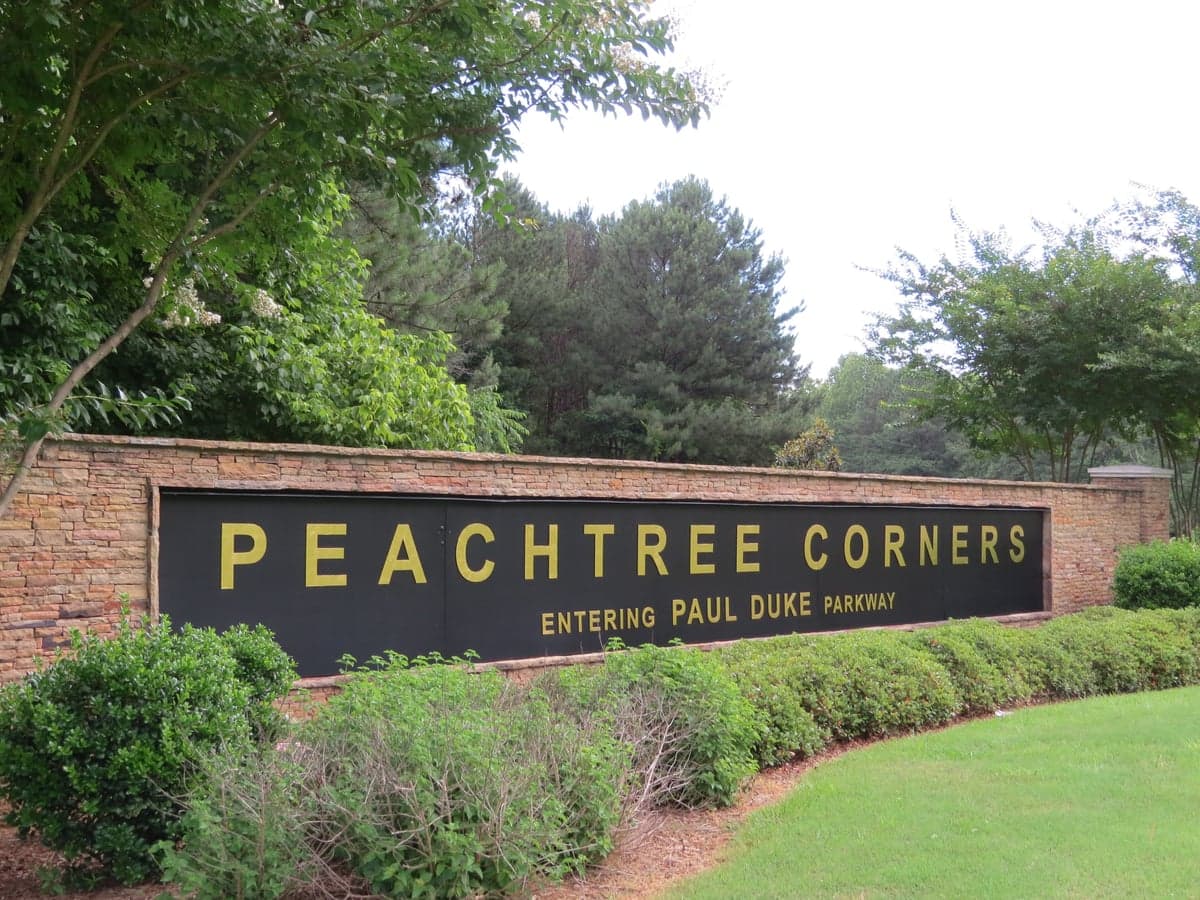
Photo: Wikipedia
Political ClimatePolitical Climate in Peachtree Corners, GA
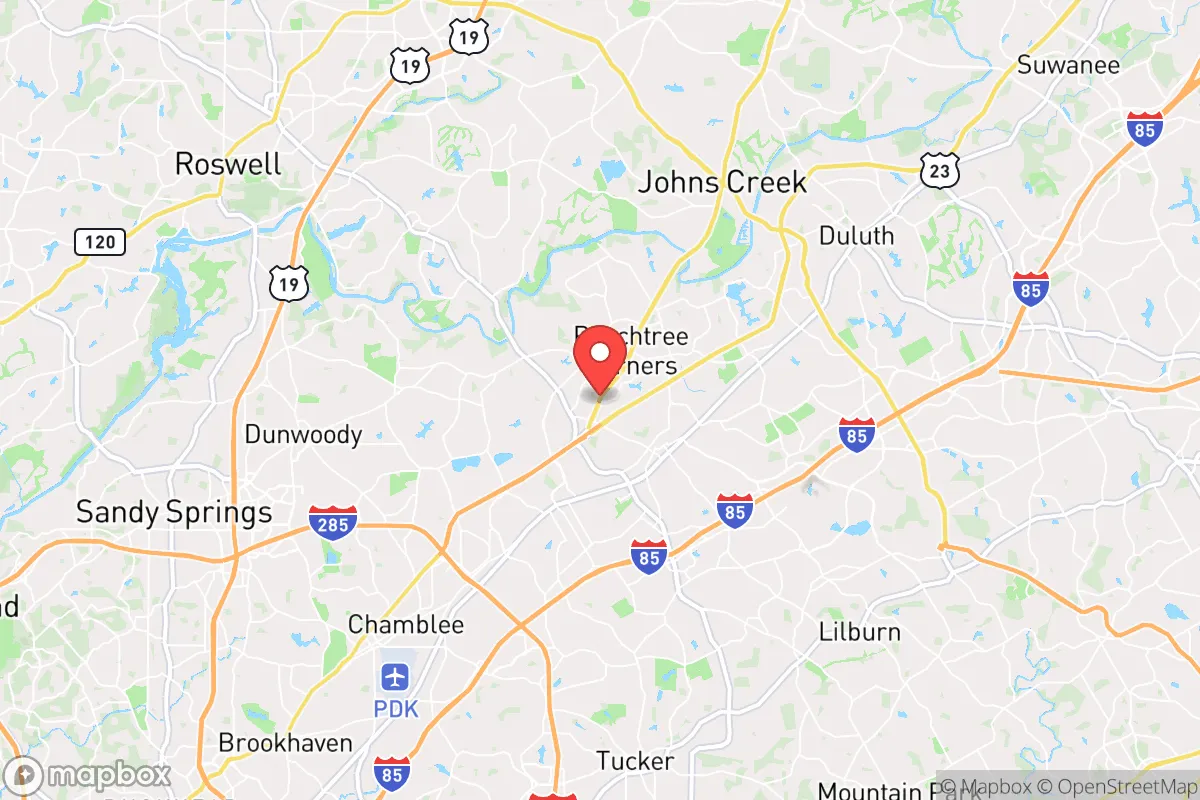
District shown is the primary district for this city’s centroid. Cities may span multiple districts.
Local Political AnalysisPolitical Analysis of Peachtree Corners, GA
Peachtree Corners leans heavily Democratic, with a Cook PVI of D+27 that makes it one of the most progressive enclaves in metro Atlanta. This wasn't always the case—twenty years ago, this area was a reliably conservative suburb where folks minded their own business and the local government stayed out of your hair. But the rapid influx of tech workers, transplants from blue states, and younger families has flipped the script. The city council and school board now consistently push policies that feel more like what you'd see in downtown Atlanta than a suburban community, and the trajectory is only getting more progressive with each election cycle.
How it compares
To understand Peachtree Corners today, you have to look at the towns around it. Drive 15 minutes north to Duluth or Suwanee, and you'll find communities that still lean conservative—places where property rights are respected and the local government isn't itching to regulate your lawn or your business. Head west to Norcross or Berkeley Lake, and you get a similar story: more moderate, more live-and-let-live. But Peachtree Corners itself has become an outlier, voting more like Decatur or Brookhaven than its Gwinnett County neighbors. The contrast is stark at the ballot box: while Gwinnett County as a whole has shifted blue, Peachtree Corners is pulling the county even further left, with local races often decided by candidates who openly champion progressive priorities like zoning restrictions, diversity mandates, and climate action plans that add layers of bureaucracy to everyday life.
What this means for residents
For a long-time resident, the biggest change is the feeling that the government is getting more involved in things it shouldn't be. The city has embraced smart city initiatives that sound nice in press releases but mean more surveillance, more data collection, and more ordinances telling you what you can do with your property. School board meetings have become battlegrounds over curriculum and parental rights, with the progressive majority consistently siding with administrators over parents who raise concerns. Property taxes have crept up to fund programs that many residents never asked for, like equity audits and sustainability offices. If you value personal freedom—the right to run your household, choose your child's education, and keep more of your paycheck—you'll find yourself increasingly at odds with the direction of local leadership.
The cultural shift is real, too. Peachtree Corners used to be the kind of place where neighbors waved from their driveways and nobody cared about your politics. Now, there's a noticeable pressure to conform to progressive social norms, especially in civic groups and local events. The city's Forum and Town Center areas are packed with trendy apartments and breweries, but the old-school hardware stores and family diners that anchored the community are fading. If you're looking for a place where government stays small and personal freedoms come first, Peachtree Corners is moving in the opposite direction—and fast. My advice? Keep an eye on the next few city council elections, because the only way to slow this train is to show up and vote for candidates who remember what limited government actually means.

State Political ClimatePolitical Climate in Georgia
State Political AnalysisPolitical Environment in the State
Georgia has shifted from a reliably conservative stronghold to a genuine battleground state over the past two decades, with its partisan lean narrowing from a double-digit Republican advantage in the 2000s to a razor-thin margin in the 2024 presidential election. The state’s political coalition is now a volatile mix of deep-red rural counties, rapidly diversifying and left-leaning metro Atlanta suburbs, and a growing population of out-of-state transplants. For a conservative considering relocation, the key takeaway is that Georgia is no longer a lock for traditional values, but it still offers a policy environment that is far more freedom-oriented than states like California or New York, provided you choose your county wisely.
Urban vs. rural divide
The political map of Georgia is a tale of two worlds. The Atlanta metropolitan area, encompassing Fulton, DeKalb, Cobb, and Gwinnett counties, now drives the state’s Democratic vote. Fulton County alone delivered over 400,000 votes for Joe Biden in 2020, more than the entire population of many rural counties. Meanwhile, the rest of the state remains deeply conservative. Counties like Murray in the northwest and Bacon in the southeast routinely vote 80%+ Republican. The real story is the suburban shift: Cobb County, once a GOP stronghold, flipped to Biden in 2020 and has not looked back, driven by an influx of professionals from blue states and a growing minority population. Forsyth County, north of Atlanta, remains a conservative bastion, but even there, the margins are tightening as development pushes outward. The rural-urban divide is stark: drive 45 minutes from downtown Atlanta and you’ll find counties like Pickens and Gilmer where Trump won by 40+ points. This geographic split means your political experience in Georgia depends almost entirely on which zip code you choose.
Policy environment
Georgia’s state-level policy is a mixed bag for conservatives, but it leans in the right direction on most fronts. The state has a flat income tax rate of 5.49%, which is being phased down to 4.99% by 2029, and no estate tax. Property taxes are relatively low, with a median effective rate of 0.87% of home value, though they vary significantly by county. The regulatory environment is business-friendly, with Georgia ranking in the top 10 for ease of doing business. On education, the state has a robust school choice program, including the Georgia Promise Scholarship Act, which provides up to $6,500 per student for private school or homeschooling expenses. However, the state’s healthcare policy is a point of contention: Georgia did not expand Medicaid under the Affordable Care Act, which keeps premiums lower for private plans but leaves a coverage gap for low-income adults. Election laws have been a flashpoint, with the 2021 Election Integrity Act (SB 202) adding voter ID requirements for absentee ballots and limiting drop boxes. For a conservative, the policy environment is generally favorable, but the constant threat of Atlanta-driven progressive legislation looms large.
Trajectory & freedom
Georgia’s trajectory on personal freedom is a tug-of-war between conservative rural interests and progressive urban ones. On the positive side, the state has expanded gun rights significantly. In 2022, Georgia became a constitutional carry state (HB 218), allowing law-abiding citizens to carry a concealed firearm without a permit. This was a major win for Second Amendment advocates. Parental rights were strengthened with the 2022 Parents’ Bill of Rights (SB 449), which requires schools to notify parents of any medical or counseling services provided to their children and prohibits instruction on sexual orientation or gender identity in grades K-3. However, the state has also seen concerning encroachments. In 2023, the Atlanta City Council passed a resolution declaring the city a “sanctuary city” for transgender individuals, though it has no legal force. More troubling for conservatives, the state’s medical autonomy was undermined by the 2019 passage of a “heartbeat” abortion ban (HB 481), which was later struck down by the courts but remains a live issue. The biggest threat to freedom is the rapid in-migration from blue states, which is slowly shifting the political center of gravity toward Atlanta’s progressive agenda. If you value low taxes and gun rights, Georgia is still a good bet, but you need to be vigilant about local elections.
Civil unrest & political movements
Georgia has seen its share of political turbulence, particularly in the Atlanta metro area. The 2020 election cycle brought massive protests in Atlanta following the death of George Floyd, with some devolving into property destruction and arson at the Wendy’s on University Avenue. The “Stop Cop City” movement, opposing the construction of a police training facility in DeKalb County, has led to repeated protests and arrests, with activists labeling it a symbol of police militarization. On the right, the Georgia Republican Party has been riven by internal battles between establishment figures like Governor Brian Kemp and Trump-aligned challengers, leading to a messy primary in 2022. Immigration politics are a live wire: the state passed HB 1105 in 2024, requiring local law enforcement to cooperate with federal immigration authorities, but sanctuary city resolutions in Atlanta and Athens have created a patchwork of enforcement. Election integrity remains a hot-button issue, with the 2020 audit and recount in Fulton County drawing national attention. For a new resident, the most visible flashpoint is likely the constant political advertising and the palpable tension between the urban core and the rest of the state. It’s not a place where you can ignore politics—it’s in the air.
Projection
Over the next 5-10 years, Georgia is likely to become more competitive, not less. The Atlanta metro area is growing at a breakneck pace, adding roughly 100,000 new residents annually, many from blue states like California, New York, and Illinois. This demographic shift will continue to push the state toward the center, and possibly toward a Democratic lean in presidential elections. However, the rural and exurban counties are also growing, driven by families fleeing high-cost metros. The key battleground will be the outer-ring suburbs like Cherokee County and Paulding County, which are still conservative but seeing an influx of moderates. The state’s electoral college votes are likely to remain in play for the foreseeable future. For a conservative moving in now, the expectation should be that Georgia will not revert to a deep-red state. Instead, it will be a perpetual swing state where your vote matters more than ever. The policy environment will remain favorable for now, but you should expect continued fights over election laws, education, and gun rights. If you want a state that is solidly conservative, you might look at Tennessee or Alabama. But if you want to live in a place where your political engagement can actually make a difference, Georgia is the arena.
For a new resident, the bottom line is this: Georgia offers a relatively low-tax, business-friendly environment with strong gun rights and school choice, but you cannot take these for granted. Your experience will depend heavily on where you settle—choose a county like Forsyth or Hall for a conservative community, or Cobb or Gwinnett if you prefer a more moderate suburban environment. Stay engaged in local politics, because the battle for Georgia’s soul is being fought at the county commission and school board level. If you’re willing to be an active citizen, this state still rewards freedom. If you check out, you might wake up in a blue state in a decade.
* Values derived from national, state, county, city and local statistics and may differ in a specific area. Last updated: 2026-05-04T02:49:12.000Z
Narrative content on this page is AI-generated and may contain mistakes. Verify any details that matter before acting on them.
ReloMaps may earn a commission from affiliate links at no extra cost to you.

