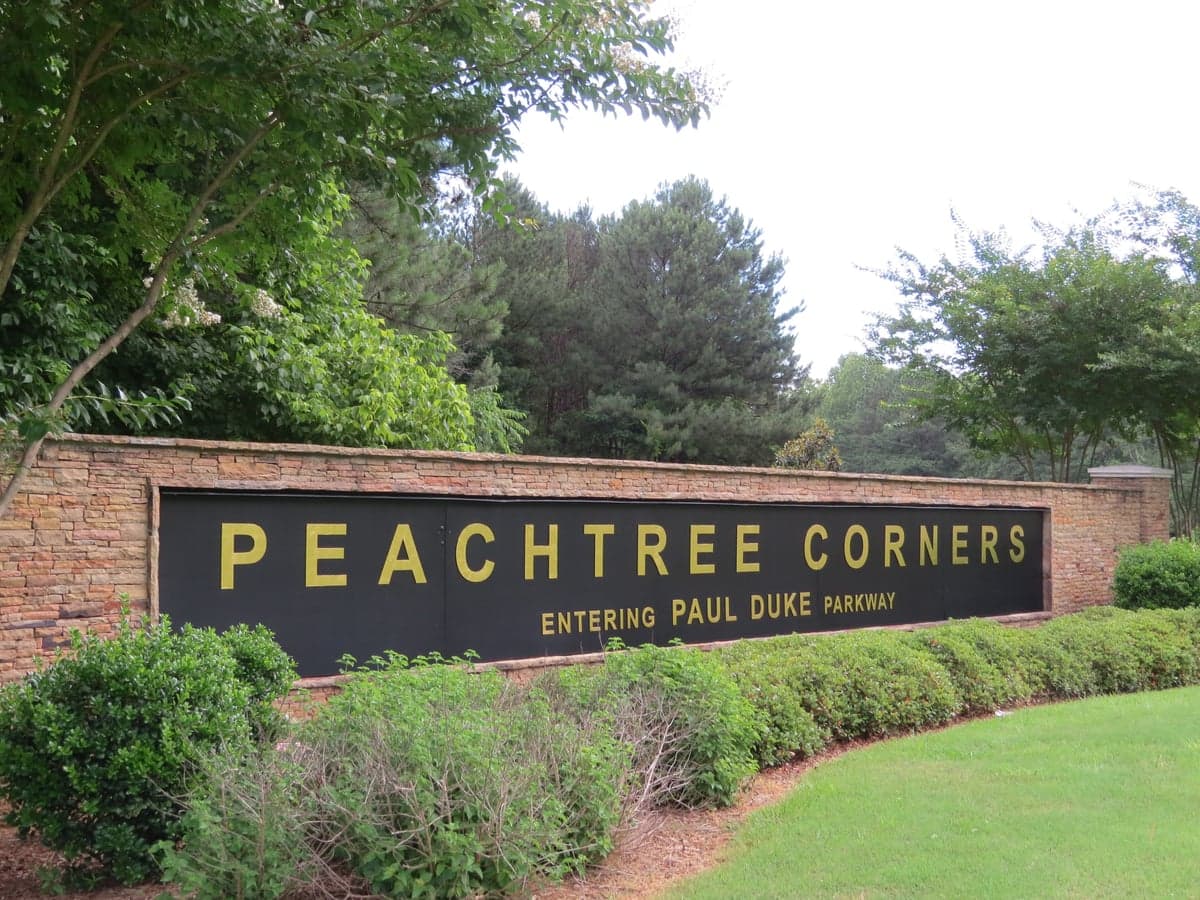
Photo: Wikipedia
Personal Sovereignty in Peachtree Corners, GA
Viable for self-reliance. Generally workable, though some barriers may limit total independence.
What does Personal Sovereignty tell us?
Personal Sovereignty measures your capacity for self-reliance and independence with minimal government friction. Higher scores mean fewer barriers between you and the way you want to live... but it assumes you have the space you need and good neighbors.
What does this tell us?
Personal Sovereignty measures your capacity for self-reliance and independence with minimal government friction. Higher scores mean fewer barriers between you and the way you want to live... but it assumes you have the space you need and good neighbors.
State Policy
Energy independence: Importer (12% of energy produced in-state)
Personal Liberty
Homesteading

Personal Liberty Analysis
Peachtree Corners, Georgia, offers a notably high degree of personal sovereignty compared to many metro-Atlanta suburbs, largely because it sits in a state that has aggressively pushed back against federal overreach and maintains a light regulatory touch. For the strategic relocator—whether a single professional or a parent—this translates into a living environment where your autonomy over your property, your family, and your personal defense is respected rather than managed. The city’s governance, while modern, operates within a state framework that prioritizes individual liberty, making it a viable base for those who value self-reliance and want to minimize government intrusion into daily life.
Tax burden and regulatory posture: How Georgia’s low-tax, low-regulation environment protects your wallet and choices
Georgia’s state-level commitment to fiscal conservatism is the bedrock of personal sovereignty here. There is no state tax on Social Security income, and the flat 5.49% state income tax is scheduled to drop to 4.99% by 2029, giving you more control over your earnings. Property taxes in Peachtree Corners are managed by Gwinnett County, with a millage rate around 30.5 mills—higher than rural Georgia but reasonable for a first-ring suburb with robust infrastructure. Critically, Georgia is a right-to-work state, meaning you cannot be forced to join a union as a condition of employment, preserving your economic freedom. The regulatory environment is equally favorable: no state-level rent control, no forced inclusionary zoning mandates, and a streamlined business licensing process that lets you start a side hustle or home-based enterprise without drowning in red tape. For the prepper-minded, this means you can invest in your property—whether it’s a generator, a well, or a workshop—without the city imposing burdensome permitting delays or aesthetic overlays that restrict your choices. The city’s zoning code does require permits for major structural changes, but it does not ban backyard chickens, beekeeping, or small-scale food production on standard residential lots, giving you tangible control over your food supply.
Self-defense and gun law specifics: Constitutional carry and castle doctrine in a state that backs you up
Georgia is a constitutional carry state, meaning you can carry a concealed firearm without a permit—a direct affirmation of your Second Amendment rights. Peachtree Corners, as a city within Gwinnett County, fully respects this; there are no local ordinances that supersede state preemption, so you won’t face the patchwork of restrictions common in blue states. The state’s Stand Your Ground law is robust: you have no duty to retreat before using deadly force if you are lawfully present and reasonably believe it is necessary to prevent death or great bodily harm. This extends to your vehicle and your home, with a strong Castle Doctrine that presumes a reasonable fear of imminent harm if an intruder forcibly enters your occupied dwelling. For parents, this means your home is legally a sanctuary—you are not expected to flee from a threat inside your own walls. The state also prohibits local governments from maintaining a registry of firearms or ammunition, so your purchases remain private. While Peachtree Corners is a safe city (violent crime rates are well below national averages), the legal framework ensures you are not disarmed by policy; you can train, carry, and defend yourself without bureaucratic hurdles. The only practical consideration is that Georgia does require a background check for all firearm purchases from licensed dealers, but private sales between individuals remain unregulated, preserving a traditional avenue for acquiring weapons without government oversight.
Self-reliance and homesteading viability: Lot sizes, zoning, and off-grid feasibility in a suburban context
Peachtree Corners is primarily a suburban community with lot sizes averaging 0.25 to 0.5 acres in most residential neighborhoods, which limits large-scale homesteading but still allows for meaningful self-reliance. The city’s zoning code permits accessory structures like sheds and greenhouses without a permit up to 120 square feet, and you can install rainwater collection systems for irrigation—though potable use would require a permit and filtration, as the city is on municipal water. Solar panels are allowed by right, and Georgia’s net metering policy lets you sell excess power back to the grid, reducing your dependence on the utility. However, going fully off-grid is impractical here: the city requires connection to municipal water and sewer for any habitable structure, and there are no provisions for composting toilets or septic systems on standard lots. For the serious prepper, this means Peachtree Corners is a base for stockpiling, gardening, and energy independence, but not for total grid disconnection. The real advantage is proximity to rural areas: within 30 minutes, you can access acreage in Hall or Jackson counties for a bug-out property, while maintaining your primary residence in a low-crime suburb with good schools. The city also has a strong farmers’ market and community garden program, which supports local food networks without government mandates. For parents, the ability to teach children gardening, basic repairs, and emergency preparedness is unencumbered by restrictive HOAs in most neighborhoods—though some subdivisions do have covenants, so you should verify deed restrictions before buying.
Personal liberties: Parental rights, medical autonomy, speech, and property protections
Georgia has been a national leader in protecting parental rights, with a state law that explicitly affirms parents’ “fundamental right” to direct the upbringing, education, and healthcare of their children. This means no mask mandates in schools, no vaccine passports for children, and no state interference in your choice of curriculum or medical decisions—including the right to opt out of any school-based health services. Peachtree Corners is served by Gwinnett County Public Schools, which, despite being a large district, has largely deferred to parental authority on these matters. Medical autonomy is further protected by Georgia’s ban on state-level vaccine mandates for adults and its prohibition of discriminatory treatment based on vaccination status. On free speech, Georgia has no anti-SLAPP law as strong as some states, but Peachtree Corners has not enacted any local ordinances restricting public expression, and the city’s public forums—including city council meetings—are open for citizen comment. Property rights are robust: Georgia’s eminent domain laws strictly limit takings to public use (not private development), and you have the right to defend your property with force under the aforementioned Castle Doctrine. The state also has a “right to farm” law that protects agricultural activities from nuisance lawsuits, though this is more relevant in rural areas than in Peachtree Corners’ suburban setting. For the conservative relocator, the key takeaway is that your family’s medical and educational choices are yours alone, and the government’s role is limited to providing basic services without dictating lifestyle.
In the broader context of American personal sovereignty, Peachtree Corners ranks favorably against most of the Northeast, West Coast, and even parts of the Midwest. It lacks the extreme libertarian ethos of rural Idaho or New Hampshire, but it offers a practical balance: low taxes, strong gun rights, parental control, and a regulatory environment that doesn’t criminalize self-reliance. The city’s biggest vulnerability is its reliance on municipal water and sewer, which creates a single point of failure in a grid-down scenario, but this is offset by Georgia’s state-level protections and the ability to quickly reach rural land. For the strategic relocator who wants to live in a modern, safe suburb without surrendering their autonomy to a nanny state, Peachtree Corners is a solid, defensible choice—one where the government sees itself as your servant, not your master.

* Values derived from national, state, county, city and local statistics and may differ in a specific area. Last updated: 2026-05-04T02:49:12.000Z
Narrative content on this page is AI-generated and may contain mistakes. Verify any details that matter before acting on them.
ReloMaps may earn a commission from affiliate links at no extra cost to you.

