Photo: Wikipedia
Demographics of Peekskill, NY
Affluence Level in Peekskill, NY
A middle-class area roughly in line with national averages across income, home values, education, and employment.
People of Peekskill, NY
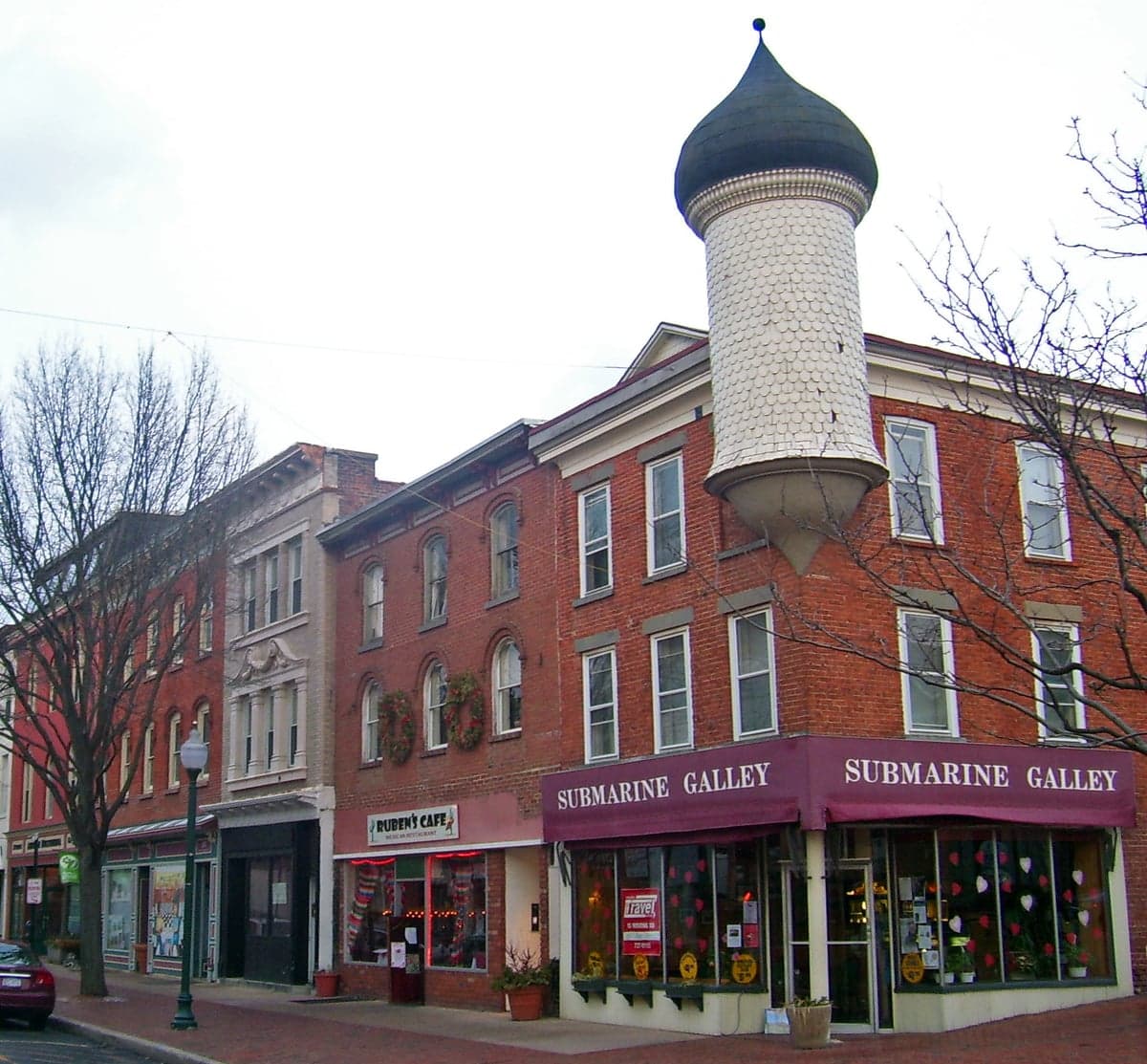
Peekskill, New York, is a city of 25,484 residents defined by its dramatic demographic transformation over the past half-century. Once a predominantly white, industrial river town, it is now a majority-minority city where Hispanic residents make up 46.2% of the population, Black residents 17.4%, and non-Hispanic whites 31.9%. The city’s identity today is shaped by a dense, walkable urban core, a growing arts scene, and a population that is younger and more diverse than surrounding Westchester County, with 37.9% holding a college degree and a foreign-born share of 14.1%.
How the city was settled and grew
Peekskill’s original European settlers were Dutch and English farmers who arrived in the late 1600s, drawn by the fertile Hudson River valley and the strategic location at the mouth of the Peekskill Hollow. The city’s industrial boom began in the mid-19th century with the arrival of the Hudson River Railroad and the establishment of iron foundries, stove works, and hat factories. This drew a wave of Irish immigrants in the 1840s and 1850s, who settled in the Waterfront District along the river, building St. Peter’s Church and forming the city’s first ethnic enclave. German immigrants followed in the 1860s and 1870s, clustering in the South Street area near the factories. A second major wave came from Italy between 1890 and 1920, with Italian immigrants establishing a strong presence in Italian Hill (the area around Main Street and Union Avenue), where they worked in the brick yards and construction trades. By 1930, Peekskill was a solidly working-class, white ethnic city of about 17,000, with distinct neighborhoods reflecting each group’s arrival.
Modern era (post-1965)
The 1965 Hart-Cellar Act and the decline of Peekskill’s manufacturing base after the 1970s reshaped the city’s population dramatically. As factories closed, many white families left for newer suburbs in Putnam and Dutchess counties, opening up housing stock in older neighborhoods. Black families, who had been a small presence since the Great Migration, grew significantly during the 1970s and 1980s, settling primarily in the Washington Street corridor and the Hillcrest area east of the city center. The largest shift came from Hispanic immigration, predominantly from Puerto Rico and the Dominican Republic, beginning in the 1980s and accelerating through the 2000s. These newcomers concentrated in the Downtown core around Main Street and in the Southside neighborhood near the river, where older multi-family housing was affordable. By 2020, Peekskill had become a majority-Hispanic city, with the Hispanic share rising from roughly 15% in 1990 to 46.2% today. The East/Southeast Asian population remains small at 1.5%, with a scattering of families in the Upper Hudson Avenue area, while the Indian-subcontinent population is negligible at 0.3%.
The future
Peekskill’s population is likely to continue its trajectory toward a Hispanic majority, though the pace of change may slow as the city’s housing market tightens. The foreign-born share of 14.1% is moderate for Westchester, suggesting that immigration is a steady but not dominant driver of growth. The city is not homogenizing; rather, it is tribalizing into distinct enclaves, with the Downtown and Southside neighborhoods remaining heavily Hispanic, the Hillcrest and Washington Street areas retaining a strong Black presence, and the Upper Village (north of Main Street) and the Depew Park area becoming more mixed but still majority white. The college-educated share of 37.9% is rising, driven by artists and professionals drawn to Peekskill’s affordable housing and Metro-North commute, but this group tends to cluster in the Waterfront District and the renovated lofts near the train station, creating a socio-economic divide. Over the next 10-20 years, Peekskill will likely remain a majority-minority city with a growing Hispanic plurality, a stable Black population, and a small but influential white professional class.
For a conservative-leaning individual or family considering relocation, Peekskill offers a dense, walkable urban environment with genuine diversity, but it is not a homogenizing suburb. The city is becoming more stratified by neighborhood, with distinct ethnic and economic zones. The key question for a newcomer is which neighborhood aligns with their priorities—the historic, artsy Waterfront, the family-oriented Hillcrest, or the heavily Hispanic Downtown—as each offers a different daily experience and community character.

* Values derived from national, state, county, city and local statistics and may differ in a specific area. Last updated: 2026-05-01T04:31:12.000Z
Narrative content on this page is AI-generated and may contain mistakes. Verify any details that matter before acting on them.
ReloMaps may earn a commission from affiliate links at no extra cost to you.

