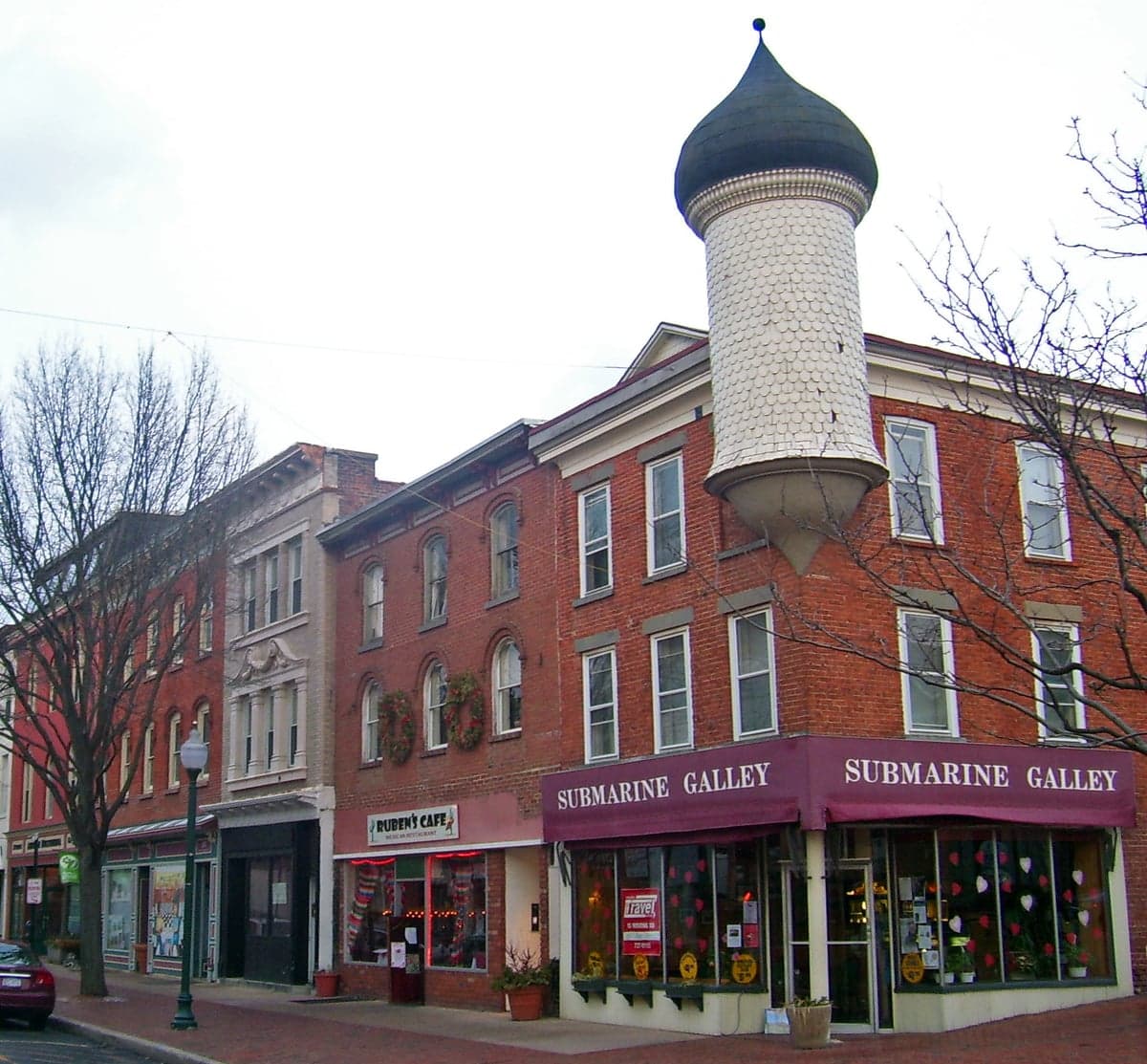
Photo: Wikipedia
Political ClimatePolitical Climate in Peekskill, NY
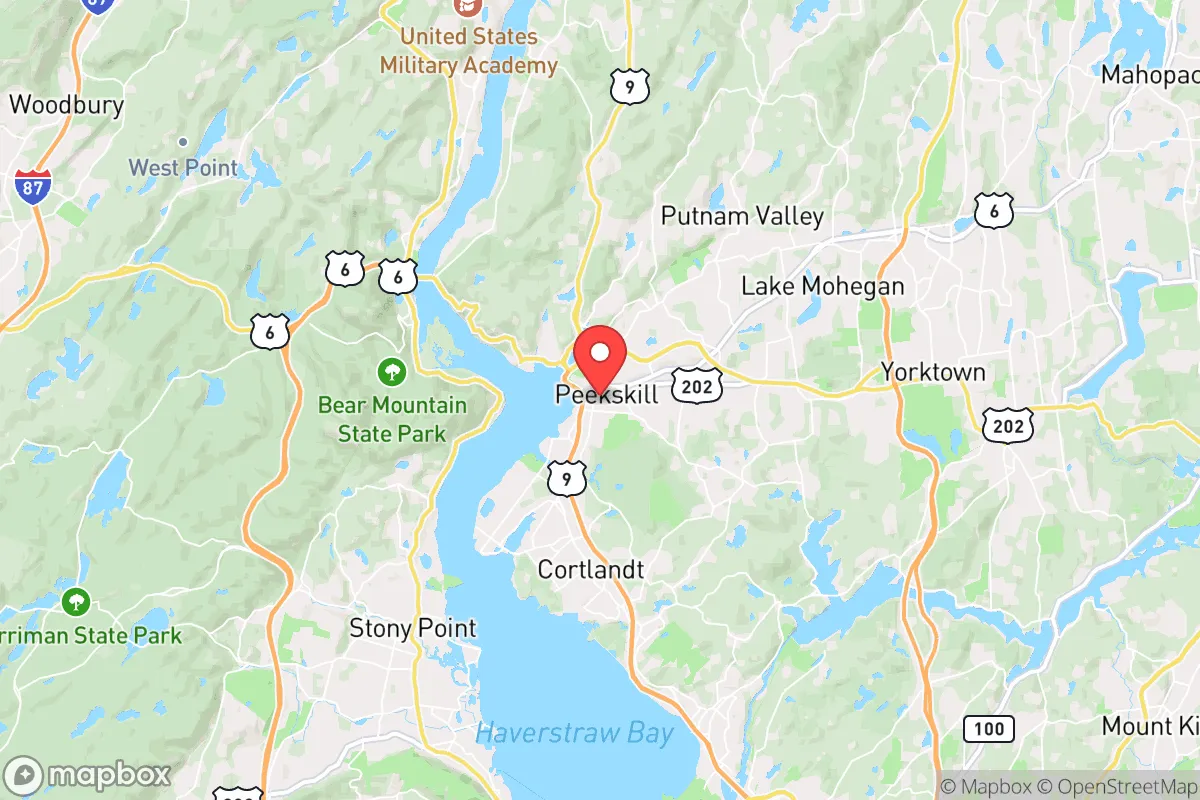
District shown is the primary district for this city’s centroid. Cities may span multiple districts.
Local Political AnalysisPolitical Analysis of Peekskill, NY
Peekskill, New York, has a Cook Political Voting Index of D+1, meaning it leans slightly Democratic compared to the national average, but that number doesn't tell the full story of a town that's been shifting noticeably leftward over the last decade. If you've been around here long enough, you remember when local elections were genuinely competitive and the town council had a mix of voices that kept things balanced. Today, the political climate is increasingly dominated by progressive activism, and the old-school, live-and-let-live attitude that made Peekskill a great place to raise a family is getting squeezed out by a more centralized, top-down approach to governance.
How it compares
Drive ten minutes north to Cortlandt or fifteen minutes east to Yorktown, and you'll find towns that still vote reliably Republican—places where property rights are respected and the local government isn't constantly trying to micromanage how you live your life. Peekskill, by contrast, has become an outlier in northern Westchester County. While the surrounding towns have held steady, Peekskill's city council has embraced policies that feel imported from much larger, more liberal cities. The contrast is stark: you can cross the Bear Mountain Bridge and feel like you've entered a different state entirely, where the local government is more interested in social engineering than in fixing the potholes or keeping taxes in check.
What this means for residents
For the average resident, the shift means more rules, more fees, and more government intrusion into daily life. The push for "equity" initiatives has led to new zoning overlays and business regulations that make it harder for small, independent shops to survive—the very places that gave Peekskill its character. There's a growing sense that if you don't align with the progressive agenda, your voice gets drowned out at public meetings. Property taxes, already among the highest in the nation, keep climbing to fund new programs that many residents never asked for. The school board has become a battleground, with curriculum changes and library policies that would have been unthinkable twenty years ago. Longtime residents are quietly selling and moving to Putnam or Dutchess counties, where the cost of living is lower and the government stays out of your business.
What this means for residents
If you value personal freedom—the right to decide what's best for your family, your property, and your wallet—Peekskill's trajectory is concerning. The city's leadership seems to believe that more government is always the answer, whether it's new mandates on landlords, restrictions on short-term rentals, or environmental rules that go far beyond state requirements. The local police department, once a respected institution, has been defunded in spirit if not in name, with resources redirected to social service programs that lack accountability. The result is a town that feels less safe after dark, even as the official crime statistics are massaged to tell a different story.
Culturally, Peekskill has always prided itself on its arts scene and diversity, and that's still here—but it's becoming a monoculture of progressive thought. The old-timers who remember when the waterfront was working-class and the diners were full of honest debate are being replaced by newcomers who see the town as a blank canvas for their political experiments. The next few election cycles will be critical: if the current trend holds, Peekskill could become a one-party town where dissent isn't just unwelcome, it's legislated out of existence. For now, the best advice is to get involved locally, show up to every meeting, and vote like your way of life depends on it—because it does.

State Political ClimatePolitical Climate in New York
State Political AnalysisPolitical Environment in the State
New York State has been a reliably blue stronghold for decades, but the political landscape is far more fractured than the statewide numbers suggest. The Democratic Party holds a supermajority in both legislative chambers and every statewide office, driven overwhelmingly by New York City and its immediate suburbs. Over the last 10-20 years, the state has lurched sharply left on fiscal and social policy, even as upstate and rural counties have grown more Republican. The 2024 presidential election saw Donald Trump lose the state by about 12 points, but he carried 44 of 62 counties—a reminder that outside the five boroughs, this is a very different place.
Urban vs. rural divide
The political map of New York is a tale of two nations. New York City (Manhattan, Brooklyn, Queens, the Bronx, and Staten Island) alone accounts for roughly 40% of the state’s vote, and it delivers margins that swamp the rest of the state. The city’s five boroughs are overwhelmingly Democratic, with Staten Island as the lone outlier—it voted for Trump in 2024 by a narrow margin. The immediate suburbs—Nassau County on Long Island, Westchester County north of the city, and Rockland County—have trended bluer over the last decade, though they still host competitive pockets. Farther out, the Hudson Valley counties like Dutchess and Ulster are purple-to-blue, while the Capital Region around Albany is reliably Democratic thanks to state government employment. The real red wall runs through western and central New York: Erie County (Buffalo) is a Democratic stronghold, but the surrounding rural counties—Wyoming, Genesee, Orleans—vote 65-70% Republican. The Southern Tier, the North Country, and the Finger Lakes region are deeply red. Oneida County (Utica) and Broome County (Binghamton) are swing counties that have shifted rightward since 2016. The divide isn’t just geographic—it’s cultural. Upstate residents often feel ignored by Albany, and the state’s one-house, one-vote system means New York City’s population dominates the legislature.
Policy environment
New York’s policy environment is among the most progressive in the nation, and it shows no signs of moderating. The state has the highest combined state and local tax burden in the country, with an income tax top rate of 10.9% and property taxes that routinely exceed 2% of home value. The regulatory posture is heavy: rent control in New York City and some suburbs, strict environmental mandates (the Climate Leadership and Community Protection Act aims for net-zero emissions by 2050), and a paid family leave program funded by payroll deductions. Education policy is dominated by the teachers’ unions; the state has some of the nation’s most restrictive charter school caps, and school choice is virtually nonexistent. Healthcare is heavily regulated, with a state-run health insurance exchange and Medicaid expansion. Election laws are among the most permissive: no-excuse absentee voting, early voting, same-day registration, and automatic voter registration. The state also passed the John R. Lewis Voting Rights Act of New York in 2022, which adds additional preclearance requirements for local election changes. For a conservative-leaning resident, the policy environment feels like a one-party state where the legislature routinely overrides local control—especially on gun laws, zoning, and energy policy.
Trajectory & freedom
Over the last five years, New York has become less free by nearly any measure. On gun rights, the state passed the Concealed Carry Improvement Act (CCIA) in 2022 after the Supreme Court’s Bruen decision, effectively banning guns from most public places and requiring a “good moral character” standard for permits—a standard that critics say is arbitrary. On parental rights, the state passed a law in 2024 that allows minors as young as 12 to consent to gender-affirming care without parental notification, and it has become a sanctuary for out-of-state families seeking such care. On speech, the state’s hate crime laws have been used to prosecute online speech, and the legislature has considered bills that would expand liability for “misinformation.” On medical autonomy, the state legalized recreational marijuana in 2021 and has a robust telehealth abortion access law. On property rights, the state’s rent stabilization laws have been tightened, and a 2019 law eliminated vacancy decontrol, meaning rent-regulated apartments stay regulated even after a tenant leaves. The state also passed a good cause eviction law in 2024, making it harder for landlords to evict tenants. On taxation, the state’s mansion tax (a transfer tax on properties over $1 million) and the pied-à-terre tax proposal (which would tax second homes) signal a continued hostility to property owners. The trajectory is clear: more regulation, higher taxes, and less individual autonomy.
Civil unrest & political movements
New York has been a flashpoint for political activism on both sides. The Black Lives Matter protests of 2020 were massive and sustained, particularly in New York City and Buffalo, and led to the passage of police reform laws including the repeal of 50-a (which had shielded police disciplinary records). The pro-Palestinian protests at Columbia University and other campuses in 2024 drew national attention and resulted in arrests and disciplinary actions. On the right, the Second Amendment sanctuary movement has spread to dozens of upstate counties, with sheriffs refusing to enforce parts of the CCIA. The parental rights movement has been active in school board elections, particularly in Nassau County and Suffolk County, where conservative slates have won seats. Immigration politics are a constant flashpoint: New York City’s sanctuary city policy has been strained by the arrival of over 200,000 migrants since 2022, leading to shelter crises and political backlash. The state’s Green Light Law, which allows undocumented immigrants to obtain driver’s licenses, remains controversial. Election integrity controversies have been relatively muted compared to other states, but the 2020 and 2022 elections saw lawsuits over absentee ballot procedures. A new resident would notice the visible presence of political activism—especially in the city—and the palpable tension between the progressive urban core and the conservative rural periphery.
Projection
Over the next 5-10 years, New York is likely to continue its leftward drift, but with growing friction. Demographic trends are working against the progressive coalition: the state is losing population (down about 600,000 since 2020), with the biggest losses in upstate and the outer suburbs. The people leaving are disproportionately middle-class families and conservatives, while the people arriving are immigrants and young progressives. This will likely deepen the urban-rural divide and make the state even more dependent on New York City’s votes. The state’s fiscal situation is precarious—the budget relies heavily on high-income earners, and if the stock market falters or more wealthy residents leave, the state could face a fiscal crisis. The political response to that crisis will likely be more taxes, not less. On social issues, expect further expansion of transgender rights, abortion access, and gun control. The parental rights movement may win some local battles, but statewide legislation is unlikely to shift. A new resident moving in now should expect to live in a state where the government is deeply involved in daily life, taxes are high, and the political culture is increasingly hostile to traditional values. The practical takeaway: if you value low taxes, gun rights, school choice, and local control, New York is a tough place to call home—unless you’re willing to fight for those things in a state that’s moving in the opposite direction.
For a conservative-leaning individual or family, the bottom line is that New York offers a high cost of living, a heavy regulatory hand, and a political environment that is actively hostile to many of the values you might hold. The upstate regions offer a more affordable and culturally conservative alternative, but you’ll still be subject to state-level policies that feel like they were written in Manhattan. If you’re considering a move, look closely at the specific county and town—the difference between living in Orleans County and Westchester County is the difference between a red state and a blue one, even though they share the same governor. Just know that no matter where you land, Albany will have a say in your life that you can’t escape.
* Values derived from national, state, county, city and local statistics and may differ in a specific area. Last updated: 2026-05-01T04:31:12.000Z
Narrative content on this page is AI-generated and may contain mistakes. Verify any details that matter before acting on them.
ReloMaps may earn a commission from affiliate links at no extra cost to you.

