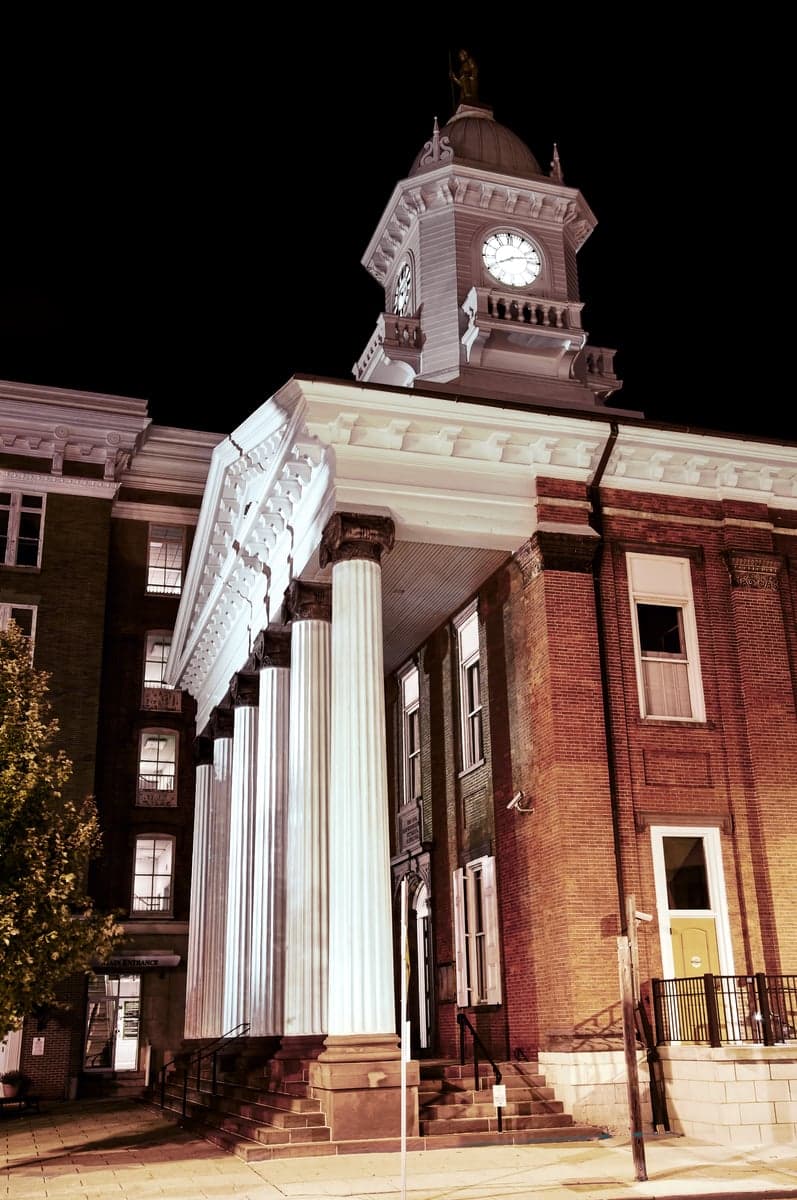
Photo: Wikipedia
Demographics of Franklin County
Affluence Level in Franklin County
A middle-class area roughly in line with national averages across income, home values, education, and employment.
People of Franklin County
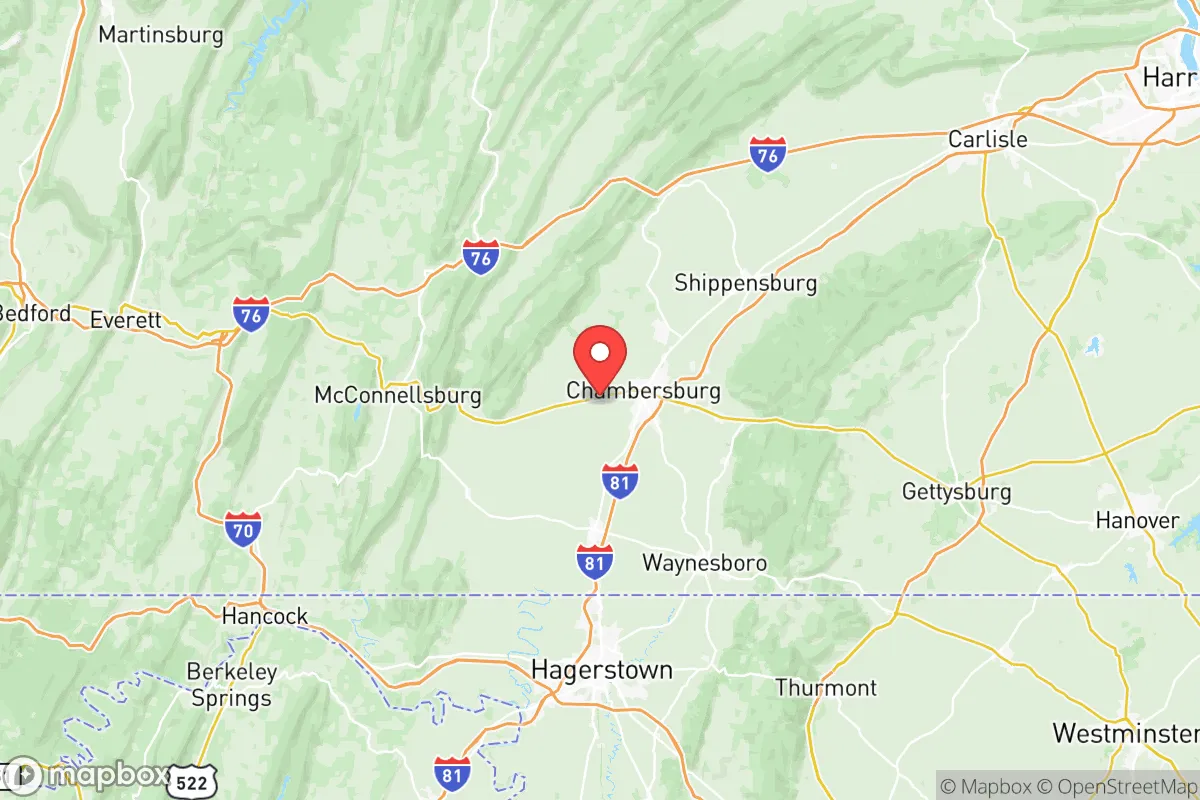
Franklin County, Pennsylvania, today is a predominantly white, politically conservative community of 156,626 residents, shaped by centuries of German and Scots-Irish settlement and a slower pace of demographic change than much of the nation. The county retains a distinctly rural and small-town character, with Chambersburg as its commercial and governmental hub, and a cultural identity rooted in agricultural traditions, religious conservatism, and a strong sense of local history. While the population is overwhelmingly white (85.0%), a growing Hispanic community (7.2%) and a small but established Black population (3.1%) are beginning to diversify the county, though the foreign-born share remains low at just 2.0%. For a relocating family or individual seeking a stable, low-crime, and family-oriented environment with a traditionalist bent, Franklin County offers a community where the past remains a visible and influential part of daily life.
Settlement & growth (pre-1960)
Long before European settlers arrived, the area now known as Franklin County was the homeland of the Susquehannock people, who controlled the fertile Cumberland Valley until disease and warfare with the Iroquois Confederacy dispersed them in the late 17th century. By the early 1700s, the Iroquois had claimed the region as a hunting ground, but European colonization began in earnest after the 1744 Treaty of Lancaster, which opened the valley to settlement. The first wave of colonists were largely Scots-Irish Presbyterians, who pushed west from Philadelphia and Lancaster County, establishing farms and small communities like Mercersburg (founded 1749) and Greencastle (settled 1738). These hardy pioneers were followed closely by German-speaking immigrants—Lutherans, Reformed, and Mennonites—who found the limestone-rich soils ideal for grain and livestock farming. The Germans concentrated in areas like Waynesboro and the rural townships around Chambersburg, where their stone farmhouses and bank barns still dot the landscape.
The county was officially formed in 1784 from Cumberland County, and Chambersburg was laid out as the seat. During the early 19th century, the construction of the Cumberland Road (later U.S. Route 40) and the arrival of the railroad in the 1830s turned Chambersburg into a major transportation and commercial center. The county's economy was driven by agriculture—especially wheat, corn, and livestock—and by small-scale manufacturing like iron forges and gristmills. The Civil War brought devastation: in 1864, Confederate forces burned much of Chambersburg to the ground, an event that remains a defining trauma in local memory. Reconstruction was slow, but by the late 19th century, the county had rebounded, with new industries like the Frick Company (farm machinery) in Waynesboro and the Chambersburg Engineering Company providing jobs. The 20th century saw little new immigration; the county's population remained overwhelmingly native-born white, with a small Black community concentrated in Chambersburg, descendants of both free and enslaved people who had lived in the area since the 1700s. The post-World War II era brought modest suburban growth around Chambersburg and Waynesboro, but Franklin County largely missed the massive industrial or Sun Belt booms that reshaped other regions.
Modern era (post-1965)
The 1965 Hart-Cellar Act had a minimal direct impact on Franklin County. Unlike major metropolitan areas, the county did not see large waves of new immigrants from Asia, Africa, or Latin America. The foreign-born population today is just 2.0%, far below the national average. The most significant demographic shift since the 1960s has been the gradual growth of the Hispanic population, which now stands at 7.2%. This community is largely composed of Mexican-American families who moved to the area for agricultural work—especially in the orchards and vegetable farms around Fayetteville and Orrstown—and later settled permanently, finding jobs in construction, food processing, and service industries. The Hispanic population is dispersed across the county, but a visible concentration has formed in Chambersburg, where Spanish-language churches and small businesses have emerged. The Black population, at 3.1%, remains modest and is primarily located in Chambersburg and Waynesboro, with roots stretching back to the 19th century. The East/Southeast Asian population (0.7%) and Indian-subcontinent population (0.3%) are tiny, mostly professionals employed by the county's largest employers, such as Volvo Construction Equipment in Shippensburg (just over the county line) and the Franklin County School District. Domestic migration has been the primary driver of population growth, with new residents drawn from the Baltimore-Washington corridor and from other parts of Pennsylvania, seeking lower housing costs, less congestion, and a more conservative political environment. Suburbanization has been modest, with new subdivisions spreading outward from Chambersburg and Waynesboro, but the county has resisted the sprawling development seen in nearby Maryland or Virginia.
The future
Franklin County's population is projected to continue growing slowly, driven by domestic in-migration from the Mid-Atlantic and by natural increase among the Hispanic community, which is younger and has higher birth rates than the white population. The county is likely to become slightly more diverse over the next 10-20 years, with the Hispanic share potentially reaching 10-12% and the Asian and Indian populations growing slowly as professionals are recruited by local employers. However, the county will remain overwhelmingly white and culturally conservative. New residents are likely to continue concentrating in Chambersburg and its immediate suburbs, as well as in Waynesboro and Greencastle, where housing developments and commercial growth are most active. The rural townships will likely see slower growth, preserving their agricultural character. The county's cultural identity—rooted in German and Scots-Irish traditions, evangelical Christianity, and a strong sense of local independence—will persist, though it may be gradually inflected by the growing Hispanic presence, which is already visible in local restaurants, festivals, and churches. For a newcomer, Franklin County offers a stable, family-oriented community with a clear sense of its past, but one that is slowly, quietly becoming more diverse.
For someone moving to Franklin County today, the bottom line is this: you are choosing a community that values tradition, stability, and self-reliance, where change comes slowly and the landscape still reflects its 18th-century origins. The population is overwhelmingly white and native-born, but a growing Hispanic community is adding new layers to the county's cultural fabric. If you are seeking a place with low crime, good schools, and a strong sense of local identity, Franklin County is a solid choice—just don't expect the rapid diversification or urban energy of a major metro area. The future here is one of gradual, manageable change, not transformation.

* Values derived from national, state, county, city and local statistics and may differ in a specific area. Last updated: 2026-08-09T13:49:47.000Z
Narrative content on this page is AI-generated and may contain mistakes. Verify any details that matter before acting on them.
ReloMaps may earn a commission from affiliate links at no extra cost to you.

