Photo: Wikipedia
Demographics of Petersburg, VA
Affluence Level in Petersburg, VA
A below-average socioeconomic profile. Incomes, home values, and educational attainment trail the U.S., with higher poverty and unemployment.
People of Petersburg, VA
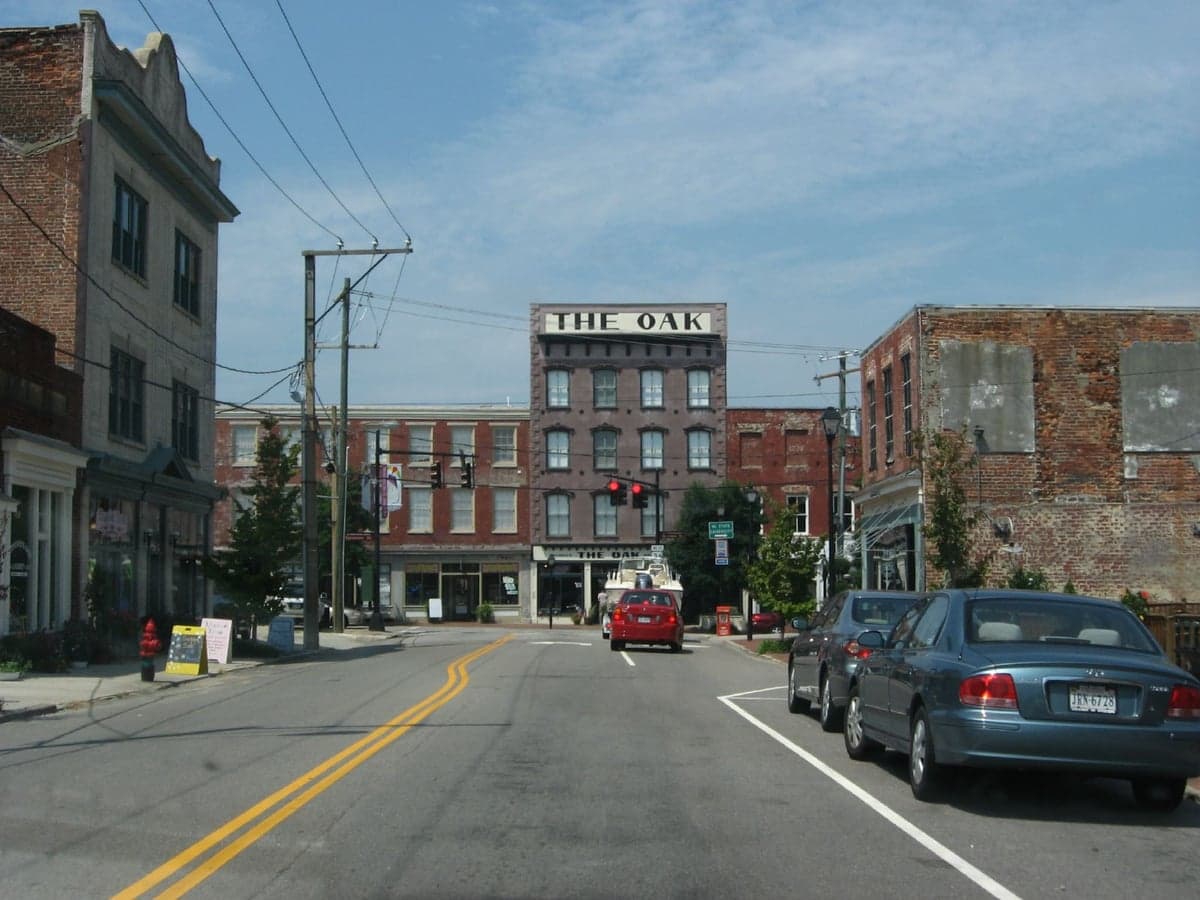
Petersburg, Virginia, is a historically Black-majority city of 33,365 residents, shaped by centuries of African American settlement, post-industrial decline, and a modest but growing Hispanic presence. The city’s population is 74.6% Black, 14.7% White, 6.0% Hispanic, and 1.0% East/Southeast Asian, with a foreign-born share of just 2.0% — well below the national average. Petersburg retains a dense, walkable urban core and a strong sense of community identity, but its population has shrunk by roughly 20% since its 1970 peak, leaving a city that feels both historic and economically strained.
How the city was settled and grew
Founded in 1733 as a tobacco inspection station on the Appomattox River, Petersburg grew as a transportation and manufacturing hub. The original European settlers — mostly English and Scottish merchants — built their homes and warehouses in Old Towne, the historic district that still contains the city’s oldest architecture. By the early 1800s, enslaved and free Black laborers formed the backbone of the tobacco and cotton industries, living in neighborhoods like Pocahontas Island, one of the oldest free Black communities in the United States. After the Civil War, freedmen and women poured into Petersburg, establishing institutions like Virginia State University (1882) just across the river in Ettrick. The early 20th century saw a wave of Black migration from rural Virginia and North Carolina, settling in Walnut Hill and Bollingbrook, areas that became the heart of Petersburg’s Black middle class. White flight accelerated after World War II, and by 1970 the city was already majority Black.
Modern era (post-1965)
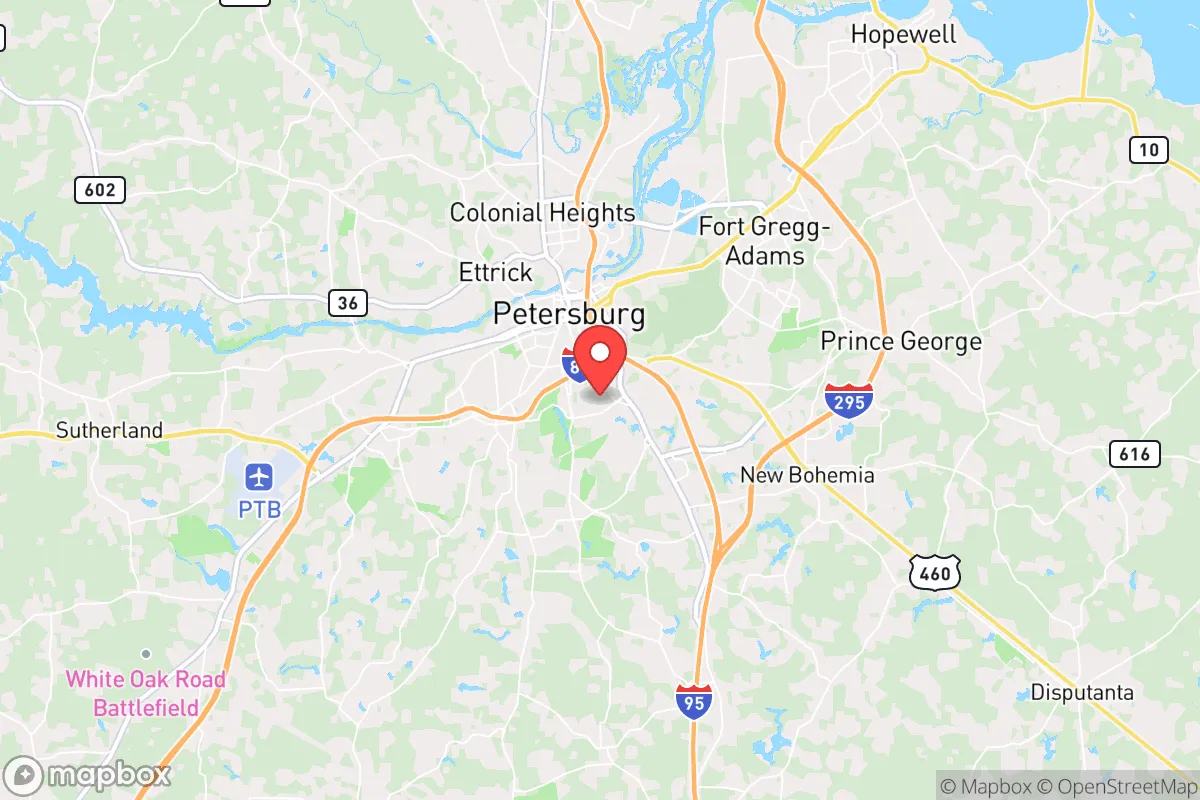
The 1965 Hart-Cellar Act had little direct effect on Petersburg — the city’s foreign-born population remains tiny at 2.0%, and the East/Southeast Asian community (1.0%) and Indian-subcontinent community (0.2%) are small, concentrated mostly in the Southpark area near the Fort Lee military base. The major demographic shift since the 1970s has been domestic: the Black population consolidated as White families left for suburbs like Colonial Heights and Chesterfield County. The Hispanic share, now 6.0%, grew steadily after 2000, driven by Mexican and Central American immigrants working in construction, landscaping, and food processing. These families have settled primarily in the Washington Street corridor and parts of Oakwood, where Spanish-language churches and small markets have appeared. The White population, now 14.7%, is concentrated in Old Towne and the Poplar Lawn historic district, where gentrification has attracted some young professionals and retirees seeking affordable historic homes.
The future
Petersburg’s population is projected to remain stable or decline slightly over the next decade, barring a major economic catalyst. The city is not homogenizing — it is tribalizing into distinct enclaves: Old Towne and Poplar Lawn are becoming whiter and more affluent, while the rest of the city remains overwhelmingly Black and lower-income. The Hispanic community is growing but still small, and its children are assimilating into English-dominant schools. The East/Southeast Asian and Indian populations are likely to remain negligible unless Fort Lee (now part of the Army’s Combined Arms Support Command) expands significantly. The biggest wildcard is the proposed Petersburg Casino project, which could bring jobs and reverse population loss, but also risks accelerating gentrification in historic Black neighborhoods.
For a conservative-leaning individual or family moving in now, Petersburg offers a deeply rooted, community-oriented Black culture, affordable housing, and proximity to Richmond and Fort Lee. But the city’s shrinking tax base, underfunded schools (only 25% of adults hold a college degree), and high crime rates mean newcomers should research specific neighborhoods carefully. Old Towne and Poplar Lawn are the safest bets for stability and resale value; Washington Street and Oakwood offer more diversity but fewer amenities. Petersburg is not a melting pot — it is a historically Black city with small, distinct enclaves of other groups, and that character is likely to persist.

* Values derived from national, state, county, city and local statistics and may differ in a specific area. Last updated: 2026-05-01T07:45:45.000Z
Narrative content on this page is AI-generated and may contain mistakes. Verify any details that matter before acting on them.
ReloMaps may earn a commission from affiliate links at no extra cost to you.

