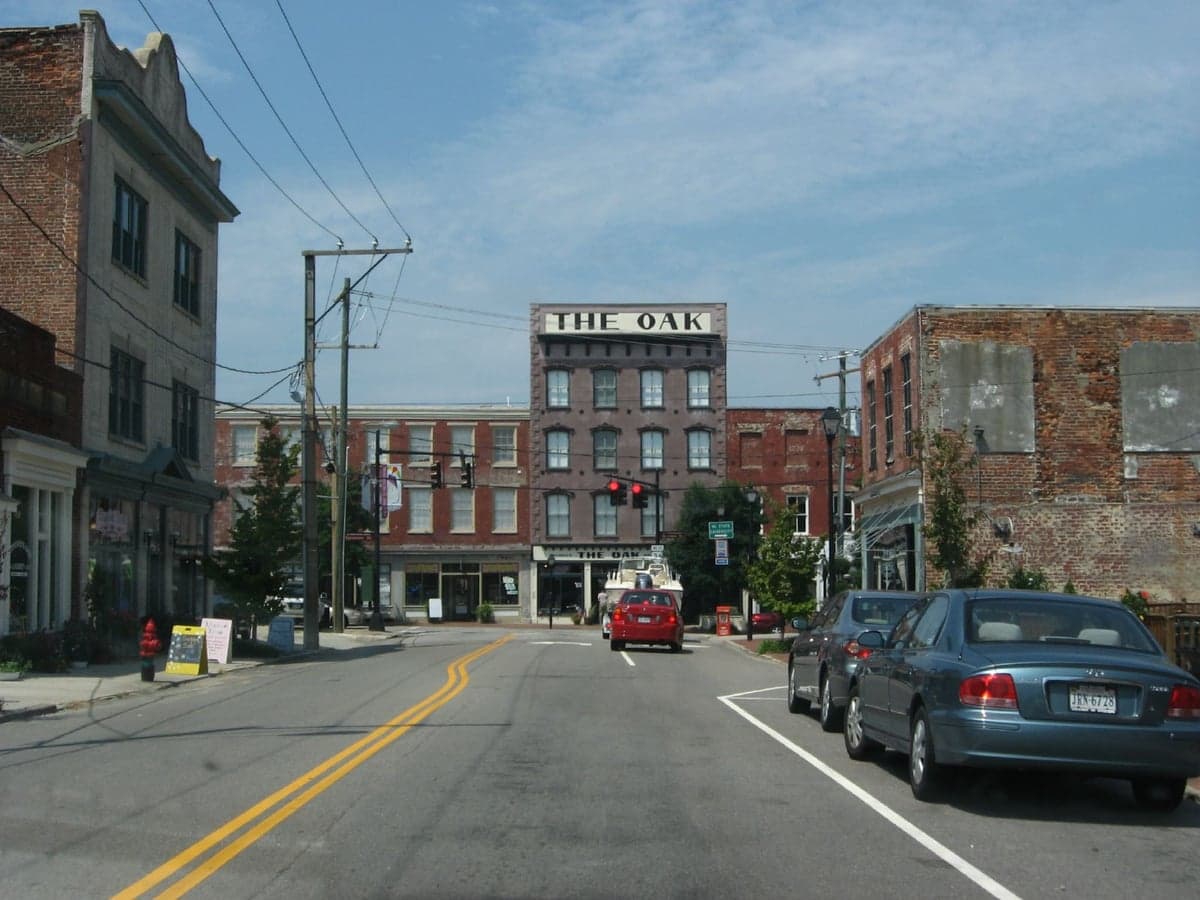
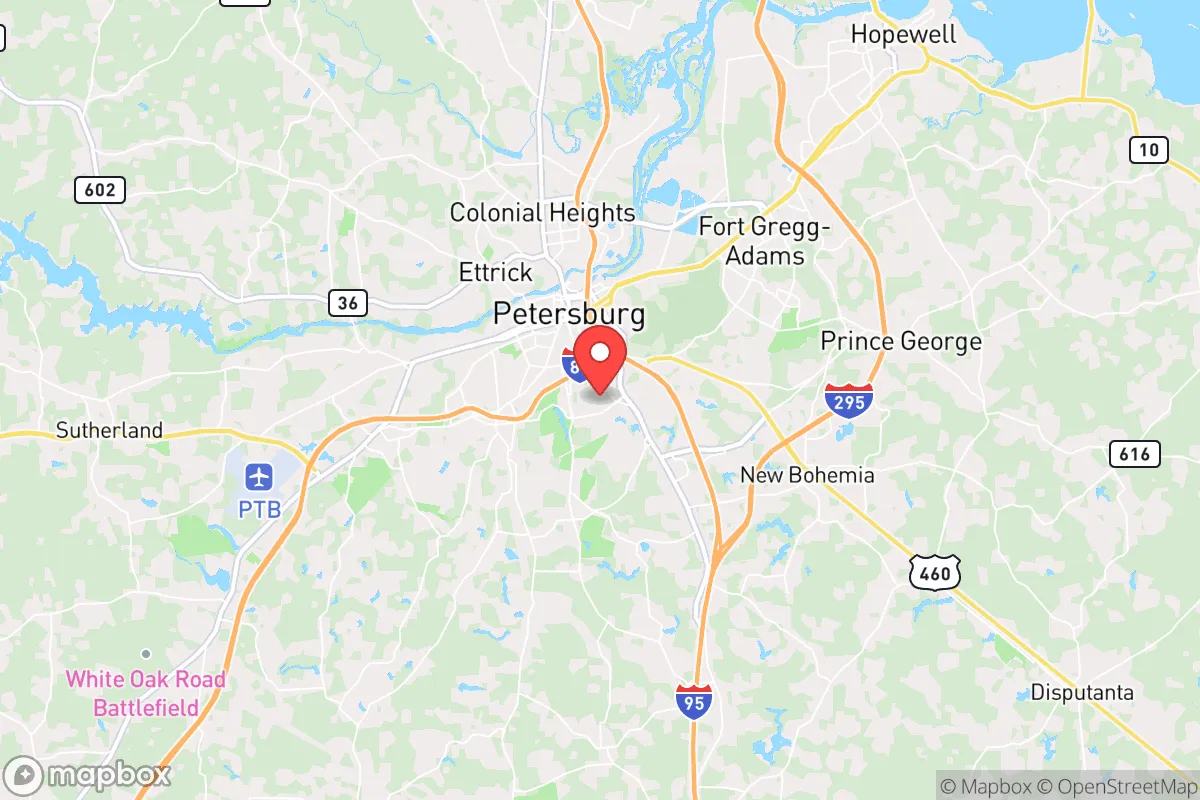
Photo: Wikipedia
Strategic Assessment of Petersburg, VA
Meaningful friction. Expect exposure to either population pressure, blast zones, or natural disaster risk. Consider buying a retreat property.
What does the Strategic Assessment tell us?
Our Strategic Assessment grades tactical survivability of an area. Major population centers, military targets, fallout zones, natural disasters, and border exposure all drive risk — lower exposure means a more defensible position in a crisis.
This is heavily inspired by Joel Skousen's Strategic Relocation book. Highly recommended you checkout the book ($)What does this tell us?
Our Strategic Assessment grades tactical survivability of an area. Major population centers, military targets, fallout zones, natural disasters, and border exposure all drive risk — lower exposure means a more defensible position in a crisis.
This is heavily inspired by Joel Skousen's Strategic Relocation book. Highly recommended you checkout the book ($)Strategic Pillars

Key Distances
Regional Safe Places
Below is our recommended "safe zones" in Virginia and the surrounding area based on our strategic heuristics. For most people, it's unrealistic to live in a “safe zone” full-time due to work, family or other personal reasons. They tend to be more rural. However, many of these areas are perfect for second homes and retreat properties that double as a vacation home or even a short-term rental.
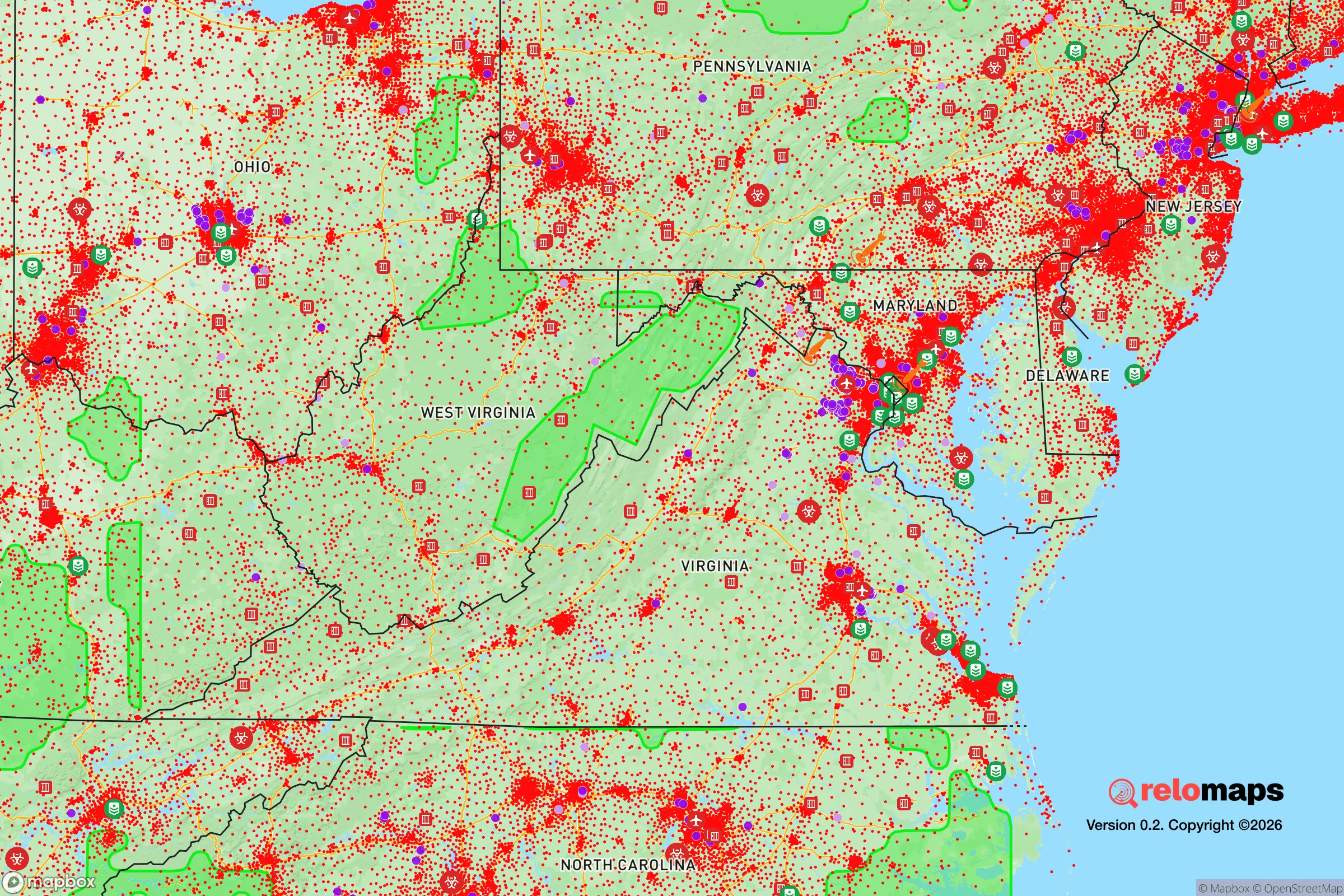
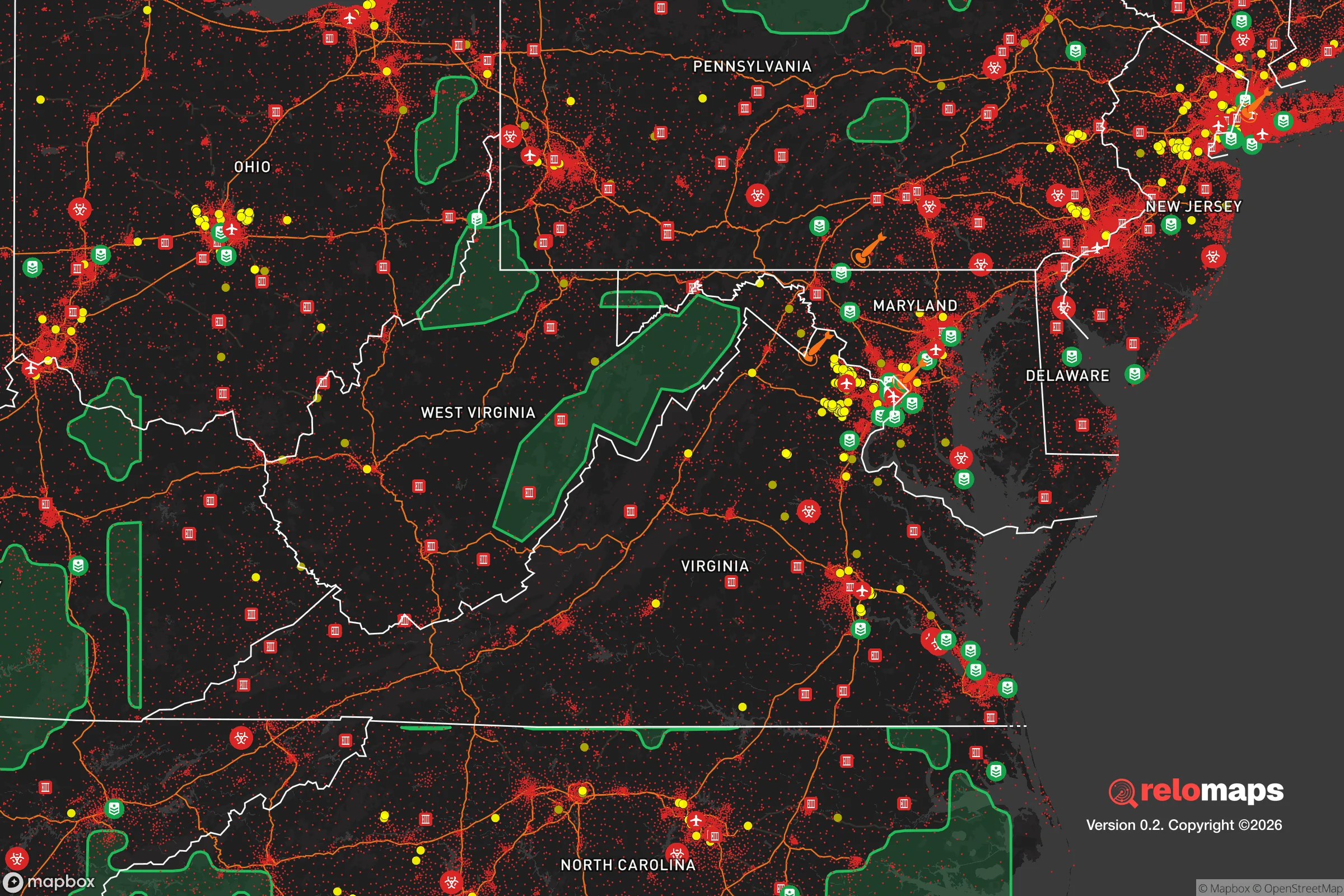


Important Note: For informational purposes only. This does not mean nothing bad ever happens in the green zones. Please use common sense. This is based on public data and modeled with AI. We tried to take a conservative approach but mistakes happen. We update this regularly as new information becomes available.
Solar Generator Recommendations
Backup power matters more here than in safer locations. We've picked three solar generators across budgets and capacity tiers — start with the budget unit if you only need a few essentials, or step up if you want to run a fridge and HVAC for days at a time.

Jackery Portable Power Station Explorer 300
Budget OptionPower on the Go: Weighing only 11 lbs, it's convenient to set up and store with book-sized foldable solar panels

BLUETTI Portable Power Station AC180
Designed for both indoor and outdoor scenarios, AC180 is highly capable as it has a robost capacity and continuous output power.

EF ECOFLOW DELTA Pro Ultra Power Station
Upgraded PickEcoFlow DELTA Pro Ultra is a whole-home energy system designed to grow with your family. Integrated with the Smart Home Panel 2, it scales to meet your evolving energy needs — keeping your home powered, intelligent, and secure through every stage of life.
We earn a commission, at no additional cost to you.
Strategic Assessment Analysis
Petersburg, Virginia, sits at a strategic crossroads that demands a sober assessment from anyone serious about long-term resilience. Its location—roughly 25 miles south of Richmond and 140 miles south of Washington, D.C.—places it within the gravitational pull of major population centers, which is a double-edged sword for a prepper or survivalist. On one hand, the city’s historical role as a transportation hub (I-95, I-85, and CSX rail lines converge here) offers logistical advantages for supply movement and potential evacuation routes. On the other, its proximity to the I-95 corridor and the Richmond-Petersburg metropolitan area means it’s directly in the path of any cascading failure—whether from civil unrest, a grid-down event, or a mass casualty incident originating in the Northeast megalopolis. The city’s resilience is real but conditional: it’s a place where preparation, not proximity to safety, will determine outcomes.
Geographic position and natural advantages for long-term survival
Petersburg’s geography is a mixed bag for a prepper. The Appomattox River runs through the city, providing a reliable freshwater source—critical for any long-term grid-down scenario. The surrounding region, part of the Virginia Piedmont, offers rolling terrain with decent drainage and a mix of hardwood forests and agricultural land. To the south and west, you’ll find rural counties like Dinwiddie and Prince George, which offer more defensible positions with lower population density. The city itself sits on a fall line, meaning the soil transitions from coastal plain to harder bedrock—good for well drilling if you own property outside the urban core. However, the area’s natural advantages are undercut by its position in a floodplain; the Appomattox has a history of flooding, and any extended power outage could complicate water purification and sanitation. For a relocator, the key takeaway is that Petersburg’s natural resources are usable but require active management—you’re not walking into a self-sustaining paradise. The real value lies in its access to multiple escape routes: I-95 north to Richmond or south to North Carolina, I-85 west to the Blue Ridge foothills, and a network of state highways that bypass the main arteries. In a crisis, that redundancy is worth more than any single resource.
Risks, exposures, and proximity to fallout-relevant landmarks
This is where Petersburg’s assessment gets sobering. The city is dangerously close to several high-value targets that would be magnets for civil unrest or, in a worst-case scenario, kinetic events. Fort Gregg-Adams (formerly Fort Lee) is just 10 miles east, a major Army logistics base that could become a focal point for military mobilization or, conversely, a target for disruption. The Richmond-Petersburg Turnpike (I-95) runs directly through the city, and the rail lines are critical for East Coast freight—both are choke points that would be contested in any large-scale disruption. Petersburg is also within 30 miles of the James River nuclear facilities (Surry Power Station is about 40 miles southeast), and while the risk of a direct strike is low, the fallout from a major incident at any of these sites would affect the area. For a survivalist, the proximity to Richmond (population 230,000) and the broader metro area (1.3 million) is the biggest red flag. In a mass casualty event or civil unrest scenario, Petersburg would be a funnel for refugees fleeing north or south along I-95. The city’s own population of about 33,000 is manageable, but it’s surrounded by suburban sprawl that could turn into a hostile environment if supply chains collapse. Property crime rates in Petersburg are notably high—roughly 3x the national average—which signals a baseline instability that could escalate quickly in a crisis. If you’re considering this area, you need a hard security plan, not just a bug-out bag.
Practical resilience for a relocator: food, water, energy, and defensibility
For a single individual or family looking to establish a resilient foothold, Petersburg offers a few concrete advantages but demands significant investment. Water is the easiest win: the Appomattox River is accessible, but you’ll need a reliable filtration system (think Berkey or a Sawyer filter) and a plan for boiling if power is out. The city’s municipal water system is old and vulnerable to contamination or pressure loss—don’t rely on it. For food, the surrounding counties have active farmland, but you’ll need to build relationships with local growers now, not during a crisis. The Petersburg Farmers Market is a decent starting point, but for true self-sufficiency, look at properties in Dinwiddie or Prince George with acreage for gardening and small livestock. Energy is a weak point: the grid in this region is aging, and Petersburg has experienced power outages from storms and infrastructure failures. Solar with battery backup is a must, but note that the area gets about 200 sunny days per year—adequate but not ideal for full off-grid living. Defensibility is the hardest factor. The city’s urban core is not defensible for a single family; you’d need to be on the outskirts, preferably on a property with a long driveway, natural barriers (tree lines, creeks), and a clear line of sight to approach routes. Zoning in Dinwiddie County is more relaxed for outbuildings and alternative structures, which is a plus for preppers who want a workshop, root cellar, or secure storage. The biggest practical concern is medical access: Petersburg has a hospital (Southside Regional Medical Center), but it’s small and would be overwhelmed in a mass casualty event. Stock your own trauma kit and plan for a 45-minute drive to Richmond for serious care.
The overall strategic picture for Petersburg is one of calculated risk. It’s not a retreat or a remote stronghold—it’s a forward operating base with good logistics but high exposure. For a conservative-leaning relocator who values self-reliance and community preparedness, the area offers a middle ground: close enough to urban resources (jobs, medical, supply chains) to be practical for daily life, but with enough rural buffer to allow for prepping. The key is to treat Petersburg as a staging point, not a final destination. If you’re willing to invest in security, water independence, and a vehicle capable of navigating clogged highways, it can work. But if you’re looking for a place to ride out a long-term collapse without constant vigilance, look further west toward the Blue Ridge or south into North Carolina. Petersburg is a place for the prepared, not the hopeful.

* Values derived from national, state, county, city and local statistics and may differ in a specific area. Last updated: 2026-05-01T07:45:45.000Z
Narrative content on this page is AI-generated and may contain mistakes. Verify any details that matter before acting on them.
ReloMaps may earn a commission from affiliate links at no extra cost to you.

