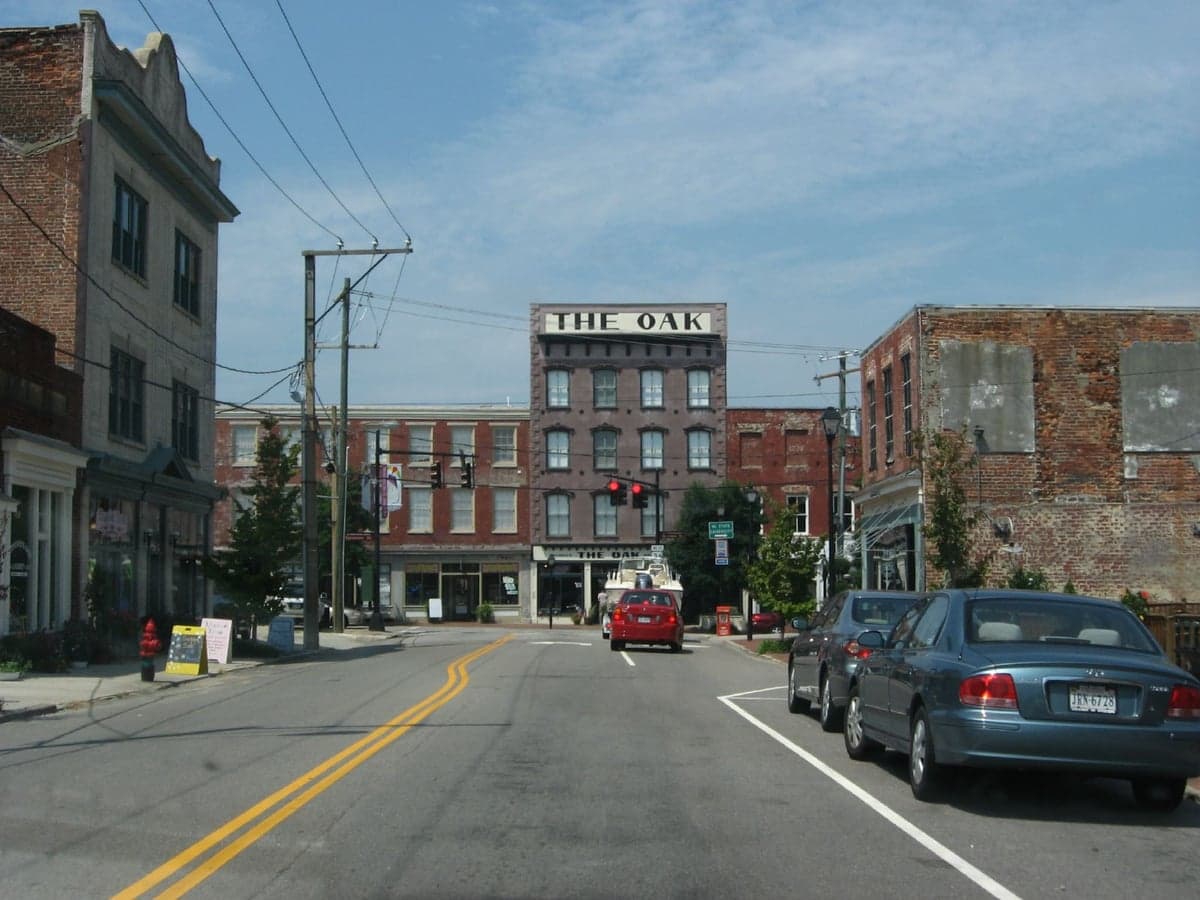

Photo: Wikipedia
Political ClimatePolitical Climate in Petersburg, VA
District shown is the primary district for this city’s centroid. Cities may span multiple districts.
Inherited from parent state — no local data available.
Local Political AnalysisPolitical Analysis of Petersburg, VA
Petersburg, Virginia, is a deeply Democratic stronghold, with a Cook Political Report Partisan Voting Index of D+17, making it one of the most reliably blue cities in the state. This wasn't always the case—back in the 80s and 90s, you'd find a lot more moderates and even some conservative Democrats running things, folks who cared more about potholes than pronouns. But over the last two decades, the shift has been dramatic and steady. The city council and school board are now almost entirely progressive, and the voting patterns reflect a population that consistently backs statewide Democratic candidates by wide margins. If you're looking at the political trajectory, it's not just staying blue—it's moving further left with each election cycle, especially among younger voters and newcomers from Northern Virginia and Richmond.
How it compares
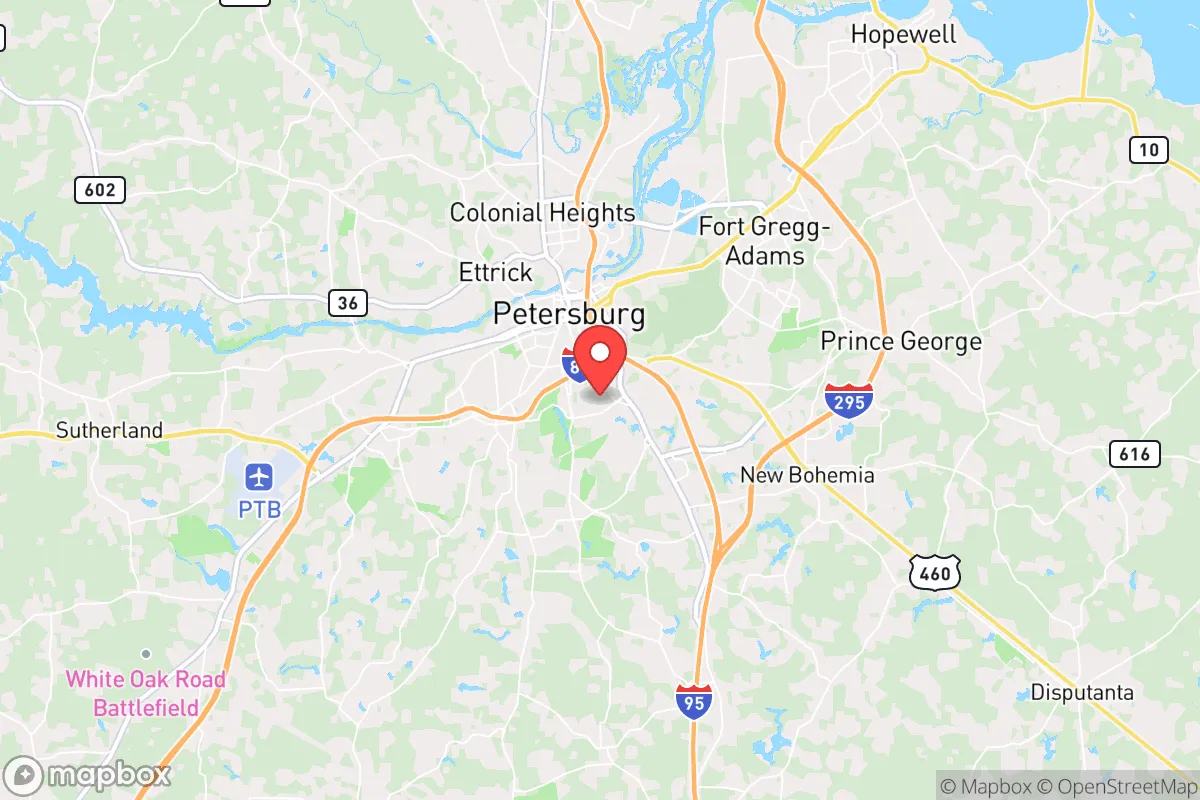
To really understand Petersburg's politics, you have to look at the surrounding area. Hop over to Colonial Heights or Chesterfield County just across the river, and you're in a completely different world—those places vote Republican by 15 to 20 points in most races. Dinwiddie County to the south is more purple but still leans right, especially in local elections. Petersburg is an island of deep blue in a sea of red and light-red suburbs. That contrast creates real tension, especially when regional issues like transportation, school funding, or public safety come up. The city's delegation in the General Assembly is all Democrats, while the surrounding districts send Republicans to Richmond. So when you hear about fights over things like police budgets or zoning laws, it's often Petersburg's progressive leadership pushing one way and the surrounding counties pushing back.
What this means for residents
For folks living here, the political climate has real, everyday consequences. The city government has embraced progressive policies on policing, including creating a civilian review board and shifting funds toward social services. Some residents see that as a necessary reform; others worry it's a step toward defunding the police, which feels dangerous given the city's crime rates. Taxes are another sore spot—Petersburg's property tax rate is among the highest in the region, and the city has struggled to balance its budget without state bailouts. There's also been a push for more "equity" initiatives in schools and city hiring, which sounds good on paper but has led to some grumbling about government overreach into how businesses and families operate. If you value low taxes, limited government, and a "stay out of my business" approach, Petersburg's current direction is probably going to frustrate you.
On the cultural side, Petersburg has a rich history—it was a key Civil War site and has some beautiful old architecture. But the political culture now leans heavily into progressive activism, with regular protests and city council meetings that can get heated over issues like Confederate monument removal and affordable housing mandates. The long-term trend, based on who's moving in and who's leaving, suggests the city will only get more liberal. For conservatives or even moderate independents, it's becoming a tougher place to feel your voice is heard, and many have already voted with their feet by moving to Chester or Prince George. If you're considering relocating here, just know you're moving into a community where the local government is actively pushing a progressive agenda, and that's not likely to change anytime soon.

State Political ClimatePolitical Climate in Virginia
State Political AnalysisPolitical Environment in the State
Virginia has shifted from a reliably purple swing state to a solidly blue one over the past two decades, driven largely by explosive growth in the Washington D.C. suburbs. The state’s overall partisan lean now favors Democrats by about 5-7 points in statewide races, but this masks a deep and growing chasm between the urban crescent and the rest of the commonwealth. For a conservative considering relocation, the key takeaway is that Virginia is no longer the conservative-leaning commonwealth it was in the 2000s—it’s a state where progressive policies are enacted at the state level, even as many rural and exurban counties remain deeply red.
Urban vs. rural divide
The political map of Virginia is essentially a story of two Virginias. The urban crescent—Arlington, Alexandria, Fairfax County, and Richmond—drives the state’s blue lean. Fairfax County alone, with over 1.1 million residents, delivers a Democratic margin of roughly 200,000 votes, enough to offset the entire rest of the state’s rural Republican votes. The I-95 corridor from D.C. to Richmond is the engine of Democratic dominance. Meanwhile, the rural south and southwest—places like Roanoke, Lynchburg, and the Shenandoah Valley—remain reliably Republican. Loudoun County, once a GOP stronghold, flipped decisively blue after 2016 and now votes Democratic by double digits. The only real bright spots for conservatives are the exurban counties like Hanover, Chesterfield, and Spotsylvania, which still lean red but are being slowly diluted by D.C. commuters. The divide isn’t just urban vs. rural—it’s also about growth: the fastest-growing counties are all trending blue, while shrinking rural counties are getting redder but losing population.
Policy environment
Virginia’s policy environment has moved sharply left since Democrats took full control of the governorship and legislature in 2019. The state’s tax burden is moderate—income tax rates range from 2% to 5.75%—but property taxes are locally set and can be high in the D.C. suburbs. The regulatory posture is increasingly burdensome: Virginia adopted California-style emissions standards under the Clean Cars Act, and the state has aggressively pushed renewable energy mandates. On education, Virginia has seen a major battle over parental rights. In 2020, the state eliminated its history-based Standards of Learning and adopted a progressive “equity” framework. The 2023 election saw Governor Glenn Youngkin win on a parental rights platform, but the legislature remains split, meaning no major rollback of progressive education policies has occurred. Healthcare policy is dominated by Medicaid expansion, which passed in 2018 and now covers over 500,000 Virginians. Election laws are relatively neutral—no-excuse absentee voting and same-day registration exist, but voter ID is still required. The state’s gun laws have tightened significantly: universal background checks, a “one handgun a month” limit, and a red flag law were all passed in 2020. For a conservative, the policy environment is a mixed bag—taxes are not California-level, but the direction is clearly toward more regulation and government involvement in daily life.
Trajectory & freedom
Virginia is becoming less free, particularly on the dimensions of gun rights, medical autonomy, and education. The 2020 gun control package was the most aggressive in state history, and attempts to repeal it have failed. On medical freedom, Virginia was one of the first states to impose strict COVID-19 vaccine mandates for state employees and healthcare workers, and those mandates remain in place. The state also passed a law in 2021 that allows minors to receive certain medical treatments without parental consent, which has alarmed many conservative parents. On property rights, Virginia has seen increasing use of eminent domain for renewable energy projects, particularly in rural areas where solar farms are being forced through. The state’s “Clean Economy Act” mandates a 100% carbon-free grid by 2050, which is driving up electricity costs and land-use conflicts. On the positive side, the 2023 election saw a strong pushback against progressive school policies, with Youngkin winning on a platform of parental rights and ending “critical race theory” in schools. However, the legislature remains divided, so no major rollback has occurred. The trajectory is clear: Virginia is moving left on most freedom metrics, with the only brake being a closely divided legislature.
Civil unrest & political movements
Virginia has been a flashpoint for political conflict. The 2017 “Unite the Right” rally in Charlottesville and the subsequent violence left a lasting scar, and the city remains a symbol of racial and political tension. Since then, the state has seen frequent protests over Confederate monuments, with Richmond’s Monument Avenue being the epicenter of a massive removal movement in 2020. The state’s sanctuary city debate is active: several localities, including Arlington and Fairfax County, have declared themselves “welcoming” to undocumented immigrants, while the state legislature has blocked efforts to mandate cooperation with ICE. Election integrity has been a hot topic: Virginia’s 2020 election was conducted largely by mail due to COVID, and while no widespread fraud was found, the process was chaotic and led to ongoing distrust among conservatives. The state’s political movements are highly organized on both sides: the Democratic Party of Virginia is well-funded and professional, while conservative grassroots groups like the Virginia Citizens Defense League and the Family Foundation are active but often outspent. The most visible flashpoint for a new resident would be the constant political advertising—Virginia is a perennial swing state for the legislature, and the D.C. suburbs are saturated with political messaging.
Projection
Over the next 5-10 years, Virginia will likely continue its slow drift leftward, driven by demographic trends. The D.C. suburbs are growing faster than the rest of the state, and the in-migration is overwhelmingly from blue states and blue-leaning professionals. The rural areas will continue to lose population and political influence. The only wild card is whether the exurban counties—places like Stafford, Prince William, and Loudoun—can hold the line or flip back red. Given current trends, it’s more likely they continue trending blue. The state’s tax burden will likely increase as the government expands services, and gun laws will probably tighten further if Democrats ever win a trifecta again. The best-case scenario for conservatives is a continued split government that blocks the worst progressive legislation, but the long-term trajectory is toward a more California-like policy environment. Someone moving in now should expect to see higher taxes, more regulation, and a political culture that is increasingly hostile to traditional conservative values, especially in the urban areas.
For a conservative considering Virginia, the bottom line is this: if you can live in a red exurban county like Hanover, Spotsylvania, or the Shenandoah Valley, you can still find a community that shares your values. But you will be fighting an uphill battle at the state level, where the D.C. suburbs dominate. The state is not yet a lost cause—it’s still possible to elect a governor like Youngkin—but the demographic tide is against conservatives. If you value low taxes, gun rights, and local control, Virginia is a state where you’ll need to be politically active just to hold the line. If you’re looking for a state that is trending in a conservative direction, Virginia is not that state—look to Tennessee or Florida instead. But if you have to be in the D.C. area for work, Virginia is still better than Maryland or the District itself.
* Values derived from national, state, county, city and local statistics and may differ in a specific area. Last updated: 2026-05-01T07:45:45.000Z
Narrative content on this page is AI-generated and may contain mistakes. Verify any details that matter before acting on them.
ReloMaps may earn a commission from affiliate links at no extra cost to you.

