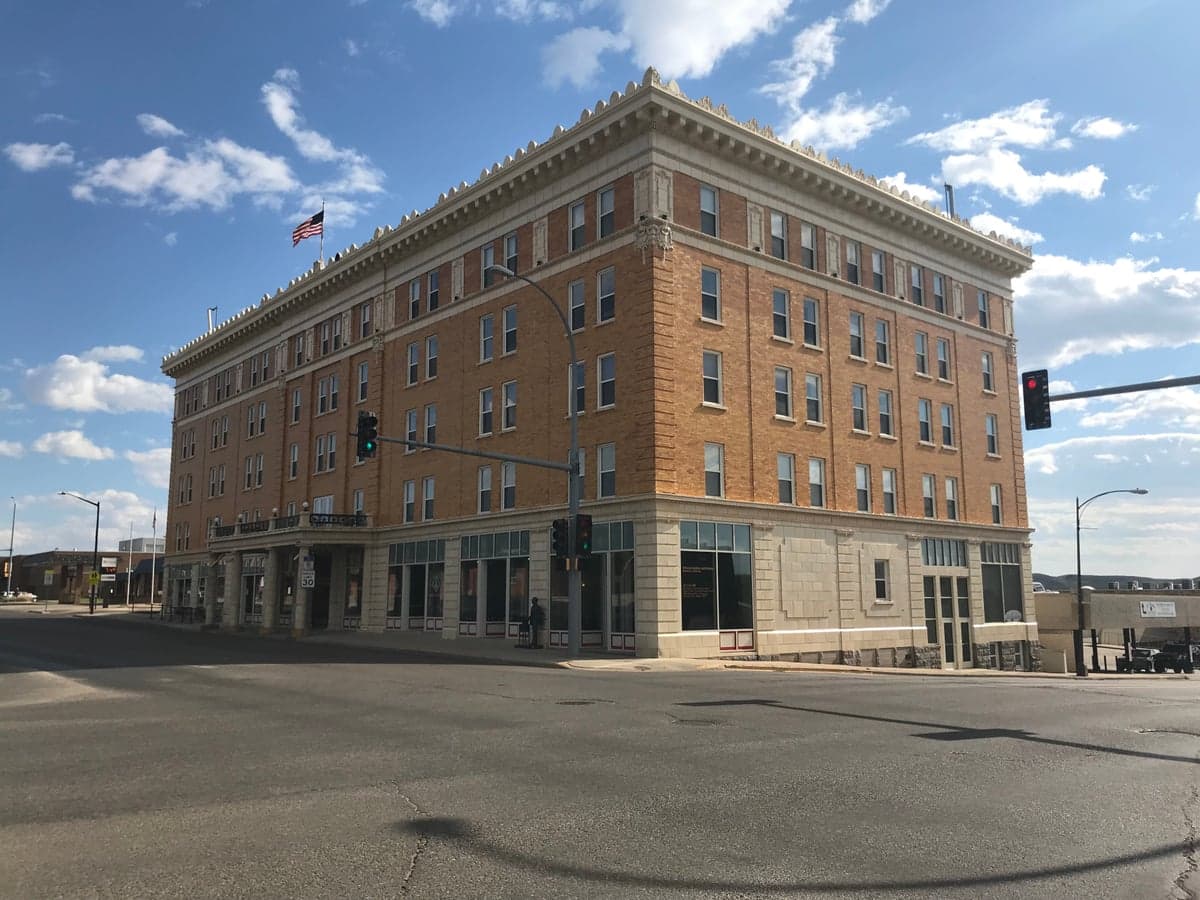
Photo: Wikipedia
Personal Sovereignty in Pierre, SD
Viable for self-reliance. Generally workable, though some barriers may limit total independence.
What does Personal Sovereignty tell us?
Personal Sovereignty measures your capacity for self-reliance and independence with minimal government friction. Higher scores mean fewer barriers between you and the way you want to live... but it assumes you have the space you need and good neighbors.
What does this tell us?
Personal Sovereignty measures your capacity for self-reliance and independence with minimal government friction. Higher scores mean fewer barriers between you and the way you want to live... but it assumes you have the space you need and good neighbors.
State Policy
Energy independence: Importer (35% of energy produced in-state)
Personal Liberty
Homesteading

Personal Liberty Analysis
Pierre, South Dakota offers one of the strongest personal sovereignty environments in the Upper Midwest, largely because state-level protections consistently outpace local ordinances in this small capital city. For a survivalist or prepper weighing relocation, the key takeaway is that Pierre’s low population density (roughly 14,000 residents) and South Dakota’s constitutional carry laws create a legal buffer against the kind of municipal overreach seen in larger cities. The state’s political culture—solidly Republican, with a legislature that has repeatedly passed preemption laws—means Pierre residents enjoy a degree of autonomy that is increasingly rare in the country. This analysis breaks down the specific pillars of that sovereignty, from tax burden to off-grid feasibility, so you can assess whether this capital city aligns with your strategic relocation goals.
Tax burden and regulatory posture: how Pierre compares to surrounding states
South Dakota’s absence of a state income tax is the single most impactful factor for personal sovereignty in Pierre. The state constitution prohibits both personal and corporate income taxes, meaning every dollar you earn stays in your pocket—no state-level confiscation for social programs you may not support. Property taxes in Hughes County, where Pierre sits, average around 1.1% of assessed value, which is moderate for the region but notably lower than neighboring Minnesota or Iowa. Sales tax in Pierre is 6.5% (4.5% state plus 2% city), but groceries and prescription drugs are exempt, reducing the regressive bite on daily essentials. From a regulatory standpoint, South Dakota has a strong track record of preempting local ordinances that exceed state law—meaning Pierre cannot enact its own rent control, plastic bag bans, or zoning rules that would restrict firearm ownership. This preemption culture is critical for anyone who views local government overreach as a creeping threat to personal liberty. The state also has no estate tax, no inheritance tax, and no tax on Social Security benefits, which matters if you’re planning multi-generational self-sufficiency. Compared to states like California or New York, Pierre’s tax environment is a fortress; even compared to neighboring Nebraska, you’re looking at a significantly lighter burden.
Self-defense and gun law specifics: constitutional carry and property protection
South Dakota is a constitutional carry state, and Pierre fully aligns with that framework. No permit is required to carry a concealed firearm for anyone legally allowed to possess a gun, and the state recognizes permits from all other states. This means you can move to Pierre with your existing firearms and immediately carry without bureaucratic delays or fees. The state also has Stand Your Ground laws with no duty to retreat in any place you have a legal right to be—your home, vehicle, or even public spaces. Castle Doctrine applies to both residences and occupied vehicles, so if someone forcibly enters your home or car, the law presumes you acted in reasonable self-defense. For preppers, the practical implication is that Pierre’s legal environment does not penalize defensive firearm use. The city itself has a low violent crime rate (roughly 2.5 incidents per 1,000 residents, well below national averages), but the legal framework is designed for worst-case scenarios. Magazine capacity is not restricted, and there is no state-level assault weapons ban. The only notable limitation is that open carry is legal but can be restricted by private property owners—something to keep in mind if you plan to frequent businesses that post signage. Overall, Pierre’s gun laws are among the most permissive in the nation, and the state legislature has consistently rejected attempts to add red flag laws or waiting periods.
Self-reliance and homesteading viability: lot sizes, zoning, and off-grid feasibility
Pierre’s zoning code is relatively permissive compared to suburban or urban jurisdictions, but it’s not a free-for-all. Within city limits, standard residential lots range from 6,000 to 10,000 square feet, which is enough for a substantial garden, small livestock like chickens, and rainwater collection—but not for larger animals or full-scale farming. The city does allow accessory dwelling units (ADUs) and detached workshops, which is useful for setting up a home-based workshop or storage for prepping supplies. However, if you want true off-grid living—solar panels, well water, septic, and no utility hookups—you’ll need to look outside city limits in unincorporated Hughes County. There, zoning is minimal: no building permits for agricultural structures under 200 square feet, and no restrictions on alternative energy systems. The county allows 5-acre minimum lot sizes for rural residential parcels, which is achievable for a modest homestead. Water access is a serious consideration: Pierre sits on the Missouri River, so surface water is abundant, but drilling a well can cost $10,000–$15,000 depending on depth. Septic systems are standard and permitted by the county health department, with no unusual restrictions. The climate is semi-arid (about 20 inches of precipitation annually), so dryland farming is marginal—irrigation from the river or a well is advisable for serious food production. For a prepper, the sweet spot is buying 5–10 acres in Hughes County within 15 minutes of Pierre, giving you city access for supplies while maintaining full control over your property’s systems.
Personal liberties: parental rights, medical autonomy, speech, and property
South Dakota has become a battleground for parental rights in education, and Pierre reflects that state-level dynamic. The state passed the Parents’ Bill of Rights in 2022, which requires school districts to notify parents of any medical or mental health services offered to their children and to obtain parental consent before administering surveys on sensitive topics. Pierre’s school board has generally aligned with this framework, meaning parents have more transparency than in many states. Medical autonomy is a mixed bag: South Dakota has no vaccine mandate for adults, and the state legislature banned vaccine passports in 2021. However, the state’s strict abortion laws (a near-total ban with limited exceptions) are a double-edged sword for those who value medical freedom—they signal a government willing to intervene in healthcare decisions, which some preppers view as a precedent for future overreach. On speech and property, Pierre benefits from South Dakota’s lack of hate speech laws or broad defamation statutes that chill political expression. The state has strong property rights protections, including a right-to-farm law that shields agricultural operations from nuisance lawsuits—relevant if you plan to keep livestock. Eminent domain is limited to public projects, and the state has no rent control or price gouging laws that would interfere with private transactions. For a conservative-leaning individual, Pierre’s legal environment prioritizes individual decision-making over collective mandates, though the medical autonomy landscape requires careful attention to specific policies.
Overall, Pierre offers a sovereignty profile that ranks among the top tier of small American cities for those prioritizing personal liberty. The combination of no income tax, constitutional carry, permissive rural zoning, and strong parental rights creates a legal ecosystem where government overreach is minimized. The trade-offs are real: harsh winters, limited healthcare specialists, and a remote location that requires self-sufficiency in logistics. But for a survivalist or prepper who values autonomy over convenience, Pierre’s alignment of state and local law provides a rare sanctuary. Compared to cities in the Pacific Northwest or Northeast, where municipal ordinances often erode state-level protections, Pierre’s consistency is its strongest asset. If you’re looking for a place where the legal framework supports rather than hinders your self-reliance goals, this capital city deserves serious consideration.

* Values derived from national, state, county, city and local statistics and may differ in a specific area. Last updated: 2026-04-21T10:56:14.000Z
Narrative content on this page is AI-generated and may contain mistakes. Verify any details that matter before acting on them.
ReloMaps may earn a commission from affiliate links at no extra cost to you.

