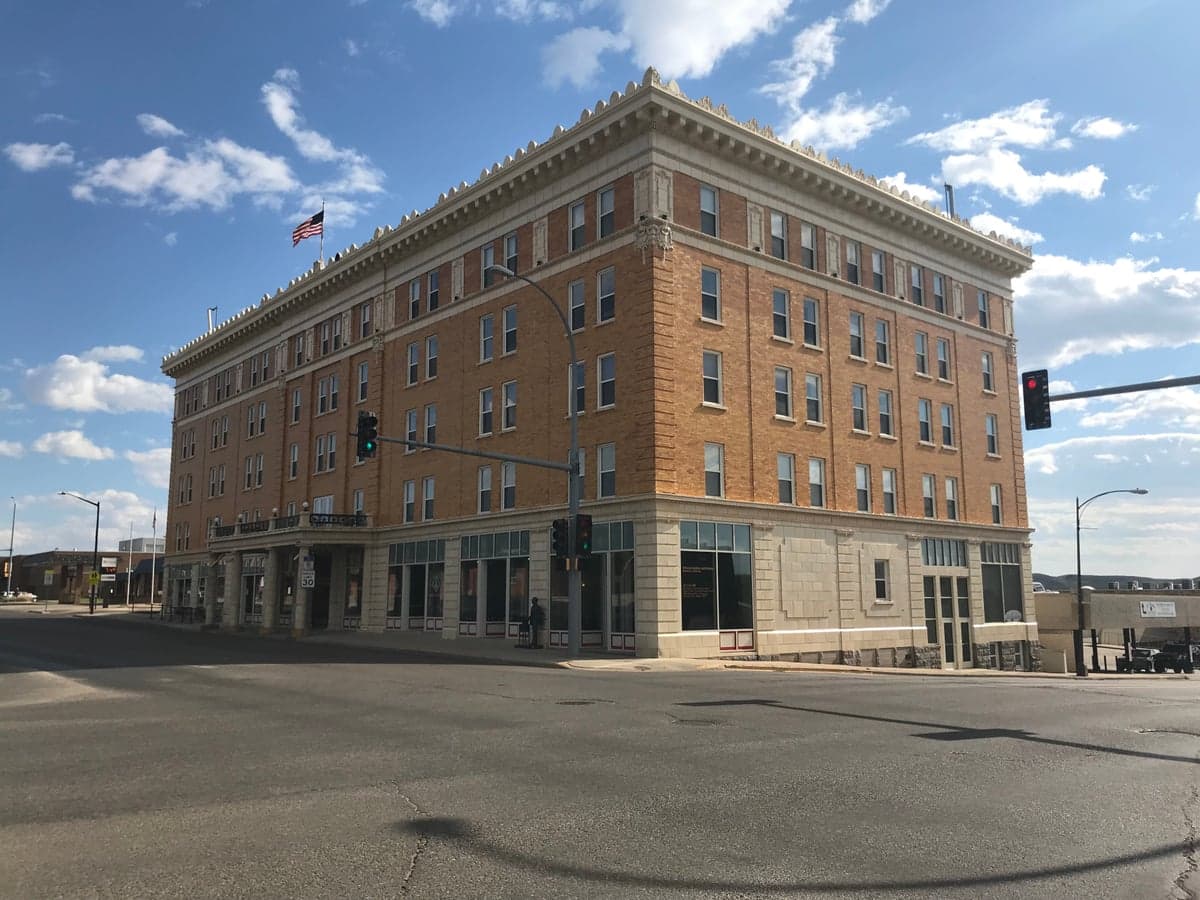
Photo: Wikipedia
Quality of Life in Pierre, SD
A high quality of life with strong walkability, manageable living costs, healthy neighborhood signals, and solid amenity access.
What does Quality of Life tell us?
Quality of Life blends cost of living, nearby amenities, socioeconomic signals, and neighborhood character. City-level scores represent the whole municipality; individual neighborhoods can differ.
What does this tell us?
Quality of Life blends cost of living, nearby amenities, socioeconomic signals, and neighborhood character. City-level scores represent the whole municipality; individual neighborhoods can differ.
Cost of Living
21% below national average
The Real Cost of Living in Pierre, SD for 2026
| Tier | Individual | Family (4) |
|---|---|---|
| Survival | $15k | $28k |
| Comfortable | $43k | $63k |
| Luxury | $109k+ | $170k+ |
| Elite (Top 5%) | $129k+ | $200k+ |
118%
The Area Signal
A metric tracking the socioeconomic signals of the area.
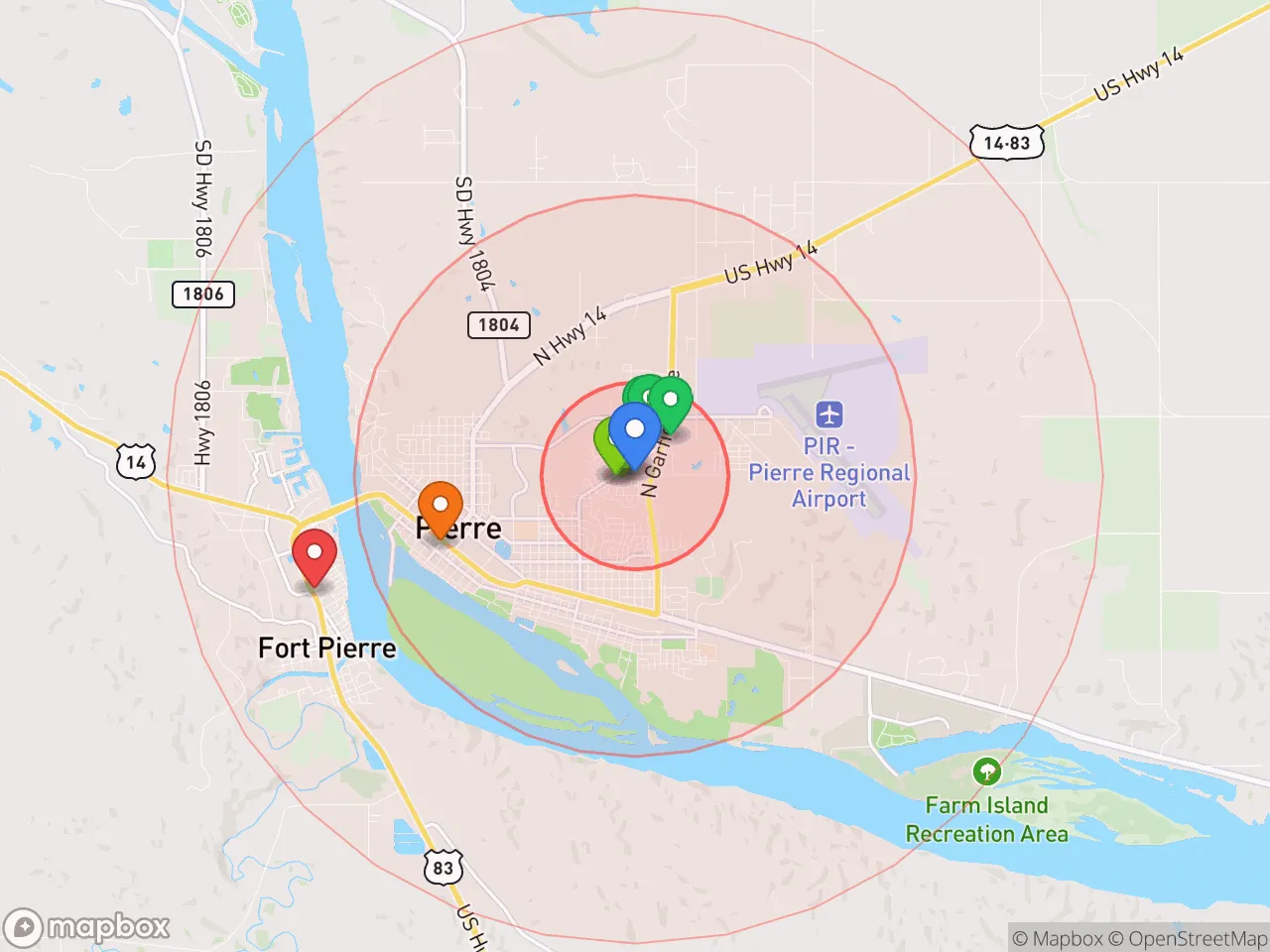
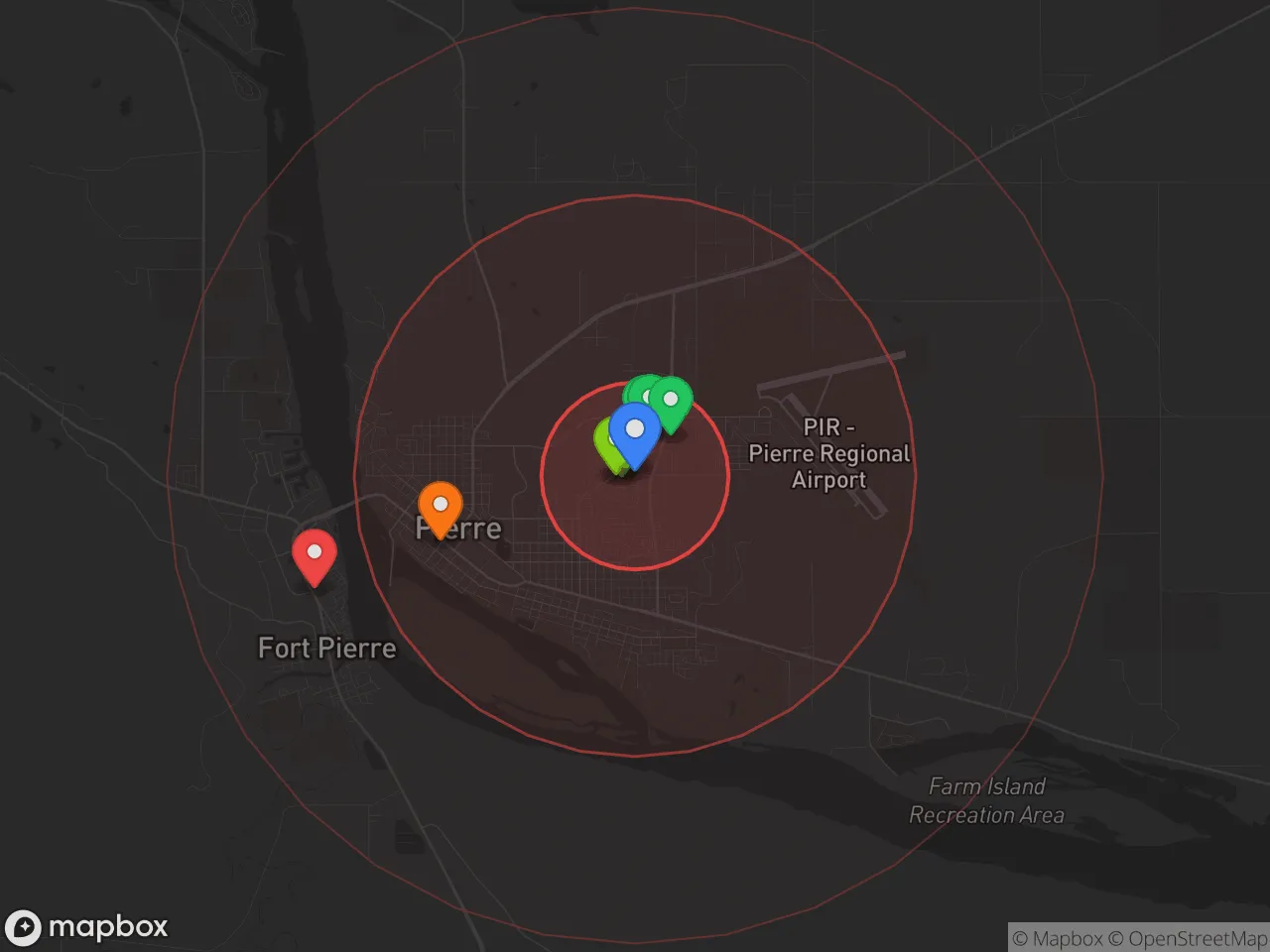
Hobbies
Explore the areaGroceries
1 within 10 miles
Gas
3 within 10 miles
Hospital
1 within 20 miles
Airport
DEN — Denver International
Post Office
USPS — Pierre, SD
Critical Amenities
Quality-of-Life Analysis
Pierre, South Dakota, presents a quality of life defined by modest affluence, a strong sense of community, and a notably low cost of living that attracts a mix of state government employees, healthcare professionals, and outdoor enthusiasts. With a cost of living index of 79—21% below the national average—the capital city offers financial breathing room that is increasingly rare in the United States. The population skews slightly older and more educated than the state average, driven by stable state government employment and a regional medical hub, creating a quiet, family-oriented atmosphere rather than a transient or boomtown feel.
How housing costs and everyday expenses compare to nearby areas
Housing in Pierre is the primary driver of its affordability, with a median home value of $219,500 and a median rent of $936—both well below national benchmarks. For context, the median home value in nearby Rapid City (roughly 100 miles west) is approximately $320,000, while in Sioux Falls it exceeds $290,000, making Pierre one of the most affordable housing markets in the state for a capital city. The average commute of just 17.6 minutes further reduces transportation costs, as most residents live within a short drive of downtown, the state capitol complex, or the major employers along Sioux Avenue. Utility costs are moderate, though winter heating bills can spike due to the harsh South Dakota climate. Property taxes remain low relative to the national average, and there is no state income tax, which amplifies the effective purchasing power of local wages.
What daily life is like for families, professionals, and retirees
Daily life in Pierre revolves around a compact downtown core, the Missouri River waterfront, and a handful of reliable local institutions. The Pierre School District serves roughly 3,500 students across four elementary schools, one middle school, and one high school, with graduation rates consistently above 90%. For families, the South Dakota Discovery Center and the Oahe Dam recreation area provide year-round educational and outdoor activities. Professionals working for the state government or at Avera St. Mary’s Hospital—the city’s largest private employer—benefit from stable, low-stress commutes and a predictable work-life balance. Retirees are drawn to the quiet neighborhoods, the 18-hole Hillsview Golf Course, and the extensive network of walking trails along the river. Dining and entertainment options are limited compared to larger metros, but local staples like the Cattleman’s Club steakhouse and the La Minestra Italian restaurant offer reliable choices. The cultural calendar is anchored by the annual Pierre Players community theater productions and the South Dakota State Fair in nearby Huron.
Pierre is best suited for individuals and families who prioritize financial stability, a slower pace, and direct access to outdoor recreation over urban amenities and nightlife. State government workers, healthcare professionals, and remote employees with stable incomes will find the low cost of living and short commutes particularly attractive. Retirees seeking a quiet, affordable community with good healthcare access will also thrive here. However, those seeking diverse dining, major cultural institutions, or a vibrant social scene may find Pierre too limited. For the right resident, the combination of affordable housing, a 17-minute average commute, and a tight-knit community creates a quality of life that is both sustainable and deeply rooted in the rhythms of the Great Plains.

Crime in Pierre, SD
Generally safer than 65% of comparable U.S. locations.
Violent CrimeViolent Crime Analysis
Property CrimeProperty Crime Analysis
Crime Analysis
Pierre, South Dakota, presents a complex safety profile where violent crime rates significantly exceed both state and national averages, while property crime rates are more moderate. The city's violent crime rate of 561.3 incidents per 100,000 residents is roughly 60% higher than the national average and more than double the South Dakota state average. Property crime, at 1,764 per 100,000, sits slightly below the national benchmark but above the state figure. These numbers place Pierre in a challenging position for a state capital of its size, requiring residents to be particularly vigilant about personal safety.
Crime in context
Compared to the rest of South Dakota, Pierre's violent crime rate is an outlier. The state's overall violent crime rate hovers around 350 per 100,000, meaning Pierre's figure of 561.3 is roughly 60% higher. This disparity is driven primarily by aggravated assault, which accounts for the majority of violent offenses in the city. Property crime, however, tells a different story: Pierre's rate of 1,764 per 100,000 is actually lower than the national average of approximately 1,950 per 100,000, though it remains above the South Dakota state average of roughly 1,500. The city's crime index is notably higher than other small South Dakota capitals like Rapid City, which also struggles with elevated violent crime, but lower than the most dangerous small cities nationally.
What residents experience
Daily life in Pierre involves a heightened awareness of potential violent confrontations, particularly in the downtown core and near the state capitol complex. Aggravated assault is the most common violent crime, often linked to disputes or alcohol-related incidents. Property crime, while less frequent than in many peer cities, still manifests as theft from vehicles and occasional burglaries. Residents report that neighborhood watch programs and community policing efforts are active but have not fully mitigated the underlying issues. The local justice system's approach—reflecting broader trends in some jurisdictions—can be a concern for those prioritizing public safety. Progressive prosecutorial policies that emphasize diversion and reduced sentencing for violent offenders may contribute to higher recidivism and a perception that the system prioritizes offender rehabilitation over victim protection and public deterrence. This ideological tilt can leave residents feeling that the justice system is not fully aligned with their safety interests.
Neighborhood-level variation in Pierre is notable. The southwest and northwest quadrants of the city, particularly areas near the Missouri River and newer subdivisions, generally report lower crime rates. In contrast, the central downtown corridor and neighborhoods immediately east of the capitol complex experience higher concentrations of both violent and property crime. The Fort Pierre area, just across the river, offers a statistically safer alternative with significantly lower crime rates, though it remains part of the same metropolitan area. For those considering relocation, consulting local crime mapping tools and speaking with current residents about specific blocks is advisable, as conditions can vary sharply within a few streets.
* Values derived from national, state, county, city and local statistics and may differ in a specific area. Last updated: 2026-04-21T10:56:14.000Z
Narrative content on this page is AI-generated and may contain mistakes. Verify any details that matter before acting on them.
ReloMaps may earn a commission from affiliate links at no extra cost to you.

