Quality of Life in Pinecrest, FL
A high quality of life with strong walkability, manageable living costs, healthy neighborhood signals, and solid amenity access.
What does Quality of Life tell us?
Quality of Life blends cost of living, nearby amenities, socioeconomic signals, and neighborhood character. City-level scores represent the whole municipality; individual neighborhoods can differ.
What does this tell us?
Quality of Life blends cost of living, nearby amenities, socioeconomic signals, and neighborhood character. City-level scores represent the whole municipality; individual neighborhoods can differ.
Cost of Living
166% above national average
The Real Cost of Living in Pinecrest, FL for 2026
| Tier | Individual | Family (4) |
|---|---|---|
| Survival | $39k | $74k |
| Comfortable | $229k | $337k |
| Luxury | $348k+ | $539k+ |
| Elite (Top 5%) | $598k+ | $926k+ |
57%
The Area Signal
A metric tracking the socioeconomic signals of the area.
Hobbies
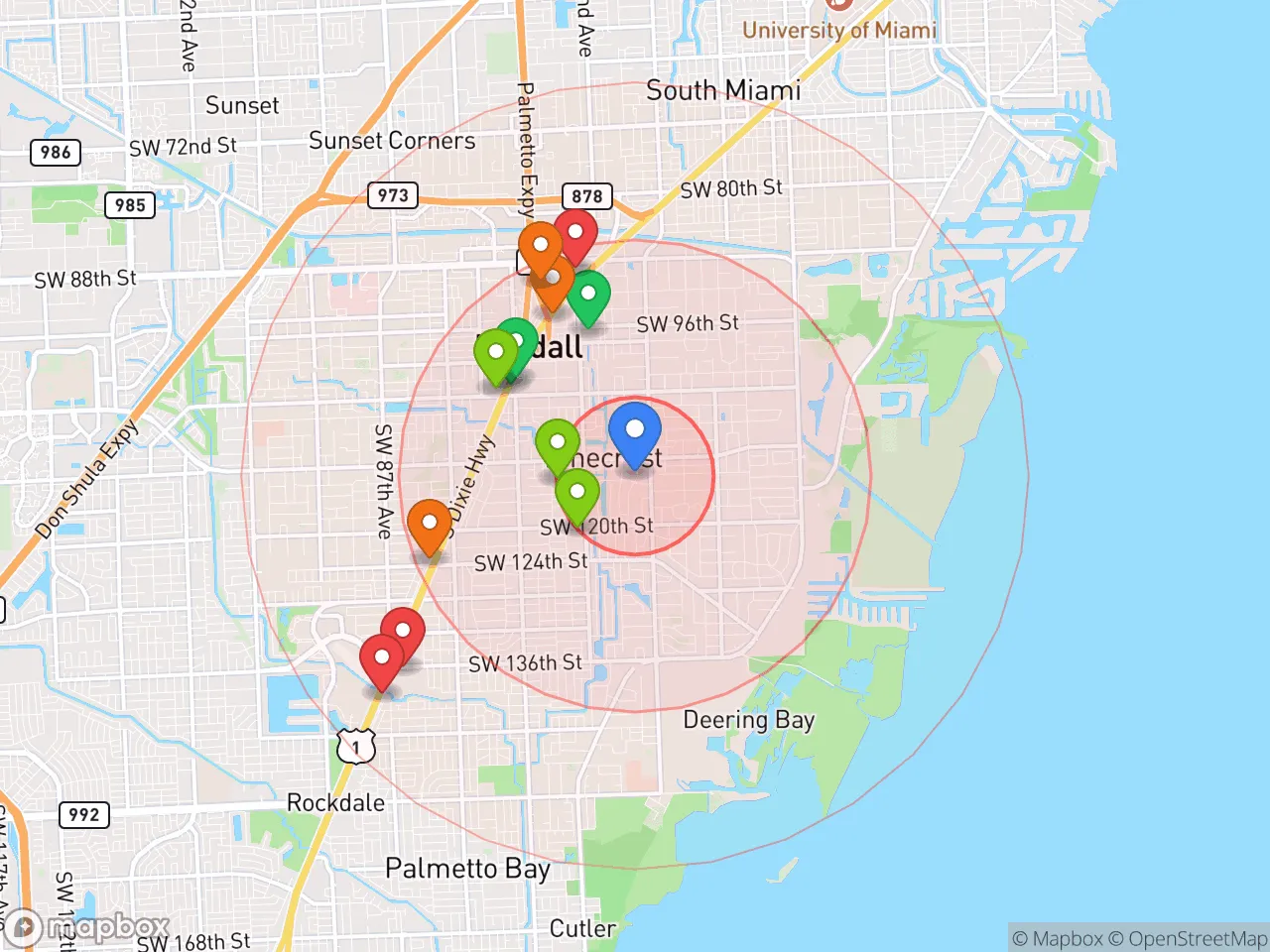
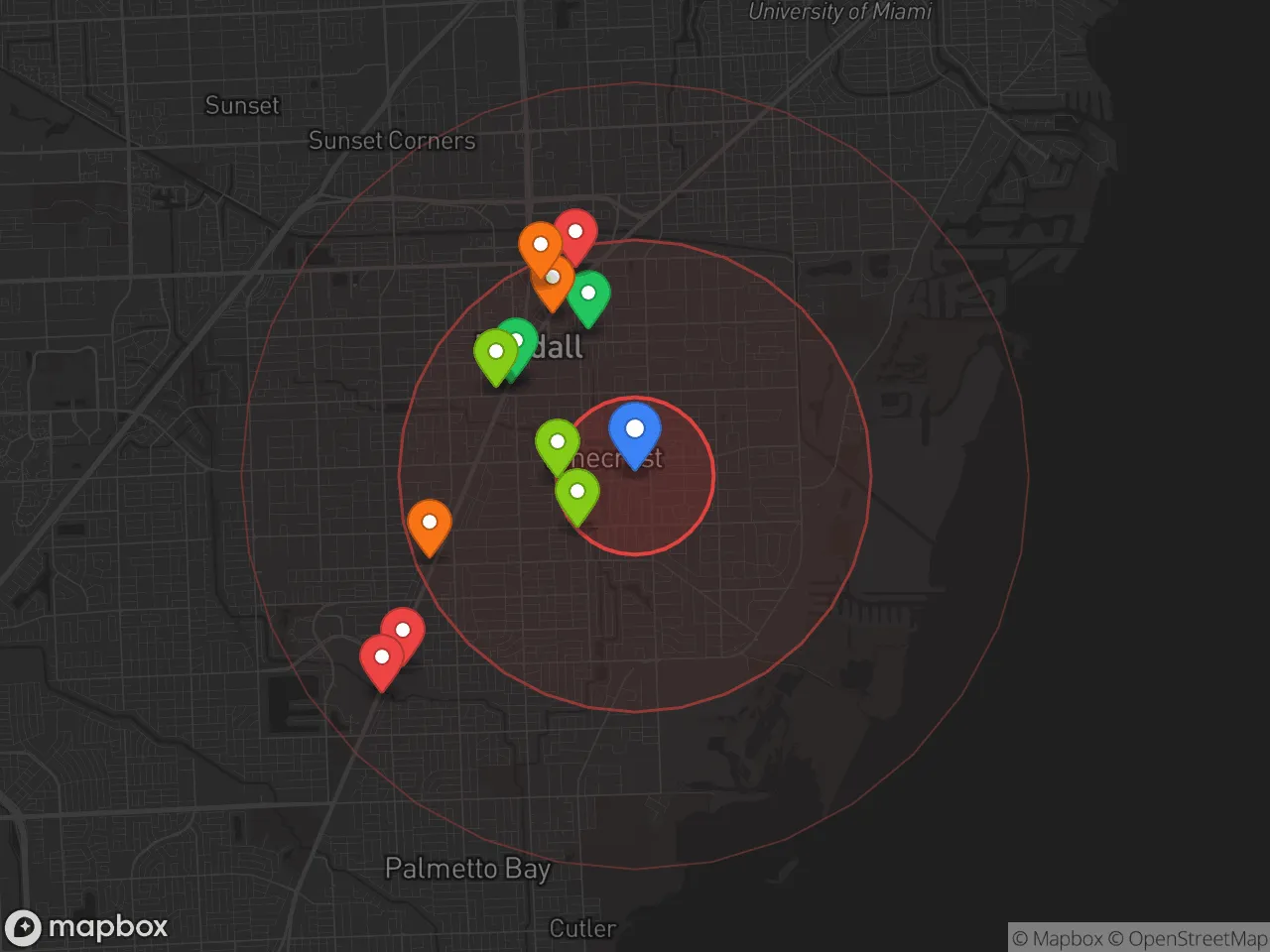
Explore the areaGroceries
6 within 10 miles
Gas
20 within 10 miles
Hospital
20 within 20 miles
Airport
MIA — Miami International
Post Office
USPS — Pinecrest, FL
Critical Amenities
Quality-of-Life Analysis
Pinecrest, Florida, is an affluent, family-oriented village in Miami-Dade County known for its sprawling estates, top-tier public schools, and meticulously landscaped neighborhoods. With a cost of living index of 266 (more than 2.5 times the U.S. average), the area attracts established professionals, executives, and families who prioritize space, safety, and educational excellence over urban proximity or nightlife. The village’s population of roughly 20,000 is predominantly white-collar, with a high concentration of homeowners and a median household income well above the national figure, creating a distinctly upscale suburban enclave within the greater Miami metro.
Cost of living, housing prices, and affordability compared to nearby Coral Gables and Palmetto Bay
Pinecrest’s cost of living is driven almost entirely by its housing market. The median home value sits at $1,179,400, placing it among the most expensive suburbs in Miami-Dade County. This is roughly 30-40% higher than neighboring Palmetto Bay (median ~$850,000) and comparable to the priciest sections of Coral Gables. Rental options are limited and relatively modest in comparison: the median rent of $1,916 is actually below the Miami metro average, reflecting the fact that fewer than 15% of Pinecrest households rent. For buyers, the premium buys large lots (typically half-acre to one acre), older custom-built homes, and a low-density zoning code that prohibits apartments and most commercial development. Property taxes are high—Miami-Dade’s millage rate combined with the village’s own levy means annual tax bills often exceed $15,000 on a median-priced home. Compared to nearby areas, Pinecrest offers less walkability and fewer rental options but significantly more land and privacy per dollar than Coral Gables or South Miami.
What daily life is like for families: schools, parks, and commute realities
Daily life in Pinecrest revolves around its public schools, which are consistently rated among the best in Florida. Pinecrest Elementary, Palmetto Middle, and Miami Palmetto Senior High all earn A grades from the state and draw families specifically for their academic programs and extracurricular offerings. The village itself maintains over a dozen parks, including the 24-acre Pinecrest Gardens (a former botanical garden with a lagoon and amphitheater) and the Pinecrest Community Center, which hosts youth sports leagues, summer camps, and senior programs. The average commute time of 27 minutes is manageable for Miami-Dade, though it can stretch to 40-50 minutes during peak hours for those working in downtown Miami or the Brickell financial district. Most residents drive, as public transit options are sparse; the nearest Metrorail station is in South Miami, about 10 minutes away. Retail and dining are concentrated along U.S. 1 (South Dixie Highway), with The Falls shopping mall and a handful of upscale strip centers providing groceries, boutiques, and casual restaurants. Nightlife is virtually nonexistent—the village enforces strict noise ordinances and has no bars or late-night venues—which reinforces its reputation as a quiet, family-first community.
Pinecrest is best suited for families with school-aged children who value top-ranked public education, large private yards, and a low-crime, suburban atmosphere. Empty nesters and remote workers with high disposable income also thrive here, drawn by the space and relative tranquility compared to coastal Miami neighborhoods. Professionals who need a short commute to downtown or the airport may find the 27-minute average acceptable, but those seeking walkable urban amenities, rental affordability, or a diverse housing stock should look to Coral Gables or Coconut Grove instead. For buyers who can afford the entry price and prioritize schools and space, Pinecrest remains one of Miami-Dade’s most stable and desirable quality-of-life investments.

Crime in Pinecrest, FL
Generally safer than 73% of comparable U.S. locations.
Violent CrimeViolent Crime Analysis
Property CrimeProperty Crime Analysis
Crime Analysis
Pinecrest, Florida, is one of the safest municipalities in Miami-Dade County, with violent crime rates significantly below both state and national averages. The village reported a violent crime rate of 166.8 incidents per 100,000 residents and a property crime rate of 735.6 per 100,000, figures that place it among the most secure communities in the region. However, as a small, affluent suburb within a large metro area, residents should remain aware that the broader county's progressive justice policies can influence local safety dynamics.
Crime in context
Pinecrest's violent crime rate is roughly 70% lower than the national average and about 60% lower than the Florida state average. Property crime in Pinecrest also runs well below national benchmarks, though it is slightly higher than some neighboring enclaves like Coral Gables. The village benefits from its own dedicated police department, which maintains a strong community policing presence and rapid response times. For context, Miami-Dade County as a whole recorded a violent crime rate of approximately 520 per 100,000 in 2024, meaning Pinecrest is roughly three times safer than the county average.
What residents experience
Daily life in Pinecrest is characterized by a low likelihood of encountering violent crime. The most common incidents are property-related, including vehicle break-ins and package thefts, particularly near commercial corridors like U.S. 1 and South Dixie Highway. Residents consistently report feeling safe walking their neighborhoods and using local parks, even after dark. However, the village's proximity to Miami means that regional crime trends—including organized retail theft rings and occasional carjackings—can spill over into the community. The Miami-Dade State Attorney's Office, which prosecutes crimes occurring in Pinecrest, has faced criticism for its progressive diversion programs and reduced sentencing for nonviolent offenders, a factor that some residents believe contributes to repeat property crime.
Neighborhood-level variation is modest but worth noting. The area east of U.S. 1, closer to Biscayne Bay, sees the lowest crime rates due to its dense canopy of mature trees, larger lots, and limited through traffic. The western edge of Pinecrest, bordering the Palmetto Expressway and more commercial zones, experiences slightly higher property crime rates. Gated communities and homes with active neighborhood watch programs report near-zero incidents, while streets with easier public access see occasional thefts from unlocked vehicles. Overall, Pinecrest remains a standout for safety in South Florida, but the influence of Miami-Dade's broader criminal justice philosophy means residents should maintain standard precautions, particularly around property security.
* Values derived from national, state, county, city and local statistics and may differ in a specific area. Last updated: 2026-04-27T14:35:20.000Z
Narrative content on this page is AI-generated and may contain mistakes. Verify any details that matter before acting on them.
ReloMaps may earn a commission from affiliate links at no extra cost to you.

