Strategic Assessment of Pinecrest, FL
Multiple tactical vulnerabilities. Population density, target proximity, or disaster risk are likely compounding. A retreat property and exit planning is required.
What does the Strategic Assessment tell us?
Our Strategic Assessment grades tactical survivability of an area. Major population centers, military targets, fallout zones, natural disasters, and border exposure all drive risk — lower exposure means a more defensible position in a crisis.
This is heavily inspired by Joel Skousen's Strategic Relocation book. Highly recommended you checkout the book ($)What does this tell us?
Our Strategic Assessment grades tactical survivability of an area. Major population centers, military targets, fallout zones, natural disasters, and border exposure all drive risk — lower exposure means a more defensible position in a crisis.
This is heavily inspired by Joel Skousen's Strategic Relocation book. Highly recommended you checkout the book ($)Strategic Pillars

Key Distances
Regional Safe Places
Below is our recommended "safe zones" in Florida and the surrounding area based on our strategic heuristics. For most people, it's unrealistic to live in a “safe zone” full-time due to work, family or other personal reasons. They tend to be more rural. However, many of these areas are perfect for second homes and retreat properties that double as a vacation home or even a short-term rental.

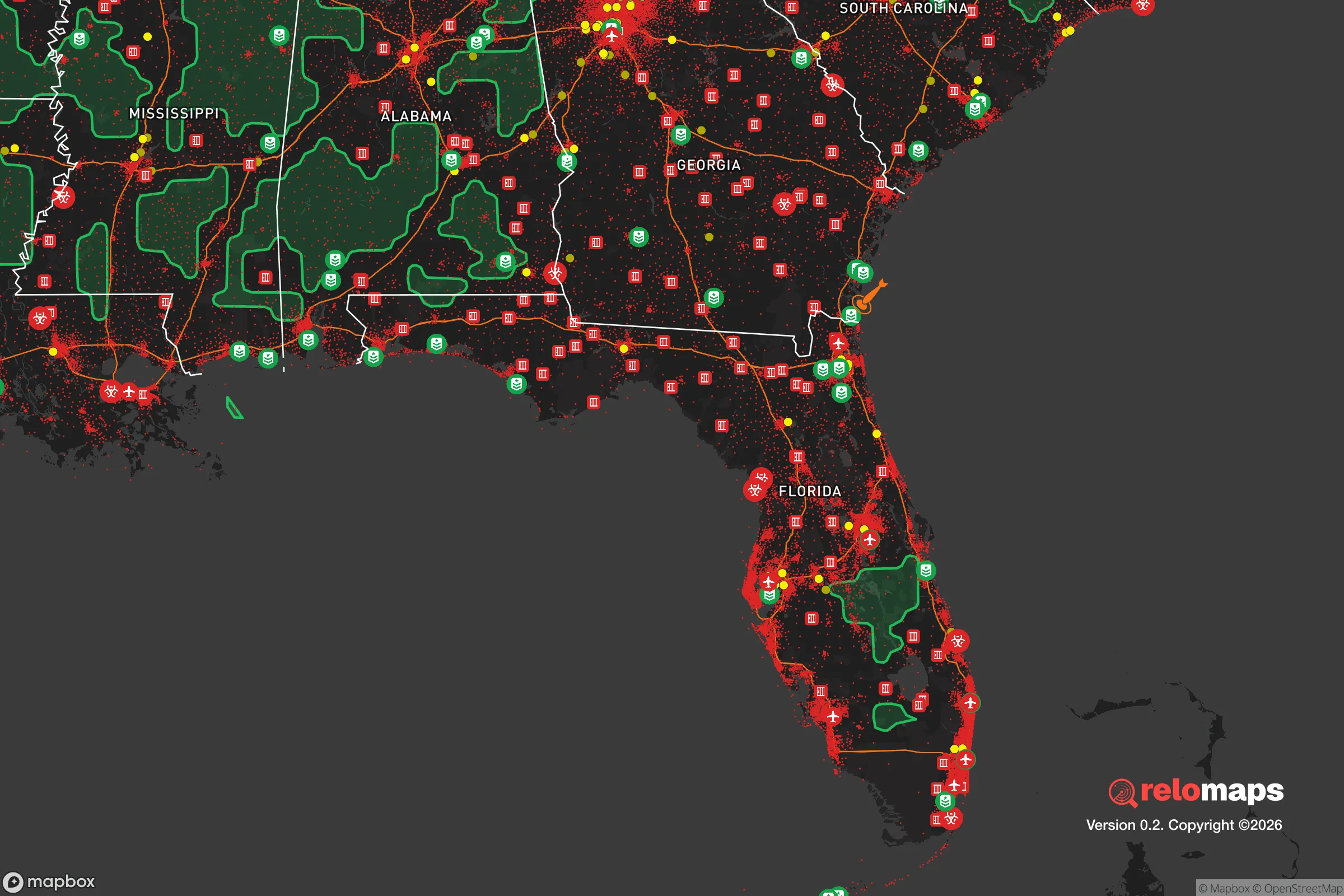


Important Note: For informational purposes only. This does not mean nothing bad ever happens in the green zones. Please use common sense. This is based on public data and modeled with AI. We tried to take a conservative approach but mistakes happen. We update this regularly as new information becomes available.
Solar Generator Recommendations
Backup power matters more here than in safer locations. We've picked three solar generators across budgets and capacity tiers — start with the budget unit if you only need a few essentials, or step up if you want to run a fridge and HVAC for days at a time.

Jackery Portable Power Station Explorer 300
Budget OptionPower on the Go: Weighing only 11 lbs, it's convenient to set up and store with book-sized foldable solar panels

BLUETTI Portable Power Station AC180
Designed for both indoor and outdoor scenarios, AC180 is highly capable as it has a robost capacity and continuous output power.

EF ECOFLOW DELTA Pro Ultra Power Station
Upgraded PickEcoFlow DELTA Pro Ultra is a whole-home energy system designed to grow with your family. Integrated with the Smart Home Panel 2, it scales to meet your evolving energy needs — keeping your home powered, intelligent, and secure through every stage of life.
We earn a commission, at no additional cost to you.
Strategic Assessment Analysis
Pinecrest, Florida, presents a complex strategic picture for the conservative prepper. While its affluence and manicured lawns suggest a sanctuary, its location within the Miami-Dade County sprawl introduces significant vulnerabilities that a survival-minded relocator must weigh carefully. The village’s genuine advantages—a robust local tax base, low crime relative to the region, and a strong sense of community—are counterbalanced by its proximity to a major metropolitan target zone, a single primary evacuation route, and exposure to both natural and man-made threats. For the single individual or family seeking a long-term hold, Pinecrest offers a defensible enclave only if its limitations are fully understood and actively mitigated.
Geographic position and natural advantages for a strategic hold
Pinecrest sits roughly 15 miles southwest of downtown Miami, placing it squarely within the suburban buffer of a major population center. This proximity is a double-edged sword. On one hand, the village benefits from one of the lowest crime rates in Miami-Dade, with violent crime roughly 60% below the county average, according to recent data. The local government is well-funded, with a property tax base that supports a dedicated police force and rapid emergency services response. The area’s natural elevation—averaging 10 to 15 feet above sea level—is a genuine advantage over coastal communities like Miami Beach or Key Biscayne, reducing storm surge risk during hurricanes. The canopy of mature oaks and tropical hardwoods provides natural cooling and some visual screening, which aids in maintaining a low profile. For the prepper, the village’s strict zoning and large lot sizes (most are half-acre or more) offer space for rainwater catchment, solar panel arrays, and concealed food production without drawing attention. The nearby Biscayne Bay and the Atlantic Ocean, while not potable, provide an emergency protein source via fishing if coastal access remains secure.
Risks, exposures, and proximity to fallout-relevant landmarks
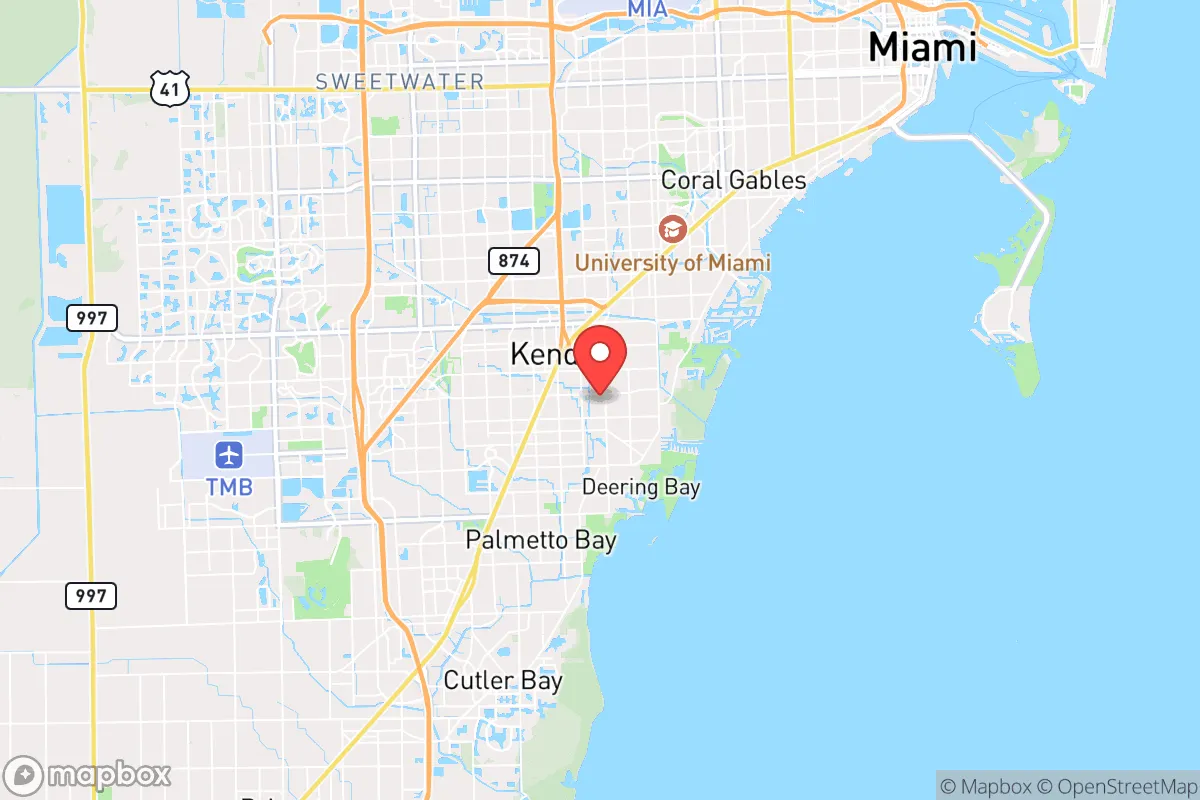
The most glaring strategic weakness is Pinecrest’s location within the Miami metropolitan area, a region with over 6 million people and multiple high-value targets. Miami International Airport (MIA) is 12 miles north, and the Port of Miami—a major hub for cargo and cruise ships—is roughly 15 miles northeast. Both are plausible targets for a coordinated attack or civil unrest scenario. The village is also within 20 miles of Homestead Air Reserve Base, a military installation that could become a focal point during a national emergency. In a grid-down or mass-casualty event, the population density of surrounding areas—including Kendall, Cutler Bay, and Palmetto Bay—would create severe competition for resources. The primary evacuation route, US-1 (South Dixie Highway), is a congested arterial that can become impassable during a hurricane evacuation or civil disturbance. There is no secondary highway-grade route out of Pinecrest; the only alternatives are local surface streets that feed back into the same choke points. For the prepper, this means that bugging out is not a viable option—the strategy must be to shelter in place and defend the perimeter. Additionally, the area’s flat, low-lying terrain offers no natural defensive high ground, and the dense suburban layout limits fields of fire and observation.
Practical resilience for a relocator: food, water, energy, and defensibility
Pinecrest’s affluence translates into practical advantages for the prepared relocator. Most homes have private wells or can be retrofitted with one, given the shallow Biscayne Aquifer that lies 10 to 20 feet below the surface. This is a critical asset: in a prolonged grid-down scenario, well water with a hand pump or solar-powered pump provides a reliable supply independent of municipal systems. The subtropical climate allows for year-round food production, and many lots have room for raised beds, fruit trees (mango, avocado, citrus), and even small livestock like chickens or rabbits, which are permitted under village code. Solar energy is viable, with Florida averaging 237 sunny days per year, though hurricane hardening is essential—panels must be rated for 140+ mph winds. The village’s strong homeowners’ association (HOA) and local police presence act as a first line of defense against looting and opportunistic crime, which is a genuine advantage over less-regulated areas. However, the HOA can also be a liability if it imposes restrictions on visible prepping activities (e.g., water barrels, antennas, or defensive landscaping). The key is to work within the rules: use underground cisterns, plant thorny hedges (bougainvillea, citrus) as natural barriers, and maintain a low profile. For the single individual or family, the defensibility of a Pinecrest property depends on its specific layout—corner lots with multiple access points are harder to secure, while interior lots with a single driveway and fenced perimeter offer better control.
The overall strategic picture for Pinecrest is one of calculated trade-offs. It is not a remote bug-out location; it is a suburban fortress that requires active investment in self-sufficiency and a clear-eyed acceptance of its vulnerabilities. The village’s wealth, low crime, and strong local governance provide a stable platform for long-term preparation, but its location within the Miami metro area means that any major event—whether a hurricane, a terrorist attack, or civil unrest—will bring external pressure. For the conservative prepper who values community, legal protections, and a high baseline quality of life, Pinecrest can work as a primary residence if the focus is on hardening the home, building local networks, and maintaining a low profile. For those seeking true isolation and minimal risk from population centers, the Florida interior or the Panhandle would be a better fit. Pinecrest is a place to ride out the storm, not to escape it—and that distinction is everything.

* Values derived from national, state, county, city and local statistics and may differ in a specific area. Last updated: 2026-04-27T14:35:20.000Z
Narrative content on this page is AI-generated and may contain mistakes. Verify any details that matter before acting on them.
ReloMaps may earn a commission from affiliate links at no extra cost to you.

