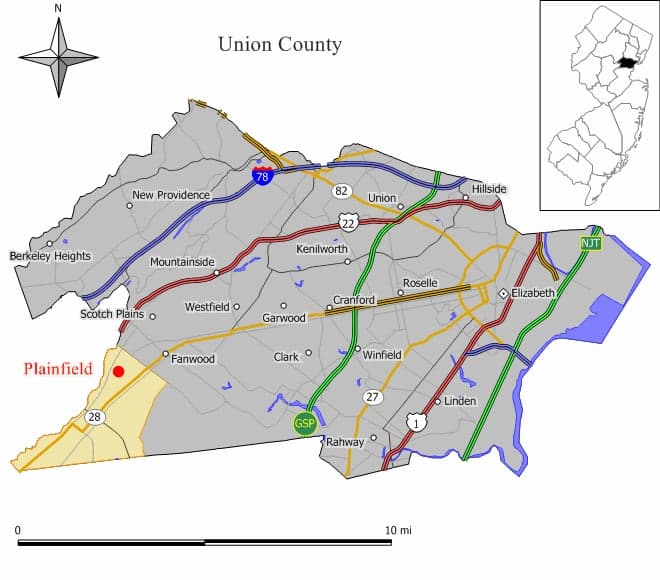
Photo: Wikipedia
Political ClimatePolitical Climate in Plainfield, NJ
District shown is the primary district for this city’s centroid. Cities may span multiple districts.
Local Political AnalysisPolitical Analysis of Plainfield, NJ
Plainfield, New Jersey, is a deep blue island in a state that’s already solidly Democratic, with a Cook PVI of D+13—meaning it votes about 13 points more Democratic than the national average. That’s not just a number; it’s a lived reality. If you’ve been around here since the 90s like I have, you’ve watched the town shift from a working-class, union-heavy Democratic stronghold into something more progressive, more activist-driven, and frankly, more top-down in its approach to governing. The old-school Democrats who kept things practical have largely been replaced by a newer wave that’s less concerned with local control and more aligned with state-level progressive agendas. It’s a change that’s felt in everything from property taxes to how the police operate.
How it compares
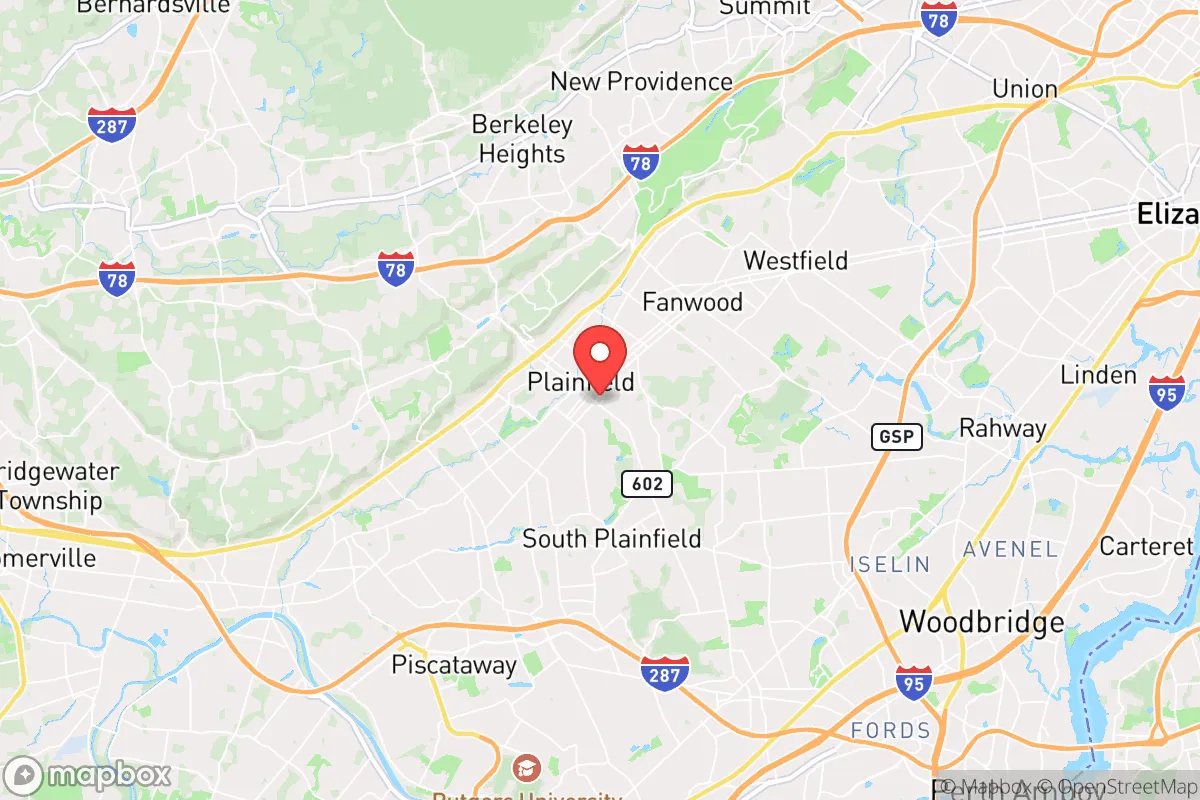
Drive ten minutes in any direction and you’ll hit towns that feel like a different country. To the north, Scotch Plains and Fanwood are reliably Republican-leaning in local races, with lower taxes and a much lighter regulatory touch. To the west, North Plainfield is a bit more purple but still more conservative than Plainfield proper. Even nearby Union County towns like Cranford and Westfield—both of which lean Republican—offer a stark contrast in how they handle zoning, school policy, and public safety. In Plainfield, the city council has pushed for things like sanctuary city policies and defunding police initiatives, while those surrounding towns have held the line on law-and-order approaches. It’s not just a political difference; it’s a cultural one. You can feel the tension when you cross the border into Plainfield—more signs, more regulations, more government presence in daily life.
What this means for residents
For the average person living here, the political climate translates directly into your wallet and your freedoms. Property taxes in Plainfield are among the highest in Union County, and they keep climbing because the city keeps adding programs and staff without cutting anything else. The school board has become a battleground for progressive curriculum changes, including critical race theory and gender ideology lessons that many parents—across the political spectrum—find intrusive. If you own a small business, you’ve probably dealt with new local mandates on paid leave, minimum wage hikes, and zoning restrictions that make it harder to operate. The city’s push for “equity” often means more bureaucracy, not better outcomes. And if you value Second Amendment rights, forget it—Plainfield has some of the strictest local gun ordinances in the state, and the city council has shown no interest in rolling them back.
Culturally, Plainfield has a proud history as a diverse, blue-collar community, but the current political direction feels less like community-driven change and more like a top-down experiment. The city has embraced policies like ranked-choice voting and non-citizen voting in school board elections, which many residents see as diluting the voice of actual taxpayers. The long-term trajectory is concerning: as the tax base shrinks and more families move to surrounding towns, Plainfield risks becoming a place where only those who can’t leave are left to deal with the consequences. If you’re thinking of moving here, just know that the political climate isn’t just background noise—it’s the engine driving everything from your commute to your kids’ education. And it’s not slowing down.

State Political ClimatePolitical Climate in New Jersey
State Political AnalysisPolitical Environment in the State
New Jersey has long been one of the most reliably Democratic states in the nation, but the picture is more nuanced than a simple blue label. For decades, the state has been dominated by a powerful coalition of public-sector unions, wealthy suburbanites in the northeast corridor, and urban machine politics, particularly from cities like Newark and Jersey City. However, the last 10-20 years have seen a slow but noticeable rightward shift in the outer suburbs and rural areas, even as the state’s overall partisan lean has hardened. In 2024, Joe Biden won New Jersey by about 6 points, a significant drop from his 16-point win in 2020, signaling that while the state isn’t flipping anytime soon, the margins are tightening in places that matter.
Urban vs. rural divide
The political map of New Jersey is a tale of three distinct regions. The urban core—Newark, Jersey City, Paterson, and Camden—is overwhelmingly Democratic, driven by dense populations, strong union presence, and a heavy reliance on government services. These cities reliably deliver 70-80% of their votes to Democrats. The suburban ring, particularly the wealthy counties of Bergen, Essex, and Morris, used to be a battleground but has shifted left over the past two decades as educated professionals have moved in. Meanwhile, the rural and exurban areas—places like Sussex County, Warren County, and the Pine Barrens region—have become increasingly Republican. In 2024, Sussex County voted for Trump by a 20-point margin, a stark contrast to the state’s overall lean. The divide is also visible in the state’s southern half, where counties like Ocean and Cape May are reliably red, while Burlington and Mercer remain competitive. The key takeaway: if you’re looking for a conservative-friendly pocket, you’re heading to the northwest or the shore, not the I-95 corridor.
Policy environment
New Jersey’s policy environment is a textbook example of a high-tax, high-regulation state. The state has the highest property taxes in the nation, averaging over $9,500 annually, and a progressive income tax that tops out at 10.75% for earners over $1 million. The regulatory posture is aggressive, with strict environmental rules, a robust public-sector union presence, and a school funding formula that heavily favors urban districts. On education, the state has some of the best public schools in the country, but also some of the most restrictive charter school laws, limiting school choice. Healthcare is dominated by large hospital systems, and the state expanded Medicaid under Obamacare. Election laws are relatively liberal: no-excuse mail-in voting was made permanent in 2020, and same-day voter registration is available. For a conservative, the policy environment is a mixed bag—excellent schools and infrastructure, but at a steep price in taxes and personal freedom.
Trajectory & freedom
Over the past five years, New Jersey has moved decidedly in the direction of less personal freedom, particularly in areas that matter to conservatives. The state passed a comprehensive gun control package in 2022 that banned .50 caliber rifles, required microstamping for handguns, and limited magazine capacity to 10 rounds. In 2023, the legislature passed a law requiring schools to teach “inclusive” sex education, which many parents view as overreach. On medical autonomy, the state has some of the most restrictive COVID-19 mandates in the country, including a vaccine mandate for healthcare workers that remains in effect. Property rights are also under pressure, with strict rent control laws in many municipalities and a controversial “just cause” eviction bill that makes it harder for landlords to remove tenants. On the positive side for conservatives, the state has a strong right-to-farm law that protects agricultural land use, and there is no state-level income tax on Social Security benefits. But the overall trajectory is clear: New Jersey is becoming more regulated, not less.
Civil unrest & political movements
New Jersey has seen its share of political flashpoints. The state’s sanctuary policies are a major point of contention—New Jersey is one of the few states with a formal “Immigrant Trust Directive” that limits cooperation between local police and federal immigration authorities. This has led to tensions in towns like Freehold and Perth Amboy, where immigration enforcement has become a local issue. On the left, the state has seen significant protest activity around racial justice and police reform, particularly in Newark and Trenton. On the right, the “Jersey Freedom” movement has organized around school board meetings and parental rights, especially in districts like Montgomery and Bridgewater, where parents have pushed back against curriculum changes. Election integrity has been a hot topic since 2020, with Republican activists raising concerns about mail-in ballot procedures, though no widespread fraud has been proven. The most visible flashpoint for a new resident would be the constant tension between the state’s progressive leadership and the growing conservative grassroots in the suburbs and rural areas.
Projection
Looking ahead 5-10 years, New Jersey is likely to remain a blue state, but the margins will continue to narrow. Demographic shifts are working against Democrats: the state’s population is aging, and younger, more liberal residents are moving out to lower-cost states like North Carolina and Texas. In-migration from New York City has slowed, and the state’s high cost of living is pushing out middle-class families. The Republican Party is slowly gaining ground in the outer suburbs and exurbs, particularly in counties like Hunterdon and Morris, where local school board and county commission races are becoming more competitive. However, the state’s gerrymandered legislative districts and strong union influence will keep the Democratic majority intact for the foreseeable future. What a new resident should expect in a decade: a state that is still blue, but with a much more vocal and organized conservative minority, particularly in the northwest and along the shore. The policy environment will likely become even more progressive on social issues, but the tax burden may finally hit a ceiling as residents vote with their feet.
For a conservative moving to New Jersey, the bottom line is this: you can find your people, but you’ll pay a premium for it. The state offers excellent schools, beautiful natural areas, and proximity to major cities, but the trade-off is high taxes, heavy regulation, and a political culture that often feels hostile to traditional values. If you’re looking for a place where your vote will make a difference, focus on the outer suburbs and rural counties—places like Sussex, Warren, and Cape May. But don’t expect the state to change overnight. New Jersey is what it is: a deeply blue state with pockets of red, and it’s not going to flip anytime soon. If you can stomach the taxes and the politics, the quality of life is undeniable. Just know what you’re signing up for.
* Values derived from national, state, county, city and local statistics and may differ in a specific area. Last updated: 2026-05-01T03:36:23.000Z
Narrative content on this page is AI-generated and may contain mistakes. Verify any details that matter before acting on them.
ReloMaps may earn a commission from affiliate links at no extra cost to you.

