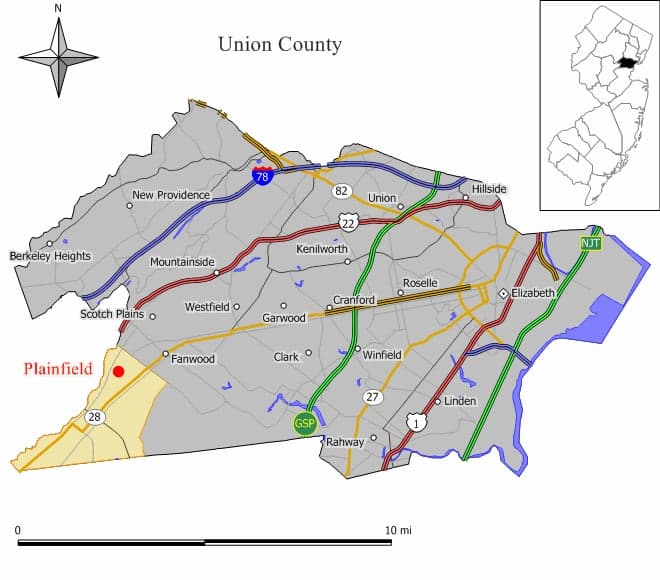
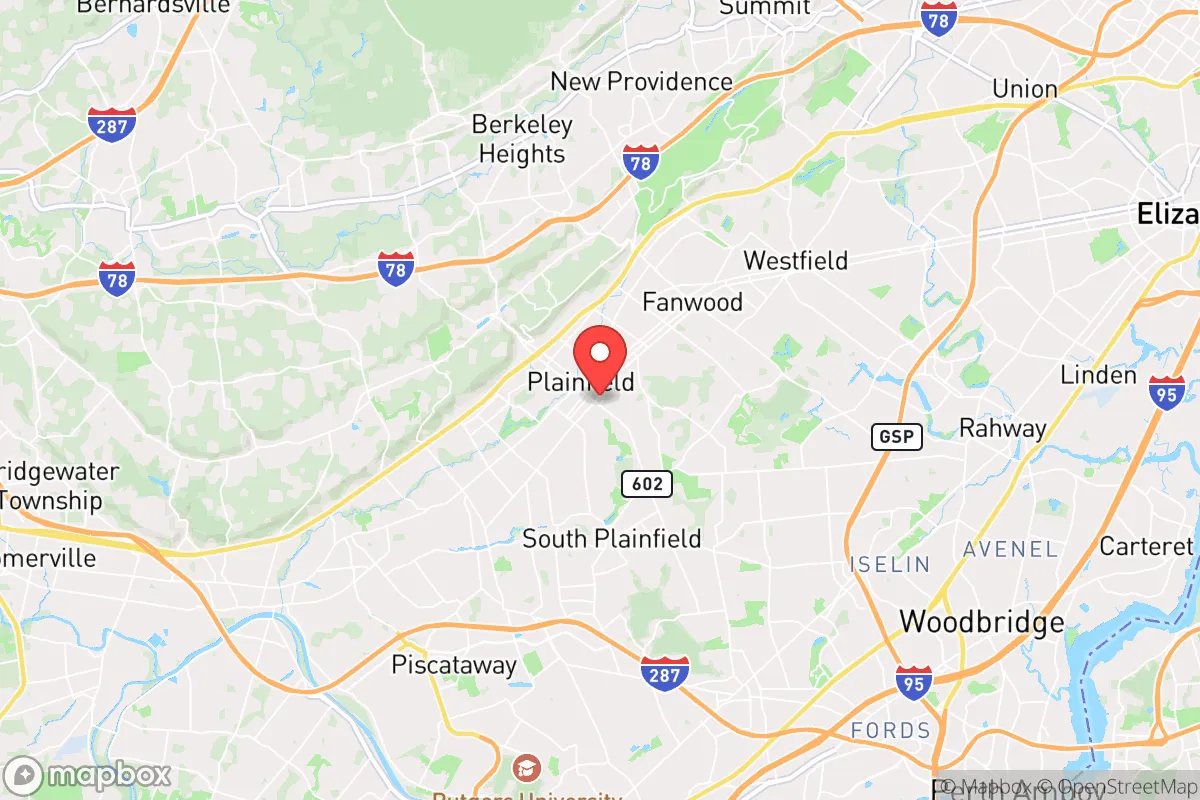
Photo: Wikipedia
Strategic Assessment of Plainfield, NJ
High tactical risk. This location is likely close to major population centers, strategic targets, or sits in a high-disaster corridor. A retreat property and careful exit planning is required.
What does the Strategic Assessment tell us?
Our Strategic Assessment grades tactical survivability of an area. Major population centers, military targets, fallout zones, natural disasters, and border exposure all drive risk — lower exposure means a more defensible position in a crisis.
This is heavily inspired by Joel Skousen's Strategic Relocation book. Highly recommended you checkout the book ($)What does this tell us?
Our Strategic Assessment grades tactical survivability of an area. Major population centers, military targets, fallout zones, natural disasters, and border exposure all drive risk — lower exposure means a more defensible position in a crisis.
This is heavily inspired by Joel Skousen's Strategic Relocation book. Highly recommended you checkout the book ($)Strategic Pillars

Key Distances
Regional Safe Places
Below is our recommended "safe zones" in New Jersey and the surrounding area based on our strategic heuristics. For most people, it's unrealistic to live in a “safe zone” full-time due to work, family or other personal reasons. They tend to be more rural. However, many of these areas are perfect for second homes and retreat properties that double as a vacation home or even a short-term rental.
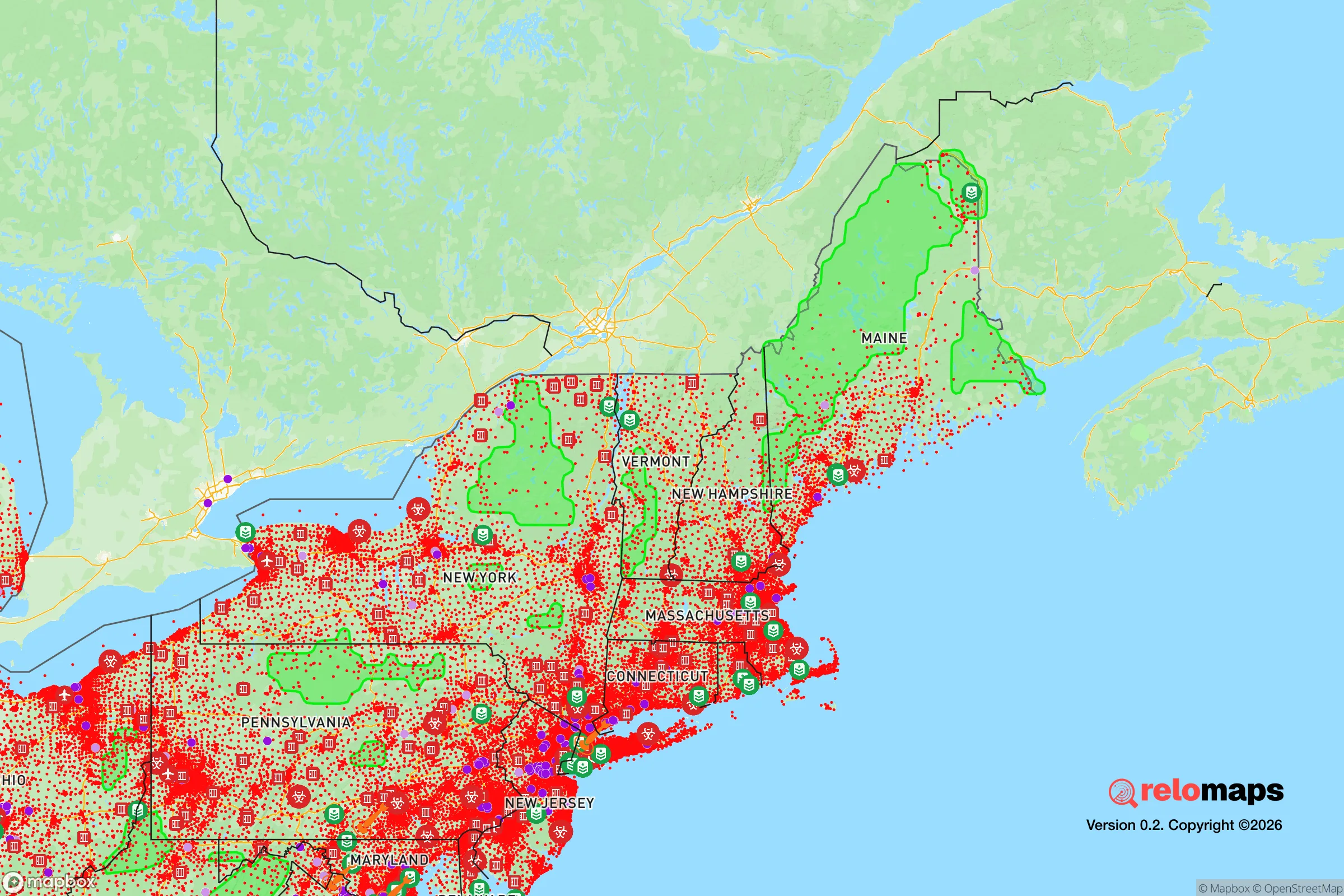
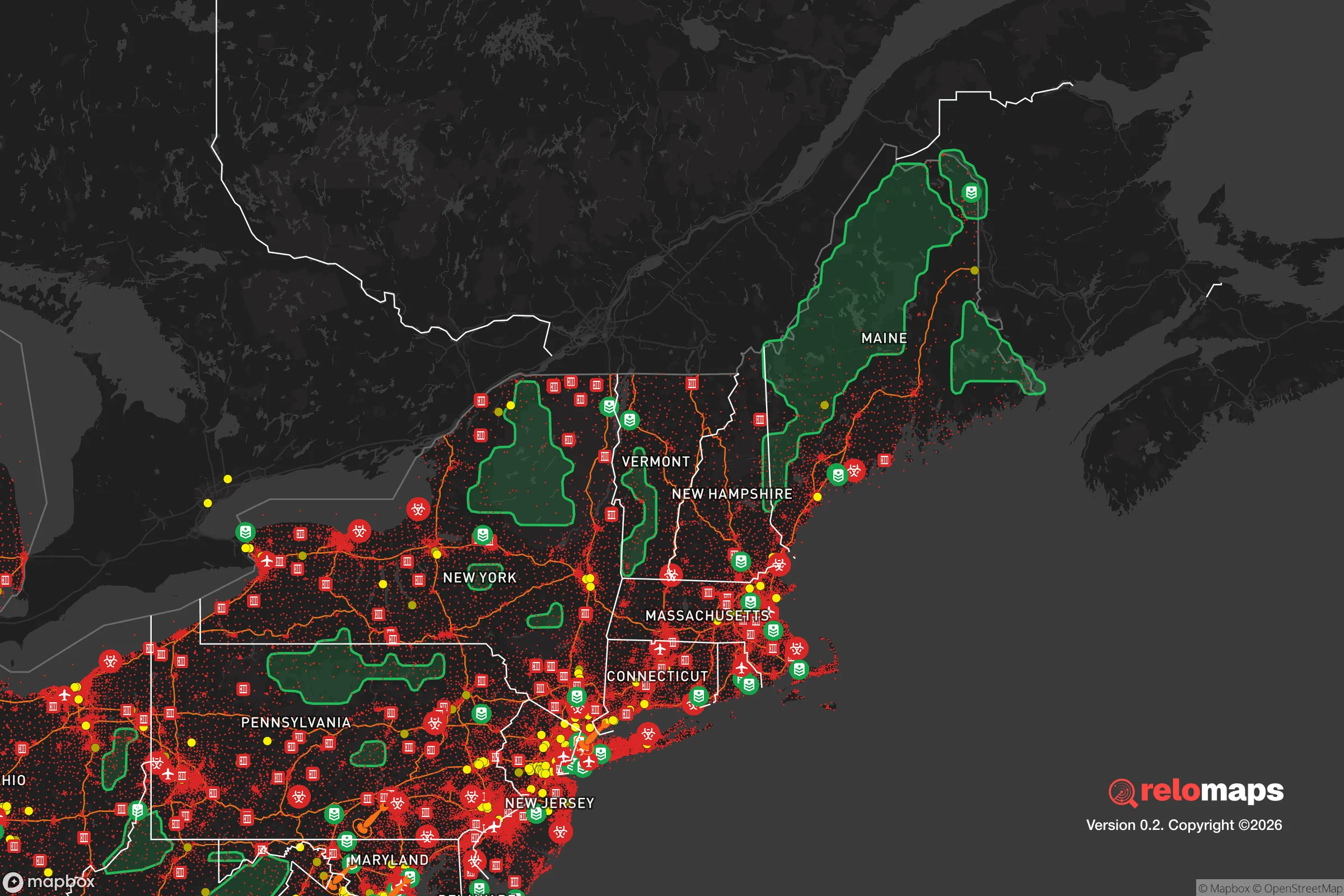


Important Note: For informational purposes only. This does not mean nothing bad ever happens in the green zones. Please use common sense. This is based on public data and modeled with AI. We tried to take a conservative approach but mistakes happen. We update this regularly as new information becomes available.
Solar Generator Recommendations
Backup power matters more here than in safer locations. We've picked three solar generators across budgets and capacity tiers — start with the budget unit if you only need a few essentials, or step up if you want to run a fridge and HVAC for days at a time.

Jackery Portable Power Station Explorer 300
Budget OptionPower on the Go: Weighing only 11 lbs, it's convenient to set up and store with book-sized foldable solar panels

BLUETTI Portable Power Station AC180
Designed for both indoor and outdoor scenarios, AC180 is highly capable as it has a robost capacity and continuous output power.

EF ECOFLOW DELTA Pro Ultra Power Station
Upgraded PickEcoFlow DELTA Pro Ultra is a whole-home energy system designed to grow with your family. Integrated with the Smart Home Panel 2, it scales to meet your evolving energy needs — keeping your home powered, intelligent, and secure through every stage of life.
We earn a commission, at no additional cost to you.
Strategic Assessment Analysis
Plainfield, New Jersey, presents a mixed strategic picture for the conservative prepper or survivalist. Its location offers some genuine natural advantages, but its proximity to major urban centers and critical infrastructure introduces significant risks that must be weighed carefully. For a relocator prioritizing long-term resilience, self-sufficiency, and security, Plainfield is less a destination and more a potential staging ground or a location to be approached with extreme caution, contingent on a very specific set of circumstances.
Geographic position and natural advantages for a strategic relocation
Plainfield sits on the western edge of Union County, roughly 25 miles southwest of Manhattan. Its most notable natural asset is its position along the Watchung Mountains, a series of low volcanic ridges that provide modest elevation and a degree of natural drainage. The area is part of the larger Piedmont region, with a mix of clay, shale, and basalt soils. While not prime farmland, the soil is workable for small-scale gardening, and the local climate—USDA Hardiness Zone 7a—supports a long growing season from April through October. The city itself has several parks, including Cedar Brook Park and Green Brook Park, which offer green space but are not defensible or productive in a collapse scenario. The primary natural advantage here is water: the Green Brook and the Rahway River run through or near the city, providing potential surface water sources. However, these are small, urban-impacted streams, not reliable, clean water supplies without significant filtration. The area's topography is rolling, not mountainous, offering limited natural chokepoints or defensible high ground. For a relocator, the key takeaway is that the land itself is not hostile—it can support subsistence-level gardening and has accessible water—but it offers no inherent fortress-like qualities.
Risks, exposures, and proximity to fallout-relevant landmarks
This is where the assessment turns sharply negative. Plainfield's greatest strategic liability is its location within the New York metropolitan area. It sits roughly 15 miles from Newark Liberty International Airport, a major transportation hub and a likely target for both conventional and asymmetric attacks. The city is also within 20 miles of the Port of Newark and Elizabeth, one of the busiest container ports in the country, and within 30 miles of the Linden natural gas-fired power plant and the Bayway Refinery in Linden, a critical fuel infrastructure node. In a major conflict or terrorist event, these are high-value targets. The fallout radius from a conventional strike on any of these sites could easily encompass Plainfield, depending on wind direction. Furthermore, the city is crisscrossed by major transportation corridors: Interstate 78 runs just north, and Routes 22 and 28 pass through the city. In a mass evacuation event from New York City or Newark, these roads would become impassable chokepoints, turning Plainfield into a funnel for desperate, fleeing populations. The city's own population of roughly 55,000 is dense by suburban standards, and its demographics are diverse but with a significant low-income population that could face acute resource pressure in a crisis. The presence of several hospitals, including JFK University Medical Center in nearby Edison, is a double-edged sword: a resource for medical care but also a potential target and a magnet for those seeking aid. For a prepper, the proximity to these fallout-relevant landmarks is a clear negative. The risk of being caught in a secondary event, a refugee wave, or a supply chain disruption originating from these nodes is high.
Practical resilience for a relocator: food, water, energy, and defensibility
Assessing the practical nuts and bolts of survival in Plainfield reveals a challenging environment. Water is the most critical concern. The city's water supply comes from the Elizabethtown Water Company, a regional utility drawing from the Raritan River and the Spruce Run Reservoir. This system is vulnerable to both contamination and disruption. A single point of failure—a pump station failure, a cyberattack, or a physical strike on the Raritan Basin—could leave the city dry. Surface water from the Green Brook is available but requires heavy filtration (ceramic or reverse osmosis) due to urban runoff and agricultural upstream use. Food security is poor. Plainfield is a food desert in many neighborhoods, with limited access to fresh produce and a heavy reliance on convenience stores and fast food. The city has no significant agricultural base; the nearest working farms are in Hunterdon County, 20+ miles west. A relocator would need to establish a substantial home garden, likely in a backyard or community plot, and would need to stockpile at least 3-6 months of non-perishable food. Energy is a mixed bag. The grid is reliable day-to-day but is part of the PJM Interconnection, a massive regional grid that could face strain during a national emergency. Natural gas is the primary heating fuel, and the local distribution system is aging. Solar panels are feasible but would require battery storage to be useful during grid outages, and the area's tree cover can limit sun exposure. Defensibility is the weakest link. Plainfield is a dense, walkable city with a grid-like street pattern. There are few natural chokepoints, and the housing stock is dominated by older single-family homes and multi-family units with limited sightlines. A determined group could secure a single block, but the surrounding area would be difficult to patrol or defend against a larger, organized threat. The city's proximity to major highways means that any unrest in Newark or Elizabeth would spill over quickly. For a relocator, the practical resilience score is low. You would be heavily dependent on stored supplies and would face constant pressure from the surrounding urban population.
The overall strategic picture for Plainfield is one of high risk and limited reward for the conservative prepper. Its location offers no natural fortress, its water and food security are fragile, and its proximity to high-value targets and major evacuation routes makes it a dangerous place to be during a national crisis. The city's only potential value is as a temporary staging point—a place to have a secure, well-stocked apartment or small house for a short period while you scout more defensible, rural properties further west in Pennsylvania or upstate New York. For a long-term relocation, the negatives far outweigh the positives. If you are determined to stay in New Jersey, look instead to the far northwestern corner of the state, near the Delaware Water Gap, or to the Pine Barrens in the south, where population density drops and natural resources are more abundant. Plainfield is a place to pass through, not to plant roots, if your goal is genuine strategic resilience.

* Values derived from national, state, county, city and local statistics and may differ in a specific area. Last updated: 2026-05-01T03:36:23.000Z
Narrative content on this page is AI-generated and may contain mistakes. Verify any details that matter before acting on them.
ReloMaps may earn a commission from affiliate links at no extra cost to you.

