Photo: Wikipedia
Demographics of Plano, TX
Affluence Level in Plano, TX
An upper-middle-class area. Household wealth, education levels, and homeownership run ahead of national benchmarks.
People of Plano, TX
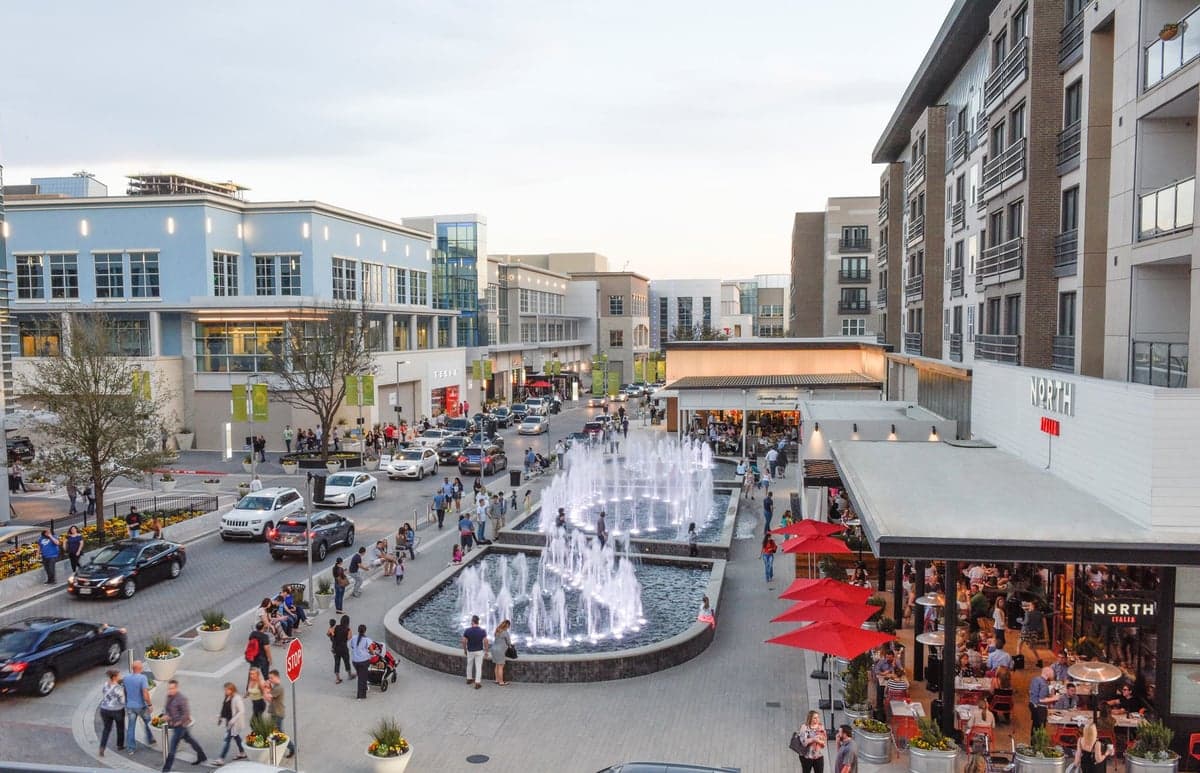
Plano, Texas, is a city of 287,339 residents defined by its high educational attainment—59.2% hold a college degree—and a distinctly multiethnic population where no single group holds a majority. Its character blends affluent, family-oriented suburbia with a dense, increasingly diverse professional class, anchored by major corporate campuses and top-ranked public schools. The city's identity today is less "old Texas" and more a globalized, upwardly mobile hub where East/Southeast Asian, Indian, and Hispanic communities each form substantial, visible enclaves alongside a shrinking white plurality.
How the city was settled and grew
Plano's original population was overwhelmingly white and Anglo-American, drawn by land grants in the Peters Colony during the 1840s. These early settlers were cotton farmers and merchants who established a small agricultural community centered around what is now Downtown Plano (the historic 15th Street corridor). The arrival of the Houston and Texas Central Railway in 1872 spurred modest growth, but Plano remained a sleepy farming town of fewer than 1,000 people through the early 1900s. The city's first significant non-white population arrived during the Great Migration, when Black families moved from the rural South to work in agriculture and domestic service. They settled in the East Plano area, particularly around the Douglass Community—a historically Black neighborhood that remains a cultural anchor. Mexican-American laborers also began arriving in the 1920s and 1930s, working on railroads and in cotton fields, and established a small barrio near Old City Park in what is now the Haggard Farm area. These early waves were small; as late as 1960, Plano's population was still under 4,000 and nearly 98% white.
Modern era (post-1965)
The 1965 Hart-Cellar Immigration Act, combined with Plano's explosive suburbanization after 1970, fundamentally reshaped the city's population. The opening of major corporate headquarters—including JCPenney, Frito-Lay, and later Toyota North America—drew a massive influx of white-collar professionals from across the United States. This domestic migration, overwhelmingly white, filled new master-planned subdivisions like West Plano (the area west of the Dallas North Tollway) and Preston Meadow, which became synonymous with large homes, golf courses, and top-rated schools. Simultaneously, the 1980s and 1990s saw the first major wave of East/Southeast Asian immigrants—primarily Chinese, Korean, and Vietnamese professionals—who were drawn by tech and engineering jobs. They concentrated in East Plano near the Legacy Business Park corridor and along Spring Creek Parkway, forming a visible Asian commercial district with supermarkets and restaurants. The Indian subcontinent community began arriving in earnest during the 1990s and 2000s, driven by the H-1B visa boom and corporate relocations. Indian families clustered heavily in West Plano and the Willow Bend area, where they now represent a dominant demographic in several elementary school zones. Hispanic growth accelerated after 2000, fueled by both domestic migration from other Texas cities and immigration from Mexico and Central America. Today, Hispanic residents are concentrated in East Plano (east of US-75) and in the Parker Road corridor, where housing is more affordable. The Black population, which peaked at roughly 10% in the 1990s, has since declined to 8.9% as many families moved to more affordable suburbs in Collin County's eastern edge.
The future
Plano's population is not homogenizing; it is tribalizing into distinct, stable ethnic enclaves. The white share has fallen from roughly 70% in 1990 to 48.2% today, and that decline is expected to continue as older white residents age in place and younger white families choose newer exurbs like Frisco or Prosper. The Indian subcontinent community, at 13.1%, is the fastest-growing major group, driven by continued tech-sector hiring and chain migration. This community is likely to reach 18-20% of the population by 2035, with West Plano and Willow Bend becoming even more heavily Indian. East/Southeast Asian communities (9.5%) are plateauing, as many second-generation families move to newer suburbs or out of state. The Hispanic share (16.2%) is growing steadily through both births and immigration, and East Plano is expected to become majority Hispanic within a decade. The Black share is likely to remain stable or decline slightly, as Plano's high housing costs—median home price above $500,000—price out many Black families. The foreign-born share (15.3%) is near its peak; future growth will come from the U.S.-born children of immigrants, who are assimilating linguistically while maintaining distinct cultural identities.
For someone moving to Plano now, the city is becoming a collection of parallel communities rather than a melting pot. The schools remain excellent, but the social and commercial life of the city is increasingly segmented by ethnicity and geography. A new resident should expect to live in a neighborhood where one group is visibly dominant, and to navigate a city where civic unity coexists with strong ethnic identity. Plano is not becoming more homogeneous—it is becoming more layered, with each layer maintaining its own institutions, grocery stores, and places of worship.

* Values derived from national, state, county, city and local statistics and may differ in a specific area. Last updated: 2026-04-16T16:01:12.000Z
Narrative content on this page is AI-generated and may contain mistakes. Verify any details that matter before acting on them.
ReloMaps may earn a commission from affiliate links at no extra cost to you.

