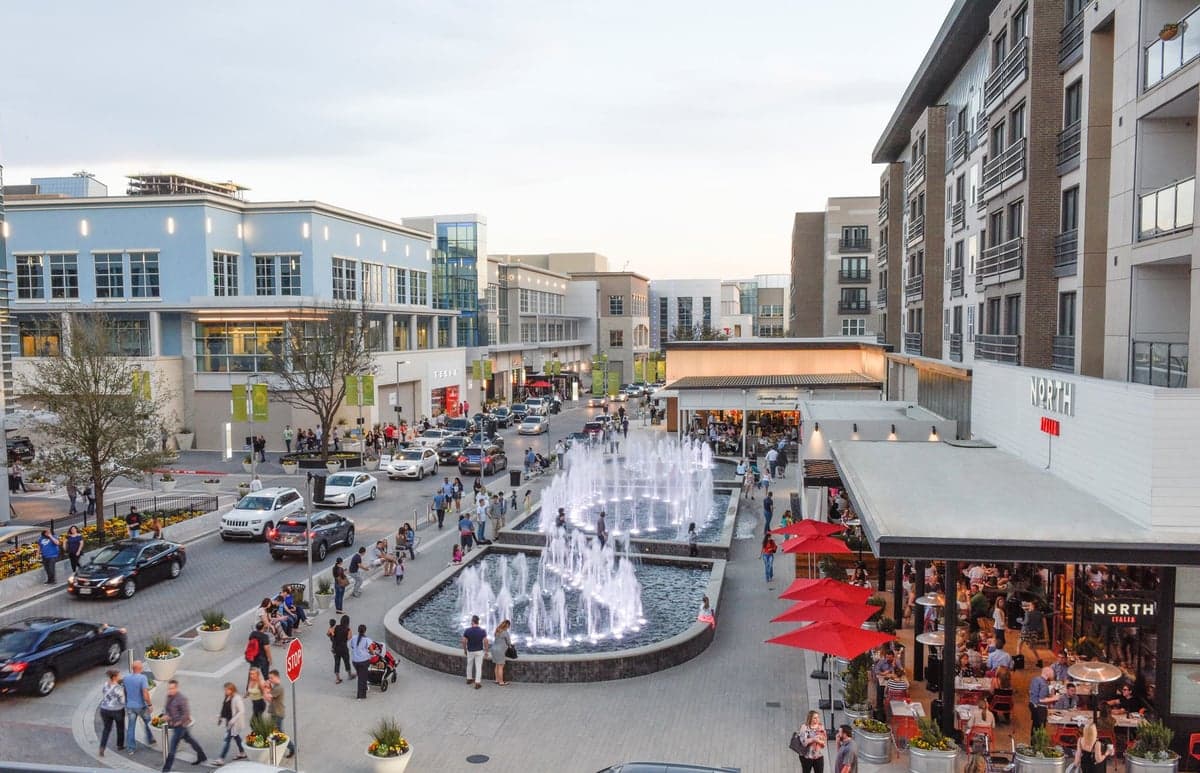
Photo: Wikipedia
Political ClimatePolitical Climate in Plano, TX
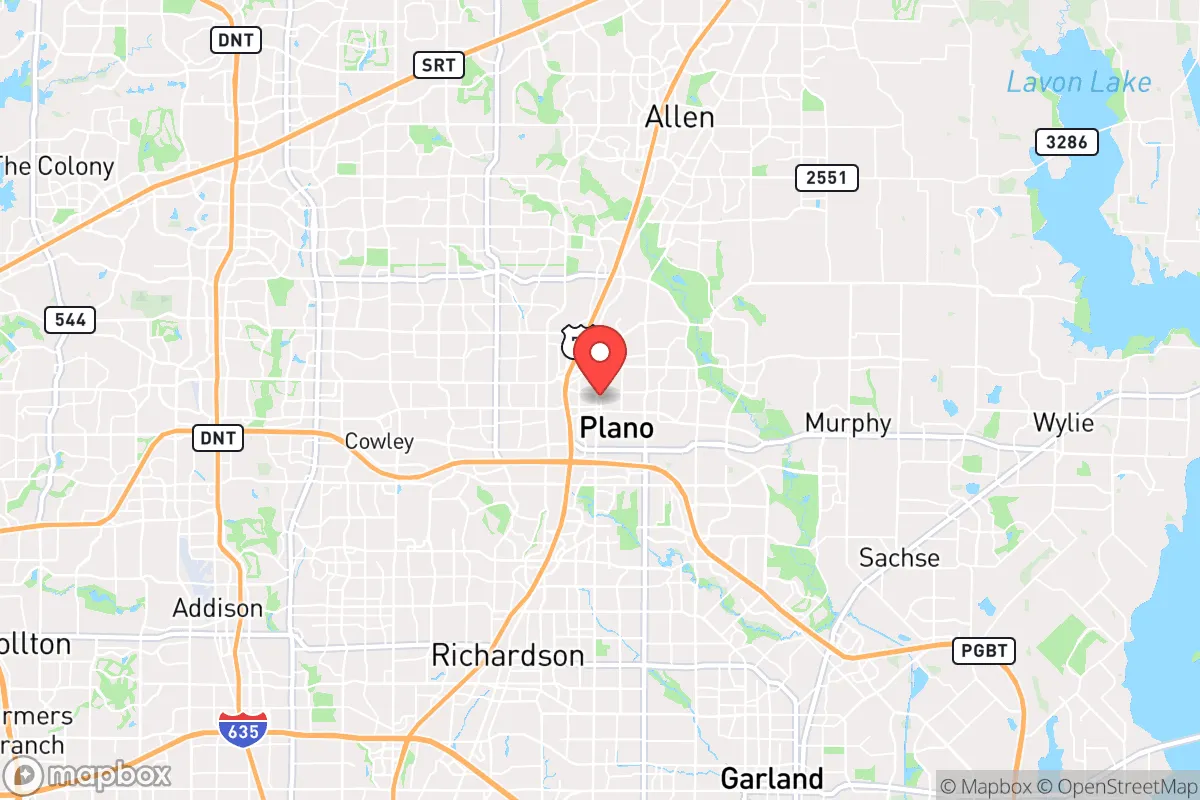
District shown is the primary district for this city’s centroid. Cities may span multiple districts.
Local Political AnalysisPolitical Analysis of Plano, TX
Plano, Texas, has shifted dramatically in recent years, and if you’ve lived here as long as I have, you’ve felt it. The Cook Partisan Voting Index (PVI) now sits at D+13, meaning the city leans more than a dozen points more Democratic than the national average. That’s a sea change from the reliably conservative suburb I grew up in, where local races were decided in the Republican primary and folks didn’t think twice about leaving their doors unlocked. The trajectory is clear: Plano is moving left, and fast, driven by an influx of out-of-state transplants and a younger, more progressive electorate. It’s not the same town it was even ten years ago.
How it compares
To understand Plano’s shift, you have to look at the neighbors. Drive 15 minutes north to Frisco or Allen, and you’re still in solidly red territory—those cities vote Republican by comfortable margins, and their school boards and city councils reflect it. Head south to Dallas, and you’re in a deep-blue urban core. Plano now sits smack in the middle, but leaning blue in a way that surprises longtime locals. Collin County as a whole still trends red, but Plano is the blue dot pulling the county’s average leftward. Even Richardson, just to the south, feels more moderate than Plano these days. The contrast is stark: you can drive ten minutes and feel like you’ve crossed into a different political universe.
What this means for residents
For those of us who value limited government and personal freedoms, the shift is concerning. The city council has become more willing to entertain progressive policies—think zoning changes that favor dense, multi-family housing over single-family lots, and a school board that’s increasingly focused on diversity, equity, and inclusion initiatives over core academics. Property taxes remain high, and there’s a growing appetite for new regulations on everything from short-term rentals to lawn watering. The Second Amendment hasn’t been directly challenged here yet, but the political climate makes it feel like a matter of time. If you’re a conservative, you’re not unwelcome—Plano is still a polite, prosperous place—but you’ll find fewer allies at the ballot box and more pushback on traditional values in public meetings.
What daily life is like for families
On the ground, day-to-day life hasn’t flipped overnight. The schools are still excellent—Plano ISD remains a draw for families—but the curriculum debates are real. Parents I know are more vigilant about what’s being taught and how their kids are being shaped. The parks and libraries are top-notch, but you’ll see more “In This House We Believe” signs than “Don’t Tread on Me” flags these days. The cost of living has climbed, and while the job market is strong thanks to corporate headquarters like J.C. Penney and Toyota North America, the cultural vibe has shifted from “keep it conservative” to “keep it woke.” It’s still a great place to raise a family, but you’ll want to stay engaged in local politics if you want to preserve the freedoms that made Plano attractive in the first place.
Looking ahead, the trend doesn’t seem to be reversing. The 2024 election results in Collin County showed Plano’s precincts voting blue by wider margins than ever, and the city’s growing diversity—about 30% Asian American and 15% Hispanic—is reshaping the electorate. If you’re a conservative considering a move, I’d recommend looking at Prosper or Celina further north, where the political climate is more aligned with traditional values. Plano is still a fine place to live, but it’s no longer the conservative stronghold it once was. Keep your eyes open, get involved in your HOA and school board, and don’t assume your vote doesn’t matter—because it does, more than ever.

State Political ClimatePolitical Climate in Texas
State Political AnalysisPolitical Environment in the State
Texas remains a solidly Republican state, but the margin has tightened noticeably over the past decade. In 2024, Donald Trump carried the state by about 9 points, down from 10.5 points in 2020 and 16 points in 2012. The dominant coalition is still a mix of rural conservatives, suburban moderates, and evangelical voters, but explosive growth in the urban crescent—especially around Austin, Dallas-Fort Worth, and Houston—is slowly shifting the ground beneath the GOP’s feet. If you’re moving here for lower taxes and fewer regulations, you’re still in the right place, but you need to understand which parts of the state are holding the line and which are starting to bend.
Urban vs. rural divide
The political map of Texas is a tale of two landscapes. The vast rural and exurban counties—places like Lubbock, Midland, and the Panhandle—vote Republican by 40 to 60 points. These areas are the engine of the GOP’s statewide wins. Meanwhile, the major metros are splitting fast. Dallas County and Harris County (Houston) have become reliably Democratic, with Harris going blue by 15 points in 2024. Travis County (Austin) is the bluest urban core in the state, voting Democratic by nearly 50 points. Bexar County (San Antonio) and El Paso County are also solidly blue. The real battleground is the suburbs: Collin County (north of Dallas) and Fort Bend County (southwest of Houston) were once GOP strongholds but are now competitive. Collin County, for example, went from +30 R in 2012 to just +8 R in 2024. If you’re looking for a politically stable conservative area, you’re better off in the outer-ring suburbs like Keller or Southlake (Tarrant County) or in smaller cities like Tyler or College Station, where the rural-to-suburban mix still leans heavily red.
Policy environment
Texas’s policy environment is defined by a low-tax, low-regulation posture that conservatives prize. There is no state income tax, and property taxes are high but capped by a 10% annual appraisal increase (Prop 4, 2023). The regulatory climate is business-friendly, with no state-level OSHA and a right-to-work law that weakens unions. On education, the state has expanded school choice through the Texas Education Savings Account program (HB 1, 2023), allowing parents to use state funds for private or homeschool expenses. Healthcare remains a mixed bag: Texas did not expand Medicaid under the ACA, and the state has some of the strictest abortion laws in the nation (SB 8, 2021, and the trigger law that took effect in 2022). Election laws tightened with SB 1 (2021), which restricted mail-in voting and early voting hours, and voter ID requirements remain strict. For a conservative moving in, the policy environment is largely aligned with limited government principles, though the property tax burden is a real pain point that hasn’t been fully solved.
Trajectory & freedom
On the freedom front, Texas has moved in two directions simultaneously. On one hand, gun rights expanded significantly with permitless carry (HB 1927, 2021), allowing any law-abiding adult to carry a handgun without a license. Parental rights were strengthened with the “Parental Bill of Rights” (HB 900, 2023), which gives parents more control over school curriculum and library materials. Medical autonomy took a hit with the near-total abortion ban, but the state also passed a law protecting physicians who refuse to perform gender-transition procedures on minors (SB 14, 2023). On the other hand, property rights have been eroded by aggressive eminent domain for infrastructure projects, particularly the Texas-Mexico border wall and the I-35 expansion. The state also passed a law (SB 4, 2024) that allows local police to enforce federal immigration law, which some see as a necessary crackdown and others as an overreach. The net trajectory is toward more personal liberty in the traditional conservative sense—guns, speech, school choice—but with a heavier hand on immigration enforcement and property takings.
Civil unrest & political movements
Texas has seen its share of political flashpoints. The 2020 protests in Austin and Houston over George Floyd’s death were large and occasionally violent, leading to property damage and a lasting distrust between activists and law enforcement. The “Defund the Police” movement gained traction in Austin’s city council, which cut the police budget by $150 million in 2020, only to reverse course in 2022 after a spike in violent crime. On the right, the “Texas Nationalist Movement” (Texit) has gained a small but vocal following, though it remains fringe. Immigration politics are the most visible daily flashpoint: Operation Lone Star, launched by Governor Abbott in 2021, has bused over 100,000 migrants to sanctuary cities like New York and Chicago, and the state has installed razor wire and buoys along the Rio Grande. Election integrity remains a hot-button issue, with the 2020 and 2022 cycles seeing lawsuits over mail-in ballot procedures and voter roll purges. A new resident will notice the heavy police presence at polling places in urban counties and the constant political ads on TV.
Projection
Over the next 5-10 years, Texas is likely to become more politically competitive, but not necessarily more liberal. The in-migration from California and other blue states is real—about 1,000 people move to Texas per day—but many of them are conservatives or libertarians fleeing high taxes and regulation. The demographic shift is more about suburbanization than liberalization. The GOP will likely hold the state legislature and governor’s mansion through 2030, but the margin in presidential races could shrink to 5 points or less. The real risk for conservatives is that the growing urban population will push for more state-level spending on education and infrastructure, which could lead to a state income tax or higher property taxes. The Texas Supreme Court is solidly conservative, so social issues like abortion and gun rights are safe for now. If you’re moving in, expect a state that remains broadly conservative but with a louder, more organized progressive minority in the cities.
For a new resident, the bottom line is this: Texas still offers the best combination of low taxes, limited government, and personal freedom in the country, but you need to pick your county carefully. If you want a reliably conservative environment, look at the outer suburbs of Dallas-Fort Worth (like Frisco or McKinney) or smaller cities like San Angelo or Wichita Falls. Avoid Austin and El Paso if you’re concerned about progressive governance. The state is not going to flip blue anytime soon, but the culture war is real and visible—especially in the schools and the local elections. Come for the freedom, but stay engaged in your local precinct to keep it that way.
* Values derived from national, state, county, city and local statistics and may differ in a specific area. Last updated: 2026-04-16T16:01:12.000Z
Narrative content on this page is AI-generated and may contain mistakes. Verify any details that matter before acting on them.
ReloMaps may earn a commission from affiliate links at no extra cost to you.

