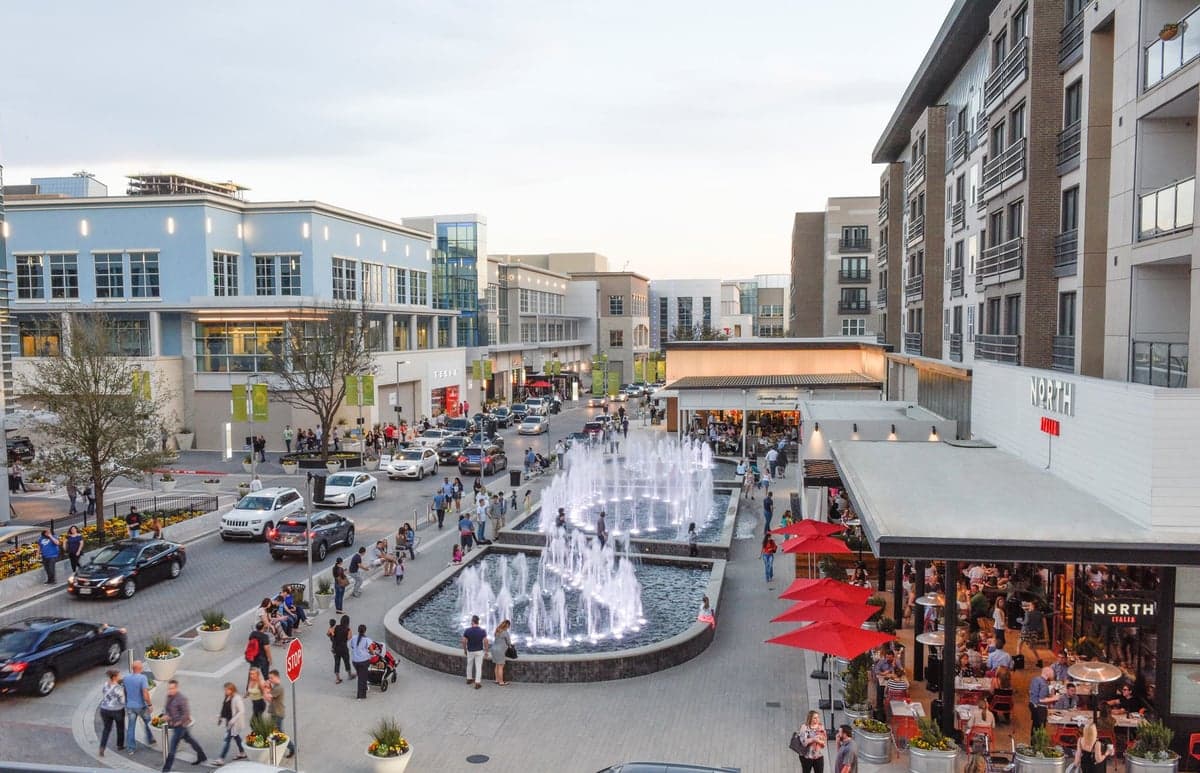
Photo: Wikipedia
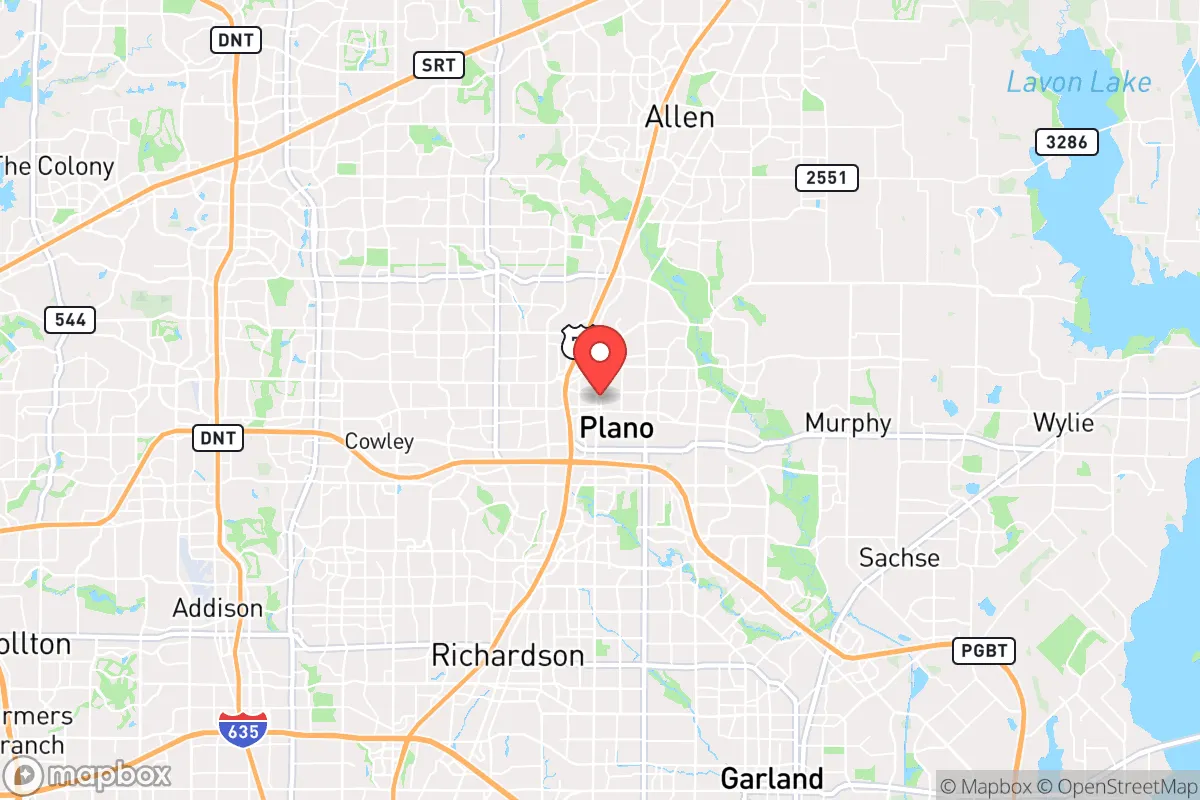
Personal Sovereignty in Plano, TX
Strong independent fundamentals that actively favor personal liberty and low regulation.
What does Personal Sovereignty tell us?
Personal Sovereignty measures your capacity for self-reliance and independence with minimal government friction. Higher scores mean fewer barriers between you and the way you want to live... but it assumes you have the space you need and good neighbors.
What does this tell us?
Personal Sovereignty measures your capacity for self-reliance and independence with minimal government friction. Higher scores mean fewer barriers between you and the way you want to live... but it assumes you have the space you need and good neighbors.
State Policy
Energy independence: Net exporter (220% of energy produced in-state)
Personal Liberty
Homesteading

Personal Liberty Analysis
Plano, Texas offers a notably high degree of personal sovereignty compared to most major U.S. suburbs, but it is not a libertarian free zone. The city operates within a state framework that strongly limits local government overreach, yet it enforces its own zoning, code compliance, and tax collection with the efficiency typical of a large corporate hub. For the survivalist or prepper-minded individual, Plano provides a solid legal foundation for self-determination—low taxes, strong gun rights, and minimal business regulation—but the density and HOA-heavy landscape mean you will trade some autonomy for access to infrastructure and economic opportunity. The key question is whether the trade-offs align with your personal risk calculus.
Tax burden and regulatory posture: how much government takes and controls
Plano’s tax burden is low by national standards, but not the lowest in Texas. The combined state and local sales tax rate is 8.25%, which is on the higher end for Texas cities due to local add-ons. Property taxes are the real bite: the effective rate hovers around 2.1% of assessed value, driven by Collin County’s robust appraisal district. For a $400,000 home, that’s roughly $8,400 annually—significant, but still far below California or New York equivalents. The state has no income tax, which is the single biggest sovereignty win. Regulatory posture is business-friendly: Plano’s city government largely defers to state law on occupational licensing and land use, but it does enforce strict building codes and HOA covenants in planned communities. For a prepper, this means you can run a home-based business or stockpile supplies without much hassle, but you cannot ignore zoning rules on sheds, fences, or vehicle storage. The city’s regulatory touch is light compared to blue-state suburbs, but it is not absent.
Self-defense and gun law specifics: what you can carry and where
Texas law preempts local gun ordinances, so Plano cannot ban firearms beyond state limits. You can carry a handgun openly or concealed without a permit (permitless carry, effective 2021) if you are 21 or older and not prohibited by federal law. The city has no additional magazine capacity restrictions or waiting periods. However, Plano is a “gun-free zone” for schools, hospitals, and government buildings under state law, and many private businesses post 30.06 (concealed carry) or 30.07 (open carry) signage. The Collin County Sheriff’s Office is generally supportive of gun rights, and the local gun culture is strong—there are multiple indoor ranges and gun shops within a 15-minute drive. For self-defense in the home, you have full legal backing under the Castle Doctrine and Stand Your Ground. The practical limitation is density: in a suburban neighborhood, a defensive shooting will be scrutinized by police and likely civilly litigated, even if legally justified. Plano is not a rural county where you can shoot on your property without neighbor concern.
Self-reliance and homesteading viability: lot sizes, zoning, and off-grid feasibility
This is where Plano falls short for the serious prepper. The typical residential lot is 0.15 to 0.25 acres in older neighborhoods, and newer subdivisions often have lots under 7,000 square feet. Zoning prohibits livestock, chickens are allowed only in limited numbers with a permit (and no roosters), and large gardens are possible but will be visible to neighbors. Off-grid living is effectively illegal: the city requires connection to municipal water and sewer, and solar panels must comply with HOA aesthetic guidelines. Rainwater collection is legal under state law, but storage tanks over 500 gallons require a permit and are subject to setback rules. For a homesteader wanting acreage, you need to look 30–45 minutes north to areas like Anna, Melissa, or Celina, where 1–5 acre lots are common and agricultural exemptions apply. Plano is a suburban grid, not a self-sufficient compound. Its value for the prepper is as a base for income generation and supply access, not for long-term independent survival.
Personal liberties: parental rights, medical autonomy, speech, and property
Texas law provides strong protections for parental rights, including the right to direct a child’s education and medical care. Plano ISD allows parents to opt out of sex education and requires parental consent for most school health services. Homeschooling is unrestricted—no notification, no curriculum approval, no testing requirements. Medical autonomy is mixed: Texas banned COVID-19 vaccine mandates for private employers and government entities, and it prohibits mask mandates in schools. However, the state’s abortion ban is near-total, and medical freedom groups have successfully pushed for laws limiting emergency powers. Free speech is robust—Plano has no local hate speech ordinances or permit requirements for public gatherings beyond standard parade permits. Property rights are strong in theory, but HOAs in Plano can impose fines for lawn length, paint color, or political signs (though state law limits sign restrictions during election periods). The city’s police department is professional but not overbearing; traffic stops and code enforcement are the primary points of contact. For the conservative individual, the biggest sovereignty win is the absence of state-level overreach into daily life—no income tax, no gun registration, no vaccine passports. The biggest loss is the HOA and zoning regime that limits what you can do with your own land.
Overall, Plano ranks high for personal sovereignty relative to other major U.S. suburbs, especially those in blue states. It offers a legal environment that respects self-defense, parental control, and economic freedom. But it is not a haven for the off-grid survivalist or the anti-government prepper. The density, HOA enforcement, and municipal utility requirements create a controlled suburban environment that rewards compliance over independence. If your strategy is to build wealth, maintain legal autonomy, and be within striking distance of rural retreat property, Plano works. If you want to live entirely by your own rules on your own land, look farther north or west. The city is a tool, not a sanctuary—use it accordingly.

* Values derived from national, state, county, city and local statistics and may differ in a specific area. Last updated: 2026-04-16T16:01:12.000Z
Narrative content on this page is AI-generated and may contain mistakes. Verify any details that matter before acting on them.
ReloMaps may earn a commission from affiliate links at no extra cost to you.

