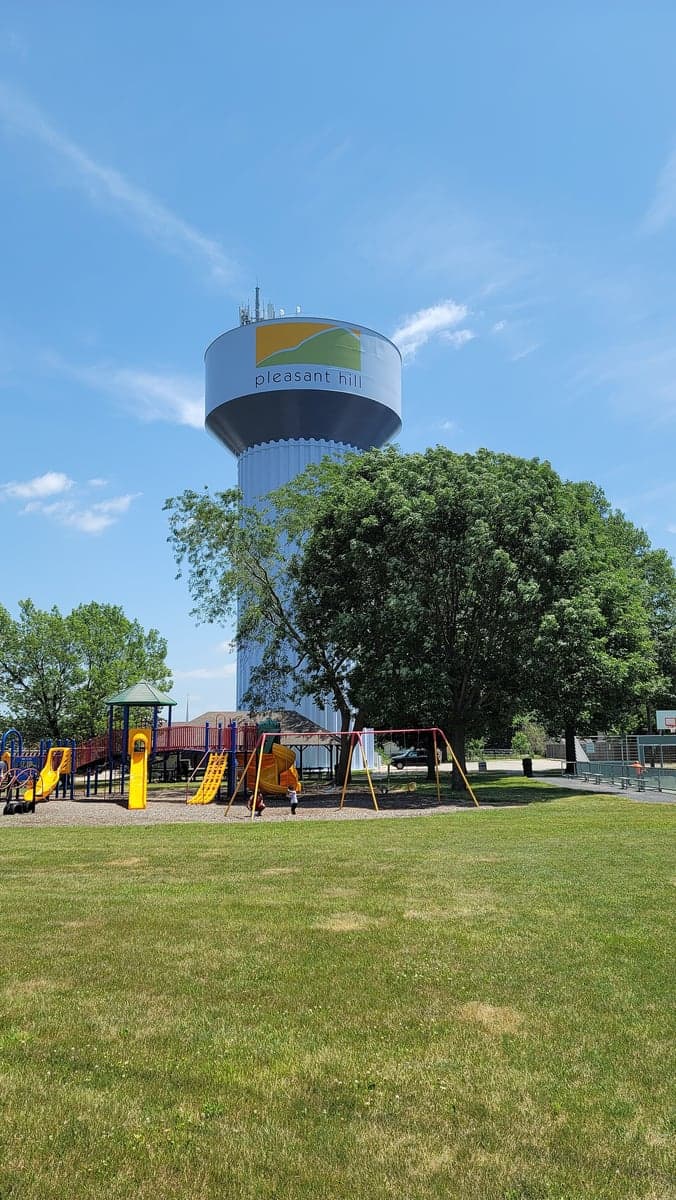
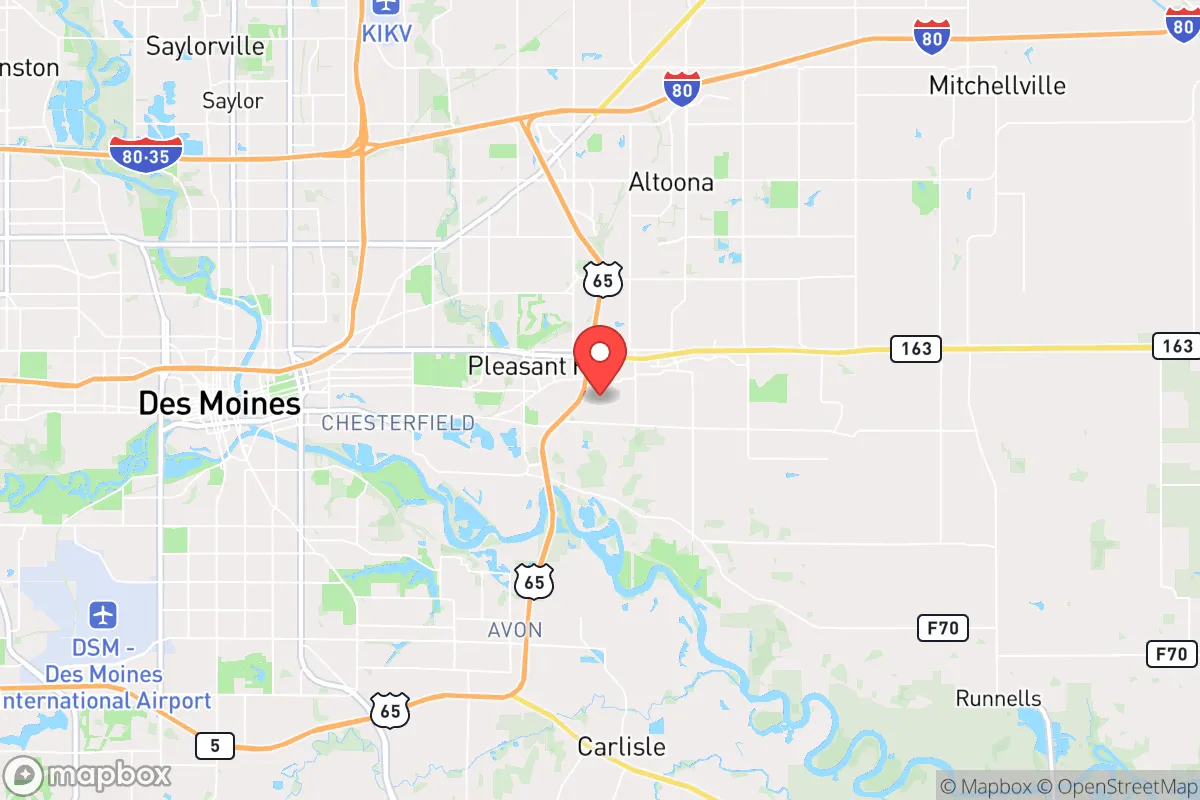
Photo: Wikipedia
Personal Sovereignty in Pleasant Hill, IA
Viable for self-reliance. Generally workable, though some barriers may limit total independence.
What does Personal Sovereignty tell us?
Personal Sovereignty measures your capacity for self-reliance and independence with minimal government friction. Higher scores mean fewer barriers between you and the way you want to live... but it assumes you have the space you need and good neighbors.
What does this tell us?
Personal Sovereignty measures your capacity for self-reliance and independence with minimal government friction. Higher scores mean fewer barriers between you and the way you want to live... but it assumes you have the space you need and good neighbors.
State Policy
Energy independence: Importer (50% of energy produced in-state)
Personal Liberty
Homesteading

Personal Liberty Analysis
Pleasant Hill, Iowa, offers a notably high degree of personal sovereignty compared to many suburban enclaves, largely because it sits within a state that has aggressively pushed back against federal overreach in recent years. While no city is a libertarian utopia, the combination of Iowa’s strong preemption laws, a relatively light tax burden, and a culture that still values self-reliance makes this a compelling option for those who prioritize keeping government out of their daily lives. The key question for a survivalist or prepper mindset is whether the local governance structure respects individual autonomy or slowly erodes it through zoning, taxation, and regulatory creep.
Tax burden and regulatory posture: How much of your income and property stays yours
Iowa’s tax climate is a mixed bag, but the trend is moving in the right direction for those seeking to minimize government extraction. The state recently enacted a flat individual income tax rate of 3.9%, set to drop to 3.5% by 2026, which is a significant improvement over the previous progressive brackets. Pleasant Hill itself does not levy a local income tax, so you’re only dealing with the state rate and the standard property tax. Property taxes in Polk County, where Pleasant Hill sits, are around 1.5% to 1.7% of assessed value—not the lowest in the nation, but reasonable for a metro area with decent services. The regulatory posture at the city level is generally business-friendly, but you’ll still encounter typical suburban zoning codes. There’s no county-level sales tax on top of the state’s 6% rate, and local option sales taxes in Pleasant Hill add about 1%, bringing the total to roughly 7%. For a prepper, the key takeaway is that Iowa’s tax burden is moderate and trending downward, but you won’t escape the property tax bite if you own a decent-sized lot.
Self-defense and gun law specifics: What you can carry, where, and without permission
Iowa is a constitutional carry state as of 2021, meaning no permit is required to carry a concealed firearm for anyone legally allowed to possess one. This is a major plus for personal sovereignty. Pleasant Hill does not have any local ordinances that restrict this further—state preemption laws are strong, so city councils cannot ban carry in parks, public buildings, or other municipal spaces unless specifically allowed by state statute. There is no waiting period for firearm purchases, no magazine capacity restrictions, and no registration requirements. The only real friction points are the federal background check system for purchases from licensed dealers and the fact that private sales between individuals are not regulated by the state. Stand-your-ground laws are on the books, and there is no duty to retreat in any place you are lawfully present. For a survivalist, this means you can maintain a fully equipped armory without bureaucratic hurdles, and you can carry daily without fear of running afoul of local ordinances. The only caveat is that Iowa’s permit-to-purchase system for handguns was repealed, but you still need a permit to buy a handgun from a dealer—though that permit is now a simple background check, not a discretionary approval process.
Self-reliance and homesteading viability: Lot sizes, zoning, and off-grid feasibility
Pleasant Hill is a suburb, not a rural homesteading paradise, but it offers more flexibility than denser suburbs like West Des Moines or Urbandale. Standard residential lots in the city range from 0.25 to 0.5 acres, though some newer developments push smaller. If you want acreage for a serious garden, chickens, or a small orchard, you’ll need to look at the unincorporated areas of Polk County just outside city limits, where zoning is far looser and lot sizes can be 1 to 5 acres. Within Pleasant Hill proper, you can keep up to four chickens on a standard lot (no roosters), and beekeeping is allowed with a simple registration. Gardening is unrestricted, and there are no HOA-style bans on vegetable gardens in most neighborhoods—though some subdivisions have their own covenants, so check before buying. Off-grid feasibility is limited: the city requires connection to municipal water and sewer for any habitable structure, and solar panels are allowed but must comply with building codes and utility interconnection rules. Rainwater collection is legal but cannot be used for potable purposes without a permit. For a prepper, the best strategy is to buy a lot just outside the city limits in unincorporated Polk County, where you can install a septic system, drill a well, and set up solar without city interference. Inside Pleasant Hill, you’re trading some self-reliance for proximity to infrastructure.
Personal liberties: Parental rights, medical autonomy, speech, and property
Iowa has been a battleground for parental rights, and the current legal landscape is favorable for those who want to control their children’s education and medical decisions. The state passed a law in 2023 requiring schools to get parental consent before any health screening or survey that touches on mental health or sexual orientation, and parents have the right to review all instructional materials. School choice is robust: Iowa offers Education Savings Accounts (ESAs) worth roughly $7,600 per child, which can be used for private school tuition, homeschooling materials, or tutoring. This effectively gives parents the power to opt out of the public school system entirely without financial penalty. Medical autonomy is more complicated. Iowa has no vaccine mandate for adults, and COVID-era mandates have been repealed, but employers and healthcare facilities can still require vaccines as a condition of service or employment. There is no state-level right-to-try law for experimental treatments, but the state does allow direct primary care arrangements without insurance interference. Free speech protections are strong under both the U.S. and Iowa constitutions, and the city has not enacted any local ordinances restricting political speech or assembly. Property rights are generally respected, but eminent domain is a concern near major infrastructure projects—the city has used it for road widening and utility easements, though not aggressively. For a parent or individual concerned about government overreach, the ESAs and parental consent laws are the standout features here.
Overall, Pleasant Hill offers a solid foundation for personal sovereignty relative to most of the Midwest, but it’s not a freehold. The state-level protections—constitutional carry, parental rights, school choice, and flat tax—create a buffer against the worst federal overreach. The city itself is more restrictive than the surrounding rural areas, particularly on zoning and utility requirements, but it’s far less intrusive than coastal suburbs or even some other Iowa cities like Iowa City. For a survivalist or prepper who wants a base within striking distance of Des Moines’ job market and supply chains, Pleasant Hill is a reasonable compromise. If you want maximum autonomy, look at the unincorporated land just east or south of town, where you can truly control your own water, waste, and energy. But if you need a suburban home with good schools and a low regulatory footprint, this is one of the better options in the state.

* Values derived from national, state, county, city and local statistics and may differ in a specific area. Last updated: 2026-04-30T08:10:08.000Z
Narrative content on this page is AI-generated and may contain mistakes. Verify any details that matter before acting on them.
ReloMaps may earn a commission from affiliate links at no extra cost to you.

