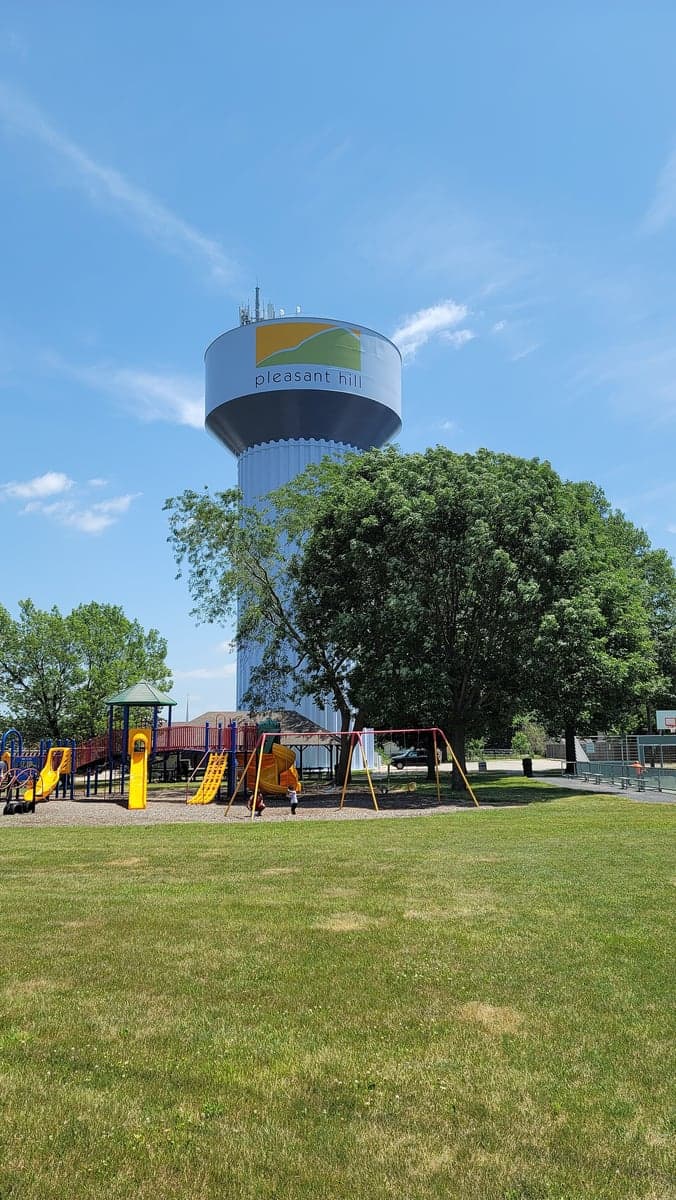
Photo: Wikipedia
Political ClimatePolitical Climate in Pleasant Hill, IA
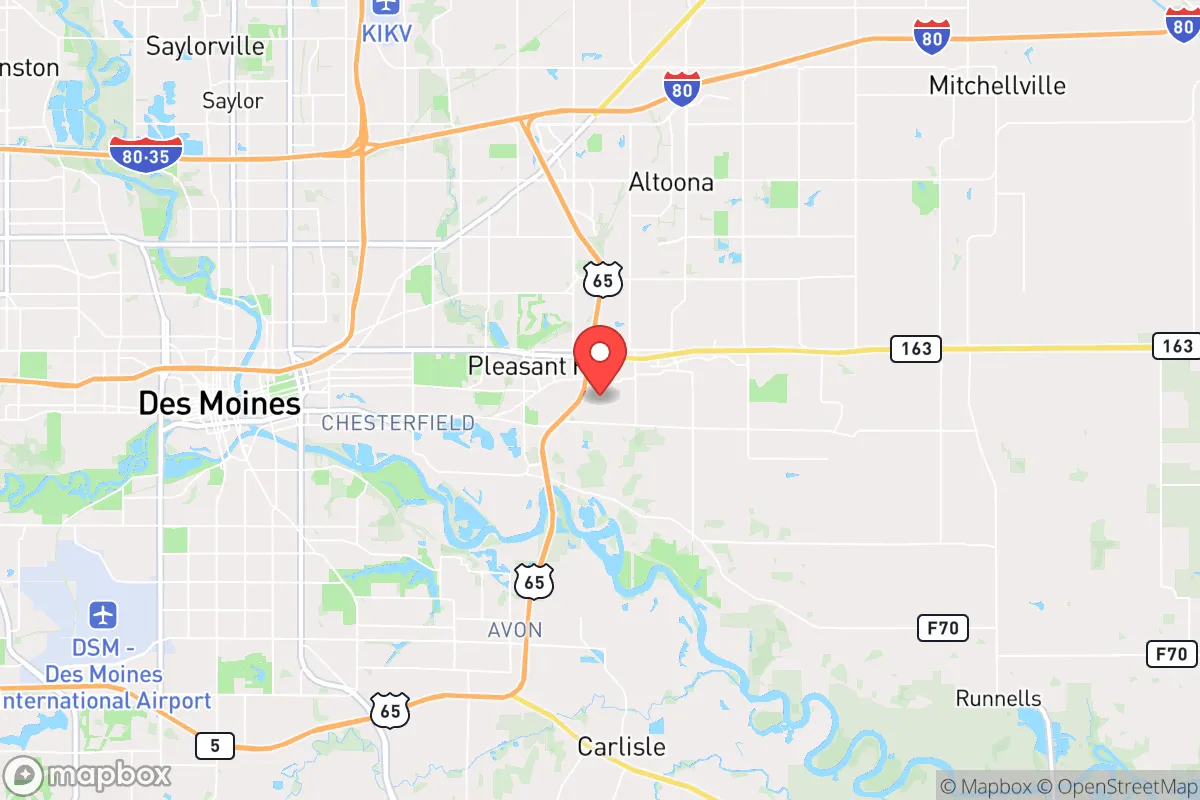
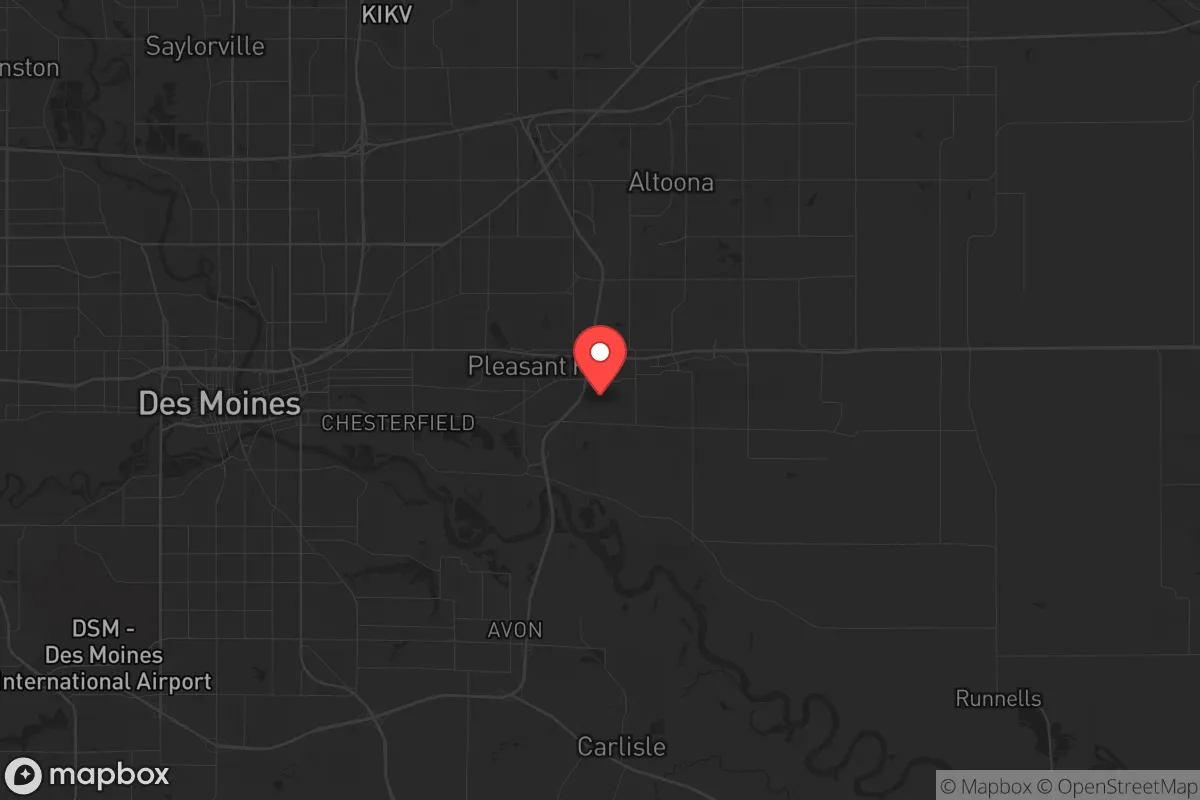
District shown is the primary district for this city’s centroid. Cities may span multiple districts.
Local Political AnalysisPolitical Analysis of Pleasant Hill, IA
Pleasant Hill, Iowa, has long been a solidly conservative community, and while it still leans that way, you can feel the political winds shifting a bit as the Des Moines metro area expands outward. The Cook PVI rating of R+2 tells you it’s not a deep-red stronghold like some of the rural counties to the south and west, but it’s still a place where most folks value personal responsibility and want the government to stay out of their business. In the last few presidential cycles, the precincts here have voted Republican by comfortable margins, though not by the landslides you’d see in, say, Indianola or Pella. The real story is how the influx of new residents from more progressive areas is slowly nudging the needle, and that’s something worth keeping an eye on if you’re thinking about moving here.
How it compares
Drive ten minutes west into Des Moines proper, and you’re in a completely different political world—blue-leaning, with city councils that are more than happy to experiment with new taxes and social programs. Head east or south to places like Altoona or Norwalk, and you’ll find communities that are still reliably red, but Pleasant Hill sits right in that interesting middle ground. It’s not as conservative as the rural townships outside the metro, where you can still have a conversation about property rights without someone bringing up zoning overlays, but it’s also not as liberal as the urban core. What’s happening here is a slow creep of progressive ideas—things like more restrictive housing regulations and talk of “equity” initiatives in the schools—that would have been laughed out of town hall a decade ago. For a longtime resident like me, it’s a little concerning to see how quickly a place can change when people move in who don’t share the same values about limited government and personal freedom.
What this means for residents
For the average family in Pleasant Hill, the political climate directly affects your wallet and your way of life. Property taxes have been creeping up as the city expands services, and there’s always a debate about whether new developments should come with more fees and mandates. The school board has seen some contentious meetings over curriculum and library materials, with a vocal minority pushing for changes that many of us see as unnecessary government overreach into what our kids are taught. On the plus side, the city council still leans conservative enough that you won’t see the kind of heavy-handed ordinances you might find in Des Moines—things like strict rental caps or business licensing hurdles. But the trend is clear: if you value being left alone to live your life without a bunch of bureaucratic red tape, you’ll want to get involved in local elections before the balance tips too far. The next few years will be critical, because once those progressive policies take root, they’re hard to pull out.
Culturally, Pleasant Hill still feels like a place where neighbors help each other and the Fourth of July parade is a bigger deal than any political rally. But there’s a growing divide between the old guard—folks who remember when this was mostly farmland—and the newcomers who see the city as just another suburb to be managed like a corporation. The biggest policy distinction you’ll notice is the city’s approach to development: it’s still relatively pro-business and pro-property owner, with fewer hoops to jump through than in West Des Moines or Ankeny. That said, the long-term trajectory depends on who shows up to vote in the primaries. If you’re looking for a place where you can still have a say in how your tax dollars are spent and keep the government from getting too big for its britches, Pleasant Hill is worth a look—just don’t wait too long to get involved.

State Political ClimatePolitical Climate in Iowa
State Political AnalysisPolitical Environment in the State
Iowa has been a reliably Republican state in presidential elections since 2016, but its political identity is more nuanced than a simple red-state label suggests. The state’s overall partisan lean is roughly R+6, driven by a deep rural-urban split and a recent, sharp shift to the right in once-competitive suburbs. Over the past 10-20 years, Iowa has moved from a classic swing state (voting for Obama in 2008 and 2012) to a solidly conservative stronghold, powered by a combination of rural cultural conservatism, a growing evangelical vote, and a backlash against progressive policies in the state’s few urban centers.
Urban vs. rural divide
The political map of Iowa is a textbook case of the urban-rural chasm. The state’s two largest metros, Des Moines and Iowa City, are the primary blue anchors. Polk County (Des Moines) has trended Democratic, but its margins are not enough to offset the massive Republican turnout in the surrounding rural counties. Iowa City, home to the University of Iowa, is a deep-blue island in Johnson County, which consistently votes 20+ points Democratic. In contrast, the vast majority of Iowa’s 99 counties are deeply red. Sioux County in the northwest, for example, is one of the most Republican counties in the nation, often voting 80%+ for GOP candidates. The real story, however, is the suburban shift. Places like Ankeny and Waukee, once considered swing suburbs of Des Moines, have moved decisively rightward since 2020, driven by parental rights concerns and COVID-era school closures. Meanwhile, rural towns like Storm Lake and Mason City remain reliably conservative, though they are losing population. The divide is stark: the Des Moines metro and Iowa City are the only areas where a Democrat can realistically compete, while the rest of the state is a Republican stronghold.
Policy environment
Iowa’s policy environment is aggressively conservative, with a focus on tax cuts, school choice, and limited government. The state enacted a flat income tax of 3.9% in 2022, down from a progressive top rate of 8.53%, and plans to phase it down to 3.5% by 2026. Property taxes are relatively low, and there is no inheritance tax. On education, Governor Kim Reynolds signed a universal school choice law in 2023, allowing any family to use state funds for private or homeschool expenses—a major win for parental rights. The state also passed a law banning transgender athletes from girls’ sports and requiring schools to notify parents of any changes to a student’s gender identity. Healthcare policy is mixed: Iowa expanded Medicaid under the Affordable Care Act, but the state has also imposed work requirements for able-bodied adults. Election laws were tightened in 2021, with stricter voter ID requirements and reduced early voting windows. The state also passed a “stand your ground” self-defense law in 2022, expanding gun rights. Overall, the policy environment is friendly to conservatives, with a strong emphasis on individual liberty and local control.
Trajectory & freedom
Iowa is clearly moving in the direction of more personal freedom, particularly in the areas of education, gun rights, and taxation. The 2023 school choice law is a landmark: it gives parents the power to direct their child’s education funding, a direct check on government-run schools. On gun rights, Iowa became a permitless carry state in 2021, meaning any law-abiding adult can carry a concealed firearm without a permit. The state also passed a “Second Amendment Preservation Act” in 2022, which prohibits state and local law enforcement from enforcing federal gun laws that violate the state constitution. On medical freedom, Iowa banned COVID-19 vaccine mandates for state employees and contractors in 2022, and the legislature has considered bills to prohibit mask mandates in schools. However, there are concerns about government overreach in other areas: the state’s ban on abortion after six weeks (signed in 2023) is a significant restriction on personal autonomy, though it aligns with the conservative view of protecting life. Property rights are strong, with no statewide rent control and limited zoning restrictions. The trajectory is clear: Iowa is becoming a freer state for those who value low taxes, educational choice, and gun rights, but less so for those who prioritize abortion access or progressive social policies.
Civil unrest & political movements
Iowa has seen relatively little civil unrest compared to coastal states, but there have been notable flashpoints. The 2020 Black Lives Matter protests in Des Moines and Iowa City were largely peaceful, though there were isolated incidents of property damage. More recently, the state has been a battleground for parental rights activism. In 2023, thousands of parents rallied at the state capitol in support of the school choice bill, and there have been organized efforts to remove school board members who supported mask mandates or critical race theory. On the left, the Iowa City area has seen protests against the state’s abortion ban, but these have been small and localized. Immigration politics are relatively quiet, as Iowa has a small foreign-born population (about 5%), though there have been debates over sanctuary policies—none of Iowa’s cities have declared themselves sanctuaries. Election integrity has been a major issue since 2020, with Republican legislators passing the aforementioned voter ID law and conducting a controversial audit of the 2020 election results in Linn County (Cedar Rapids). The audit found no widespread fraud, but it fueled ongoing distrust among some conservatives. Overall, the political climate is stable, with activism focused on education and parental rights rather than street-level unrest.
Projection
Over the next 5-10 years, Iowa is likely to become even more conservative, driven by two key trends: continued rural depopulation and suburban in-migration from blue states. The Des Moines metro is growing, but the new arrivals are often conservatives fleeing high-tax states like California and Illinois. This will likely push suburbs like Ankeny and Waukee further right. Meanwhile, rural counties will continue to lose population, but their political influence will remain strong due to the state’s Republican-drawn legislative maps. The Democratic base will shrink to the University of Iowa corridor and a few Des Moines precincts. Expect further tax cuts, possibly a flat income tax below 3%, and more school choice expansion. The state may also see a push for a constitutional amendment to ban abortion, though the current six-week law is already among the strictest in the nation. The biggest wildcard is the state’s aging population—Iowa has one of the oldest median ages in the country, which could slow growth and strain public services. But for a conservative moving in, the trajectory is positive: lower taxes, more educational freedom, and a culture that values self-reliance.
For a new resident, the bottom line is that Iowa offers a stable, conservative environment with low taxes, strong gun rights, and a growing emphasis on parental control in education. The state is not a libertarian paradise—there are still significant government restrictions on abortion and some business regulations—but it is moving in the right direction for those who prioritize personal freedom and limited government. The urban-rural divide means you’ll find a like-minded community in most of the state, especially in the suburbs and small towns. If you’re looking for a place where your values are reflected in state law and where you can live without constant political drama, Iowa is a solid bet.
* Values derived from national, state, county, city and local statistics and may differ in a specific area. Last updated: 2026-04-30T08:10:08.000Z
Narrative content on this page is AI-generated and may contain mistakes. Verify any details that matter before acting on them.
ReloMaps may earn a commission from affiliate links at no extra cost to you.

