
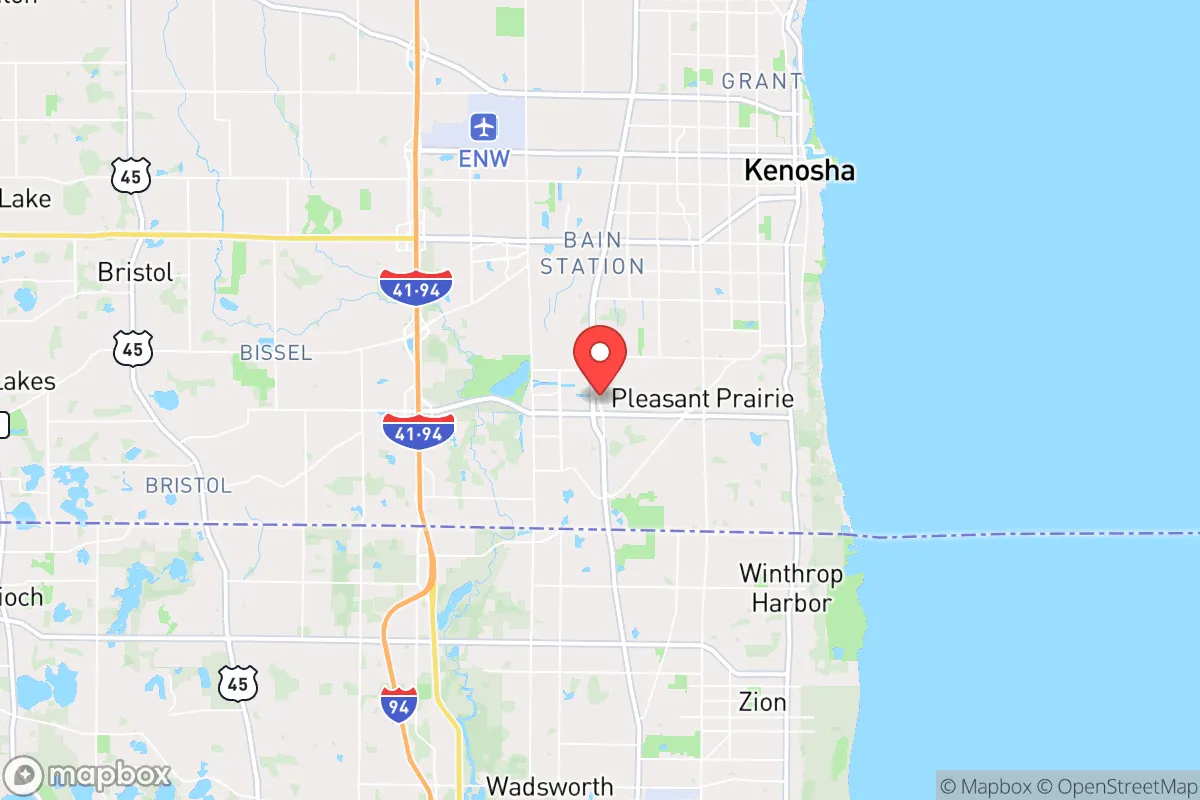
Photo: Wikipedia
Quality of Life in Pleasant Prairie, WI
A high quality of life with strong walkability, manageable living costs, healthy neighborhood signals, and solid amenity access.
What does Quality of Life tell us?
Quality of Life blends cost of living, nearby amenities, socioeconomic signals, and neighborhood character. City-level scores represent the whole municipality; individual neighborhoods can differ.
What does this tell us?
Quality of Life blends cost of living, nearby amenities, socioeconomic signals, and neighborhood character. City-level scores represent the whole municipality; individual neighborhoods can differ.
Cost of Living
22% above national average
The Real Cost of Living in Pleasant Prairie, WI for 2026
| Tier | Individual | Family (4) |
|---|---|---|
| Survival | $23k | $43k |
| Comfortable | $65k | $96k |
| Luxury | $137k+ | $213k+ |
| Elite (Top 5%) | $162k+ | $250k+ |
108%
The Area Signal
A metric tracking the socioeconomic signals of the area.
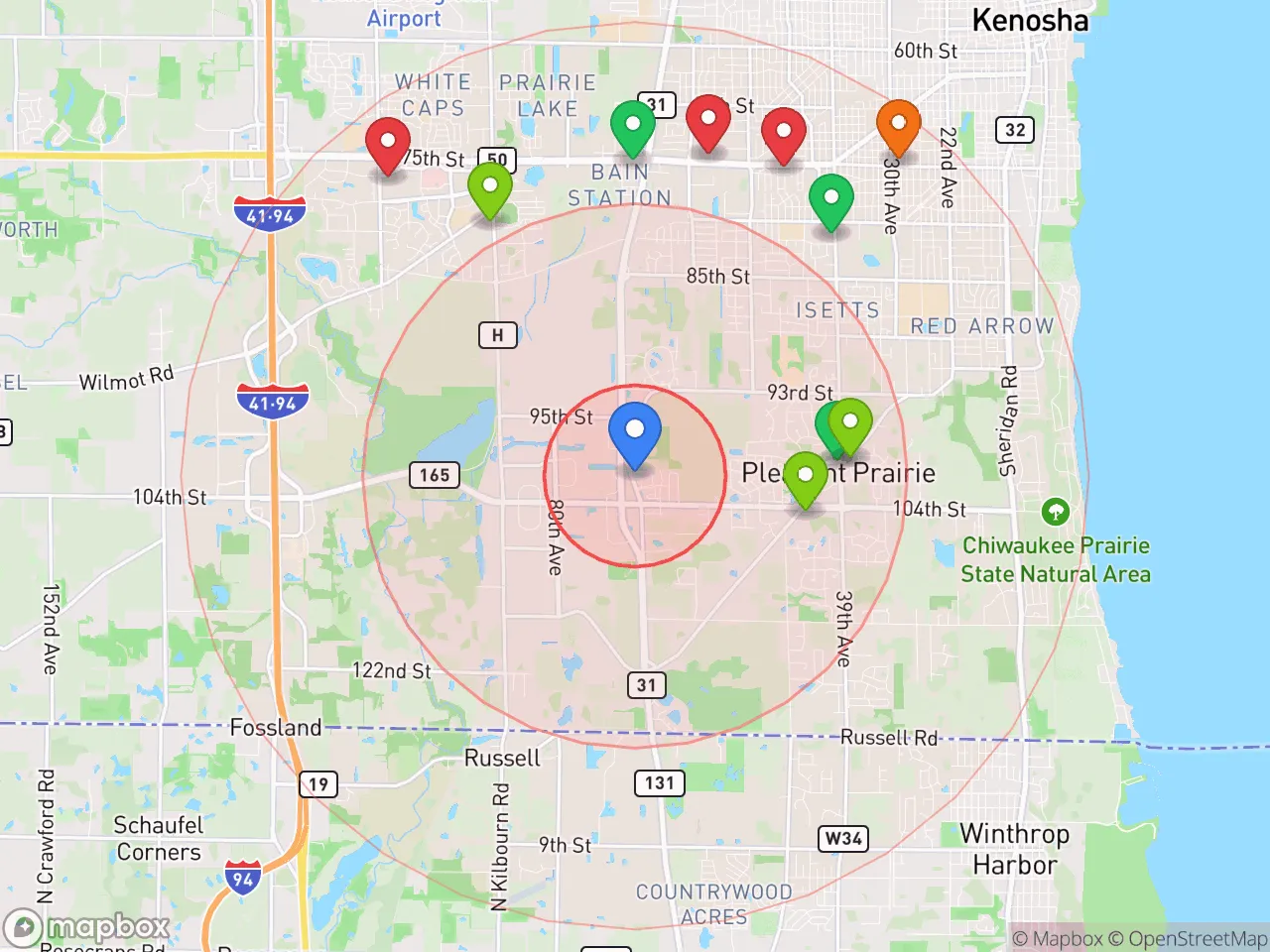
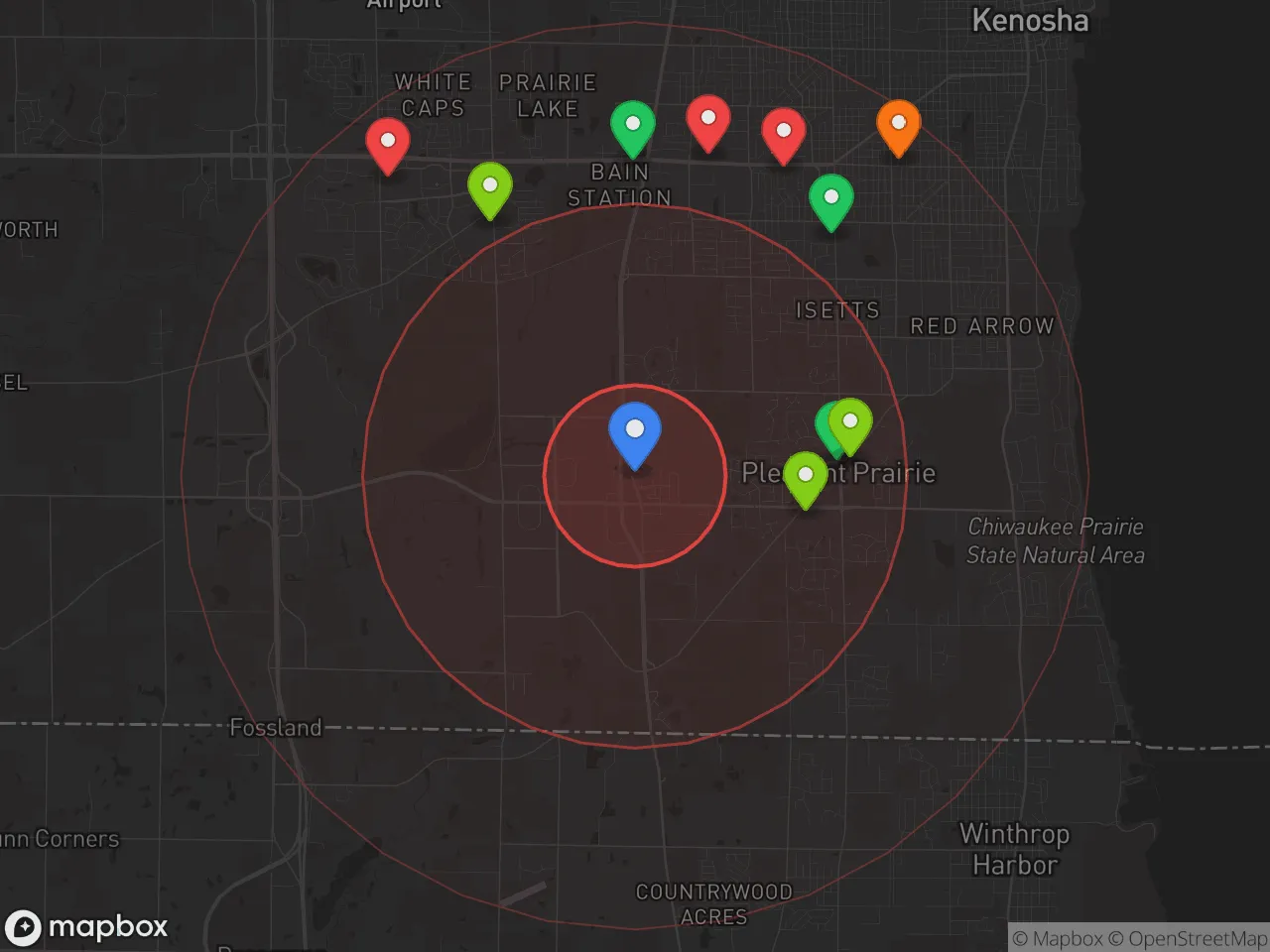
Hobbies
Explore the areaGroceries
7 within 10 miles
Gas
20 within 10 miles
Hospital
14 within 20 miles
Airport
ORD — O'Hare International
Post Office
USPS — Pleasant Prairie, WI
Critical Amenities
Quality-of-Life Analysis
Pleasant Prairie, Wisconsin, is an affluent village in Kenosha County with a cost of living index of 122 (22% above the U.S. average), reflecting its position as a high-demand suburb between Chicago and Milwaukee. The population skews toward upper-middle-class families and professionals who commute to Kenosha, Racine, or the Chicago metro area, drawn by strong schools, low crime, and newer housing stock. With a median home value of $336,300 and median rent of $1,446, the village offers a premium suburban lifestyle that commands a significant price premium over nearby Kenosha city but remains more affordable than comparable Lake County, Illinois suburbs.
Cost of living, housing, and affordability compared to Kenosha and Lake County
Pleasant Prairie’s cost of living index of 122 is driven primarily by housing, which is roughly 30% above the national average. The median home value of $336,300 is about $80,000 higher than the Kenosha city median, reflecting the village’s newer subdivisions, larger lots, and lower property tax rates relative to Illinois. Median rent of $1,446 is similarly elevated—about $200–$300 more per month than comparable rentals in Kenosha proper. For context, a similar home in Lake County, Illinois (e.g., Gurnee or Libertyville) would typically cost $400,000–$500,000, making Pleasant Prairie a relative bargain for Illinois transplants seeking Wisconsin’s lower property taxes. The average commute of 26.4 minutes is slightly above the national average (26.1 minutes), but many residents commute south to Lake County jobs or north to Racine, with I-94 and the Metra Kenosha station providing rail access to Chicago. Utilities and groceries are near the national average, while healthcare costs are about 5% lower than the U.S. norm.
What daily life is like for families: schools, amenities, and recreation
Daily life in Pleasant Prairie centers on the Pleasant Prairie Elementary School District (part of Kenosha Unified) and the highly rated Indian Trail High School and Academy, which offers Advanced Placement and technical education programs. The village is known for its extensive park system, including the 200-acre Prairie Springs Park with sports fields, walking trails, and a dog park, plus the RecPlex fitness and aquatic center. Retail anchors include the Pleasant Prairie Premium Outlets (a major regional shopping destination) and the LakeView Corporate Park, which houses employers like Amazon, Uline, and Jockey International. Dining options are mostly chain restaurants along 75th Street and Highway 165, with local gems like Boat House Pub & Eatery on the Pike River. The village’s low violent crime rate (roughly 1.5 per 1,000 residents, well below the national average) and well-maintained sidewalks and bike paths make it a safe, walkable environment for families with children. Cultural amenities are limited within village limits, but residents have easy access to Kenosha’s lakefront, the Kenosha Public Museum, and the Milwaukee and Chicago metro areas within an hour’s drive.
Pleasant Prairie is best suited for families and professionals who prioritize strong schools, low crime, and newer housing over urban walkability or nightlife. It appeals strongly to Illinois commuters seeking Wisconsin’s lower property taxes and to Kenosha-area workers who want a suburban buffer from the city’s older housing stock and higher crime rates. Retirees may find the cost of living high relative to other Wisconsin villages, but the RecPlex and parks offer active-adult programming. Singles or young professionals without cars may struggle with the car-dependent layout and limited public transit. Overall, Pleasant Prairie delivers a premium suburban experience with a clear trade-off: higher housing costs for safety, schools, and proximity to two major metro areas.

Crime in Pleasant Prairie, WI
Lower crime rates than 82% of comparable U.S. locations.
Violent CrimeViolent Crime Analysis
Property CrimeProperty Crime Analysis
Crime Analysis
Pleasant Prairie, Wisconsin, presents a mixed safety profile for prospective residents. The village's violent crime rate of 186.9 incidents per 100,000 people is notably lower than the national average, but its property crime rate of 1,121.4 per 100,000 exceeds the national benchmark. As a community situated within the Kenosha County metro area—part of the broader Chicago-Milwaukee corridor—Pleasant Prairie is subject to regional crime trends and the policies of local courts that can influence public safety outcomes.
Crime in context
When compared to statewide Wisconsin averages, Pleasant Prairie's violent crime rate is roughly 30% lower, offering a tangible safety advantage over many other communities in the state. However, the property crime rate sits approximately 15% higher than the Wisconsin average, driven largely by thefts and vehicle break-ins common in suburban commercial corridors. The village's proximity to Interstate 94 and the Illinois state line makes it a transit point, which can contribute to property crime patterns. It is important to note that Kenosha County, like many jurisdictions in the region, has seen the influence of progressive prosecutorial policies—including reduced bail requirements and diversion programs for repeat property offenders—which critics argue can lead to higher recidivism and more crimes against property and persons.
What residents experience
For daily life in Pleasant Prairie, the most common safety concerns are non-violent. Residents frequently report incidents of package theft, unlocked vehicle entries, and occasional retail theft at the Prairie Ridge shopping area. Violent crime is rare and typically isolated to domestic incidents or disputes among known individuals, meaning random attacks on strangers are uncommon. The village maintains its own police department with a strong community presence, and neighborhood watch programs are active in subdivisions like the Country Club Estates and Prairie Springs areas. However, the broader Kenosha County court system's emphasis on rehabilitation over incarceration for non-violent offenders means that some property criminals cycle through the system quickly, a dynamic that frustrates many homeowners who feel the justice system prioritizes offender outcomes over victim restitution.
Neighborhood-level variation in Pleasant Prairie is modest but worth noting. The newer developments west of I-94, such as those near Chiwaukee Prairie, tend to report lower crime rates due to limited commercial traffic and higher property values. Older neighborhoods closer to the Lake Michigan shoreline and the Kenosha border see slightly elevated property crime, particularly during summer months when transient populations increase. Overall, Pleasant Prairie offers a relatively safe suburban environment, but residents should remain vigilant about property security and be aware that regional criminal justice policies may reduce the deterrent effect for repeat offenders.
* Values derived from national, state, county, city and local statistics and may differ in a specific area. Last updated: 2026-04-21T10:13:15.000Z
Narrative content on this page is AI-generated and may contain mistakes. Verify any details that matter before acting on them.
ReloMaps may earn a commission from affiliate links at no extra cost to you.

