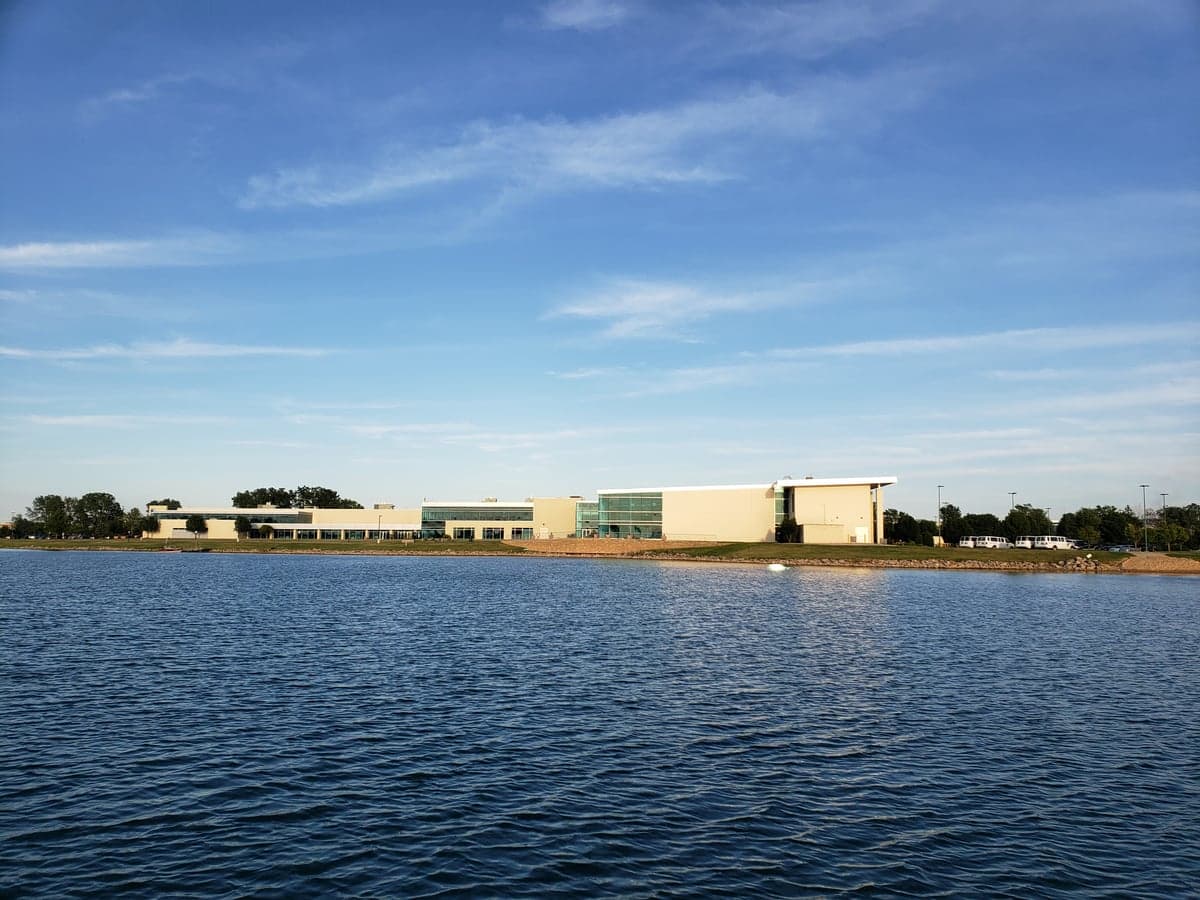
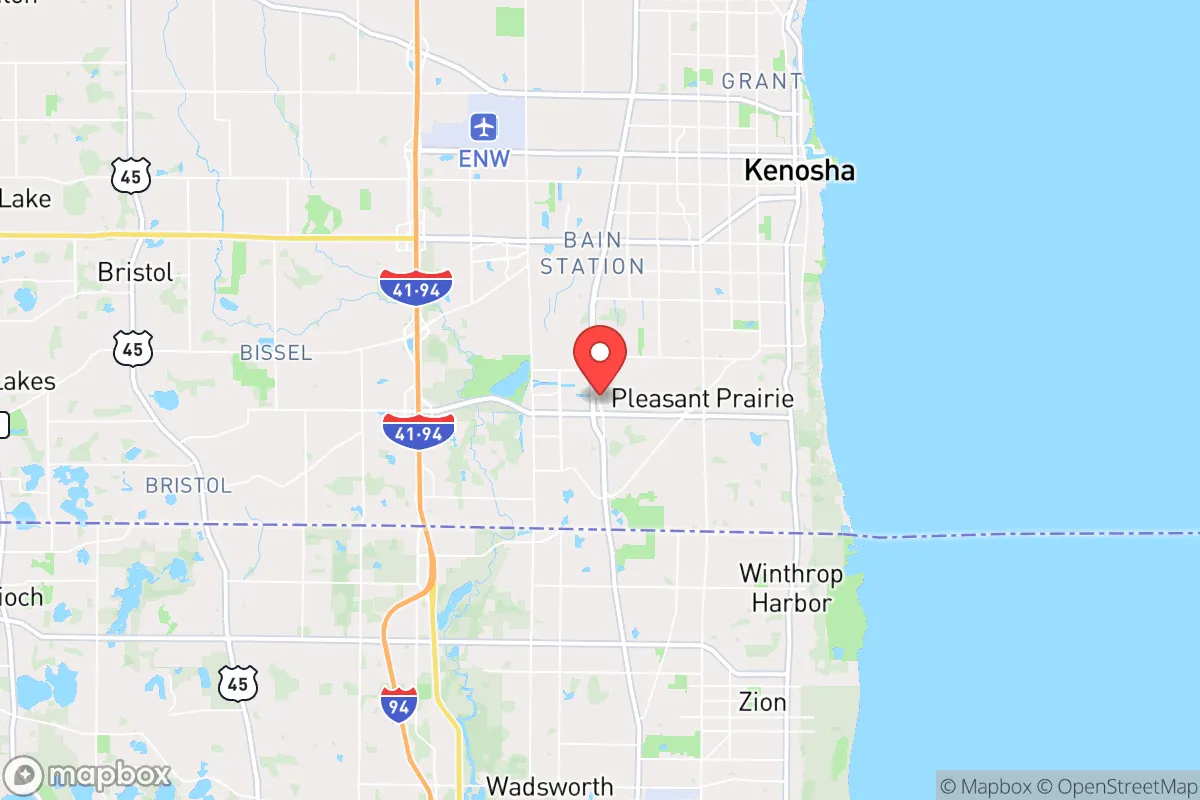
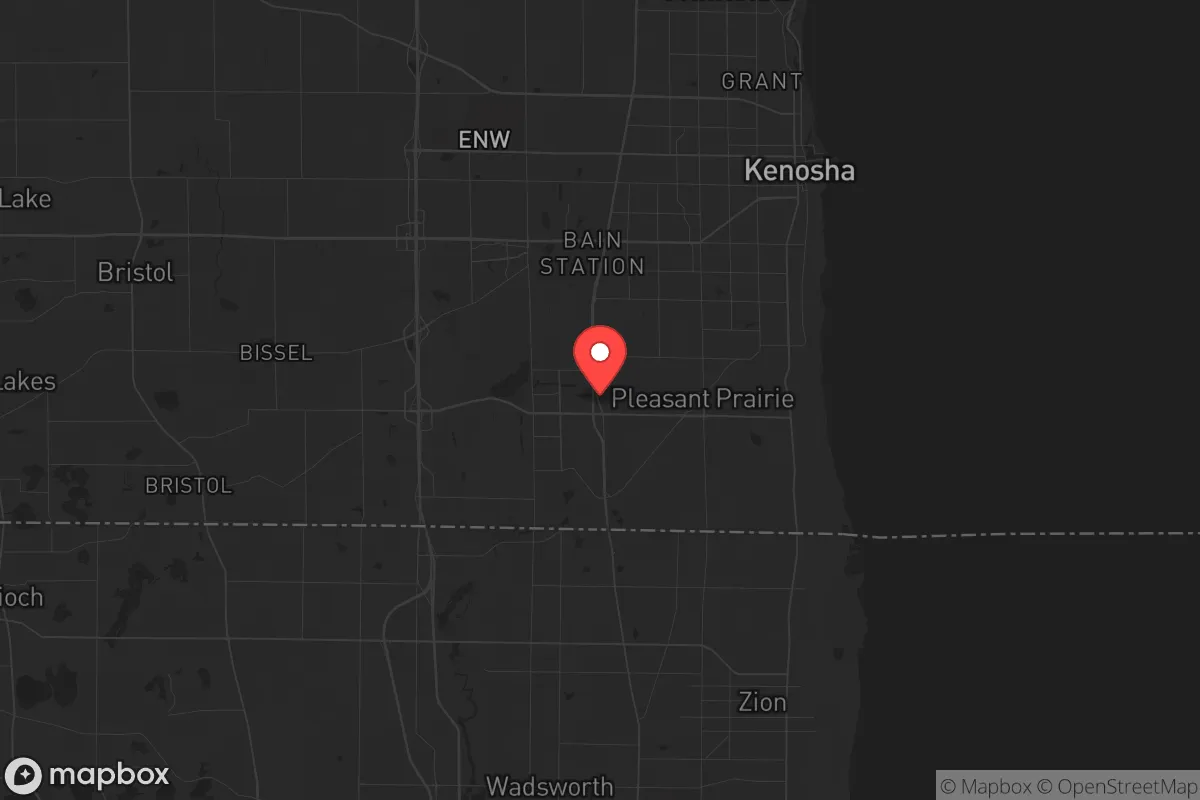
Photo: Wikipedia
Political ClimatePolitical Climate in Pleasant Prairie, WI
District shown is the primary district for this city’s centroid. Cities may span multiple districts.
Local Political AnalysisPolitical Analysis of Pleasant Prairie, WI
Pleasant Prairie, Wisconsin, has long been a reliably conservative community, and for good reason. The Cook PVI rating of R+2 tells the story of a place that, while not a deep-red stronghold, consistently leans right in a state that’s become a national battleground. But if you’ve lived here as long as I have, you’ve seen the winds start to shift, and it’s something worth keeping an eye on. The local culture still values personal responsibility and limited government, but there’s a creeping influence from the more progressive enclaves to the south, and it’s starting to show up in local elections and policy debates.
How it compares
To understand Pleasant Prairie’s politics, you have to look at its neighbors. Head north into Kenosha proper, and you’ll find a city that’s been trending blue for years, with a strong union and manufacturing base that’s increasingly aligned with Democratic candidates. Drive south across the state line into Illinois, and you hit the Chicago suburbs—places like Waukegan and Zion—where progressive policies on taxes, spending, and regulation are the norm. Pleasant Prairie sits right in the middle, acting as a kind of buffer zone. While Kenosha County as a whole has become more competitive, Pleasant Prairie itself has held the line, voting for conservative candidates in most local races. The contrast is stark: you can drive ten minutes and go from a town that still respects the Second Amendment and low property taxes to one where the local government is pushing green mandates and higher levies. That’s why a lot of folks moved here in the first place—to get away from that overreach.
What this means for residents
For the people who call Pleasant Prairie home, the political climate directly affects daily life in ways that matter. Property taxes here are still reasonable compared to Illinois, but there’s constant pressure from county-level officials to increase spending on things like public transit and “equity” initiatives that many residents see as unnecessary government expansion. The school board races have become a flashpoint, with parents pushing back against curriculum changes that feel more like social engineering than education. On the plus side, the village government has generally kept its nose out of personal business—no mask mandates that lasted forever, no heavy-handed business closures during the pandemic. But the concern is that as the Milwaukee-Chicago corridor grows, more people from high-tax, high-regulation areas will move in and try to bring their politics with them. The long-term trajectory depends on whether the community stays engaged and votes to keep government small and local control strong.
Cultural and policy distinctions
One thing that sets Pleasant Prairie apart is its practical, no-nonsense approach to development. You won’t find a lot of symbolic gestures or virtue-signaling ordinances here. The village focuses on keeping roads paved, parks maintained, and businesses open—without a lot of fanfare. There’s a strong sense that your money is your money, and the government’s job is to stay out of the way. That said, the recent push for a regional transit authority and talk of “climate action plans” at the county level are red flags. Those kinds of initiatives almost always lead to higher taxes and more bureaucratic control over how you live your life. For now, Pleasant Prairie remains a place where you can still have a say in your own backyard, but it’s going to take vigilance to keep it that way. If you’re looking for a community that values freedom over government convenience, this is still a solid bet—just don’t take it for granted.

State Political ClimatePolitical Climate in Wisconsin
State Political AnalysisPolitical Environment in the State
Wisconsin has long been a classic swing state, but over the past decade it has shifted from a true battleground to a state where Republicans hold a structural edge in statewide elections, thanks to a deep red rural and exurban base that offsets the deep blue strongholds of Milwaukee and Madison. The 2024 presidential race saw Donald Trump carry the state by roughly 1 point, continuing a pattern where the GOP has won four of the last six presidential contests here, a stark reversal from the 1988-2012 era when Democrats won six of seven. The key driver has been the realignment of working-class voters in the southeastern and western counties, plus a steady rightward drift in the Milwaukee suburbs, while the liberal urban cores have become even more concentrated and intense.
Urban vs. rural divide
The political map of Wisconsin is a tale of two poles. Milwaukee County, home to the state's largest city, routinely delivers 65-70% of its vote to Democrats, powered by a coalition of Black voters, young professionals, and union households. Dane County, anchored by Madison and its massive university and state government apparatus, is even more lopsided, often hitting 75% Democratic. These two counties alone produce a Democratic margin of roughly 300,000 votes, which the GOP must overcome everywhere else. And they do. The rural "WOW" counties — Waukesha, Ozaukee, and Washington — form the Republican heartland, with Waukesha County alone delivering 60-65% GOP margins. But the real story is the exurban and small-town counties that have flipped hard red since 2010: places like Brown County (Green Bay), which went from a swing county to a reliable +15 GOP lean, and Racine and Kenosha, which have shifted right as manufacturing workers abandoned the Democratic Party. The Fox Valley region, including Appleton and Oshkosh, has also trended Republican, while the far northwestern counties like Burnett and Washburn have become deeply red as well. The result is a map where Democrats are packed into two urban islands, and Republicans control the vast geographic and electoral middle.
Policy environment
Wisconsin's policy environment is a mixed bag for conservatives. On the plus side, the state has a flat income tax rate of 4.4% (down from 7.75% in 2011), a Republican-led achievement that has made the state more competitive. Property taxes are moderate, and the state has a right-to-work law (passed in 2015) and is a "shall issue" state for concealed carry. Act 10, the 2011 law that effectively ended collective bargaining for most public employees, remains in place and has saved local governments billions. However, the state has a Democratic governor, Tony Evers, who has vetoed numerous conservative bills, including a 2023 proposal to ban abortion at 14 weeks and a 2024 school choice expansion. The state also has a liberal-controlled Supreme Court (4-3 as of 2023), which has struck down Republican-drawn legislative maps and is currently considering a challenge to the state's 1849 abortion ban. Election laws are a bright spot: Wisconsin requires voter ID, has no same-day registration (though it does have same-day registration for existing voters), and has a relatively clean voter roll. But the state's election administration is decentralized, with each county running its own system, leading to persistent concerns about ballot drop boxes and absentee ballot handling in Democratic strongholds.
Trajectory & freedom
Wisconsin's trajectory on personal freedom is a tug-of-war. On the positive side, the state has seen a major expansion of gun rights in recent years: in 2023, the legislature passed a bill allowing permitless carry (signed by Evers after he let it become law without his signature), and the state has preempted local gun ordinances. Parental rights have also advanced: a 2023 law requires schools to notify parents of any changes to a student's health or well-being, and a 2024 law banned gender transition procedures for minors. However, the Evers administration has used executive orders to expand government overreach, including a 2023 order creating a "Office of Environmental Justice" that imposes DEI mandates on state contracts, and a 2024 order that effectively bans the use of natural gas in new state buildings. The biggest freedom concern is the abortion landscape: the 1849 ban is currently unenforceable due to a court ruling, but the liberal Supreme Court is likely to strike it down entirely, leaving the state with no restrictions until viability — a far more permissive regime than most of the Midwest. Property rights are generally strong, with no statewide rent control and limited zoning restrictions outside of Madison and Milwaukee.
Civil unrest & political movements
Wisconsin has a history of political volatility. The 2011 Act 10 protests in Madison drew 100,000 people to the Capitol and sparked a recall effort against Governor Scott Walker, which he survived. In 2020, Kenosha became a national flashpoint after the Jacob Blake shooting, leading to riots and the Kyle Rittenhouse shooting, which polarized the state further. Since then, the left has organized heavily through groups like the Wisconsin Alliance for Retired Americans and the League of Women Voters, while conservative grassroots groups like the Wisconsin Family Action and the Badger Institute have mobilized around school board races and election integrity. Immigration politics are relatively quiet, as Wisconsin is not a border state and has a small foreign-born population (about 5%), but there have been local sanctuary city debates in Madison and Milwaukee, which have passed "welcoming city" ordinances that limit cooperation with ICE. Election integrity remains a hot-button issue: the 2020 election saw widespread use of ballot drop boxes in Milwaukee and Madison, which Republicans have since tried to ban, and a 2024 audit found thousands of duplicate voter registrations. The state has no secession or nullification movement of note, but there is a persistent "Wisconsin First" sentiment among rural conservatives who feel ignored by the Madison-Milwaukee axis.
Projection
Over the next 5-10 years, Wisconsin is likely to become more Republican at the state level but more polarized internally. The demographic trends favor the GOP: the state's population is aging (median age 40), and the fastest-growing counties are the red exurbs like St. Croix County (near the Twin Cities) and Jefferson County, while Milwaukee and Dane counties are losing population. In-migration is largely from Illinois, bringing both conservative-leaning retirees and some liberal professionals, but the net effect is a slight rightward tilt. The 2024 redistricting, forced by the liberal Supreme Court, will likely create more competitive legislative maps, but the GOP's structural advantage in the rural and exurban areas is hard to overcome. The biggest wildcard is the abortion issue: if the Supreme Court strikes down the 1849 ban, it could energize the Democratic base and moderate suburban women, potentially flipping the state back to swing status. However, the GOP's grip on the legislature and the governor's office (which will be up for grabs in 2026) means that conservative policy wins on taxes, school choice, and gun rights are likely to continue. A new resident should expect a state that is politically divided but functionally conservative in most policy areas, with a vibrant grassroots conservative movement that is winning the culture war in the legislature even as the courts and the governor's office remain contested.
For a conservative moving to Wisconsin, the bottom line is this: you'll find a state where your values are represented in the legislature and in most local governments outside of Madison and Milwaukee. The tax burden is manageable, gun rights are strong, and parental rights are protected. But you'll need to be engaged — the battle for the courts and the governor's office is ongoing, and the outcome will determine whether Wisconsin continues its rightward trajectory or stalls into a purple stalemate. If you're looking for a place where your vote counts and your voice matters in the fight for freedom, Wisconsin is one of the best bets in the Midwest.
* Values derived from national, state, county, city and local statistics and may differ in a specific area. Last updated: 2026-04-21T10:13:15.000Z
Narrative content on this page is AI-generated and may contain mistakes. Verify any details that matter before acting on them.
ReloMaps may earn a commission from affiliate links at no extra cost to you.

