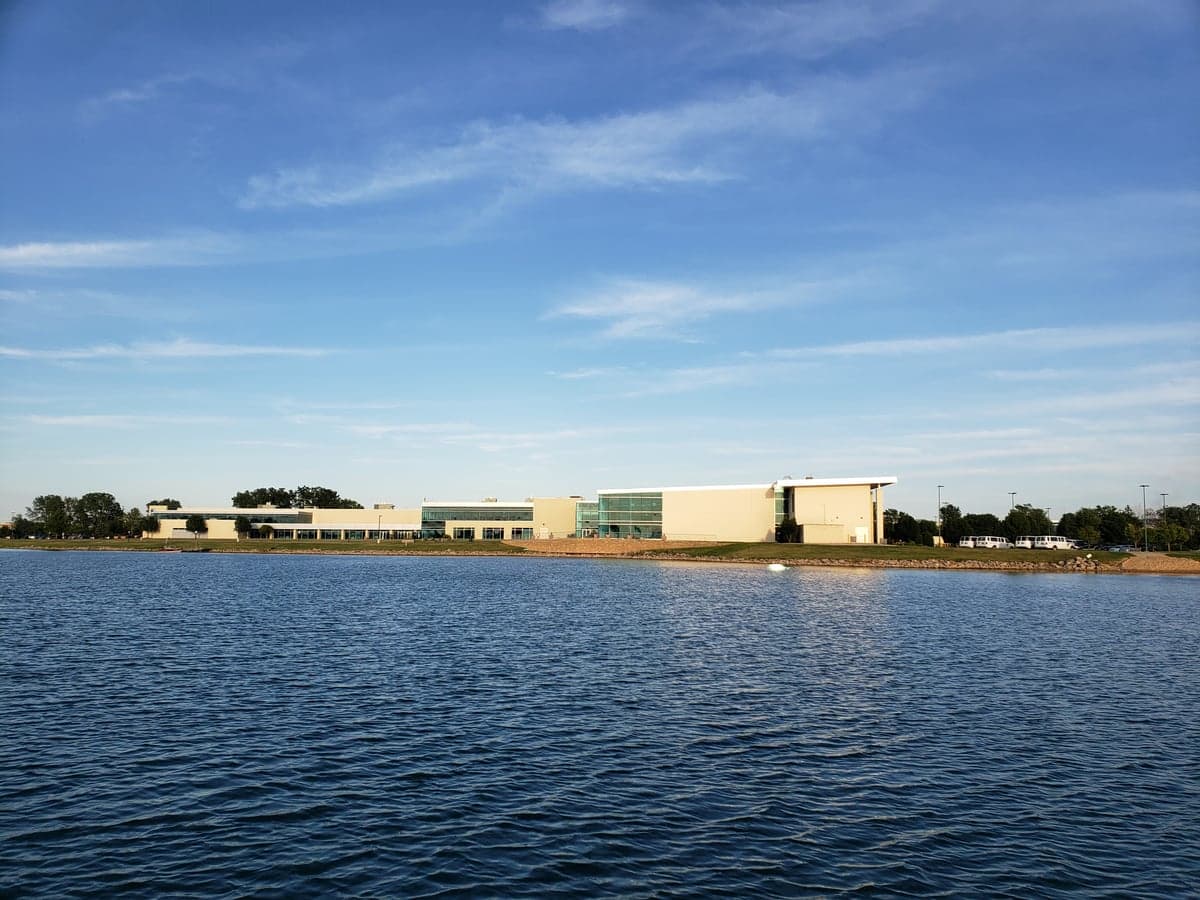
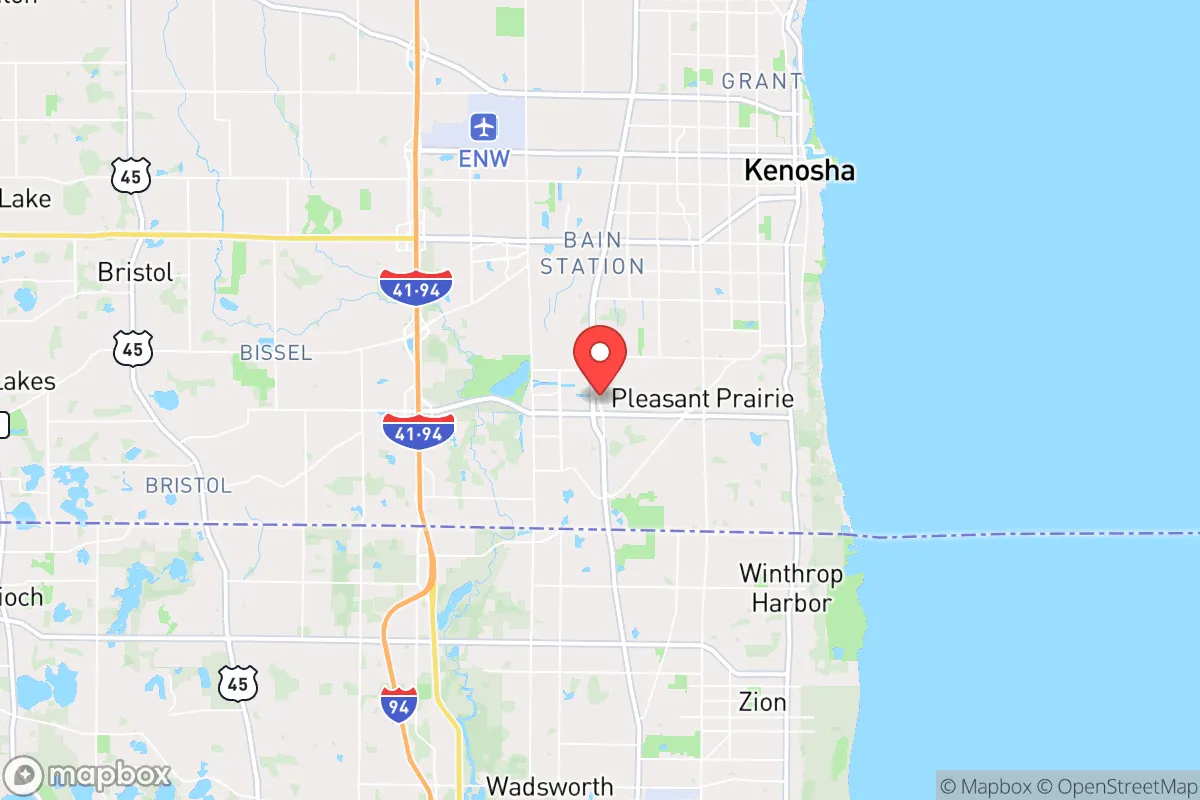
Photo: Wikipedia
Strategic Assessment of Pleasant Prairie, WI
Meaningful friction. Expect exposure to either population pressure, blast zones, or natural disaster risk. Consider buying a retreat property.
What does the Strategic Assessment tell us?
Our Strategic Assessment grades tactical survivability of an area. Major population centers, military targets, fallout zones, natural disasters, and border exposure all drive risk — lower exposure means a more defensible position in a crisis.
This is heavily inspired by Joel Skousen's Strategic Relocation book. Highly recommended you checkout the book ($)What does this tell us?
Our Strategic Assessment grades tactical survivability of an area. Major population centers, military targets, fallout zones, natural disasters, and border exposure all drive risk — lower exposure means a more defensible position in a crisis.
This is heavily inspired by Joel Skousen's Strategic Relocation book. Highly recommended you checkout the book ($)Strategic Pillars

Key Distances
Regional Safe Places
Below is our recommended "safe zones" in Wisconsin and the surrounding area based on our strategic heuristics. For most people, it's unrealistic to live in a “safe zone” full-time due to work, family or other personal reasons. They tend to be more rural. However, many of these areas are perfect for second homes and retreat properties that double as a vacation home or even a short-term rental.
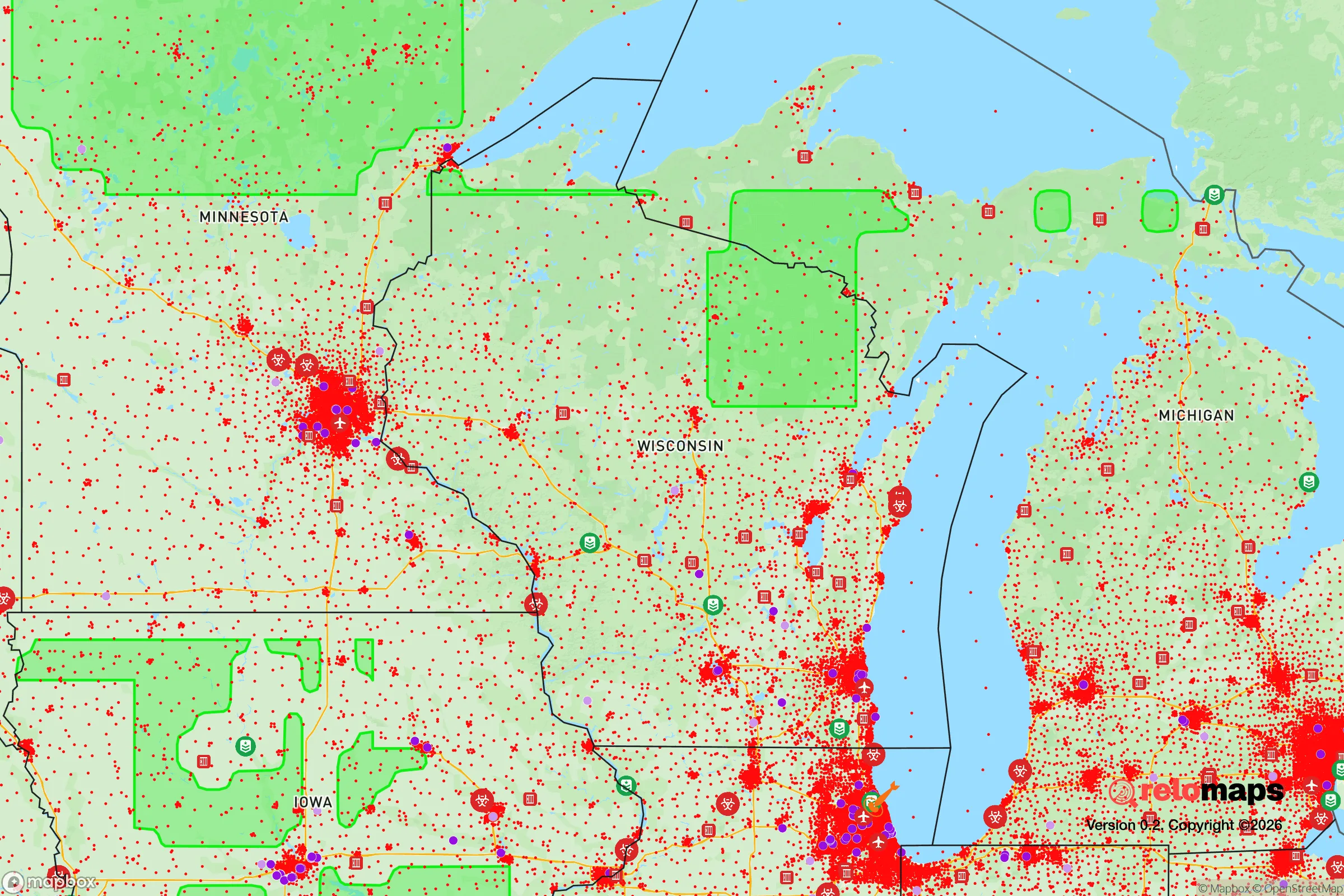
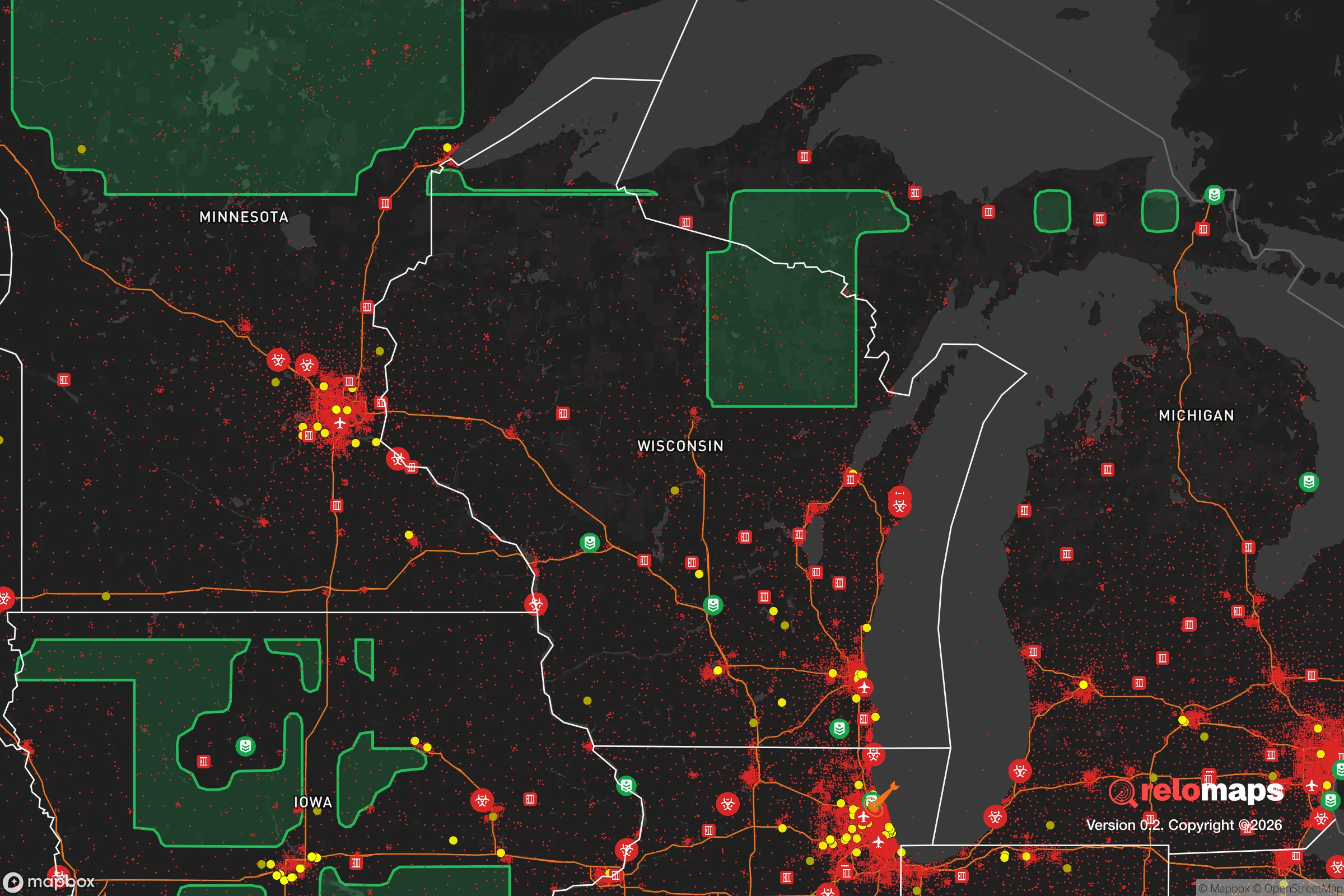


Important Note: For informational purposes only. This does not mean nothing bad ever happens in the green zones. Please use common sense. This is based on public data and modeled with AI. We tried to take a conservative approach but mistakes happen. We update this regularly as new information becomes available.
Solar Generator Recommendations
Backup power matters more here than in safer locations. We've picked three solar generators across budgets and capacity tiers — start with the budget unit if you only need a few essentials, or step up if you want to run a fridge and HVAC for days at a time.

Jackery Portable Power Station Explorer 300
Budget OptionPower on the Go: Weighing only 11 lbs, it's convenient to set up and store with book-sized foldable solar panels

BLUETTI Portable Power Station AC180
Designed for both indoor and outdoor scenarios, AC180 is highly capable as it has a robost capacity and continuous output power.

EF ECOFLOW DELTA Pro Ultra Power Station
Upgraded PickEcoFlow DELTA Pro Ultra is a whole-home energy system designed to grow with your family. Integrated with the Smart Home Panel 2, it scales to meet your evolving energy needs — keeping your home powered, intelligent, and secure through every stage of life.
We earn a commission, at no additional cost to you.
Strategic Assessment Analysis
Pleasant Prairie, Wisconsin, sits in a strategic sweet spot that few relocators fully appreciate: close enough to the economic engine of Chicago and Milwaukee to access resources, yet far enough to avoid the immediate blast zones, civil unrest fallout, and supply-chain choke points that plague those metros. This village of roughly 21,000 residents in Kenosha County offers a rare combination of geographic insulation, freshwater abundance, and industrial redundancy that makes it a serious contender for anyone thinking long-term about resilience. For the conservative prepper or survivalist, Pleasant Prairie isn't a bug-out location—it's a live-in location with the infrastructure to ride out the first 72 hours and the land to sustain a multi-year posture if things go sideways.
Geographic position and natural advantages for long-term survival
Pleasant Prairie’s location at the intersection of I-94 and I-41, just north of the Illinois border, gives it a logistical edge that most rural retreats lack. You’re less than 10 miles from Lake Michigan, which provides an essentially unlimited freshwater source—critical if municipal systems fail or become contaminated. The area sits on the Niagara Escarpment, meaning the water table is high and wells are viable even in drought conditions. The terrain is gently rolling, with a mix of agricultural land, wooded lots, and suburban development, offering multiple micro-environments for food production, water catchment, and concealment. Unlike the flat, exposed plains further west, Pleasant Prairie has enough tree cover and topographic variation to provide natural defensibility and thermal cover for off-grid operations. The climate is a true four-season zone: cold winters slow down biological threats and force discipline in heating and food storage, while summers are mild enough to avoid the heat-related infrastructure failures that plague the South. For a relocator prioritizing self-sufficiency, this is a climate that rewards preparation without punishing mistakes.
Risks, exposures, and proximity to fallout-relevant landmarks
No location is a fortress, and Pleasant Prairie has clear vulnerabilities that must be factored into any survival calculus. The most obvious risk is proximity to the Chicago metropolitan area—roughly 50 miles south. In a mass casualty event, civil unrest, or grid-down scenario, Chicago’s population of 2.7 million could become a human wave moving north along I-94. The same interstate that brings you Amazon packages in peacetime becomes a refugee highway in crisis. Kenosha itself, just 5 miles north, has a population of about 100,000 and has seen its own civil unrest in recent years, including the 2020 riots that drew national attention. Pleasant Prairie is not immune to spillover. Additionally, the area lies within the Great Lakes industrial corridor, which includes multiple chemical plants, rail yards, and the Zion Nuclear Power Station (decommissioned but still storing spent fuel) about 20 miles south. A catastrophic failure at any of these sites could render large areas uninhabitable for weeks. The village also sits in a tornado-prone zone, with EF-2 and EF-3 events historically possible. Flooding is less of a concern due to the well-drained glacial till soils, but the Pike River and its tributaries can surge in heavy rain events. For the strategic relocator, these risks are manageable with proper planning—but they are real and must be acknowledged.
Practical resilience for a relocator: food, water, energy, and defensibility
Pleasant Prairie’s practical resilience is where the analysis gets interesting. Water is the single most critical resource in any survival scenario, and this area has it in abundance. Lake Michigan is a 22,000-square-mile freshwater reservoir that doesn’t freeze solid and is accessible via multiple public access points and private lakefront properties. The village itself draws its municipal water from the lake, but a well-drilled property gives you independence from the grid. The water table is shallow enough that a hand pump or solar-powered well can provide potable water indefinitely. For food, the surrounding Kenosha County is still agricultural, with working farms producing dairy, corn, soybeans, and vegetables. The Pleasant Prairie Farmers Market runs seasonally, but more importantly, the soil is fertile and the growing season (roughly 150 frost-free days) is long enough for a serious garden. Local ordinances are generally friendly to backyard chickens, beekeeping, and small livestock, though you’ll want to check HOA restrictions if you’re in a subdivision. Energy resilience is mixed: the grid is reliable in normal times, but winter storms have caused multi-day outages. Solar is viable, though winter production drops significantly; a backup generator with a 500-gallon propane tank is the standard prepper solution here. Defensibility is moderate. The village is laid out in a suburban grid with cul-de-sacs and some rural acreage properties that offer good fields of fire and limited approach vectors. The presence of multiple lakes and wetlands creates natural barriers to vehicle movement. However, the area is not remote—neighbors are close, and noise discipline matters. For a single individual or family, a property with a basement (for shelter and storage), a well, and at least 5 acres of wooded or agricultural land provides a solid base of operations.
The overall strategic picture for Pleasant Prairie is one of calculated trade-offs. It is not a remote mountain redoubt, and it will never be a place to disappear entirely. But for the conservative relocator who wants to stay within striking distance of urban resources while maintaining a credible self-sufficiency posture, it offers a rare combination of freshwater security, agricultural potential, and industrial redundancy. The risks from Chicago and Kenosha are real, but they are predictable and can be mitigated with route planning, community building, and a solid cache of supplies. In a world where the next crisis could be economic collapse, civil unrest, or a pandemic resurgence, Pleasant Prairie gives you the option to hunker down without cutting yourself off from civilization entirely. That’s a strategic advantage worth paying for.

* Values derived from national, state, county, city and local statistics and may differ in a specific area. Last updated: 2026-04-21T10:13:15.000Z
Narrative content on this page is AI-generated and may contain mistakes. Verify any details that matter before acting on them.
ReloMaps may earn a commission from affiliate links at no extra cost to you.

