
Photo by Nils Huenerfuerst on Unsplash
Political ClimatePolitical Climate in Pleasant Valley, WV
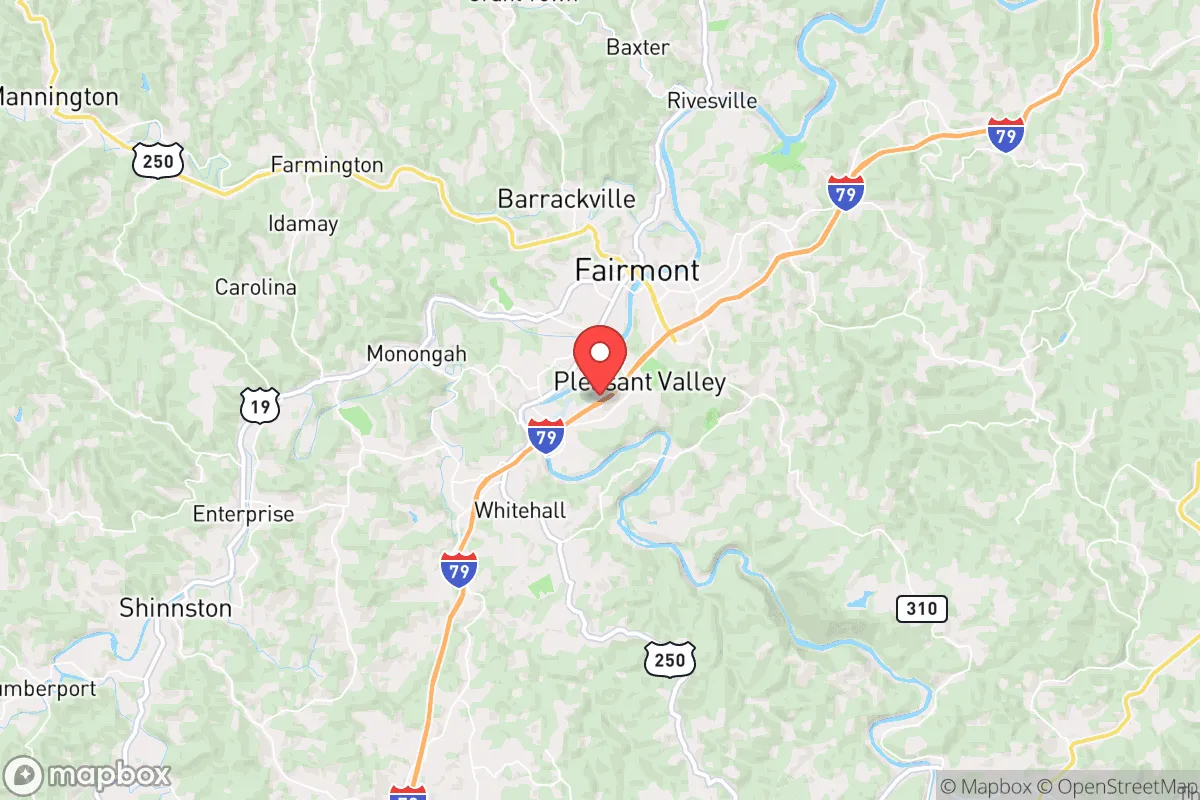
District shown is the primary district for this city’s centroid. Cities may span multiple districts.
Local Political AnalysisPolitical Analysis of Pleasant Valley, WV
Pleasant Valley, West Virginia, is about as solidly conservative as they come, with a Cook PVI of R+20 that tells you pretty much everything you need to know about the local voting patterns. This isn't a place that's been trending blue or even purple—it's a community that has held the line on traditional values for decades, and the numbers back it up. If you look at the surrounding area, you'll find that places like Morgantown, just a short drive north, have shifted noticeably leftward in recent years, but Pleasant Valley has stayed the course, and most folks here are proud of that.
How it compares
When you stack Pleasant Valley up against its neighbors, the contrast is stark. Morgantown, home to West Virginia University, has seen a steady influx of out-of-state students and faculty, which has nudged its politics toward the progressive side—think higher taxes, more regulations, and a general acceptance of government meddling in daily life. Down in Fairmont, you get a bit more balance, but it's still not as reliably conservative as Pleasant Valley. The R+20 rating means that in a typical election, Republicans win by a landslide margin here, and that's not changing anytime soon. The local government tends to keep its hands off, which is exactly how residents like it—less red tape, fewer mandates, and a focus on personal responsibility over government programs.
What this means for residents
For the people who live here, the political climate translates into a daily life that feels free from the kind of overreach you hear about in other parts of the country. There's no push for strict zoning laws that tell you what you can do with your own property, no heavy-handed environmental regulations that choke small businesses, and no pressure to adopt the kind of woke policies that have taken over schools and town halls elsewhere. The local schools still teach the basics without indoctrination, and the sheriff's department focuses on real crime, not enforcing unpopular mandates. That said, there's a growing concern among longtime residents that the progressive wave creeping in from Morgantown and even from state-level politics in Charleston could eventually spill over. The long-term worry is that if the state keeps moving toward more centralized control—like pushing for higher minimum wages or stricter gun laws—Pleasant Valley's way of life could be threatened. For now, though, the community stays tight-knit and vigilant, and most folks are confident that the conservative majority will hold the line for the foreseeable future.
Culturally, Pleasant Valley stands out for its emphasis on self-reliance and neighborly support rather than government assistance. You won't find a lot of public programs here because people prefer to handle things themselves—church groups, volunteer fire departments, and family networks fill the gaps. Policy-wise, the area is a stronghold for Second Amendment rights, with minimal local restrictions on firearms, and there's a general skepticism of any new tax or regulation that comes down from the state capital. The biggest distinction from nearby progressive towns is the attitude toward personal freedom: in Pleasant Valley, the default assumption is that you should be left alone to live your life, as long as you're not hurting anyone else. That's a value that's getting harder to find, and the folks here intend to keep it that way.

State Political ClimatePolitical Climate in West Virginia
State Political AnalysisPolitical Environment in the State
West Virginia has long been one of the most reliably Republican states in the nation, but that wasn’t always the case. As recently as the 1990s, it was a Democratic stronghold at the state and local level, though those Democrats were culturally conservative. The realignment accelerated after 2000, and by 2024, Donald Trump carried the state by nearly 40 points. The dominant coalition today is a mix of rural, working-class voters, coal-country families, and evangelical Christians, with the GOP holding supermajorities in both legislative chambers. The trajectory over the last 20 years has been a steady march rightward, driven by cultural backlash, energy policy fights, and a deep distrust of federal authority.
Urban vs. rural divide
The political map of West Virginia is starkly divided between a handful of small urban centers and the vast rural expanse. The state’s largest city, Charleston, and its surrounding Kanawha County lean more moderate, but even there, the GOP has made deep inroads. In 2024, Kanawha County voted for Trump by about 18 points, a far cry from its Democratic past. Morgantown, home to West Virginia University, is the most liberal pocket in the state, with Monongalia County voting for Trump by only single digits in 2024—the closest margin of any county outside the Eastern Panhandle. Huntington and Cabell County are reliably red, though not as deep red as the rural counties. The real GOP engine is in the state’s southern coalfields—places like Logan, Mingo, and McDowell counties, where Trump won by 70 to 80 points. The Eastern Panhandle, including Martinsburg and Berkeley County, has become a Republican stronghold as well, driven by an influx of former Maryland and Virginia residents seeking lower taxes and more freedom. The rural-urban divide here isn’t about cities versus farms; it’s about university towns versus coal country, with the latter dominating the state’s political direction.
Policy environment
West Virginia’s policy environment is aggressively conservative, with a focus on low taxes, deregulation, and cultural traditionalism. The state has no personal income tax on Social Security benefits and has been phasing down its personal income tax rate, which is now a flat 3.99% as of 2025. Property taxes are among the lowest in the nation, and there is no estate or inheritance tax. The regulatory posture is business-friendly, especially for energy extraction, manufacturing, and outdoor recreation. On education, the state passed a robust school choice law in 2021, creating the Hope Scholarship program, which allows parents to use public funds for private school tuition, homeschooling, or other educational expenses. This has been a major draw for conservative families. Healthcare policy is mixed: the state expanded Medicaid under the Affordable Care Act, but there is no state-level abortion access to speak of—trigger laws banned abortion after the Dobbs decision, with very narrow exceptions. Election laws are moderately conservative: voter ID is required, early voting is available, but no-excuse absentee voting is limited. The state has not gone as far as some others on election integrity measures, but there is a general trust in the system among conservatives.
Trajectory & freedom
West Virginia is becoming more free in many respects, particularly on economic and Second Amendment issues. In 2024, the legislature passed a permitless carry law, allowing any adult who can legally possess a firearm to carry it concealed without a permit. This was a major victory for gun rights advocates. On parental rights, the state passed the "Parental Bill of Rights" in 2023, requiring schools to notify parents of any changes to a child’s health or well-being and prohibiting instruction on sexual orientation or gender identity in K-5 classrooms. Medical autonomy has seen some expansion, with the state legalizing medical cannabis in 2017 (though the program has been slow to roll out) and passing a law in 2024 protecting doctors who refuse to perform procedures they find morally objectionable. Property rights are strong, with no state-level property tax increases without a vote of the people. However, there are concerns about government overreach in the form of the state’s involvement in the opioid settlement—some conservatives worry that the state is too cozy with pharmaceutical litigation lawyers. On the whole, the trajectory is toward more personal liberty, especially for gun owners, parents, and taxpayers.
Civil unrest & political movements
West Virginia has a history of labor unrest, but modern political movements are largely centered on cultural and energy issues. The 2018 teachers’ strike was a rare moment of cross-ideological protest, with educators from both parties walking out over pay and benefits. That movement has since faded, replaced by more conservative activism. The "Coal Country" movement remains strong, with regular rallies in Beckley and Lewisburg opposing federal environmental regulations. There is no significant sanctuary city movement in West Virginia; in fact, the state passed a law in 2020 requiring local law enforcement to cooperate with federal immigration authorities. Election integrity has been a flashpoint, with some activists pushing for hand-counting of ballots and stricter voter roll maintenance, though the legislature has not gone as far as some neighboring states. The most visible political flashpoint for a new resident would be the ubiquitous "Don’t Tread on Me" flags and Trump signage, especially in rural areas. There is a small but vocal libertarian streak, particularly in the Eastern Panhandle, where residents often express frustration with both major parties. Overall, civil unrest is minimal—West Virginians tend to express their political views through voting and local activism rather than street protests.
Projection
Over the next 5 to 10 years, West Virginia is likely to become even more conservative, but with some important caveats. The state’s population is aging and declining, with younger residents leaving for opportunities elsewhere. This demographic trend reinforces the GOP’s dominance, as older voters are more reliably Republican. However, the Eastern Panhandle is seeing an influx of remote workers and retirees from blue states, which could introduce a more moderate, libertarian-leaning element. These new residents are generally conservative on taxes and regulation but may be less culturally aligned with the coal-country base. The state’s energy transition—from coal to natural gas, renewables, and possibly nuclear—will be a defining political issue. Expect continued fights over federal energy policy, with state leaders pushing back against any perceived overreach. The school choice movement will likely expand, and there may be further tax cuts. On social issues, the state will remain a leader in protecting parental rights and gun rights. A new resident moving in now should expect to find a state that is deeply conservative, increasingly free on economic and personal liberty fronts, and resistant to progressive trends. The biggest risk is economic stagnation, but for those who value low taxes, strong Second Amendment protections, and a traditional culture, West Virginia will remain a solid bet for the foreseeable future.
For a conservative individual or family considering relocation, West Virginia offers a rare combination of low taxes, strong gun rights, school choice, and a culture that respects traditional values. The state is not without its challenges—economic diversification is slow, and the healthcare system has gaps—but the political climate is stable and aligned with conservative priorities. If you’re looking for a place where your vote counts, your freedoms are respected, and your children can be educated according to your values, West Virginia is one of the safest bets in the country. Just be prepared for a slower pace of life and a climate that can be harsh in the mountains. The trade-off is worth it for many.
* Values derived from national, state, county, city and local statistics and may differ in a specific area. Last updated: 2026-04-23T05:44:32.000Z
Narrative content on this page is AI-generated and may contain mistakes. Verify any details that matter before acting on them.
ReloMaps may earn a commission from affiliate links at no extra cost to you.

