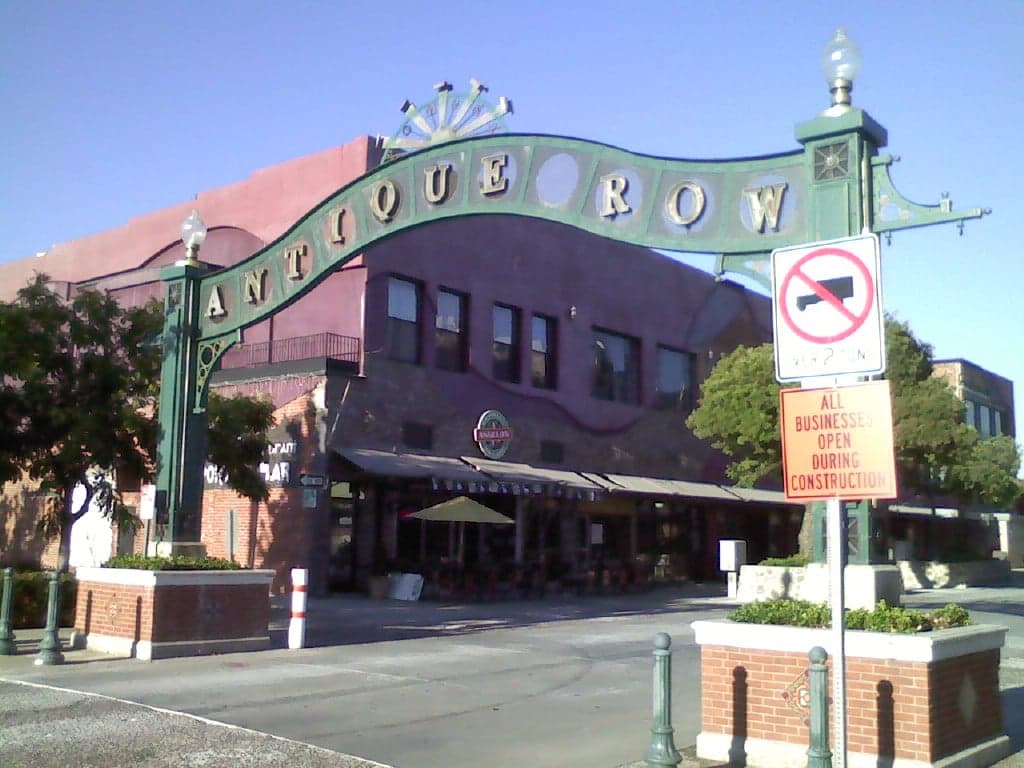
Photo: Wikipedia
Personal Sovereignty in Pomona, CA
Moderate friction. Expect trade-offs in some aspect of personal liberty and independence.
What does Personal Sovereignty tell us?
Personal Sovereignty measures your capacity for self-reliance and independence with minimal government friction. Higher scores mean fewer barriers between you and the way you want to live... but it assumes you have the space you need and good neighbors.
What does this tell us?
Personal Sovereignty measures your capacity for self-reliance and independence with minimal government friction. Higher scores mean fewer barriers between you and the way you want to live... but it assumes you have the space you need and good neighbors.
State Policy
Energy independence: Importer (33% of energy produced in-state)
Personal Liberty
Homesteading

Personal Liberty Analysis
Pomona, California presents a challenging environment for personal sovereignty, where the state's expansive regulatory framework and high tax burden significantly constrain individual autonomy. While the city itself has a moderate political profile compared to coastal enclaves, residents must contend with California's overarching policies on self-defense, property use, and parental rights that systematically reduce the scope of independent decision-making. For those prioritizing self-reliance and minimal government interference, Pomona represents a location where sovereignty must be actively defended rather than assumed, with the state's legal architecture creating substantial friction for prepper and survivalist lifestyles.
Tax burden and regulatory posture in Pomona
California's tax structure is among the most aggressive in the nation, and Pomona residents bear the full weight of it. The state's top marginal income tax rate of 13.3% applies to earnings above $1 million, but even middle-income households face rates around 9-10%, significantly higher than in Texas or Florida. Sales tax in Pomona is 10.25%, among the highest in Los Angeles County, adding a substantial surcharge to every purchase of gear, supplies, or building materials. Property taxes, while capped at 1% of assessed value under Proposition 13, can increase upon sale, and the state's Mello-Roos community facility districts often add special assessments that raise effective rates. Regulatory posture is equally burdensome: California's California Environmental Quality Act (CEQA) can delay or block construction of sheds, workshops, or water storage systems, and the state's building codes are among the most stringent nationally. For a prepper looking to retrofit a home with reinforced structures, backup power, or extensive food storage, the permitting process can be a multi-year ordeal. The state's California Air Resources Board (CARB) also restricts the use of generators and off-road equipment, limiting options for off-grid energy independence.
Self-defense and gun law specifics in Pomona
California's gun laws are among the most restrictive in the country, and Pomona residents must navigate a dense web of regulations that severely limit self-defense options. The state's Roster of Handguns Certified for Sale restricts which firearms can be purchased new, effectively banning many modern models. The California Assault Weapons Control Act prohibits rifles with certain features, including pistol grips, flash suppressors, and collapsible stocks, and the state's 10-round magazine limit applies to all firearms. Concealed carry permits (CCWs) are issued by the Los Angeles County Sheriff's Department, and while the Supreme Court's Bruen decision has loosened "good cause" requirements, the process remains costly and time-consuming, with average wait times of 6-12 months and fees exceeding $300. Open carry is prohibited entirely. The state's red flag laws (Gun Violence Restraining Orders) allow family members or law enforcement to petition for temporary firearm seizure without a criminal conviction, a tool that critics argue can be abused in disputes. For survivalists, the inability to own standard-capacity magazines or certain defensive rifles is a significant limitation. Ammunition purchases are also tracked through the state's Ammunition Purchase Authorization Program, requiring a background check for every transaction, and online ammo sales are effectively banned. Stand-your-ground laws do not exist in California; the state follows a "duty to retreat" standard in public spaces, meaning you must attempt to avoid confrontation before using deadly force, even if you are lawfully present.
Self-reliance and homesteading viability in Pomona
Pomona's urban and suburban character makes traditional homesteading difficult, but some opportunities for self-reliance exist with careful planning. Typical residential lot sizes in Pomona range from 5,000 to 7,500 square feet, with some larger parcels in the city's northern hills. Zoning codes in most residential areas allow for backyard chickens (up to 4-6 hens, no roosters) and small vegetable gardens, but livestock such as goats, pigs, or cattle are prohibited. The city's Pomona Municipal Code restricts the height of fences to 6 feet in rear yards and 3.5 feet in front yards, limiting privacy and security. Off-grid feasibility is extremely low: California law requires connection to the municipal water and sewer system where available, and solar panel installation must comply with state net metering rules that can complicate true energy independence. Rainwater harvesting is permitted but limited to 2,500 gallons of storage without a permit, and any system must include mosquito control measures. The city's fire code restricts outdoor burning and the storage of large quantities of fuel or propane. For serious preppers, the lack of acreage and restrictive zoning means that most self-reliance efforts must focus on urban techniques: container gardening, indoor food storage, and small-scale renewable energy. The nearby San Gabriel Mountains offer some public land for hunting and foraging, but access requires travel and permits.
Personal liberties in Pomona: parental rights, medical autonomy, speech, and property
California's progressive legal framework significantly impacts personal liberties in Pomona. Parental rights are notably constrained: the state's California Healthy Youth Act mandates comprehensive sex education in public schools, and parents cannot opt their children out of LGBTQ+-inclusive curriculum. The state's AB 1955 (2024) prohibits school districts from requiring parental notification when a child changes their gender identity or pronouns, effectively overriding parental authority. Medical autonomy is similarly limited: California has strict vaccine mandates for school attendance, and the state's SB 277 eliminated personal belief exemptions for required childhood immunizations. During the COVID-19 pandemic, California maintained some of the longest-lasting mask and vaccine mandates in the country, and the state retains emergency powers that could be reactivated. Free speech protections are generally robust under the First Amendment, but California's hate speech laws and workplace harassment standards can be applied broadly, and the state's SB 1071 (2023) requires gun stores to post warnings about suicide prevention and safe storage, which some view as compelled speech. Property rights are heavily regulated: the California Coastal Commission has authority over development in coastal zones, and the state's rent control laws (AB 1482) cap annual rent increases at 5% plus inflation, limiting landlords' ability to manage their properties. The city of Pomona also has its own rent stabilization ordinance for older units, further restricting property owners. For those who value maximum personal discretion in family, health, and property matters, these policies represent significant encroachments.
Overall, Pomona offers a low level of personal sovereignty compared to states like Texas, Arizona, or Idaho, where tax burdens are lower, gun laws are more permissive, and parental rights are more strongly protected. The city's location within Los Angeles County means residents are subject to both county and state regulations that consistently prioritize collective mandates over individual choice. For a survivalist or prepper, the high cost of living, restrictive zoning, and limited self-defense options make Pomona a challenging base of operations. However, for those who are tied to Southern California for family or work reasons, the city's relatively moderate local politics and access to outdoor recreation areas provide some room for strategic adaptation. The key is understanding that sovereignty here is not a given but a constant negotiation with a powerful state apparatus, requiring deliberate legal compliance and creative workarounds to maintain a degree of self-reliance.

* Values derived from national, state, county, city and local statistics and may differ in a specific area. Last updated: 2026-04-24T05:06:47.000Z
Narrative content on this page is AI-generated and may contain mistakes. Verify any details that matter before acting on them.
ReloMaps may earn a commission from affiliate links at no extra cost to you.

