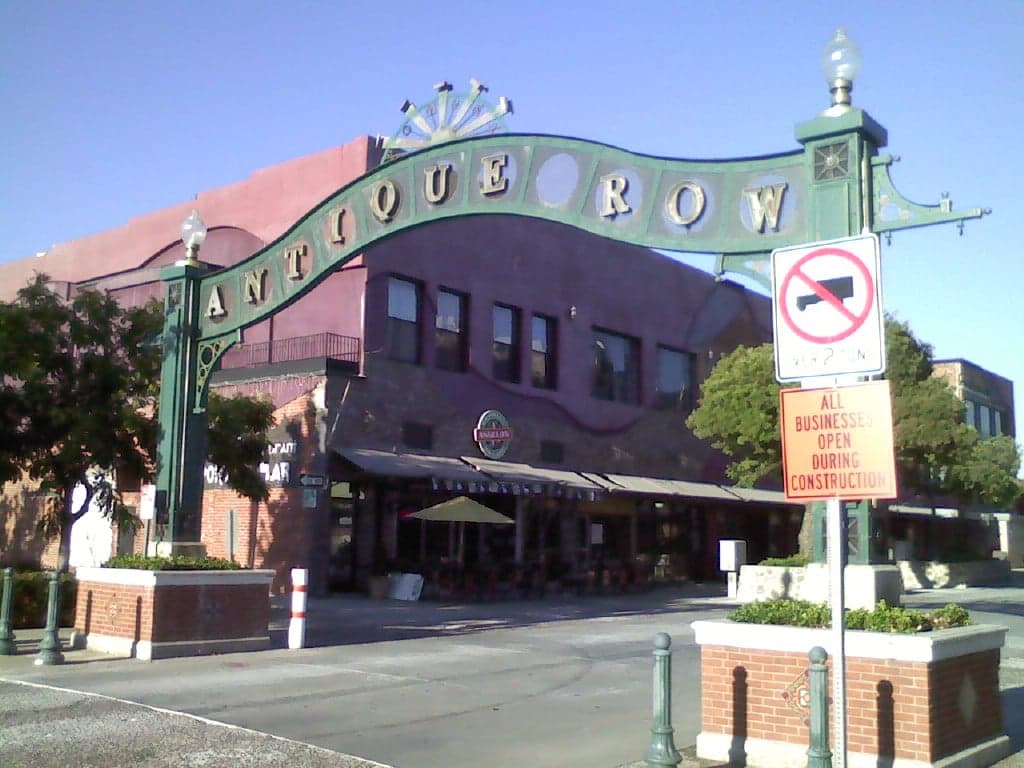
Photo: Wikipedia
Political ClimatePolitical Climate in Pomona, CA
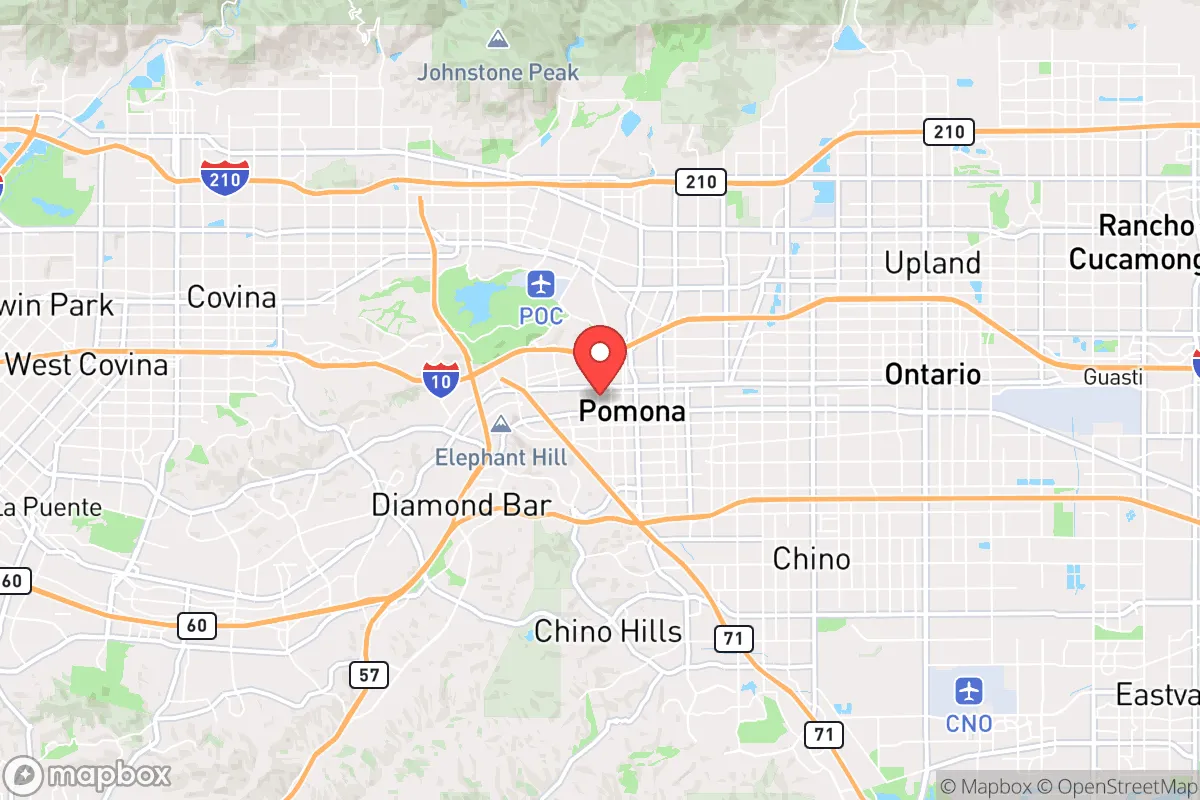
District shown is the primary district for this city’s centroid. Cities may span multiple districts.
Local Political AnalysisPolitical Analysis of Pomona, CA
Pomona’s political climate has shifted hard left over the past decade, and if you’ve lived here as long as I have, you’ve felt it in everything from city council meetings to how the local schools handle discipline. The Cook PVI sits at D+8, which means the city votes about 8 points more Democratic than the national average—but that number doesn’t tell the full story. In the 2020 presidential election, Pomona gave Joe Biden over 68% of the vote, while Donald Trump pulled in just under 29%. That’s a 39-point gap, and it’s been widening every cycle. Ten years ago, this was a working-class, union-heavy town where folks voted their pocketbooks and didn’t appreciate being told how to live. Now, the progressive wing of the local Democratic Party has taken over, and it shows in the policies being pushed through.
How it compares
Drive 15 minutes east to Claremont, and you’ll find a similar D+8 vibe—but with a much wealthier, more educated base that actually likes the progressive agenda. Head west to Walnut or Diamond Bar, and you’re in solidly purple territory, where voters still value property rights and push back on tax hikes. The real contrast is north in San Dimas and La Verne, where the Cook PVI flips to R+4 or R+6. Those towns have kept their city councils conservative, their police departments well-funded, and their zoning laws intact. Pomona, by contrast, has seen its city council move further left with each election. The current council majority has supported rent control expansions, a “sanctuary city” ordinance that limits cooperation with federal immigration enforcement, and a push to defund the police—though that last one got walked back after a crime spike in 2022. The county Board of Supervisors, which oversees unincorporated areas near Pomona, is also solidly Democratic, meaning there’s no conservative buffer at the county level either.
What this means for residents
For the average homeowner or small business owner, the shift means more regulations and less say in how your property is used. The city’s rent control ordinance, passed in 2021, caps annual rent increases at 3% plus inflation—sounds good on paper, but it’s made landlords sell off units or stop maintaining them, shrinking the rental supply and driving up prices for everyone else. The sanctuary policy has also created tension: local police are barred from asking about immigration status, which some residents feel has made it harder to build trust with law enforcement. Meanwhile, the school board has embraced critical race theory training and gender identity policies that let students choose their pronouns and bathrooms without parental notification. If you’re a parent who wants to be involved in your kid’s education, you’re increasingly seen as a nuisance rather than a partner. The city’s tax base is also under pressure—Pomona relies heavily on sales tax from the Fairplex and auto dealers, but as more residents shop online or leave for lower-tax areas, the city keeps eyeing new fees and parcel taxes to close budget gaps.
Culturally, Pomona still has a strong sense of community—the weekly farmers market on Second Street and the art walks downtown draw a diverse crowd. But the political direction has created a quiet exodus of longtime families, especially those with kids, who are moving to Chino Hills or Eastvale for better schools and less government overreach. The city’s leadership seems to think more progressive policies will attract young creatives and tech workers, but so far, the main effect has been higher housing costs and a slower response to quality-of-life issues like graffiti and homeless encampments. If you’re considering moving here, keep an eye on the next city council election—if the current majority holds, expect more of the same. If it flips, you might see a return to the kind of common-sense governance that made Pomona a place people stayed for decades.

State Political ClimatePolitical Climate in California
State Political AnalysisPolitical Environment in the State
California is a deep blue state where Democrats hold every statewide office and supermajorities in both legislative chambers, but that monolithic label hides a fractured reality. The state’s overall partisan lean is roughly D+20 in presidential elections, yet that number has been slipping—in 2020, Joe Biden won by 29 points, but by 2024, Kamala Harris’s margin shrank to about 20 points, a nine-point drop in a single cycle. Over the last 10-20 years, California has lurched left on social and economic policy, but a growing exodus of conservatives and moderates to states like Texas and Idaho is reshaping the electorate, leaving behind a more progressive core that is increasingly out of step with the rest of the country.
Urban vs. rural divide
The political map of California is a tale of two worlds. The coastal metros—Los Angeles, San Francisco, San Diego, and San Jose—drive the state’s blue lean, with San Francisco County delivering 85% of its vote to Biden in 2020 and Los Angeles County providing over 4 million Democratic votes. But drive an hour inland and you hit a different America. Bakersfield in Kern County is a Republican stronghold, voting +20 for Trump in 2024, while Redding in Shasta County is even redder, with Trump winning by 30 points. The Central Valley, from Fresno to Modesto, is a patchwork of purple and red, with agricultural communities leaning conservative on water rights and gun laws. Even in blue metros, suburbs are shifting: Orange County, once a GOP bastion, flipped blue in 2018 and stayed there, but inland Riverside and San Bernardino counties are trending red as working-class families flee coastal costs. The divide isn’t just geographic—it’s cultural, with coastal elites pushing policies that rural and inland residents resent.
Policy environment
California’s policy environment is a laboratory of progressive governance that conservatives find alarming. The state has the highest income tax rate in the nation (13.3% for top earners) and a 7.25% sales tax that local add-ons push to over 10% in cities like Los Angeles. Property taxes are capped by Prop 13, but annual increases and transfer taxes in places like San Francisco add burdens. Regulatory posture is aggressive: California’s Environmental Quality Act (CEQA) is weaponized to block housing and business projects, while the California Air Resources Board (CARB) sets emissions rules that effectively ban new gas-powered cars by 2035. Education policy is dominated by the teachers’ union, with school boards in San Francisco and Oakland prioritizing equity over academics—math scores in Oakland are among the lowest in the nation. Healthcare is heavily regulated, with a state-run exchange (Covered California) and mandates for employer coverage. Election laws are among the most liberal: universal mail-in ballots, same-day registration, and no voter ID requirement, which conservatives argue undermines election integrity. On immigration, California is a sanctuary state (SB 54), limiting local police cooperation with federal ICE—a flashpoint for those concerned about rule of law.
Trajectory & freedom
California is becoming less free by nearly any measure conservatives care about. On gun rights, the state has some of the strictest laws in the nation: an assault weapons ban, a 10-day waiting period, and a “may issue” concealed carry regime that was tightened further by SB 2 in 2023, which restricted carry in most public places—a law currently tied up in court but emblematic of the trend. On parental rights, AB 1955 (2024) prohibits school districts from requiring parental notification when a child changes gender identity, effectively cutting parents out of decisions about their kids. On speech, California’s AB 587 (2023) forces social media companies to report their content moderation policies, a move critics call a backdoor to censorship. Medical autonomy took a hit with the state’s COVID-19 mandates, which were among the longest-lasting in the country, and vaccine mandates for schoolchildren remain in place. Property rights are eroded by rent control (AB 1482) and a growing push for “tenant protection” laws that make eviction nearly impossible in cities like Los Angeles. The tax burden is rising: a 2024 ballot measure (Prop 5) to lower the threshold for local tax increases failed, but the legislature continues to find new fees, like a proposed mileage tax on drivers. The trajectory is clear: more regulation, less personal freedom, and a government that trusts itself over families and individuals.
Civil unrest & political movements
California has been a hotspot for civil unrest and political movements that a new resident would notice immediately. The 2020 George Floyd protests in Los Angeles and Oakland saw widespread looting and property destruction, with the city of Los Angeles paying out over $100 million in settlements for police misconduct during the unrest. The “defund the police” movement had real teeth: San Francisco cut $120 million from its police budget in 2020, though it has since partially restored funding as crime surged. On the right, the “Recall Newsom” movement in 2021 gathered 1.7 million signatures and came within 4 points of ousting the governor, a sign of deep discontent. Immigration politics are a daily reality: sanctuary policies mean ICE holds are routinely ignored, and the border crisis has overwhelmed cities like San Diego, which has seen a surge in migrant arrivals. Secession rhetoric is alive—the “Calexit” movement, though fringe, resurfaces every few years, while rural counties like Shasta and Modoc have floated secession from the state entirely. Election integrity remains a sore point: the 2020 and 2024 elections saw no major fraud convictions, but the universal mail-in system and lack of voter ID continue to fuel distrust among conservatives. A new resident would see homeless encampments in every major city, a visible symptom of failed progressive policies on housing and mental health.
Projection
Over the next 5-10 years, California is likely to become even more progressive as its demographic trends accelerate. The state’s population has declined for three consecutive years (2020-2023), losing over 500,000 residents, with the biggest outflows from coastal counties. Those leaving are disproportionately middle-class families and conservatives, while the remaining population is younger, more diverse, and more left-leaning. In-migration from abroad, particularly from Asia and Latin America, tends to vote Democratic, reinforcing the blue tilt. The state’s housing crisis will worsen, with median home prices over $800,000 and rents in San Francisco averaging $3,500—pushing even more moderates out. Politically, expect more extreme legislation: a single-payer healthcare push (SB 770 is already in motion), a wealth tax (Prop 19 already raised property taxes on inherited homes), and further erosion of parental rights. The GOP is essentially a rump party in state government, holding no statewide offices and only 18 of 80 Assembly seats. A new resident moving in now should expect a decade of higher taxes, more regulation, and a government that prioritizes collective goals over individual liberty. The only wildcard is a potential economic crash—if the tech bubble bursts or the state’s budget deficit (projected at $68 billion for 2025) triggers a fiscal crisis, voters might finally demand a course correction.
For a conservative considering relocation, California offers world-class natural beauty and economic opportunity, but at a steep cost to personal freedom and financial security. You’ll pay more in taxes, deal with more bureaucracy, and watch your values get sidelined in schools and local government. If you’re a single professional in tech or entertainment, the trade-offs might be worth it. But if you’re a parent worried about your kids’ education or a business owner tired of red tape, the trajectory is clear: California is moving in the opposite direction of where you want to go. My advice? Visit the inland areas like Bakersfield or Redding first—they’re the last redoubts of sanity, but even they are being squeezed by Sacramento’s long arm.
* Values derived from national, state, county, city and local statistics and may differ in a specific area. Last updated: 2026-04-24T05:06:47.000Z
Narrative content on this page is AI-generated and may contain mistakes. Verify any details that matter before acting on them.
ReloMaps may earn a commission from affiliate links at no extra cost to you.

