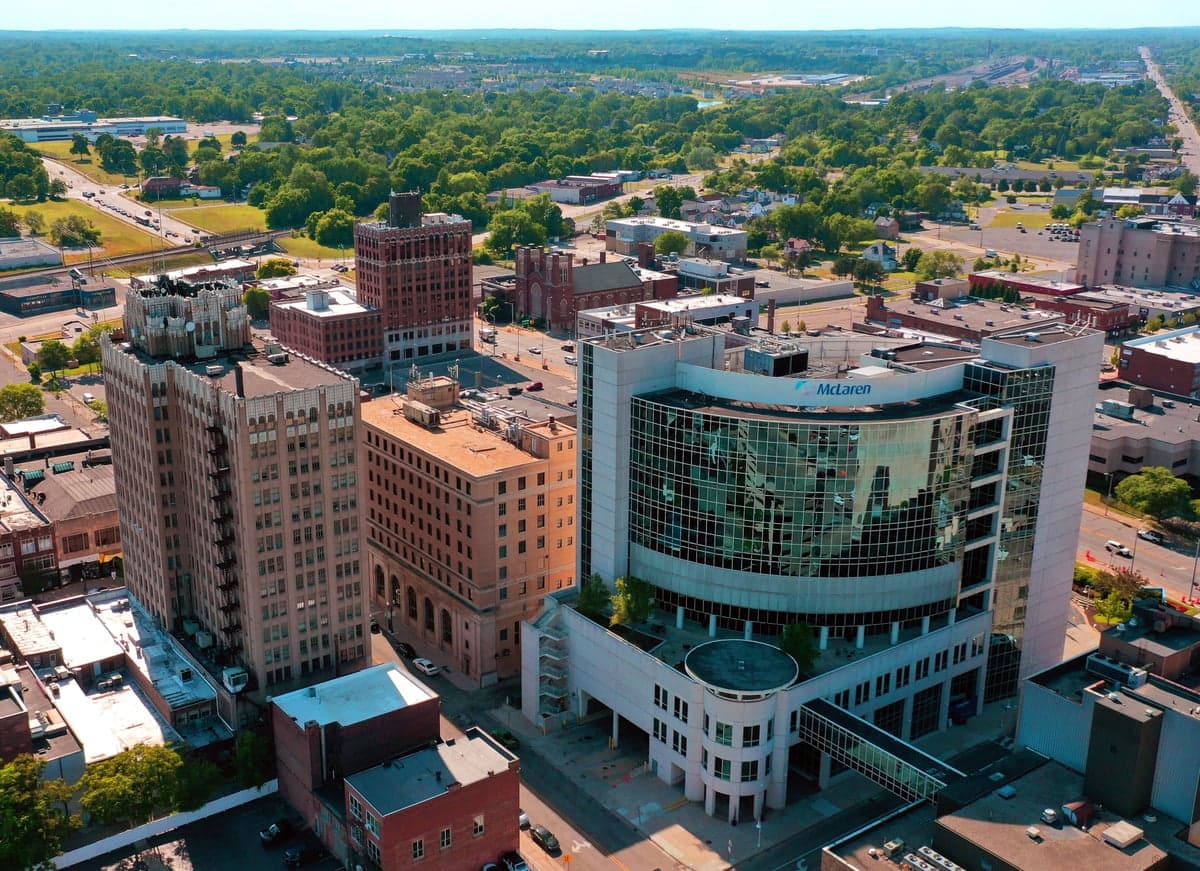
Photo: Wikipedia
Strategic Assessment of Pontiac, MI
Multiple tactical vulnerabilities. Population density, target proximity, or disaster risk are likely compounding. A retreat property and exit planning is required.
What does the Strategic Assessment tell us?
Our Strategic Assessment grades tactical survivability of an area. Major population centers, military targets, fallout zones, natural disasters, and border exposure all drive risk — lower exposure means a more defensible position in a crisis.
This is heavily inspired by Joel Skousen's Strategic Relocation book. Highly recommended you checkout the book ($)What does this tell us?
Our Strategic Assessment grades tactical survivability of an area. Major population centers, military targets, fallout zones, natural disasters, and border exposure all drive risk — lower exposure means a more defensible position in a crisis.
This is heavily inspired by Joel Skousen's Strategic Relocation book. Highly recommended you checkout the book ($)Strategic Pillars

Key Distances
Regional Safe Places
Below is our recommended "safe zones" in Michigan and the surrounding area based on our strategic heuristics. For most people, it's unrealistic to live in a “safe zone” full-time due to work, family or other personal reasons. They tend to be more rural. However, many of these areas are perfect for second homes and retreat properties that double as a vacation home or even a short-term rental.


Important Note: For informational purposes only. This does not mean nothing bad ever happens in the green zones. Please use common sense. This is based on public data and modeled with AI. We tried to take a conservative approach but mistakes happen. We update this regularly as new information becomes available.
Solar Generator Recommendations
Backup power matters more here than in safer locations. We've picked three solar generators across budgets and capacity tiers — start with the budget unit if you only need a few essentials, or step up if you want to run a fridge and HVAC for days at a time.

Jackery Portable Power Station Explorer 300
Budget OptionPower on the Go: Weighing only 11 lbs, it's convenient to set up and store with book-sized foldable solar panels

BLUETTI Portable Power Station AC180
Designed for both indoor and outdoor scenarios, AC180 is highly capable as it has a robost capacity and continuous output power.

EF ECOFLOW DELTA Pro Ultra Power Station
Upgraded PickEcoFlow DELTA Pro Ultra is a whole-home energy system designed to grow with your family. Integrated with the Smart Home Panel 2, it scales to meet your evolving energy needs — keeping your home powered, intelligent, and secure through every stage of life.
We earn a commission, at no additional cost to you.
Strategic Assessment Analysis
Pontiac, Michigan, presents a complex strategic picture for the conservative prepper. Its core advantage is raw industrial resilience and a location that sits just outside the blast radius of a major Detroit event, yet its deep entanglement with a struggling, high-crime urban core and its position downwind of significant geopolitical targets make it a high-risk, high-reward proposition. This is not a retreat; this is a forward operating base for those who need to stay close to the rust belt's industrial heart but are willing to accept serious proximity risks.
Geographic position and natural advantages for a strategic hold
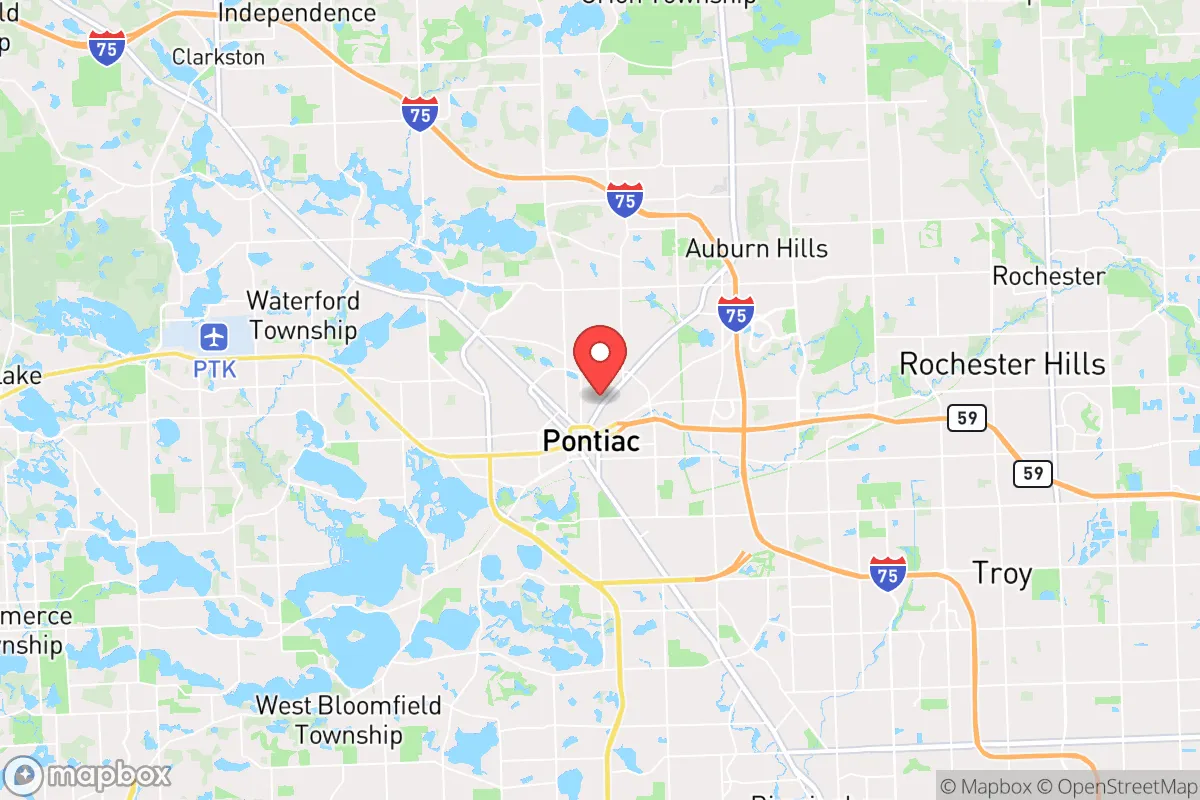
Pontiac's geography is its primary strategic asset, but it comes with a major caveat. The city sits in Oakland County, roughly 25 miles northwest of downtown Detroit. This puts it just outside the likely immediate blast and thermal effects of a major nuclear detonation in Detroit, but well within the dangerous fallout plume zone depending on wind direction. The natural advantages are the area's abundant fresh water—the Clinton River runs through the city, and the Great Lakes are a short drive north—and the relatively flat, open terrain that offers decent line-of-sight for defensive positions. The region's heavy clay soil is poor for large-scale farming but excellent for digging in and constructing hardened shelters. The primary natural advantage is the dense network of secondary roads and rail lines that bypass the major interstate choke points (I-75, M-59). A relocator can move north into the less populated thumb of Michigan or west toward Lansing without ever touching a major highway, a critical factor for movement during a grid-down scenario.
Risks, exposures, and proximity to fallout-relevant landmarks
This is where the analysis gets sobering. Pontiac's proximity to Detroit is a double-edged sword, and the edge is sharp. The city is directly downwind of the Detroit Metro Airport (DTW) and the massive fuel depots and logistics hubs along I-94. In a conflict scenario, DTW is a Tier-1 target. Pontiac also sits within 30 miles of the Detroit-Windsor Tunnel and Ambassador Bridge, both critical infrastructure links to Canada that would be primary targets for sabotage or conventional strikes. The city itself has a high baseline crime rate and a struggling local economy, meaning that in a crisis, the local population will be desperate and mobile. The Pontiac Silverdome site, now a vacant lot, is a potential FEMA staging area or refugee camp magnet, drawing chaos directly to your doorstep. The proximity to the General Motors Orion Assembly plant in nearby Lake Orion is a double-edged sword: it provides industrial resources but also marks the area as a target for economic disruption. The DTE Energy power plant in St. Clair County is a major regional grid node; if it goes down, Pontiac loses power and likely water pressure quickly.
Practical resilience for a relocator: food, water, energy, and defensibility
For a prepper willing to put in the work, Pontiac offers a surprising number of practical advantages. Water is not a primary concern—the Clinton River is perennial, and the city's water system draws from Lake Huron via the Detroit system, but you'll need a backup well or a means to haul from the river. The area has ample abandoned industrial buildings and warehouses that can be hardened into defensible positions, though you'll need to secure them legally or through private purchase. The local soil is poor for row crops, but raised-bed gardening and hydroponics in a basement or warehouse are viable. The region's heavy snowfall means you'll need a robust heating plan—wood stoves are common, and the surrounding forests (Pontiac Lake Recreation Area, Highland State Recreation Area) provide fuel, but you'll be competing with others for it. Energy is a weak point; the grid is old and prone to outages even in good weather. Solar is viable but requires significant battery storage due to Michigan's cloudy winters. The defensibility of a single-family home in Pontiac is poor—the city is dense, with narrow streets and close neighbors. A rural property in northern Oakland County or western Lapeer County is far more defensible, but Pontiac itself is a place to stage supplies and maintain a low profile, not to make a last stand.
Overall strategic picture: a high-risk forward position
Pontiac is not a retreat location. It is a high-risk, high-maintenance forward position for someone who needs to remain within striking distance of Detroit's industrial and logistical assets but is willing to accept the fallout risks. The city's location offers decent escape routes north and west, and its industrial past means there are resources—tools, building materials, fuel—that can be scavenged or stockpiled. But the downsides are severe: high baseline crime, proximity to major targets, a struggling local economy that will collapse quickly in a crisis, and a population density that makes low-profile living difficult. For the conservative prepper, this is a place to have a secondary cache and a bug-out vehicle staged, not a primary residence. If you must live here, invest in a basement shelter with a good air filtration system, a reliable vehicle with a full tank at all times, and a network of trusted neighbors who share your worldview. The strategic value is real, but the margin for error is razor-thin. Pontiac is a chess piece, not a home base.

* Values derived from national, state, county, city and local statistics and may differ in a specific area. Last updated: 2026-04-30T02:55:04.000Z
Narrative content on this page is AI-generated and may contain mistakes. Verify any details that matter before acting on them.
ReloMaps may earn a commission from affiliate links at no extra cost to you.

