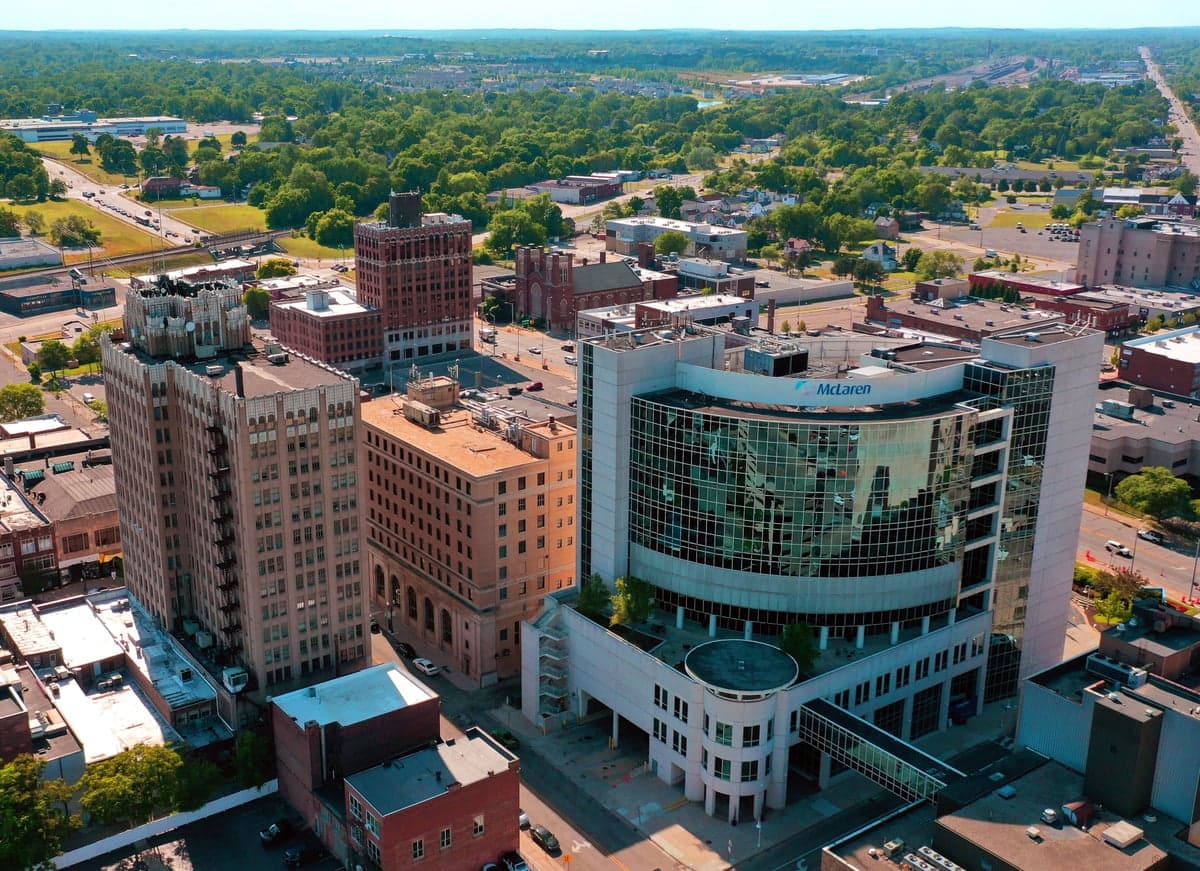
Photo: Wikipedia
Quality of Life in Pontiac, MI
Above-average quality of iife. The area offers a reasonable cost of living, decent mobility, and a mix of neighborhood amenities.
What does Quality of Life tell us?
Quality of Life blends cost of living, nearby amenities, socioeconomic signals, and neighborhood character. City-level scores represent the whole municipality; individual neighborhoods can differ.
What does this tell us?
Quality of Life blends cost of living, nearby amenities, socioeconomic signals, and neighborhood character. City-level scores represent the whole municipality; individual neighborhoods can differ.
Cost of Living
32% below national average
The Real Cost of Living in Pontiac, MI for 2026
| Tier | Individual | Family (4) |
|---|---|---|
| Survival | $16k | $30k |
| Comfortable | $25k | $37k |
| Luxury | $75k+ | $116k+ |
| Elite (Top 5%) | $88k+ | $137k+ |
116%
The Area Signal
A metric tracking the socioeconomic signals of the area.
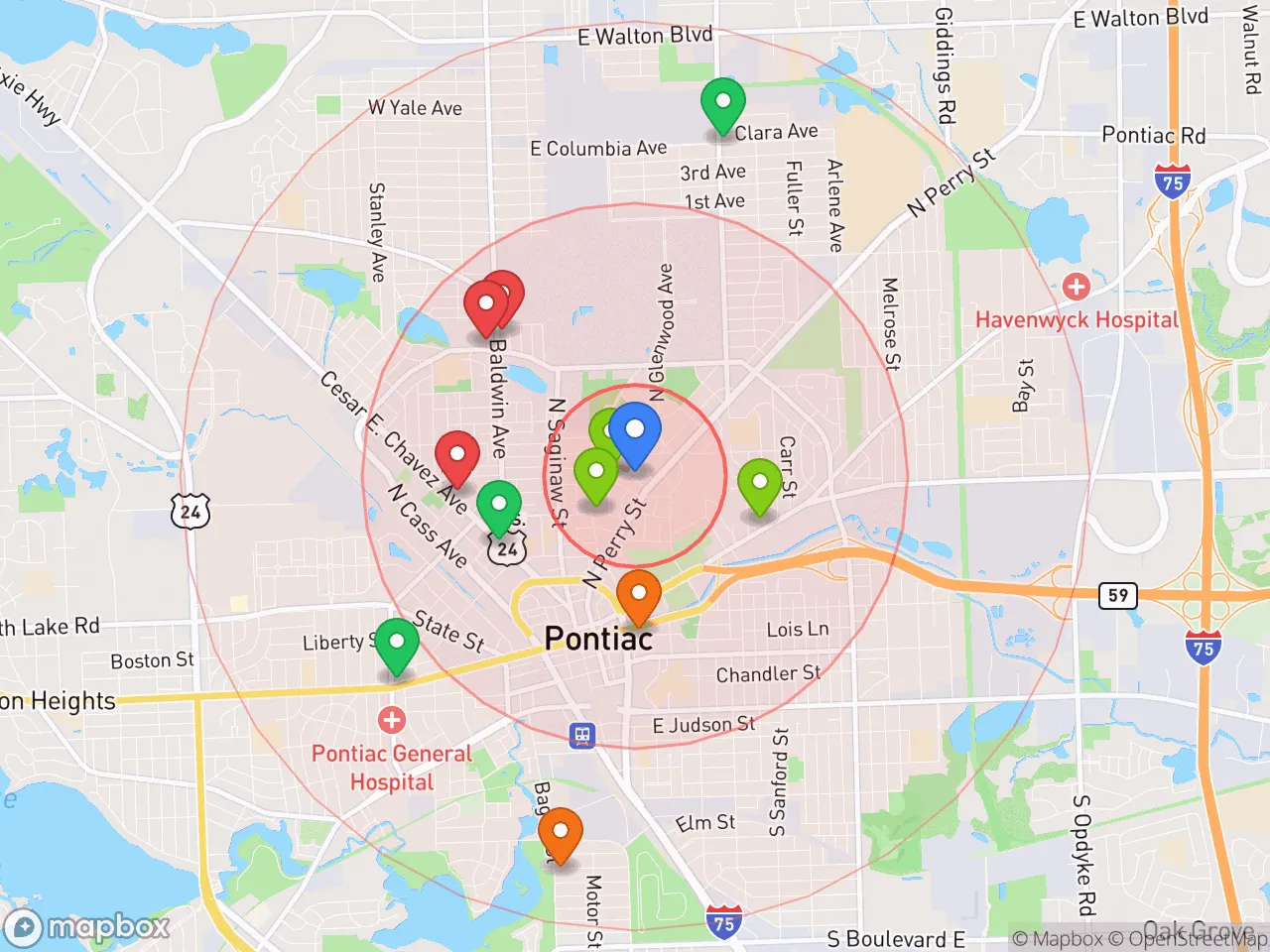
Hobbies
Explore the areaGroceries
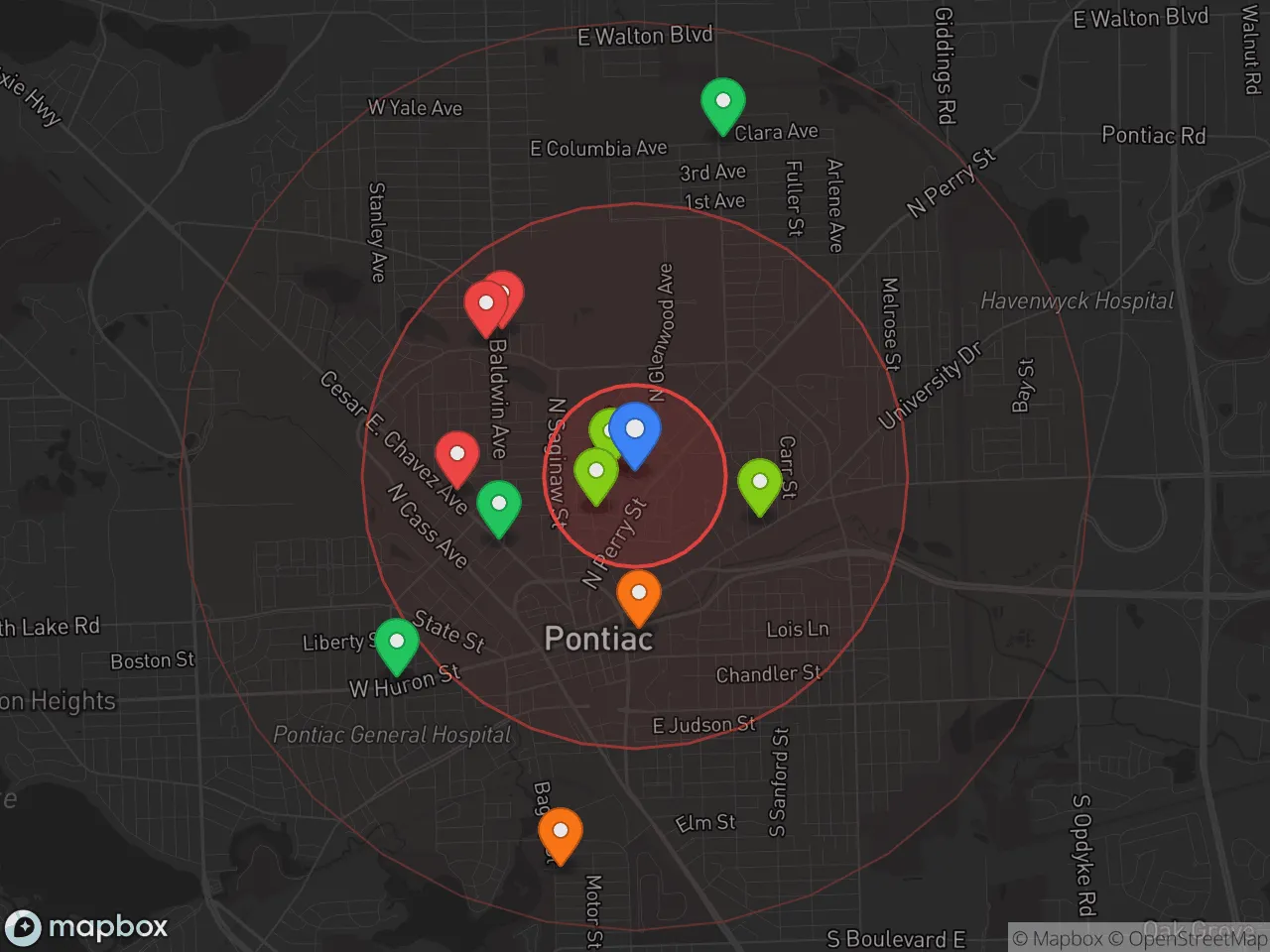
5 within 10 miles
Gas
20 within 10 miles
Hospital
20 within 20 miles
Airport
DTW — Detroit Metropolitan Wayne County
Post Office
USPS — Pontiac, MI
Critical Amenities
Quality-of-Life Analysis
Pontiac, Michigan, presents a distinctive quality-of-life profile as an urban center undergoing revitalization, offering a cost of living that is significantly lower than the national average while providing access to the economic and cultural resources of the greater Detroit metropolitan area. With a cost-of-living index of 68 (where 100 equals the U.S. average), Pontiac is one of the most affordable cities in Oakland County, attracting a mix of long-term residents, first-time homebuyers, and workers seeking proximity to major employers like General Motors and United Shore without paying suburban premiums. The city’s population is diverse, with a median age of 36, and includes a growing number of young professionals and families drawn by the potential for homeownership and the ongoing redevelopment of its historic downtown core.
How housing costs and daily expenses compare to nearby suburbs
Pontiac’s affordability is its most defining quality-of-life feature, especially when compared to neighboring communities like Rochester Hills, Bloomfield Hills, or Auburn Hills. The median home value in Pontiac is $110,600, which is roughly one-third of the Oakland County median and less than a quarter of the median in adjacent Bloomfield Hills. For renters, the median monthly rent of $1,007 is well below the county average of approximately $1,400, making it one of the few places in the region where a one-bedroom apartment remains accessible to households earning near the area median income. The average commute time of 21.8 minutes is shorter than the national average of 26 minutes, a practical advantage for workers employed at the nearby General Motors Pontiac Assembly Center or at offices in Auburn Hills and Troy. While property taxes in Pontiac are higher than the state average (around 3.5% of assessed value), the low entry price for homes means total monthly housing costs—including taxes and insurance—often remain under $1,200, a figure that is increasingly rare in southeast Michigan.
What daily life is like for families and professionals
Daily life in Pontiac is shaped by a mix of urban convenience and ongoing neighborhood-level challenges. The city is served by the Pontiac School District, which includes Pontiac High School and several magnet programs, though many families with school-age children opt for charter schools or the nearby Waterford and Rochester districts. For amenities, residents have direct access to the Pontiac Silverdome site (now being redeveloped for mixed-use and commercial space), the M1 Concourse motorsports complex, and the historic Strand Theatre, which hosts concerts and community events. Outdoor recreation is centered on Hawk Island Park and the Clinton River Trail, a 16-mile paved path connecting Pontiac to Rochester and beyond. Grocery access has improved with the opening of a new Fresh Thyme Market in the city, though the area remains a food desert for some neighborhoods without a car. The rhythm of life leans practical: residents value the short commute, the ability to buy a home for under $120,000, and the proximity to Detroit’s job market (a 35-minute drive), but must contend with higher crime rates than surrounding suburbs—Pontiac’s violent crime rate is roughly 2.5 times the national average, though property crime has declined steadily since 2020.
Pontiac is best suited for budget-conscious buyers, investors, and professionals who prioritize affordability and location over suburban polish. First-time homebuyers priced out of Ferndale or Royal Oak will find a realistic path to ownership here, while workers at the nearby Oakland County government complex or the dozens of auto suppliers in Auburn Hills benefit from the short commute. The city is less ideal for families seeking top-rated public schools or retirees wanting quiet, low-crime neighborhoods, but for those willing to engage with an urban environment in transition, Pontiac offers a rare combination of low housing costs, central location, and the tangible momentum of redevelopment.

Crime in Pontiac, MI
Higher crime rates than 64% of comparable U.S. locations.
Violent CrimeViolent Crime Analysis
Property CrimeProperty Crime Analysis
Crime Analysis
Pontiac, Michigan, presents a challenging safety landscape, with crime rates significantly exceeding both state and national averages. The city's violent crime rate stands at 408.1 incidents per 100,000 residents, while property crime occurs at a rate of 1,238.7 per 100,000. These figures place Pontiac among the higher-crime communities in Oakland County, a reality shaped by decades of economic disinvestment and, more recently, by the policies of a progressive prosecutorial office that critics argue prioritizes offender rehabilitation over public safety.
Crime in context
Pontiac's violent crime rate is roughly 17% higher than the Michigan state average and more than double the national median for cities of its size. Property crime is similarly elevated, with the rate exceeding the national average by approximately 30%. These numbers are not uniform across the city; they are heavily concentrated in specific neighborhoods and often tied to property disputes, drug-related activity, and domestic incidents. The presence of a progressive district attorney in Oakland County, who has implemented policies such as reduced cash bail and diversion programs for repeat non-violent offenders, has been a point of contention. Critics argue these measures contribute to a revolving-door justice system that fails to deter crime and undermines victim confidence.
What residents experience
For those living in Pontiac, safety is a daily concern that varies sharply by block. Many residents report feeling unsafe walking alone at night, particularly in the downtown core and along major corridors like Woodward Avenue and Telegraph Road. Property crime—including vehicle theft, burglary, and larceny—is the most common threat, with car theft rates in Pontiac among the highest in the metro Detroit area. The city's police department, while understaffed relative to its needs, has focused on community policing initiatives and data-driven patrols, but the impact is blunted by the broader county-level prosecutorial philosophy. Residents often express frustration that offenders arrested locally are quickly back on the street, a sentiment echoed by business owners who face repeated break-ins.
Neighborhood-level variation
Safety in Pontiac is not monolithic. The northern and western residential areas, such as those near the border with Lake Angelus and Auburn Hills, generally experience lower crime rates and a stronger sense of security. In contrast, the central and southeastern neighborhoods, including the area around the former General Motors plants and the downtown district, see the highest concentrations of violent and property crime. Blocks within a half-mile of each other can feel like entirely different cities, with some having active neighborhood watches and well-lit streets while others struggle with abandoned properties and open-air drug markets. For prospective residents, a block-by-block assessment is essential, as is an understanding that the county's progressive justice policies create a permissive environment that can undermine local safety efforts.
* Values derived from national, state, county, city and local statistics and may differ in a specific area. Last updated: 2026-04-30T02:55:04.000Z
Narrative content on this page is AI-generated and may contain mistakes. Verify any details that matter before acting on them.
ReloMaps may earn a commission from affiliate links at no extra cost to you.

