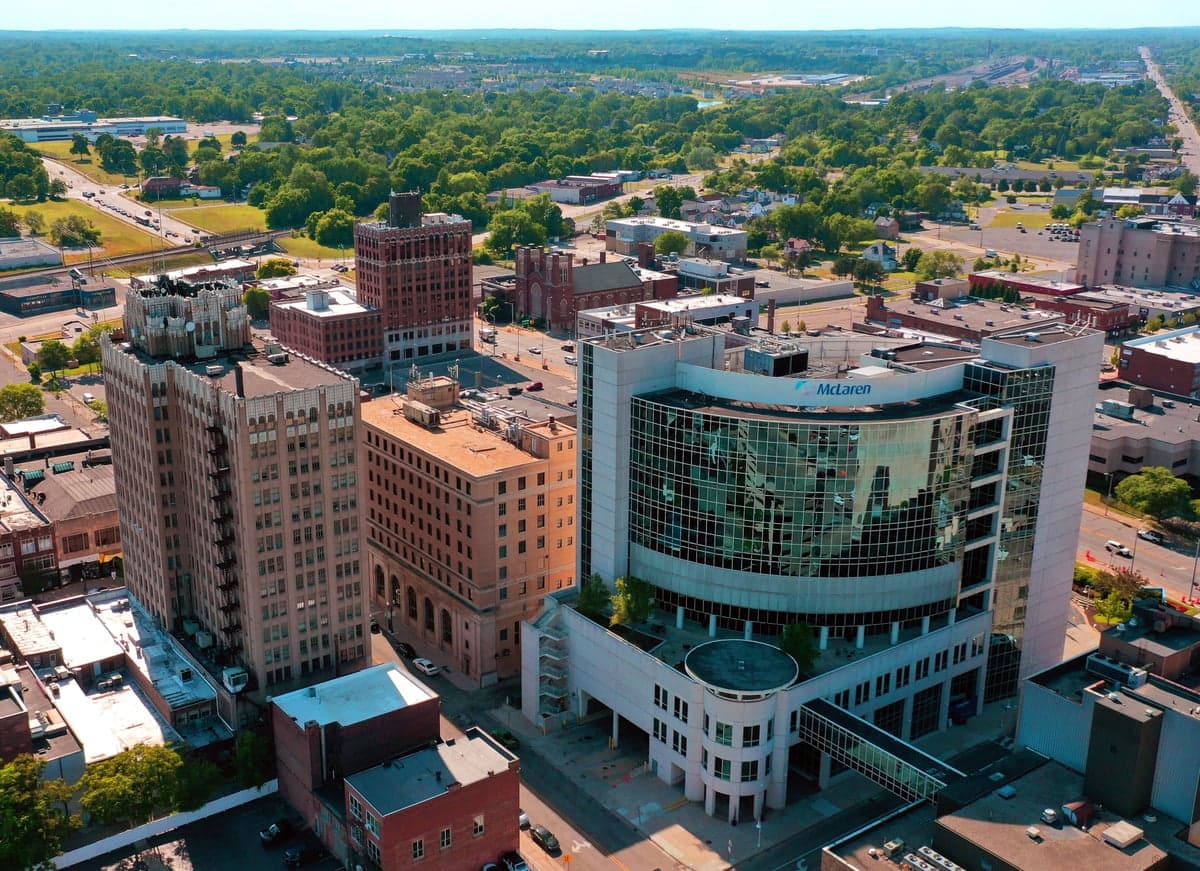
Photo: Wikipedia
Political ClimatePolitical Climate in Pontiac, MI
District shown is the primary district for this city’s centroid. Cities may span multiple districts.
Local Political AnalysisPolitical Analysis of Pontiac, MI
Pontiac, Michigan, has long been a Democratic stronghold, and that hasn’t changed much. The Cook PVI rating of D+9 tells you the city leans heavily blue, and that’s been the case for decades. But if you’ve lived here as long as I have, you’ve watched the political energy shift from a kind of quiet, working-class pragmatism to something a lot more progressive and, frankly, top-down. It’s not just about who wins elections anymore—it’s about how the city’s leadership is using that power, and a lot of us are starting to feel like the government’s getting a little too comfortable telling us how to live our lives.
How it compares
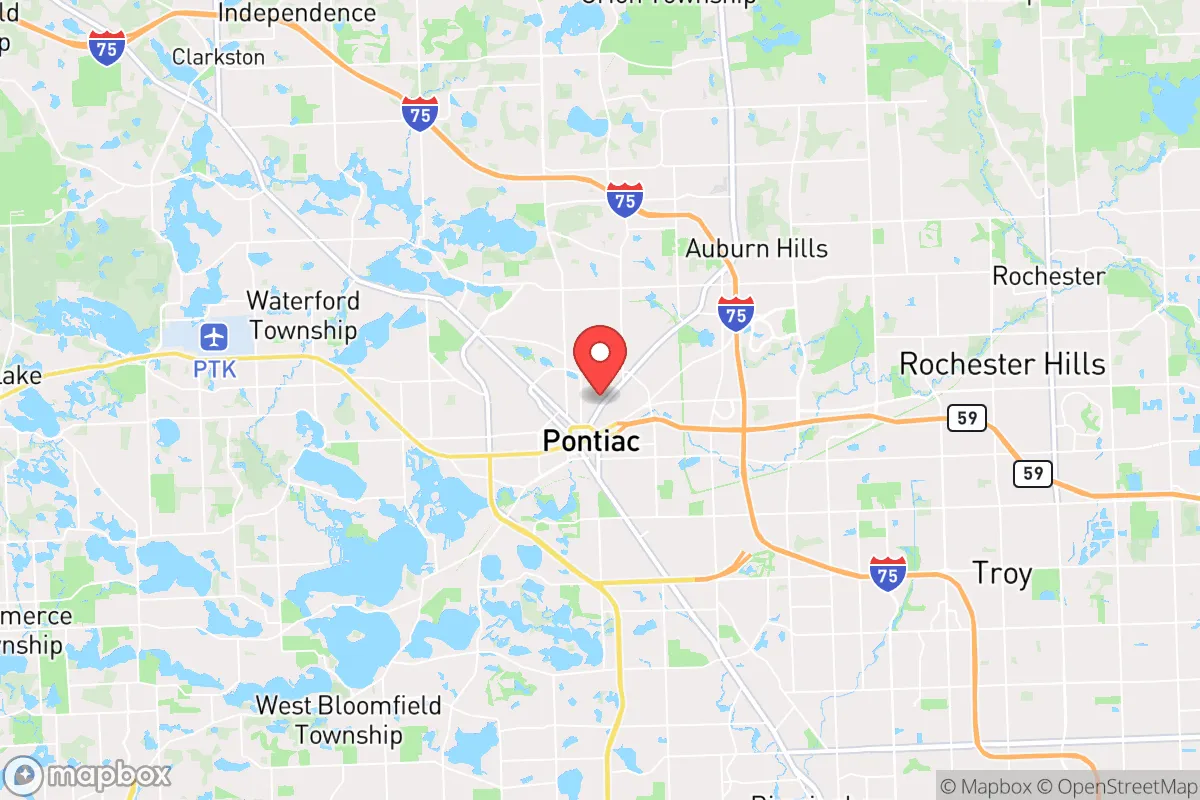
Drive ten miles in any direction, and you’ll hit a completely different world. Head north to Waterford Township or west to White Lake, and you’re in areas that vote reliably Republican—places where people still believe in low taxes, less regulation, and keeping the government out of your backyard. Even Auburn Hills, right next door, has a more balanced political mix, thanks to its corporate base and a lot of folks who just want to be left alone. Pontiac, though? It’s an island of deep-blue politics in a sea of purple and red. That contrast isn’t just academic—it means Pontiac’s policies on things like housing, business permits, and even local ordinances often feel out of step with the surrounding communities. You see it in the higher tax burden and the way the city council seems more focused on social engineering than on fixing potholes or keeping the streets safe.
What this means for residents
For the average person living here, the political climate translates into a few concrete headaches. First, there’s the constant push for new regulations—everything from stricter rental inspections to noise ordinances that feel less about public safety and more about control. The city’s been flirting with progressive zoning changes that sound good on paper but often mean more bureaucracy for small landlords and homeowners. Second, the tax base is shaky. Pontiac’s reliance on state and federal grants, plus a few big employers like United Shore (now Rocket Companies) and the GM Powertrain plant, means the city’s budget is vulnerable to political winds from Lansing and D.C. When the government’s your biggest sugar daddy, you tend to fall in line with whatever agenda they’re pushing—and that’s not always what’s best for the folks on the ground. Third, there’s a growing sense that your voice doesn’t matter much if you’re not part of the progressive coalition. School board meetings, city council sessions—they’ve become echo chambers for a certain set of ideas, and dissent is often met with a cold shoulder.
What daily life is like for families
If you’re raising kids here, you’ll notice the political climate seeps into everyday life. The Pontiac School District has been under state oversight for years, and the constant churn of new programs—often tied to grant funding with ideological strings attached—can feel more like social experimentation than education. Parents I know are frustrated that basic academics take a backseat to diversity, equity, and inclusion initiatives that sound nice but don’t teach a kid how to read or do math. Outside of school, you’ll see the city’s priorities in how it spends money: more on public art projects and community organizing grants than on basic infrastructure like streetlights or sidewalk repairs. It’s not all bad—there are good people here trying to make a difference—but the overall direction feels like a slow drift toward a bigger, more intrusive government that’s less interested in your freedom and more interested in your compliance.
One thing that sets Pontiac apart culturally is its strong union history, especially from the auto industry. That legacy still shapes the local mindset, but it’s been co-opted by a newer brand of progressivism that’s less about worker rights and more about identity politics. The old-timers who remember when Pontiac was a manufacturing powerhouse shake their heads at the shift. In the long term, unless there’s a real course correction—more focus on economic freedom, less on social engineering—I worry the city will keep losing the middle-class families and small businesses that used to be its backbone. The surrounding towns are already outpacing Pontiac in growth and opportunity, and that gap is only going to widen if the political climate here doesn’t change.

State Political ClimatePolitical Climate in Michigan
State Political AnalysisPolitical Environment in the State
Michigan has shifted from a reliably purple battleground to a state where Democrats now control all levers of government, with Governor Gretchen Whitmer, Attorney General Dana Nessel, and Secretary of State Jocelyn Benson forming a powerful progressive trifecta. The state went for Joe Biden by 2.8 points in 2020 and for Kamala Harris by a similar margin in 2024, but the real story is the collapse of Republican strength in the populous southeast while the rest of the state grows redder. Over the past 20 years, Michigan has moved from a classic swing state to one that leans Democratic at the state level, though the legislature remains narrowly divided and the state Supreme Court flipped to a 4-3 Democratic majority in 2024.
Urban vs. rural divide
The political map of Michigan is a tale of three regions. Wayne County (Detroit) alone delivers roughly 30% of the Democratic vote statewide, with Detroit’s 78% Black population producing margins of 80-20 for Democrats. Oakland County, once a Republican stronghold, has flipped decisively—it went for Trump in 2016 by 2 points but for Biden by 14 points in 2020, driven by affluent suburbanites repelled by Trump’s style. Washtenaw County (Ann Arbor) is a deep blue academic hub, while Kent County (Grand Rapids) has shifted from reliably red to purple, with Grand Rapids proper trending left even as its rural outskirts stay conservative. Meanwhile, the Upper Peninsula and northern Lower Peninsula—places like Traverse City, Alpena, and the rural thumb region—vote heavily Republican. Macomb County, the iconic “Reagan Democrat” bastion, is now a true toss-up, swinging from Obama to Trump to Biden, and remains the most watched bellwether in the state. The rural-urban divide is stark: in 2024, Trump won 80 of Michigan’s 83 counties, but lost the state because the three urban counties (Wayne, Oakland, Washtenaw) produced enough votes to overcome that geographic dominance.
Policy environment
Michigan’s policy environment has shifted dramatically leftward since Democrats took full control in 2023. The state repealed its right-to-work law, which had been in place since 2012, making union membership effectively mandatory in many workplaces—a major blow to individual freedom of association. The corporate income tax rate was cut from 6% to 4.25% in 2023, but the personal income tax rate was raised from 4.05% to 4.25% after a temporary cut expired, and the state’s gas tax remains among the highest in the Midwest at 28.6 cents per gallon. Governor Whitmer signed a package of gun control laws in 2023 that included universal background checks, safe storage requirements, and red flag orders, which conservatives view as an infringement on Second Amendment rights. Education policy has seen the expansion of the state’s school choice program, but also a push for critical race theory-adjacent curriculum in public schools, with the Michigan Department of Education adopting “culturally responsive” teaching standards that critics say prioritize group identity over academic rigor. Election laws were significantly loosened in 2022 with the passage of Proposal 2, which enshrined nine days of early voting, automatic voter registration, and no-excuse absentee voting into the state constitution—changes that conservatives argue increase the risk of fraud. The state also expanded Medicaid under the Affordable Care Act and maintains some of the strongest environmental regulations in the Great Lakes region, including a 2023 ban on PFAS in firefighting foam.
Trajectory & freedom
Michigan is becoming less free by any objective measure, particularly for conservatives. The repeal of right-to-work was the most significant contraction of economic freedom in decades, forcing workers to pay union dues as a condition of employment. The 2023 gun control package, while popular in polls, represents the most aggressive firearm restrictions in state history—red flag laws allow for temporary seizure of firearms without a criminal conviction, which many see as a violation of due process. On the parental rights front, the state has moved in the opposite direction of Florida and other red states: Michigan’s 2023 LGBTQ+ “safe schools” law prohibits schools from notifying parents if a child changes their gender identity or pronouns, a direct blow to parental authority. Medical freedom took a hit with the state’s strict COVID-19 mandates, which included some of the longest-lasting mask and vaccine requirements in the Midwest, though those have since been lifted. Property rights have been eroded by aggressive environmental regulations, particularly around wetlands and shoreline development, which can require months of permitting for even minor construction. On the positive side, Michigan has no personal property tax on business equipment, and the state’s homestead property tax exemption remains generous for primary residences.
Civil unrest & political movements
Michigan has been a flashpoint for political activism on both sides. The 2020 “Operation Gridlock” protests at the state capitol in Lansing, where thousands of armed protesters demonstrated against Whitmer’s COVID-19 lockdowns, became a national symbol of resistance to government overreach. The Whitmer kidnapping plot in 2020, in which a group of extremists allegedly planned to kidnap the governor, further polarized the state and led to increased security at the capitol. Immigration politics are relatively muted compared to border states, but Michigan does have sanctuary city policies in Detroit, Ann Arbor, and Kalamazoo, which limit cooperation with federal immigration enforcement. The 2020 election integrity controversy was intense in Michigan, with the “Stop the Steal” movement focusing on Detroit’s absentee ballot counting process at the TCF Center, leading to ongoing distrust among conservatives. The state has seen a surge in organized conservative activism through groups like the Michigan Conservative Coalition and the Michigan Freedom Fund, which have successfully pushed back on some progressive initiatives at the local level. The 2023 passage of Proposal 3, which enshrined abortion rights in the state constitution, was a major victory for the left and has energized progressive activism, particularly in college towns like Ann Arbor and East Lansing.
Projection
Over the next 5-10 years, Michigan is likely to become more Democratic and more progressive, driven by continued suburbanization of Oakland and Kent counties and the steady growth of the Detroit metro area’s population. The state’s aging population in rural areas will continue to shrink, reducing the Republican base. However, there are signs of a potential realignment: working-class voters in Macomb and Monroe counties are drifting rightward, and if the national Democratic party continues to prioritize cultural issues over economic populism, those voters could flip the state back to purple. The 2024 election showed that Trump’s message on trade and manufacturing resonated in the industrial corridor from Detroit to Grand Rapids, and if Republicans can nominate a candidate who appeals to those voters without alienating suburbanites, Michigan could become competitive again. The biggest wildcard is the state’s growing Hispanic population, particularly in southwest Michigan (Holland, Grand Rapids), which is trending more conservative than the national Hispanic average. For now, expect continued Democratic control of the governorship and state government, with the legislature remaining narrowly divided and the state Supreme Court staying 4-3 Democratic.
For a conservative considering a move to Michigan, the bottom line is this: you will be living in a state where your vote for president and governor is unlikely to count, but where local control still matters. The best bets for conservative-friendly communities are in the western side of the state (Grand Rapids suburbs like Byron Center and Hudsonville), the northern Lower Peninsula (Traverse City area), and the Upper Peninsula (Marquette and Houghton). Property taxes are high but manageable, and the cost of living remains reasonable compared to other Great Lakes states. You’ll need to accept that state-level policy will continue to lean left on guns, education, and labor, but you can find like-minded communities and strong local churches, schools, and civic organizations. Just don’t expect the state government to have your back—you’ll need to build your own networks of freedom and mutual support.
* Values derived from national, state, county, city and local statistics and may differ in a specific area. Last updated: 2026-04-30T02:55:04.000Z
Narrative content on this page is AI-generated and may contain mistakes. Verify any details that matter before acting on them.
ReloMaps may earn a commission from affiliate links at no extra cost to you.

