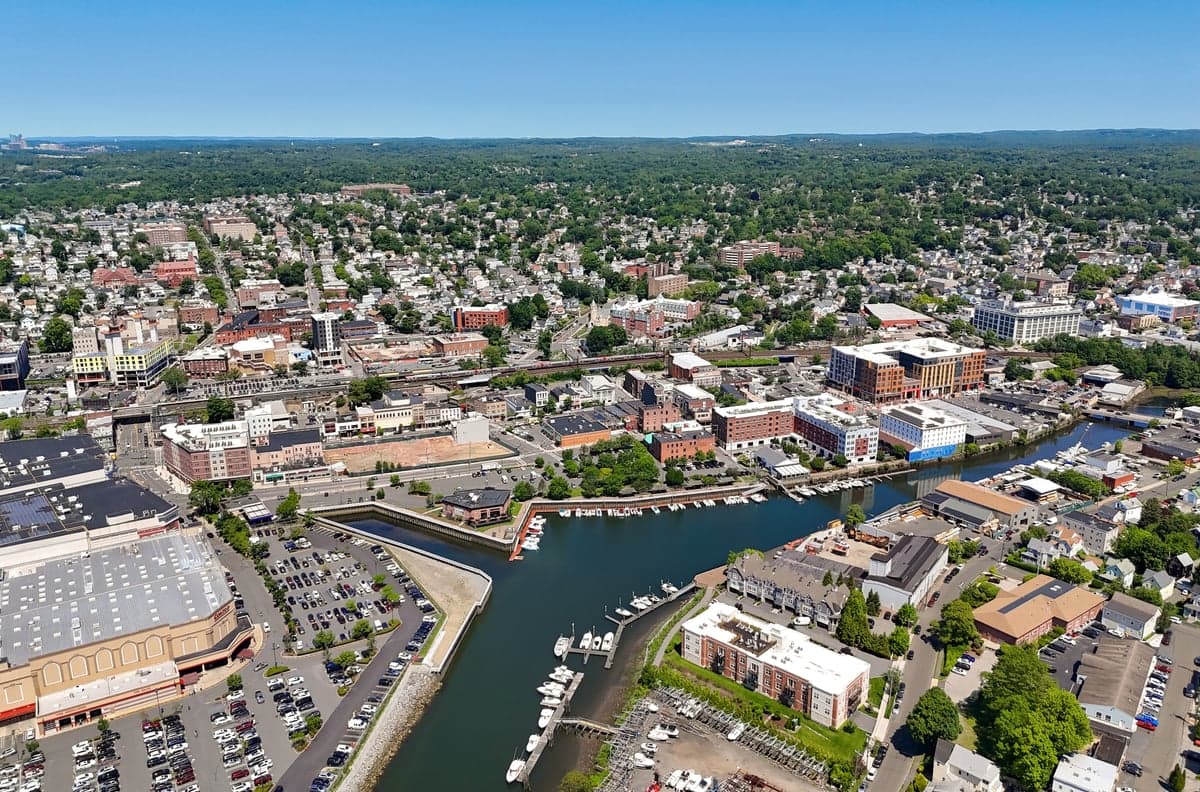
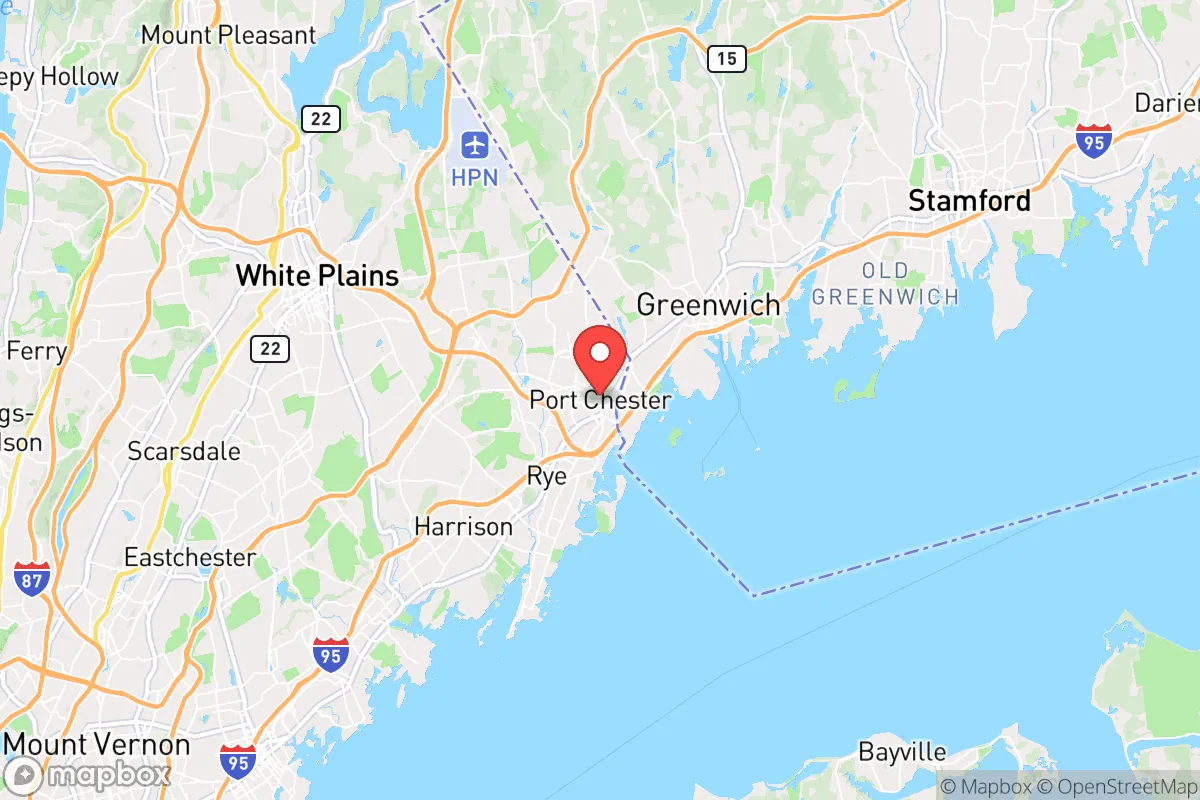
Photo: Wikipedia
Quality of Life in Port Chester, NY
A high quality of life with strong walkability, manageable living costs, healthy neighborhood signals, and solid amenity access.
What does Quality of Life tell us?
Quality of Life blends cost of living, nearby amenities, socioeconomic signals, and neighborhood character. City-level scores represent the whole municipality; individual neighborhoods can differ.
What does this tell us?
Quality of Life blends cost of living, nearby amenities, socioeconomic signals, and neighborhood character. City-level scores represent the whole municipality; individual neighborhoods can differ.
Cost of Living
79% above national average
The Real Cost of Living in Port Chester, NY for 2026
| Tier | Individual | Family (4) |
|---|---|---|
| Survival | $31k | $58k |
| Comfortable | $110k | $161k |
| Luxury | $180k+ | $280k+ |
| Elite (Top 5%) | $228k+ | $353k+ |
62%
The Area Signal
A metric tracking the socioeconomic signals of the area.


Hobbies
Explore the areaGroceries
1 within 10 miles
Gas
0 within 10 miles
Hospital
3 within 20 miles
Airport
JFK — John F. Kennedy International
Post Office
USPS — Flushing, NY
Critical Amenities
Quality-of-Life Analysis
Port Chester, New York, presents a quality of life defined by its position as a more accessible, diverse alternative to the ultra-wealthy communities of Westchester County. With a cost of living index of 179 (79% above the U.S. average), the village attracts a mix of young professionals, long-standing immigrant families, and commuters who value its relative affordability compared to neighboring Greenwich, CT, or Rye, NY, while still enjoying proximity to New York City. The population is notably bicultural, with a large Hispanic community contributing to the village’s vibrant, working-to-middle-class character, a contrast to the more uniformly affluent towns that surround it.
Cost of living, housing, and affordability compared to Greenwich and Rye
Port Chester’s housing market is the primary driver of its affordability appeal within the region. The median home value of $563,900 is significantly lower than the Westchester County median of roughly $700,000 and is a fraction of the $1.5 million-plus median in adjacent Greenwich, CT. Median rent sits at $1,922, which, while high by national standards, is a relative bargain for commuters seeking a Metro-North connection to Manhattan. However, the cost of living index of 179 means that everyday expenses—groceries, utilities, and property taxes—are steep. Westchester County property taxes are among the highest in the nation, and Port Chester is no exception, often adding $10,000–$15,000 annually to homeownership costs. For renters and buyers alike, the trade-off is clear: you pay a premium for the New York metro location, but you avoid the six-figure premiums demanded by Rye or Scarsdale.
Daily life, local amenities, and school district realities
Daily life in Port Chester is walkable and dense, centered around the downtown commercial corridor along Westchester Avenue and the historic Bowery district. The village offers a strong array of independent Latin American restaurants, bodegas, and bakeries, alongside newer craft breweries and coffee shops that signal gradual gentrification. The Port Chester-Rye Union Free School District serves the village, with Port Chester High School offering a diverse student body and a range of Advanced Placement courses, though its academic rankings trail those of the more affluent neighboring districts. Commuters benefit from the average one-way commute of 25.4 minutes, which is shorter than the typical Westchester-to-Manhattan trek, largely because many residents work locally or in nearby Fairfield County. Parks like Lyon Park and the Port Chester Marina provide waterfront recreation along the Byram River, while the Capitol Theatre draws regional music fans for live performances.
The village’s rhythm is distinctly urban-suburban: busy sidewalks, frequent bus service, and a mix of older housing stock and newer luxury rentals near the train station. For families, the trade-off involves weighing lower housing costs against school performance and property tax burdens. For singles and couples, the appeal lies in the walkable downtown, lower rent than Greenwich, and a 45-minute train ride to Grand Central. Port Chester is best suited for those who want Westchester’s location and diversity without the exclusivity of its wealthier neighbors—people who prioritize cultural vibrancy and commute convenience over top-tier school rankings or sprawling lots. It is a village in transition, offering genuine affordability for the region, but requiring residents to accept higher taxes and a more modest amenity base than the elite suburbs just across the town line.

Crime in Port Chester, NY
Generally safer than 56% of comparable U.S. locations.
Violent CrimeViolent Crime Analysis
Property CrimeProperty Crime Analysis
Crime Analysis
Port Chester, New York, reports a violent crime rate of 331.5 incidents per 100,000 residents and a property crime rate of 1,323.4 per 100,000. These figures place the village in a higher-risk category compared to many suburban communities in Westchester County, though the overall safety picture is heavily influenced by its proximity to New York City and the specific criminal justice policies of the surrounding region.
Crime in context
Port Chester's violent crime rate is roughly 10% below the national average but significantly higher than the average for New York State, which benefits from lower statewide violent crime figures. Property crime in Port Chester is also elevated, running about 20% above the national average. These numbers reflect the challenges of a dense, transit-connected village of roughly 30,000 residents that sits directly on the Connecticut border. The village's crime statistics are comparable to other inner-ring suburbs of major metro areas, where higher population density and commuter traffic create more opportunities for theft and property offenses. However, the local context is critical: Port Chester falls under the jurisdiction of Westchester County's district attorney and local courts, which in recent years have adopted progressive prosecution policies, including bail reform and diversion programs for non-violent offenders. For readers concerned about public safety, this ideological approach is a significant negative factor, as it can result in repeat offenders cycling through the system more quickly and a perception of reduced accountability for property crimes like shoplifting and vehicle break-ins.
What residents experience
Daily life in Port Chester involves a heightened awareness of property crime. Residents commonly report incidents of package theft, car break-ins, and occasional burglaries, particularly in areas near the Metro-North train station and along the Boston Post Road commercial corridor. Violent crime is less frequent but does occur, with aggravated assaults and robberies concentrated in specific blocks rather than spread evenly across the village. The presence of the Port Chester Police Department, which maintains a visible patrol presence, provides some reassurance, but the department's effectiveness is constrained by the broader county-level justice policies. For families and individuals considering relocation, the practical impact is that street-level property crime is a routine annoyance, and securing vehicles, homes, and deliveries requires more vigilance than in a typical Westchester suburb. The progressive judicial environment means that even when arrests are made, offenders may face minimal consequences, which undermines deterrence and contributes to a sense of impunity among habitual criminals.
Neighborhood-level variation is notable. The area west of I-287, closer to the Byram River and the Connecticut line, tends to see fewer incidents, while the downtown core and areas near the village's southern border with Rye and Harrison experience higher crime volumes. The King Street corridor and the area around the Port Chester train station are the most frequently cited hotspots for both property and violent crime. Prospective residents should research block-by-block data and consider that the village's compact size means that safety can change dramatically within a few blocks, with some residential streets feeling very safe and others requiring caution after dark.
* Values derived from national, state, county, city and local statistics and may differ in a specific area. Last updated: 2026-04-19T05:20:06.000Z
Narrative content on this page is AI-generated and may contain mistakes. Verify any details that matter before acting on them.
ReloMaps may earn a commission from affiliate links at no extra cost to you.

