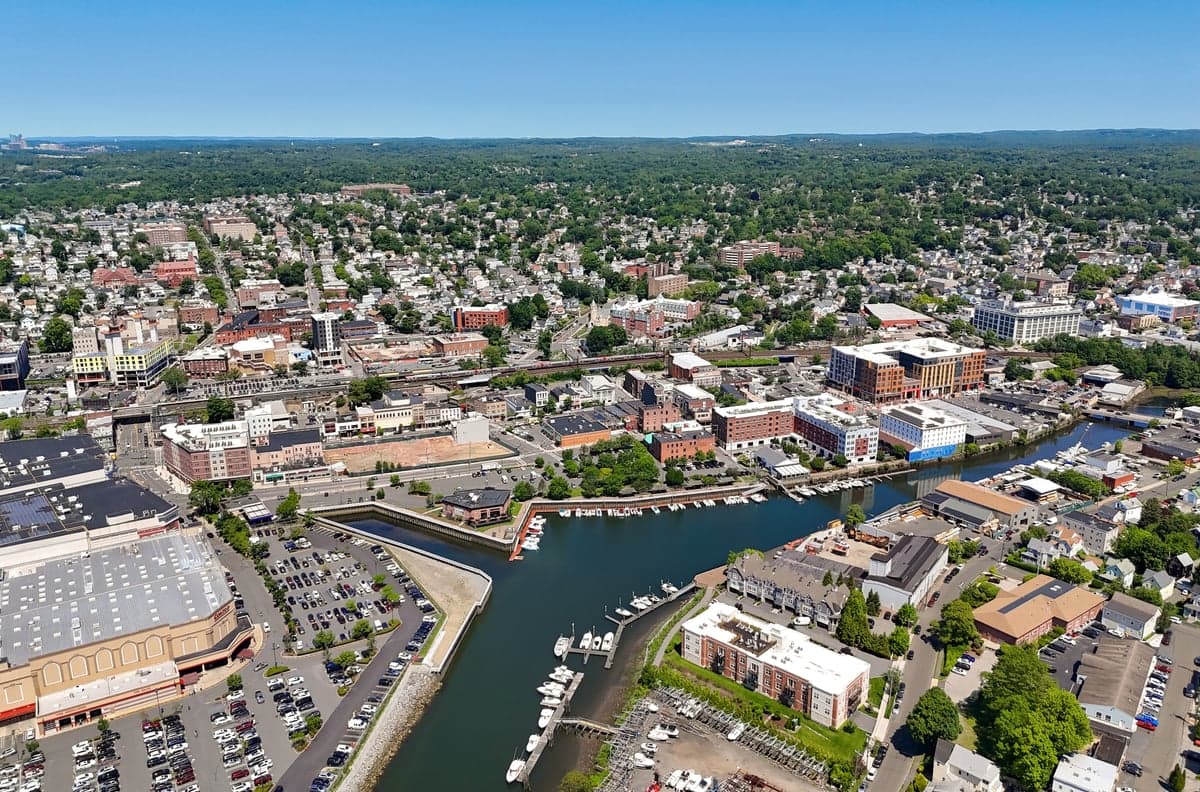
Photo: Wikipedia
Political ClimatePolitical Climate in Port Chester, NY
District shown is the primary district for this city’s centroid. Cities may span multiple districts.
Local Political AnalysisPolitical Analysis of Port Chester, NY
Port Chester, New York, leans heavily Democratic, with a Cook PVI of D+18, meaning it votes about 18 points more Democratic than the national average. That’s a pretty stark shift from what you’d have seen here even 20 years ago, when the village was more of a mixed bag politically. Today, the local government and school board are firmly in progressive hands, and the trajectory is clearly toward more government involvement in daily life—higher taxes, more regulations on small businesses, and a push for policies that prioritize collective goals over individual freedoms. If you’re someone who values personal liberty and limited government, this is a place where you’ll need to keep a close eye on things.
How it compares
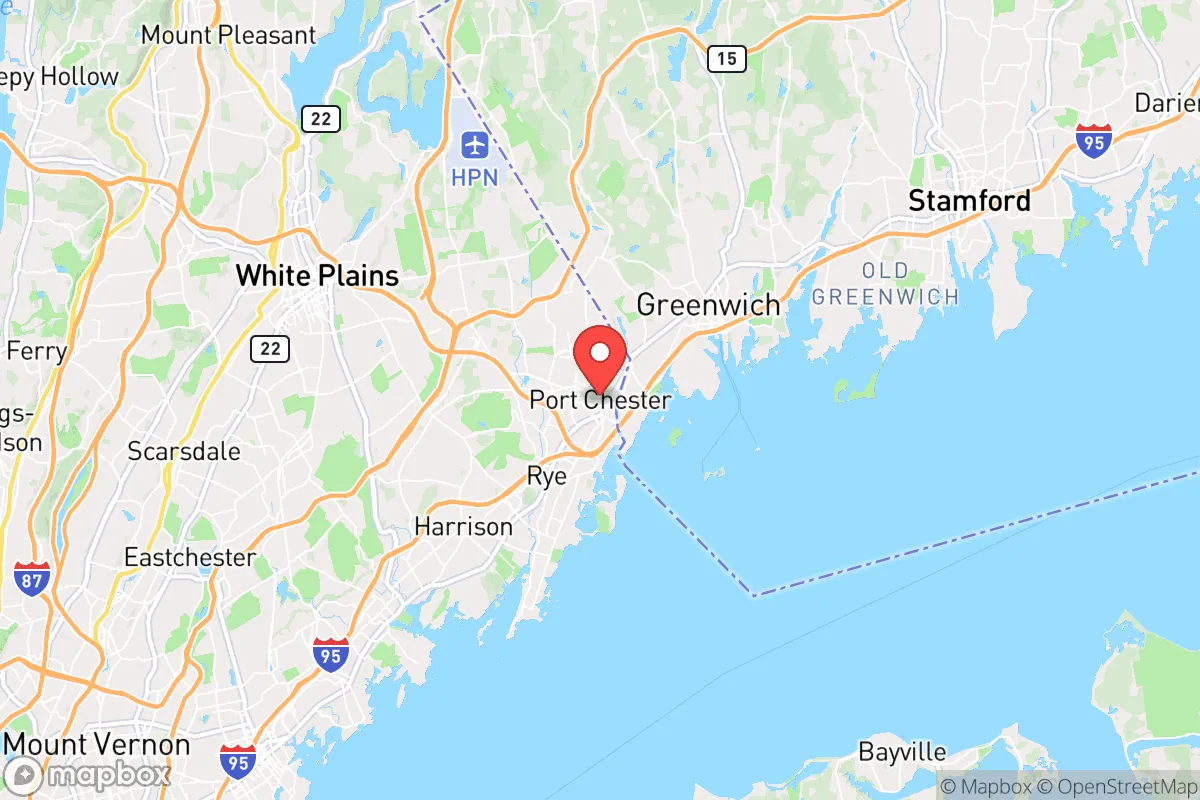
Port Chester sits in a political bubble compared to its neighbors. Head north to Greenwich, Connecticut, and you’ll find a reliably Republican town with lower taxes and a more hands-off approach to business. Drive west into Westchester County’s more rural areas like North Salem or Pound Ridge, and you’ll see a similar conservative tilt. Even nearby Rye Brook, just a few miles away, has a more moderate, business-friendly vibe. Port Chester, by contrast, has embraced progressive policies like rent control, sanctuary city status, and a local police reform board that critics say ties officers’ hands. The contrast is stark: while surrounding towns focus on keeping taxes low and protecting property rights, Port Chester’s leaders seem more interested in expanding the public sector and regulating private life.
What this means for residents
For a long-time resident like me, the biggest concern is how this political climate affects your wallet and your freedoms. Property taxes in Port Chester are already among the highest in Westchester County, and they keep climbing to fund new social programs and administrative bloat. Small business owners, especially in the downtown area, face a maze of new licensing requirements, paid leave mandates, and zoning restrictions that make it harder to turn a profit. On the personal freedom side, you’ve got things like the village’s push for universal pre-K, which sounds nice but means more government control over your kids’ education. And if you’re a gun owner or a parent who wants to opt out of certain school curricula, you’ll find the local government increasingly unsympathetic. The long-term trend is toward a more managed, less free society—something that’s hard to reverse once the bureaucracy gets entrenched.
Cultural and policy distinctions
One thing that sets Port Chester apart is its strong immigrant community, which has shaped the local culture for decades. That’s not inherently bad—diversity can be a strength—but the political response has been to double down on sanctuary policies and public benefits for non-citizens, which strains local resources and creates a two-tier system where some residents get more government help than others. The village also has a history of corruption scandals, from the 2010s federal probe into illegal voting by non-citizens to more recent controversies over no-bid contracts. It’s a place where the political class often seems more focused on consolidating power than on protecting the rights of the people they serve. If you’re thinking of moving here, I’d say visit first, talk to some small business owners, and ask yourself if you’re comfortable with a government that’s always reaching a little further into your life.

State Political ClimatePolitical Climate in New York
State Political AnalysisPolitical Environment in the State
New York State has been a solidly blue stronghold for decades, with Democrats holding a supermajority in the state legislature and every statewide office since 2006. The partisan lean is driven overwhelmingly by New York City and its inner suburbs, which together cast roughly 60% of the state’s vote. Over the last 10-20 years, the state has lurched sharply leftward, with the 2019 legislative session alone passing a raft of progressive bills on abortion, rent control, and criminal justice reform that would have been unthinkable in the more moderate era of Governors Pataki and Cuomo. For a conservative considering a move here, the political climate is increasingly hostile to traditional values, fiscal restraint, and personal liberty.
Urban vs. rural divide
The political map of New York is a stark tale of two states. New York City—Manhattan, Brooklyn, Queens, the Bronx, and Staten Island—is the Democratic engine, with Manhattan and Brooklyn routinely delivering 80-85% of the vote to Democratic candidates. The inner-ring suburbs of Westchester County, Nassau County on Long Island, and Rockland County are also reliably blue, though Nassau has shown some recent rightward drift in local races. In contrast, the vast upstate region—from the Hudson Valley north to the Adirondacks and west to the Great Lakes—is a patchwork of red and purple. Erie County (Buffalo) and Monroe County (Rochester) are blue due to their urban cores, but their surrounding suburbs and exurbs lean conservative. The real conservative strongholds are the rural counties: Allegany, Steuben, Chenango, and Lewis routinely vote 65-70% Republican. The divide is so deep that in 2020, Donald Trump won 56 of New York’s 62 counties, yet lost the state by 23 points because of the NYC metro’s sheer population weight. A conservative moving to Oneonta or Elmira will find a very different political culture than someone settling in Brooklyn or White Plains.
Policy environment
New York’s policy environment is a case study in progressive governance. The state has the highest combined state and local tax burden in the nation, with a top income tax rate of 10.9% and property taxes that average over $5,000 annually. The 2019 “Green Light” law allows undocumented immigrants to obtain driver’s licenses, and the state is a “sanctuary” jurisdiction that limits cooperation with federal immigration enforcement. Education policy is dominated by the teachers’ unions, with per-pupil spending exceeding $26,000—among the highest in the country—yet student outcomes remain mediocre. The 2019 Reproductive Health Act codified abortion up to birth, and the state’s “bail reform” laws eliminated cash bail for most misdemeanors and non-violent felonies, leading to a surge in repeat offending that has alarmed even some Democrats. Election laws are among the most permissive: no-excuse absentee voting, same-day registration, and automatic voter registration are all in place. For a conservative, the regulatory posture feels suffocating—from strict gun laws (the SAFE Act of 2013) to energy mandates that ban natural gas hookups in new construction by 2026.
Trajectory & freedom
New York is becoming less free by almost any measure, and the pace has accelerated since 2019. The SAFE Act, passed in 2013, was one of the nation’s strictest gun control laws, banning “assault weapons” and limiting magazine capacity to seven rounds. In 2022, the state went further with the Concealed Carry Improvement Act, which restricted where licensed gun owners can carry and required “good moral character” reviews—a law that the Supreme Court is currently reviewing. On parental rights, the state has moved aggressively: in 2024, it passed a law shielding doctors who provide gender-transition care to minors from out-of-state lawsuits, effectively overriding parental consent laws in other states. Medical autonomy took a hit with the state’s COVID-19 mandates, which required healthcare workers and school employees to be vaccinated—a policy that remains in effect for healthcare settings. Property rights are under constant assault from rent control laws that now cover over one million apartments, and the state’s “good cause” eviction bill, passed in 2024, makes it nearly impossible to evict a tenant who pays rent. The trajectory is clear: more regulation, higher taxes, and less individual discretion in how to live, work, and raise a family.
Civil unrest & political movements
New York has been a flashpoint for political activism on both sides. The 2020 Black Lives Matter protests in New York City were among the largest and most destructive in the nation, with over 600 businesses damaged and $1 billion in insured losses. The state’s response—then-Governor Cuomo’s “New York State Police Reform and Reinvention Collaborative”—mandated that every local police department adopt new use-of-force policies or risk losing state funding. On the right, the “Second Amendment Sanctuary” movement has gained traction in upstate counties like Lewis and Allegany, where local sheriffs have vowed not to enforce certain provisions of the SAFE Act. Immigration politics are a constant source of tension: New York City’s “right to shelter” law has been strained by the arrival of over 200,000 migrants since 2022, leading to protests in neighborhoods like Staten Island and Queens over shelter placements. Election integrity remains a live issue—the 2020 election saw widespread use of mail-in ballots under a temporary executive order, and the state’s refusal to clean voter rolls has drawn lawsuits. A new resident in Buffalo or Rochester will see these tensions play out in local news daily.
Projection
Over the next 5-10 years, New York is likely to become more progressive, not less. Demographic trends favor the left: New York City continues to attract young, college-educated, left-leaning migrants from abroad, while upstate’s population stagnates or declines. The state’s tax burden is driving a net outflow of higher-income residents—over 1.5 million people left between 2010 and 2020—but those leaving are disproportionately conservative-leaning families and retirees. The state legislature’s Democratic supermajority shows no signs of cracking, and the party’s left wing is ascendant. Expect further gun restrictions, expansion of rent control to upstate cities, and possibly a single-payer healthcare system. For a conservative moving in now, the political environment will feel increasingly alienating, with fewer allies in government and more policies that directly conflict with your values. The best bet for like-minded community is in the rural north or the Finger Lakes region, but even there, state-level policies will continue to constrain local autonomy.
For a conservative considering New York, the bottom line is this: you will pay more in taxes, have less control over your children’s education, face strict limits on your Second Amendment rights, and live under a government that actively resists federal immigration enforcement. The state’s urban centers are hostile territory for traditional values, and the rural areas that share your worldview are losing political influence every year. If you value personal freedom, fiscal conservatism, and local control, New York is a tough place to call home—and it’s only getting tougher.
* Values derived from national, state, county, city and local statistics and may differ in a specific area. Last updated: 2026-04-19T05:20:06.000Z
Narrative content on this page is AI-generated and may contain mistakes. Verify any details that matter before acting on them.
ReloMaps may earn a commission from affiliate links at no extra cost to you.

