 Popular
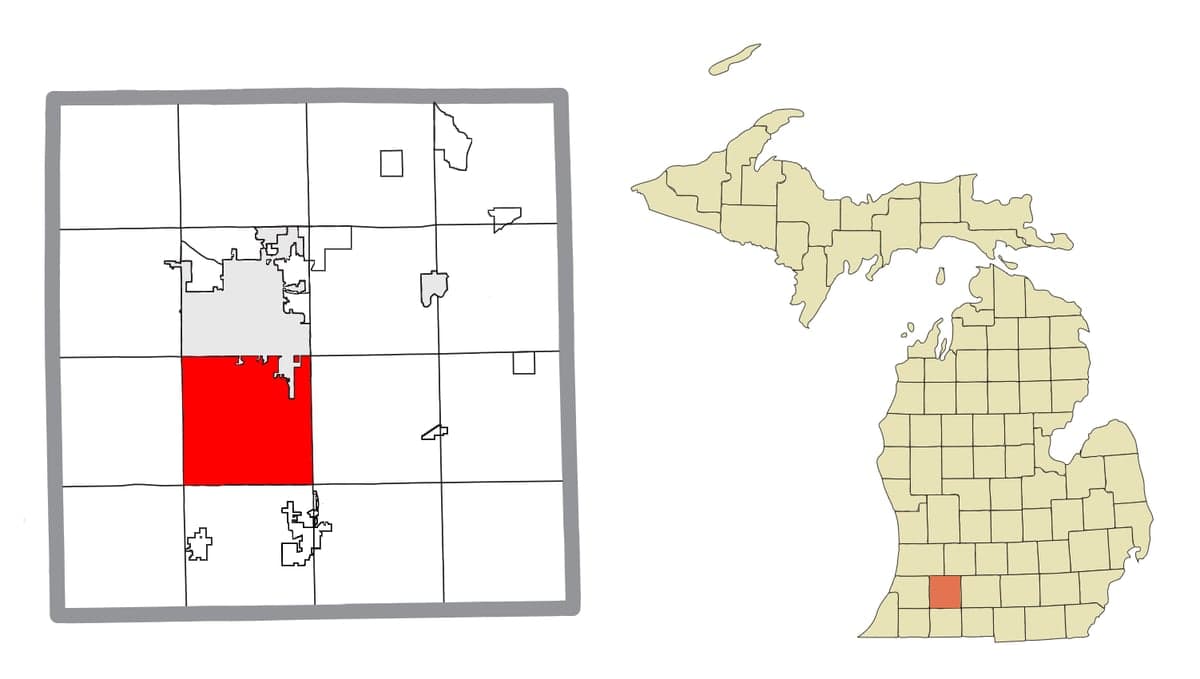
Photo: Wikipedia
Personal Sovereignty in Portage, MI
Strong independent fundamentals that actively favor personal liberty and low regulation.
What does Personal Sovereignty tell us?
Personal Sovereignty measures your capacity for self-reliance and independence with minimal government friction. Higher scores mean fewer barriers between you and the way you want to live... but it assumes you have the space you need and good neighbors.
What does this tell us?
Personal Sovereignty measures your capacity for self-reliance and independence with minimal government friction. Higher scores mean fewer barriers between you and the way you want to live... but it assumes you have the space you need and good neighbors.
State Policy
Energy independence: Importer (20% of energy produced in-state)
Personal Liberty
Homesteading

Personal Liberty Analysis
For the individual or family prioritizing personal sovereignty—meaning the maximum feasible control over your own life, property, and decisions—Portage, Michigan offers a mixed but workable environment. It sits within a state that has a strong tradition of local self-governance and a constitutional right to keep and bear arms, but it also operates under a state government that has, in recent years, shown a willingness to expand its reach into areas like emergency powers and public health mandates. The key for a sovereignty-minded person is understanding where Portage’s local ordinances and Kalamazoo County’s culture either protect or encroach upon that autonomy. The overall picture is one of a relatively stable, low-crime community where you can live largely undisturbed, provided you are aware of the specific regulatory lines you cannot cross.
Tax burden and regulatory posture: How much of your income and property stays yours
Michigan’s state-level tax structure is generally favorable for those seeking to keep more of what they earn. There is a flat personal income tax rate of 4.25%, which is moderate compared to many states, and no state-level tax on Social Security benefits. For property owners in Portage, the local property tax rate is approximately 1.5% to 1.8% of assessed value, which is competitive for the Midwest. The city does not have a local income tax, a significant advantage over many Michigan municipalities. However, the regulatory posture at the city level is not laissez-faire. Portage enforces a standard zoning code that restricts what you can do on your property, particularly regarding home-based businesses, accessory structures, and livestock. The city’s building code is enforced, meaning any major construction or renovation requires permits and inspections—a clear limit on your ability to modify your property without government oversight. For a prepper or survivalist, this means you can likely afford a home here, but you will need to work within a defined regulatory box for any improvements or self-sufficient activities.
Self-defense and gun law specifics: What you can own and where you can carry
Michigan is a “shall-issue” state for concealed pistol licenses (CPL), meaning if you meet the legal requirements, the county sheriff must issue the permit. Kalamazoo County, where Portage is located, has a historically reasonable track record on processing CPL applications, though wait times can vary. A key point for the sovereignty-minded: Michigan does not require a permit to openly carry a handgun in most public places, and the state preempts local governments from enacting their own gun control ordinances. This means Portage cannot ban firearms in city parks or other public spaces beyond what state law allows. However, there are significant restrictions to be aware of. Michigan law prohibits the carrying of firearms in certain “gun-free zones,” including schools, sports arenas, and bars. Additionally, the state has a universal background check law for all firearm sales, including private transactions, which took effect in 2024. For long guns, there is no state-level registration, and the purchase of rifles, including AR-15s, remains legal. For the prepper, the legal framework allows for a robust personal arsenal, but the private sale restriction is a notable infringement on the traditional right to transfer property without government involvement.
Self-reliance and homesteading viability: Lot sizes, zoning, and off-grid feasibility
Portage is a suburban city, and its zoning code reflects that. Most residential lots are between a quarter-acre and half-acre, with some larger parcels in the more rural edges of the city limits. Keeping chickens is generally permitted on residential lots, but with restrictions on the number of birds and coop placement. Keeping larger livestock like goats or pigs is typically not allowed within the city’s urbanized areas. For off-grid living, the city’s building code requires connection to municipal water and sewer where available, and the use of solar panels is permitted but must comply with local electrical codes and permitting. Rainwater collection is legal in Michigan and not heavily regulated at the state level, but Portage’s stormwater ordinances may impose limits on how much you can capture. For a serious homesteading effort, the best strategy is to look at properties just outside Portage’s city limits, in unincorporated Kalamazoo County, where zoning is less restrictive and larger acreage is more affordable. Within the city, you can achieve a modest level of self-sufficiency—a garden, some chickens, and solar backup—but full independence from municipal infrastructure is not realistic.
Personal liberties: Parental rights, medical autonomy, speech, and property
Michigan law generally respects parental rights in education and medical decisions, though recent state-level legislation has shifted the balance. Parents retain the right to opt their children out of specific curriculum or activities, and there is no state-level mandate for critical race theory or comprehensive sex education in K-12 schools. However, the state has expanded access to abortion and gender-affirming care for minors without parental consent in certain circumstances, a major concern for conservative parents. On medical autonomy, Michigan did not have a statewide mask or vaccine mandate for the general public during the COVID-19 pandemic, but local health departments, including Kalamazoo County’s, did impose some restrictions. The state’s emergency powers law was reformed in 2020 to limit a governor’s ability to issue unilateral, long-lasting orders, a positive development for those wary of government overreach. Free speech is protected under the First Amendment, and Portage has no notable local ordinances restricting public assembly or expression. Property rights are generally strong, with Michigan being a “right-to-farm” state that protects agricultural activities from nuisance lawsuits, though this applies more to rural areas than suburban Portage. The city’s code enforcement is active, meaning you cannot let your property become an eyesore or violate setback rules without facing fines.
In the broader landscape of American cities, Portage ranks as a moderately sovereignty-friendly location. It is not a free county like some rural Western jurisdictions, nor is it a heavily regulated coastal city. The tax burden is manageable, gun laws are permissive for ownership but restrictive on private transfers, and the regulatory environment is predictable but not overly intrusive. For the survivalist or prepper, the biggest advantages are the low crime rate, the ability to own a wide range of firearms, and the absence of a local income tax. The biggest drawbacks are the zoning restrictions on self-sufficiency and the state-level erosion of parental rights. If you are willing to live within the suburban code and stay informed on state-level legislative changes, Portage offers a stable base where you can build a resilient, self-reliant life without constant government interference. For those seeking maximum autonomy, the rural townships just outside the city limits are a better fit, but Portage itself is a solid, defensible choice for the sovereignty-minded individual or family.

* Values derived from national, state, county, city and local statistics and may differ in a specific area. Last updated: 2026-05-01T12:21:19.000Z
Narrative content on this page is AI-generated and may contain mistakes. Verify any details that matter before acting on them.
ReloMaps may earn a commission from affiliate links at no extra cost to you.

