 Popular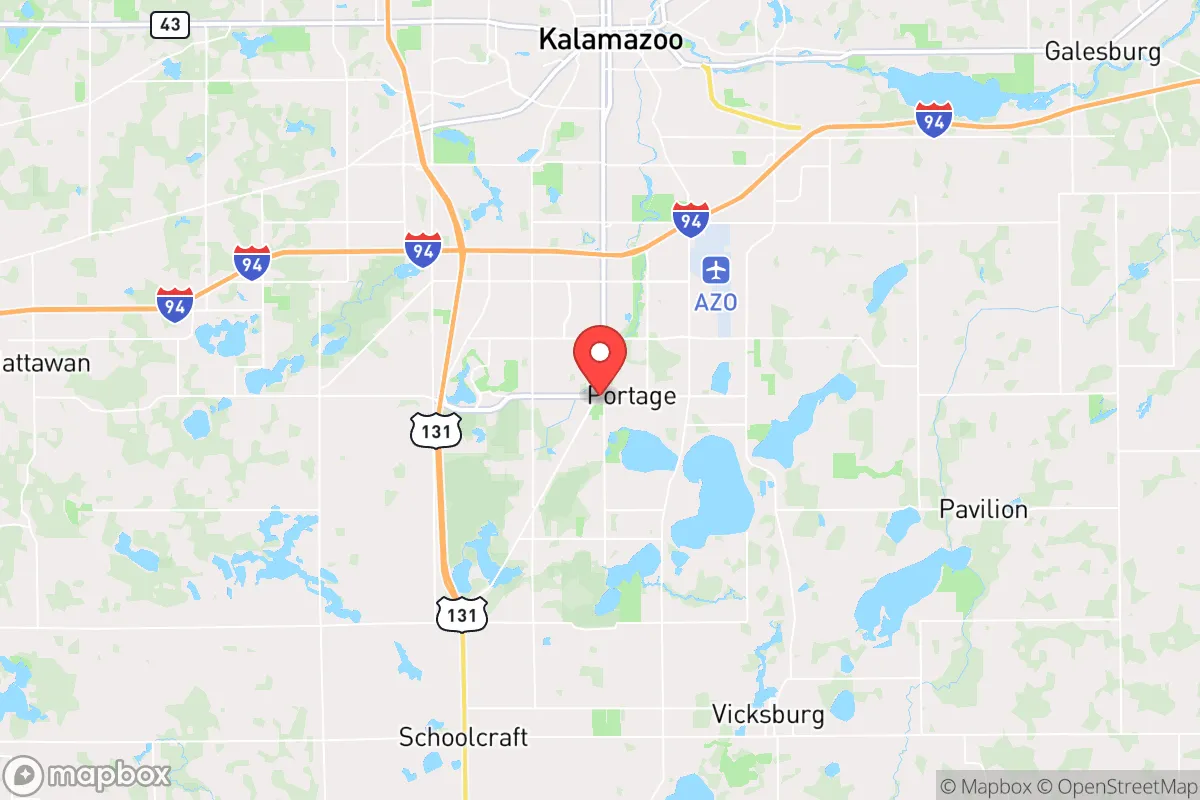
Photo: Wikipedia
Strategic Assessment of Portage, MI
Meaningful friction. Expect exposure to either population pressure, blast zones, or natural disaster risk. Consider buying a retreat property.
What does the Strategic Assessment tell us?
Our Strategic Assessment grades tactical survivability of an area. Major population centers, military targets, fallout zones, natural disasters, and border exposure all drive risk — lower exposure means a more defensible position in a crisis.
This is heavily inspired by Joel Skousen's Strategic Relocation book. Highly recommended you checkout the book ($)What does this tell us?
Our Strategic Assessment grades tactical survivability of an area. Major population centers, military targets, fallout zones, natural disasters, and border exposure all drive risk — lower exposure means a more defensible position in a crisis.
This is heavily inspired by Joel Skousen's Strategic Relocation book. Highly recommended you checkout the book ($)Strategic Pillars

Key Distances
Regional Safe Places
Below is our recommended "safe zones" in Michigan and the surrounding area based on our strategic heuristics. For most people, it's unrealistic to live in a “safe zone” full-time due to work, family or other personal reasons. They tend to be more rural. However, many of these areas are perfect for second homes and retreat properties that double as a vacation home or even a short-term rental.


Important Note: For informational purposes only. This does not mean nothing bad ever happens in the green zones. Please use common sense. This is based on public data and modeled with AI. We tried to take a conservative approach but mistakes happen. We update this regularly as new information becomes available.
Solar Generator Recommendations
Backup power matters more here than in safer locations. We've picked three solar generators across budgets and capacity tiers — start with the budget unit if you only need a few essentials, or step up if you want to run a fridge and HVAC for days at a time.

Jackery Portable Power Station Explorer 300
Budget OptionPower on the Go: Weighing only 11 lbs, it's convenient to set up and store with book-sized foldable solar panels

BLUETTI Portable Power Station AC180
Designed for both indoor and outdoor scenarios, AC180 is highly capable as it has a robost capacity and continuous output power.

EF ECOFLOW DELTA Pro Ultra Power Station
Upgraded PickEcoFlow DELTA Pro Ultra is a whole-home energy system designed to grow with your family. Integrated with the Smart Home Panel 2, it scales to meet your evolving energy needs — keeping your home powered, intelligent, and secure through every stage of life.
We earn a commission, at no additional cost to you.
Strategic Assessment Analysis
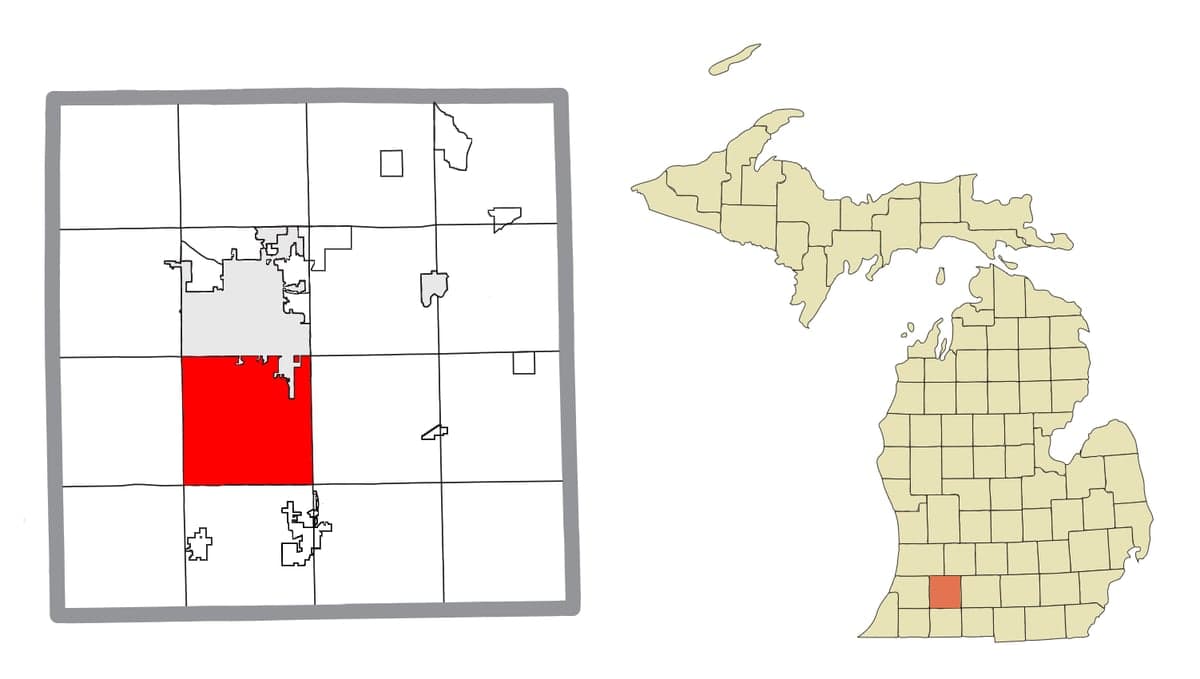
Portage, Michigan, sits in a strategic sweet spot that many relocators overlook: close enough to a major metro for supply runs and employment, yet far enough from the primary blast zones and unrest epicenters to offer genuine breathing room. Its position along the I-94 corridor, roughly 50 miles east of Lake Michigan and 140 miles west of Detroit, places it in a secondary ring of safety—outside the immediate fallout radius of a Chicago or Detroit-level event, but within a day’s drive of critical infrastructure. For a conservative-minded individual or family looking to hedge against civic collapse, mass casualty events, or natural disasters, Portage offers a blend of industrial resilience, agricultural access, and low-profile defensibility that warrants a hard look.
Geographic position and natural buffers: why Portage avoids the worst of it
Portage’s geography is its first line of defense. The city sits on the Kalamazoo River, a modest but reliable water source, and is surrounded by a patchwork of farmland, state game areas, and hardwood forests. This isn’t the open prairie where you’re exposed for miles—it’s a landscape of rolling hills, tree lines, and scattered lakes that provide natural cover and concealment. The area’s elevation is modest (around 900 feet), but the local topography includes enough low ridges and drainage basins to break line-of-sight and slow any organized movement through the region. Critically, Portage is over 100 miles from any major population center over 500,000, meaning the initial shockwave of a WMD event or a coordinated attack on a major city would likely leave this area untouched by direct blast effects. The prevailing westerly winds also carry fallout from a Chicago or Gary, Indiana event eastward—away from Portage—though a Detroit or Toledo event would require monitoring. The city’s position in the southern Lower Peninsula also means it’s far from the nuclear submarine bases and strategic bomber fields of the East and West Coasts, reducing its target value in a conflict scenario.
Risks, exposures, and proximity to fallout-relevant landmarks
No location is perfect, and Portage has its share of liabilities. The most obvious is the Palmer Nuclear Power Plant, located just 12 miles northwest in Covert Township. While the plant is a Babcock & Wilcox design (similar to Three Mile Island) and has a solid safety record, a catastrophic failure or a targeted attack would put Portage directly in the plume path under prevailing winds. The plant’s 10-mile emergency planning zone barely grazes Portage’s western edge, but the 50-mile ingestion pathway zone covers the entire city. For a prepper, this means having a potassium iodide stockpile and a southward evacuation route to Indiana is non-negotiable. Additionally, Portage lies within 30 miles of the Battle Creek Air National Guard Base (home to the 110th Attack Wing, flying MQ-9 Reapers) and the Kalamazoo/Battle Creek International Airport, which handles military cargo and refueling operations. In a conflict, these are secondary targets—not primary, but enough to draw stray ordnance or create a no-fly zone that complicates movement. The I-94 corridor itself is a double-edged sword: it’s your lifeline for resupply, but in a mass evacuation scenario, it becomes a choke point. The highway runs east-west through the city, and a single bridge failure over the Kalamazoo River could trap thousands. Finally, the area’s proximity to Lake Michigan (45 miles west) means lake-effect snow can dump 60-80 inches annually, creating mobility challenges during winter emergencies.
Practical resilience for a relocator: food, water, energy, and defensibility
For a family or individual serious about self-reliance, Portage delivers on the basics. Water is abundant: the Kalamazoo River runs through the city, and the local water table is high enough that a shallow well (30-50 feet) can yield potable water in most residential areas. The city’s municipal water comes from groundwater wells, not surface reservoirs, which reduces contamination risk from airborne fallout or upstream industrial spills. For food, the surrounding Kalamazoo County is one of Michigan’s top agricultural producers, with corn, soybeans, and dairy operations within a 15-minute drive. The Portage Farmers Market operates year-round, and local orchards (like VerHage Fruit Farms) offer bulk apples and preserves. For long-term storage, the area has several Mennonite and Amish communities within 30 miles that sell grains, seeds, and livestock feed without requiring a membership or credit card trail. Energy resilience is mixed: Portage’s grid is served by Consumers Energy, which has a decent reliability record but is vulnerable to ice storms and cyberattacks. However, the city’s zoning allows for rooftop solar without HOA restrictions in most neighborhoods, and natural gas is widely available for backup generators. For defensibility, Portage’s residential layout is a plus. The city is a collection of subdivisions, cul-de-sacs, and wooded lots, not a dense urban grid. A well-chosen property on a dead-end road with tree cover and a rear access point (like a dirt path or creek bed) offers excellent standoff distance. The local sheriff’s office (Kalamazoo County) is professional but understaffed—about 1.5 deputies per 1,000 residents—so in a prolonged crisis, you’re largely on your own. That’s not a bug; it’s a feature for those who prefer to rely on their own training and community networks.
The overall strategic picture for Portage is one of moderate risk, high reward for the prepared. It’s not a bug-out location in the wilderness—you’re still within a two-hour drive of Detroit, Grand Rapids, and Lansing, and the nuclear plant is a real concern. But for a conservative relocator who wants to stay connected to the broader economy while maintaining a low profile and a defensible position, Portage checks more boxes than most Midwestern towns its size. The key is to treat it as a base of operations, not a fortress: build relationships with local farmers, invest in a generator and well, and have a plan to move south or east if the Palmer plant goes hot. If you’re looking for a place where you can ride out the storm without disappearing into the woods, Portage is worth a serious look.

* Values derived from national, state, county, city and local statistics and may differ in a specific area. Last updated: 2026-05-01T12:21:19.000Z
Narrative content on this page is AI-generated and may contain mistakes. Verify any details that matter before acting on them.
ReloMaps may earn a commission from affiliate links at no extra cost to you.

