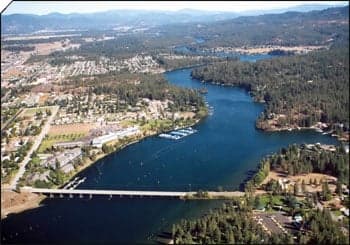
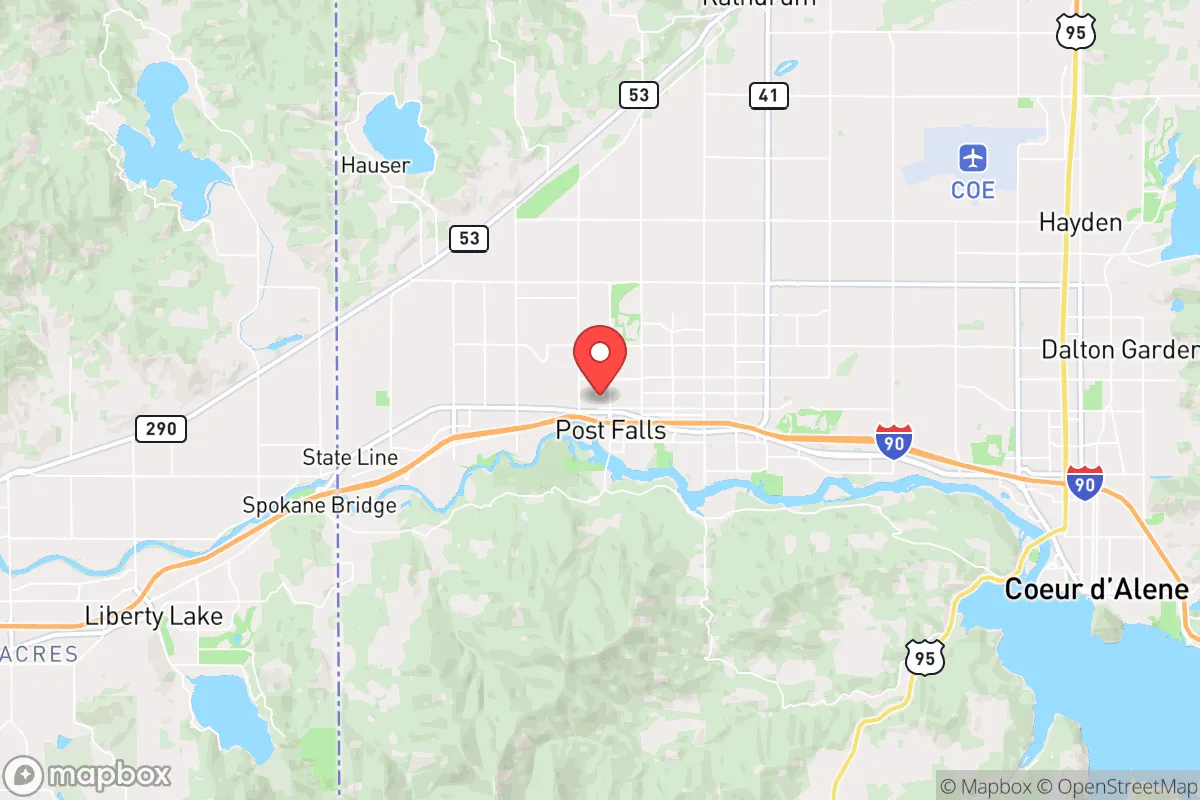
Photo: Wikipedia
Quality of Life in Post Falls, ID
A high quality of life with strong walkability, manageable living costs, healthy neighborhood signals, and solid amenity access.
What does Quality of Life tell us?
Quality of Life blends cost of living, nearby amenities, socioeconomic signals, and neighborhood character. City-level scores represent the whole municipality; individual neighborhoods can differ.
What does this tell us?
Quality of Life blends cost of living, nearby amenities, socioeconomic signals, and neighborhood character. City-level scores represent the whole municipality; individual neighborhoods can differ.
Cost of Living
28% above national average
The Real Cost of Living in Post Falls, ID for 2026
| Tier | Individual | Family (4) |
|---|---|---|
| Survival | $21k | $39k |
| Comfortable | $71k | $105k |
| Luxury | $104k+ | $162k+ |
| Elite (Top 5%) | $123k+ | $190k+ |
70%
The Area Signal
A metric tracking the socioeconomic signals of the area.


Hobbies
Explore the areaGroceries
2 within 10 miles
Gas
0 within 10 miles
Hospital
3 within 20 miles
Airport
SEA — Seattle–Tacoma International
Post Office
USPS — Spokane Valley, WA
Critical Amenities
Quality-of-Life Analysis
Post Falls, Idaho, presents a quality of life shaped by rapid growth and relative affluence, attracting a mix of young families, remote workers, and retirees priced out of nearby Coeur d'Alene. With a cost of living index of 128—28 percent above the national average—the city sits squarely in the upper-middle tier of affordability within the Inland Northwest, though it remains notably cheaper than its lakefront neighbor to the north. The median household income hovers around $80,000, supporting a demographic that values space, outdoor access, and newer housing stock over urban density.
Cost of living, housing affordability, and how Post Falls compares to Coeur d'Alene and Spokane
Post Falls’ housing market reflects its status as a bedroom community with a premium on new construction. The median home value sits at $425,100, roughly $75,000 less than Coeur d'Alene’s median but about $100,000 more than comparable homes in Spokane Valley, Washington, just 15 minutes west. Median rent is $1,313, which undercuts Coeur d'Alene’s average by about $200 per month but runs $150 higher than Spokane’s typical asking price. The average commute of 22.2 minutes is manageable, with most workers heading south to Coeur d'Alene or west across the state line into Spokane for employment. Property taxes in Kootenai County are low—roughly 0.6 percent of assessed value—which partially offsets the higher home prices compared to Washington, where mill rates often exceed 1 percent. However, Idaho’s income tax (a flat 5.8 percent) and rising home insurance premiums due to wildfire risk mean total housing costs can surprise newcomers accustomed to lower-tax states.
What daily life is like for families: schools, parks, and local amenities
Daily life in Post Falls centers on the Spokane River corridor and a growing network of suburban amenities. The Post Falls School District (serving roughly 5,500 students) earns above-average ratings, with Prairie View Elementary and Post Falls High School both scoring 7 out of 10 on GreatSchools—competitive with Coeur d'Alene’s best but behind Spokane’s top magnet programs. The city maintains over 20 public parks, including the 100-acre Q’emiln Park with river access and mountain-bike trails, and the Falls Park amphitheater hosts summer concerts and a farmers market. Retail is concentrated along the Interstate 90 corridor, anchored by a Walmart Supercenter, Costco, and the Riverbend Commerce Park, which includes a Cabela’s and multiple chain restaurants. For groceries and daily errands, most residents drive 5–10 minutes; walkability is low outside the downtown core. The rhythm is car-dependent and family-oriented, with weekend traffic on Seltice Way and Idaho Street backing up during summer tourist season as visitors head to Lake Coeur d'Alene.
Post Falls is best suited for those who prioritize newer housing, lower property taxes, and quick access to both Spokane’s job market and North Idaho’s recreation. Remote workers and commuters tolerate the 22-minute drive for the trade-off of a quieter, more affordable base than Coeur d'Alene proper. Families with school-age children will find competent public schools and ample parks, though those seeking urban nightlife or walkable downtowns should look to Spokane or downtown Coeur d'Alene. Retirees on fixed incomes may struggle with the above-average cost of living unless they bought before 2020, when median prices were below $300,000. Overall, Post Falls offers a solid, middle-ground quality of life for those who can absorb the housing premium and don’t mind driving for most services.

Crime in Post Falls, ID
Lower crime rates than 77% of comparable U.S. locations.
Violent CrimeViolent Crime Analysis
Property CrimeProperty Crime Analysis
Crime Analysis
Post Falls, Idaho, maintains a crime rate significantly below national averages, with a violent crime rate of 159.7 per 100,000 residents and a property crime rate of 726.8 per 100,000. These figures position the city as a relatively safe option within the Spokane-Coeur d'Alene corridor, though property crime remains a more common concern for residents than violent incidents.
Crime in context
Post Falls' violent crime rate of 159.7 per 100,000 is roughly half the national average of 380 per 100,000, and well below Idaho's statewide rate of approximately 245 per 100,000. Property crime in Post Falls, at 726.8 per 100,000, also undercuts the national average of 1,954 per 100,000 by a wide margin. However, it is slightly above the Idaho state average of roughly 1,500 per 100,000, indicating that theft and burglary are the more pressing issues locally. These numbers reflect data from the FBI's Uniform Crime Reporting program and local law enforcement reports, providing a reliable baseline for comparison.
What residents experience
Residents of Post Falls typically report feeling safe in their neighborhoods, with most crime concentrated in commercial areas and along major thoroughfares like Seltice Way and the Interstate 90 corridor. The city's police department emphasizes community policing and proactive engagement, which contributes to a sense of security. However, the proximity to Spokane, Washington—a larger metro area with a more progressive justice system—is a factor some residents cite as a concern. Spokane County's liberal prosecutorial policies and focus on offender rehabilitation over incarceration have been linked to higher recidivism rates and a perception of leniency, which can spill over into border communities like Post Falls. This dynamic means that while Post Falls itself maintains conservative law enforcement practices, the regional influence of a progressive district attorney's office in Spokane may contribute to property crime trends, as offenders face fewer consequences across the state line.
Neighborhood-level variation in Post Falls is notable. Areas west of the Spokane River and near the Idaho-Washington border tend to see higher property crime rates due to easier access for transient offenders. In contrast, newer subdivisions east of Highway 41 and around the Post Falls Golf Course report very low crime incidents. Gated communities and developments with homeowners' associations often have additional security measures, further reducing risk. For families and retirees, the city's overall safety profile is strong, but awareness of regional justice system differences is prudent when evaluating long-term safety trends.
* Values derived from national, state, county, city and local statistics and may differ in a specific area. Last updated: 2026-04-19T05:23:42.000Z
Narrative content on this page is AI-generated and may contain mistakes. Verify any details that matter before acting on them.
ReloMaps may earn a commission from affiliate links at no extra cost to you.

