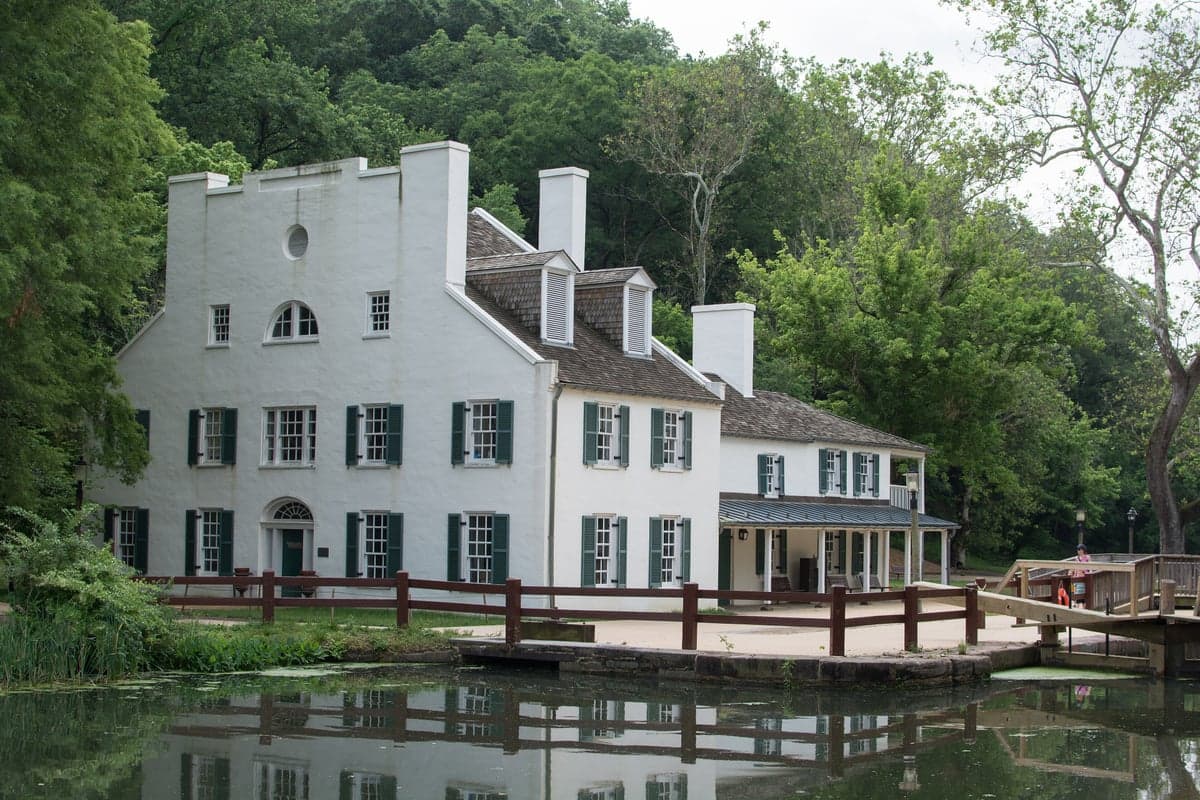
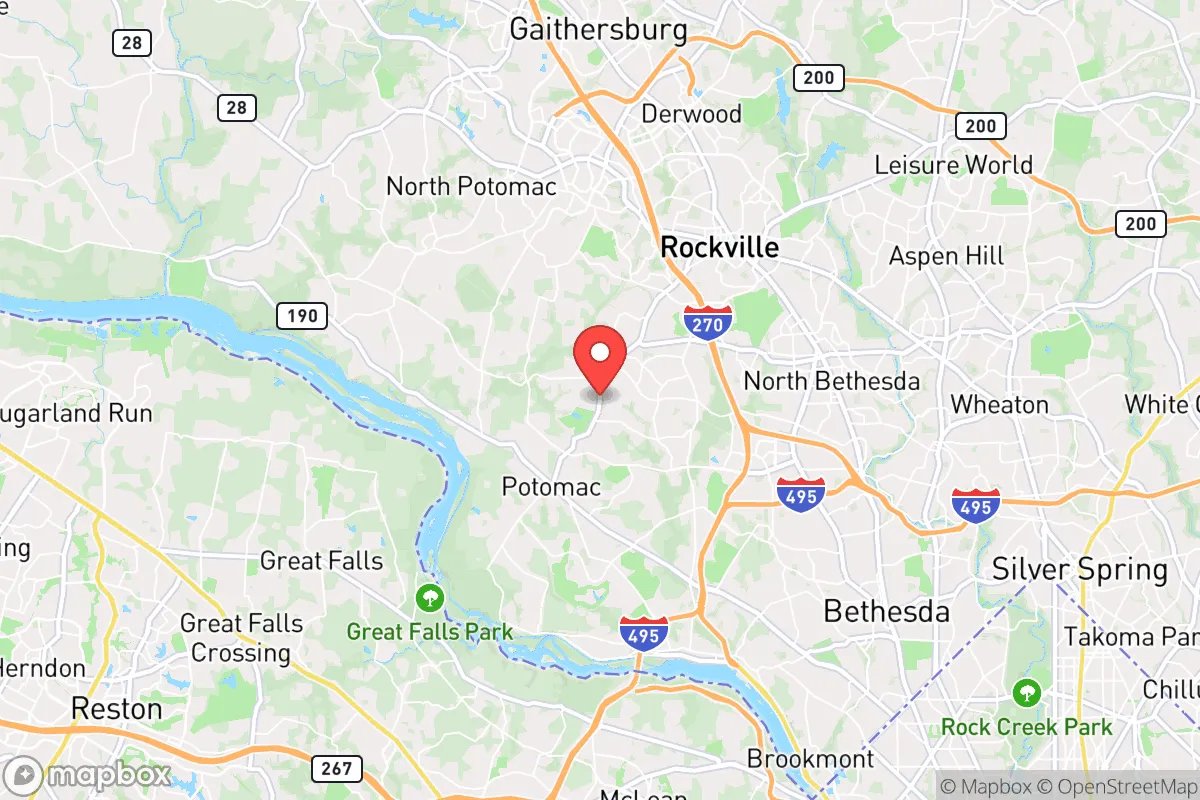
Photo: Wikipedia
Personal Sovereignty in Potomac, MD
Viable for self-reliance. Generally workable, though some barriers may limit total independence.
What does Personal Sovereignty tell us?
Personal Sovereignty measures your capacity for self-reliance and independence with minimal government friction. Higher scores mean fewer barriers between you and the way you want to live... but it assumes you have the space you need and good neighbors.
What does this tell us?
Personal Sovereignty measures your capacity for self-reliance and independence with minimal government friction. Higher scores mean fewer barriers between you and the way you want to live... but it assumes you have the space you need and good neighbors.
State Policy
Energy independence: Importer (8% of energy produced in-state)
Personal Liberty
Homesteading

Personal Liberty Analysis
Potomac, Maryland presents a complex sovereignty picture for the liberty-minded individual. While the area offers significant personal wealth and privacy through large, wooded lots, it sits squarely within one of the most heavily regulated states in the union. For the prepper or survivalist, the trade-off is stark: you gain physical buffer from neighbors but face a state government that actively limits firearm rights, taxes property heavily, and maintains a dense web of health and education mandates. The autonomy you carve out here is defensive and private, not offensive or public.
Tax burden and regulatory posture: what it costs to live free in Montgomery County
Maryland’s tax posture is a primary concern for anyone valuing financial sovereignty. The state levies a progressive income tax with rates climbing to 5.75%, and Montgomery County adds its own local income tax, bringing the combined top marginal rate to over 9% for high earners. Property taxes are also substantial: the effective rate in Potomac hovers around 1.1% of assessed value, and assessments have risen sharply with the hot real estate market. This means a $1.5 million home carries an annual tax bill near $16,500. For the prepper mindset, this is money forcibly diverted from your own land improvements, supplies, and security infrastructure. The regulatory environment is equally dense. Maryland’s vehicle emissions testing, strict building codes, and extensive environmental regulations on tree removal and stormwater management mean that any significant property modification—from a root cellar to a solar array—requires permits and inspections. The state’s energy code is among the most stringent in the nation, which can complicate off-grid power setups if you intend to remain fully compliant. For the individualist, this is a state that demands paperwork for nearly every act of self-reliance.
Self-defense and gun law specifics: navigating Maryland’s restrictive framework
Maryland is a shall-issue state for concealed carry, but the process is far from simple. Applicants must complete a 16-hour training course, submit fingerprints, and pass a background check that includes a review of mental health records. The state also maintains a handgun roster that limits which models you can purchase, and the Firearm Safety Act of 2013 banned many semi-automatic rifles commonly used for home defense and competition. Magazine capacity is capped at 10 rounds for long guns and 10 rounds for handguns. For the survivalist, this is a significant limitation. You cannot legally own standard-capacity magazines for an AR-15 or a Glock 19. Furthermore, Maryland has a "good and substantial reason" requirement for carry permits, though a 2022 Supreme Court ruling (NYSRPA v. Bruen) has weakened that standard. In practice, Montgomery County is one of the most restrictive jurisdictions in the state for issuance. Stand-your-ground laws do not exist in Maryland; you have a duty to retreat if safely possible before using deadly force. Castle doctrine applies inside your home, but the legal burden is on you to prove you were in imminent danger. For the prepper, this means your defensive options are legally constrained, and any use of force will be scrutinized by a county with a liberal prosecutorial culture.
Self-reliance and homesteading viability: lot sizes, zoning, and off-grid feasibility
Potomac’s residential zoning is a double-edged sword for the self-reliant. Minimum lot sizes in the area range from one to five acres, with many properties in the "Rural Residential" zone sitting on two to five acres of wooded land. This provides genuine privacy and space for gardens, small orchards, and even a few chickens or goats, which are permitted under county code with proper setbacks. However, full-scale homesteading is limited. Montgomery County restricts livestock to a small number of animals per acre, and pigs, cattle, and horses require larger parcels and specific permits. Off-grid living is effectively illegal. The county requires connection to the public water and sewer system where available, and most of Potomac is served by WSSC Water. Solar panels are allowed but must be grid-tied; battery storage for full independence is permitted but subject to fire code inspections. Rainwater collection is legal but limited to 5,000 gallons per property, and you cannot use it for potable purposes without a treatment system that meets state health standards. For the serious prepper, Potomac offers the land and privacy to stockpile supplies and grow food, but you will remain tethered to the grid and the county’s regulatory apparatus. True off-grid autonomy is not feasible here.
Personal liberties: parental rights, medical autonomy, speech, and property
On parental rights, Maryland has moved in a direction that concerns many conservative families. The state mandates comprehensive sex education in public schools, and parents cannot opt their children out of all content—only specific lessons. School boards in Montgomery County have also implemented policies on gender identity that allow students to use chosen names and pronouns without parental notification. For the parent who believes they should have final say in their child’s upbringing, this is a direct erosion of authority. Medical autonomy is similarly constrained. Maryland has a vaccine mandate for school attendance, with only narrow medical and religious exemptions that are difficult to obtain. During the COVID-19 pandemic, the state imposed mask mandates and business closures that were among the longest in the nation. For the individual who values bodily autonomy and the right to make medical decisions without government coercion, this track record is troubling. Free speech is protected under the First Amendment, but Montgomery County has a history of local ordinances that restrict signage, noise, and public assembly in ways that can chill political expression. Property rights are strong in terms of ownership, but the county’s zoning and environmental regulations mean you cannot use your land as you see fit. Building a bunker, a shooting range, or a large workshop requires multiple permits and can be denied based on neighborhood character or environmental impact. For the survivalist, this is a place where your sovereignty is exercised quietly, within the lines drawn by the state.
Overall, Potomac offers a high degree of personal privacy and the physical space to prepare, but it sits within a state that actively limits your ability to defend yourself, control your children’s education, and make independent medical choices. Compared to areas in the rural South or the Mountain West, where property taxes are lower, gun laws are more permissive, and off-grid living is legal, Potomac is a compromised environment for the liberty-minded individual. It works best for those who can afford the tax burden and are willing to operate within the regulatory framework while maintaining a low profile. For the prepper who wants true sovereignty, this is a place to hold ground, not to build a fortress.

* Values derived from national, state, county, city and local statistics and may differ in a specific area. Last updated: 2026-04-27T14:55:29.000Z
Narrative content on this page is AI-generated and may contain mistakes. Verify any details that matter before acting on them.
ReloMaps may earn a commission from affiliate links at no extra cost to you.

