Photo: Wikipedia
Find The Best Places To Live
in Poughkeepsie
PRO TIP! You can paste a Zillow or Redfin link to get info on that property.
What It's Like Living in Poughkeepsie, NY
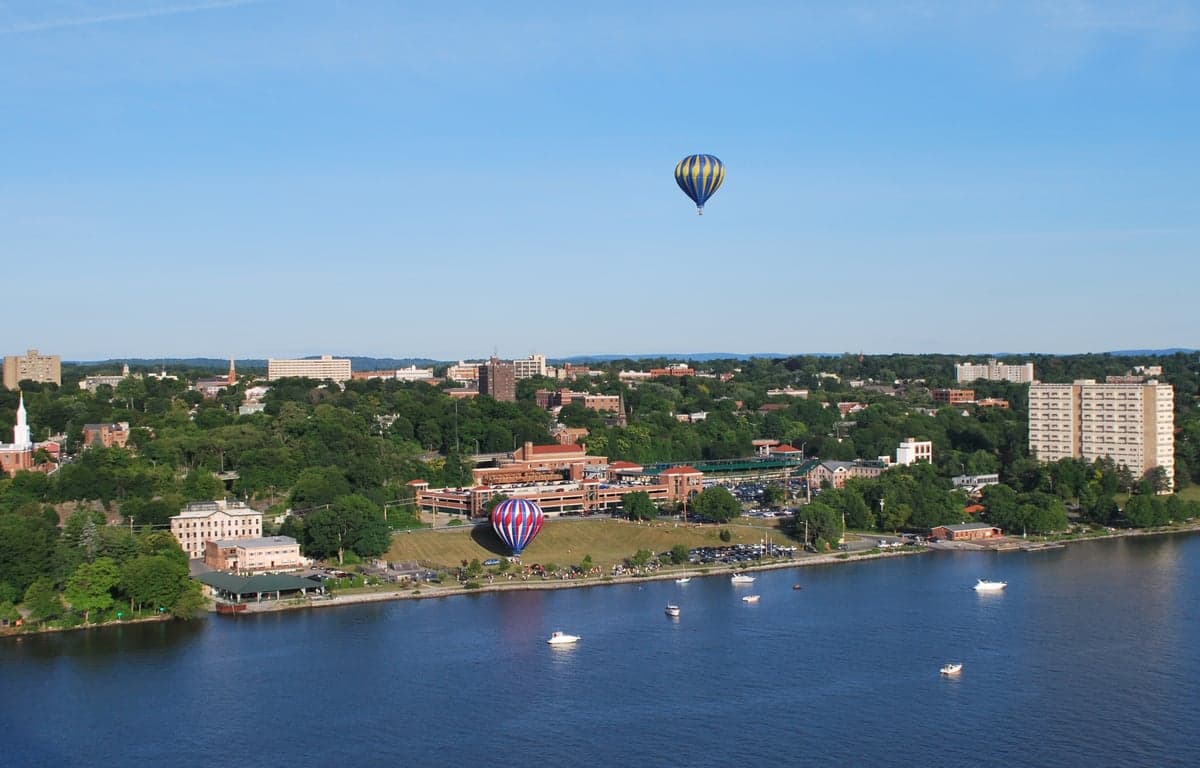
Living in Poughkeepsie means straddling two worlds: the quiet, walkable neighborhoods of a historic Hudson Valley city and the constant hum of commuter life heading south toward New York City. It’s a place where you can grab coffee at a local roastery, watch a minor league baseball game, and still be back home in time to hear the Metro-North whistle fade into the night. The vibe is less “upstate escape” and more “working river town with a college-town pulse,” shaped by Marist College, Vassar College, and the Culinary Institute of America just across the river in Hyde Park.
Daily Rhythm: Commutes, Coffee, and the River
Most weekdays here start early. The average commute clocks in at about 22 minutes, which feels generous by downstate standards—you can live in a quiet neighborhood off Raymond Avenue and still be at a desk in the city core in under 15. That said, the 9-to-5 crowd is split between local employers like IBM’s former Hudson Valley Research Park, Central Hudson Gas & Electric, and the hospitals (Vassar Brothers Medical Center is the largest employer), and those who catch the 5:45 AM train to Grand Central. For the latter group, the trade-off is a longer day but a much lower mortgage.
Weekends have a slower rhythm. Locals hit the Poughkeepsie Farmers Market on Main Street from May through November, or walk the Walkway Over the Hudson, the mile-long pedestrian bridge that connects to Highland and offers views of the river that never get old. For groceries, you’ve got a Price Chopper and a ShopRite, but many families drive 15 minutes to the Adams Fairacre Farms in Kingston for better produce. The restaurant scene punches above its weight for a city of 31,778: Mill House Brewing Company on Mill Street is the go-to for craft beer and gastropub fare, while the casual Italian spot Cosimo’s on Union has been a Friday-night staple for decades. For a nicer dinner, Brasserie 292 on Main Street draws the Marist faculty crowd and anyone celebrating a promotion.
Sports, Schools, and the Local Identity
Sports here are a bigger deal than you might expect for a city this size. The Hudson Valley Renegades, a High-A affiliate of the New York Yankees, play at Dutchess Stadium in nearby Fishkill—summer games are cheap ($12 lawn seats), family-friendly, and draw a loyal crowd of locals who’d rather watch live baseball than sit through another Netflix binge. High school sports are serious business, too: Poughkeepsie High School’s football and basketball teams have a passionate following, and games against rival Newburgh Free Academy can pack the bleachers. Marist College’s Division I basketball team (the Red Foxes) gets solid local attention, especially when they play Siena or Iona in the MAAC conference.
The city’s identity is shaped by its role as a regional hub. It’s the county seat of Dutchess County, which means the courthouse and government offices anchor downtown employment. But it’s also a college town in miniature: 31.5% of adults hold a bachelor’s degree or higher, and the median age of 37.9 reflects a mix of young professionals, empty-nesters, and families who stayed after graduation. The cultural quirk you’ll notice: people here are fiercely loyal to their specific neighborhood—the “Acre” (the area around Vassar), the “South Side” (near the river), or the “North Side” (closer to the city line with Hyde Park). Ask a local where they live, and they’ll tell you the neighborhood before the street name.
What’s There to Do: Festivals, Parks, and the Nightlife Trade-Off
Entertainment is seasonal and community-driven. The Poughkeepsie Trolley Barn on Main Street hosts concerts and art shows, and the Bardavon 1869 Opera House (a 944-seat historic theater) brings in touring acts and the Hudson Valley Philharmonic. Summer brings the Poughkeepsie Waterfront Festival in July and the Dutchess County Fair in August (about 20 minutes east in Rhinebeck), which is a big deal for families—think midway rides, livestock shows, and fried dough. Outdoor enthusiasts use the Vassar College Ecological Preserve for trail running and birdwatching, or drive 15 minutes to the Fahnestock State Park for hiking and swimming.
Nightlife is modest. The college crowd gravitates to Mahoney’s Irish Pub on Main Street and Schatzi’s Pub & Bier Hall on Academy Street, while the 30-something set prefers the quieter wine bar Levon’s or a pint at Poughkeepsie Brewing Company. If you’re looking for a club scene, you’ll be disappointed—this isn’t that kind of town. The trade-off is that you can afford a night out. The cost of living index sits at 107 (just 7% above the national average), and the median home value of $259,200 is a fraction of what you’d pay in Westchester or the city. For a single person or a young family, that math matters.
Pros and Cons of Living Here
- Pro: Affordability relative to the region. You get Hudson Valley scenery and proximity to NYC without the eye-watering prices of Beacon or Cold Spring. A starter home in the South Side can still be found under $250,000.
- Pro: Walkability in the core. The area around Main Street and the train station is genuinely walkable—you can hit the grocery store, a brewery, and the Walkway without getting in a car.
- Con: Crime is a real concern. The violent crime rate of 511.1 per 100,000 is well above the national average. Most incidents are concentrated in specific blocks north of downtown, but it’s something families and singles should research block by block before signing a lease.
- Con: Winter drags on. From December through March, the city feels quiet and gray. Snow removal is hit-or-miss on side streets, and the river wind can make a 20-degree day feel like 10. Locals cope by leaning into indoor life—bar trivia, library events, and long dinners.
- Pro: Schools are a mixed bag but improving. Poughkeepsie City School District has struggled with funding and test scores, but the Poughkeepsie High School’s P-TECH program (a partnership with IBM) draws motivated students. Many families opt for private schools like Our Lady of Lourdes or the Dutchess Day School, or move to the Arlington Central School District just east of the city limits.
- Con: The downtown has empty storefronts. Main Street has a handful of gems, but it’s not the thriving retail corridor it was in the 1950s. You’ll drive to the Poughkeepsie Galleria mall (about 10 minutes south) for Target, Best Buy, or a chain restaurant.
In the end, Poughkeepsie works best for people who want a real community—flaws and all—rather than a polished suburb. It’s a place where you know your neighbors, where the river is a daily presence, and where you can build a life without needing a six-figure salary. The median household income of $60,050 goes further here than it would in most of the Northeast, but the trade-off is that you’ll have to be intentional about finding your people and your spots. For the right person—someone who values character over perfection—it’s home.

Similar towns to Poughkeepsie
* Values derived from national, state, county, city and local statistics and may differ in a specific area. Last updated: 2026-05-01T10:03:27.000Z
Narrative content on this page is AI-generated and may contain mistakes. Verify any details that matter before acting on them.
ReloMaps may earn a commission from affiliate links at no extra cost to you.

