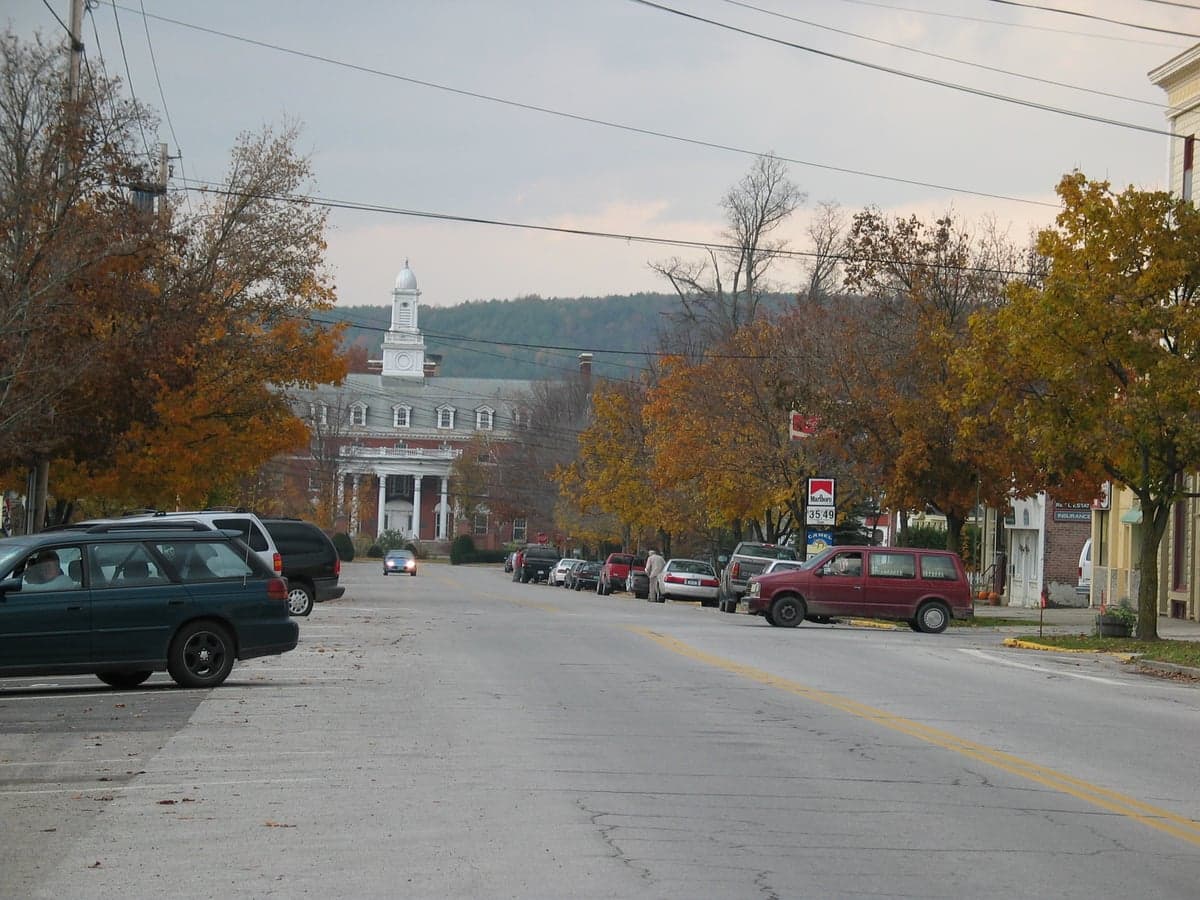
Photo: Wikipedia
Quality of Life in Poultney, VT
A high quality of life with strong walkability, manageable living costs, healthy neighborhood signals, and solid amenity access.
What does Quality of Life tell us?
Quality of Life blends cost of living, nearby amenities, socioeconomic signals, and neighborhood character. City-level scores represent the whole municipality; individual neighborhoods can differ.
What does this tell us?
Quality of Life blends cost of living, nearby amenities, socioeconomic signals, and neighborhood character. City-level scores represent the whole municipality; individual neighborhoods can differ.
Cost of Living
32% below national average
The Real Cost of Living in Poultney, VT for 2026
| Tier | Individual | Family (4) |
|---|---|---|
| Survival | $13k | $25k |
| Comfortable | $34k | $50k |
| Luxury | $79k+ | $123k+ |
| Elite (Top 5%) | $93k+ | $145k+ |
123%
The Area Signal
A metric tracking the socioeconomic signals of the area.
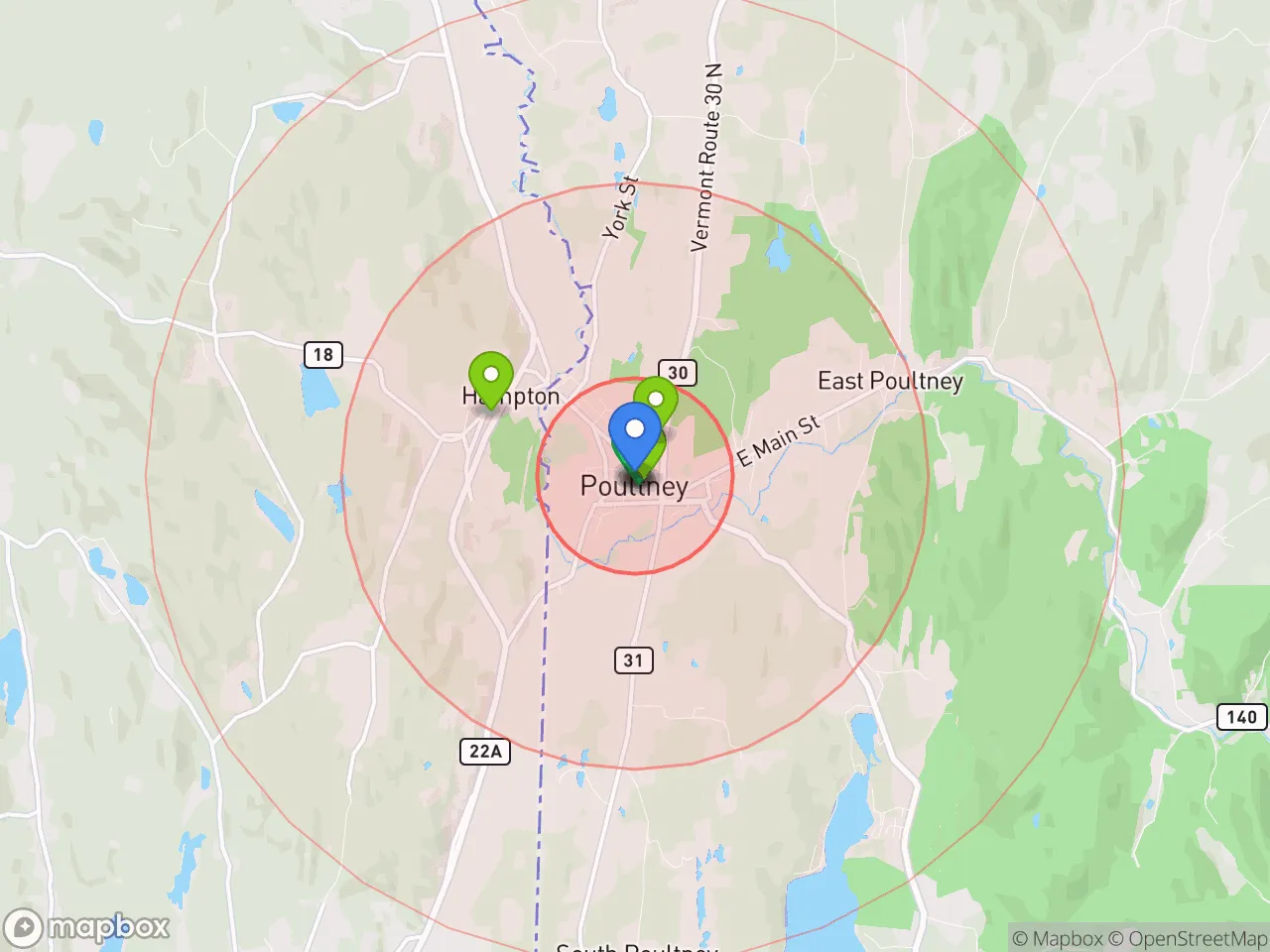
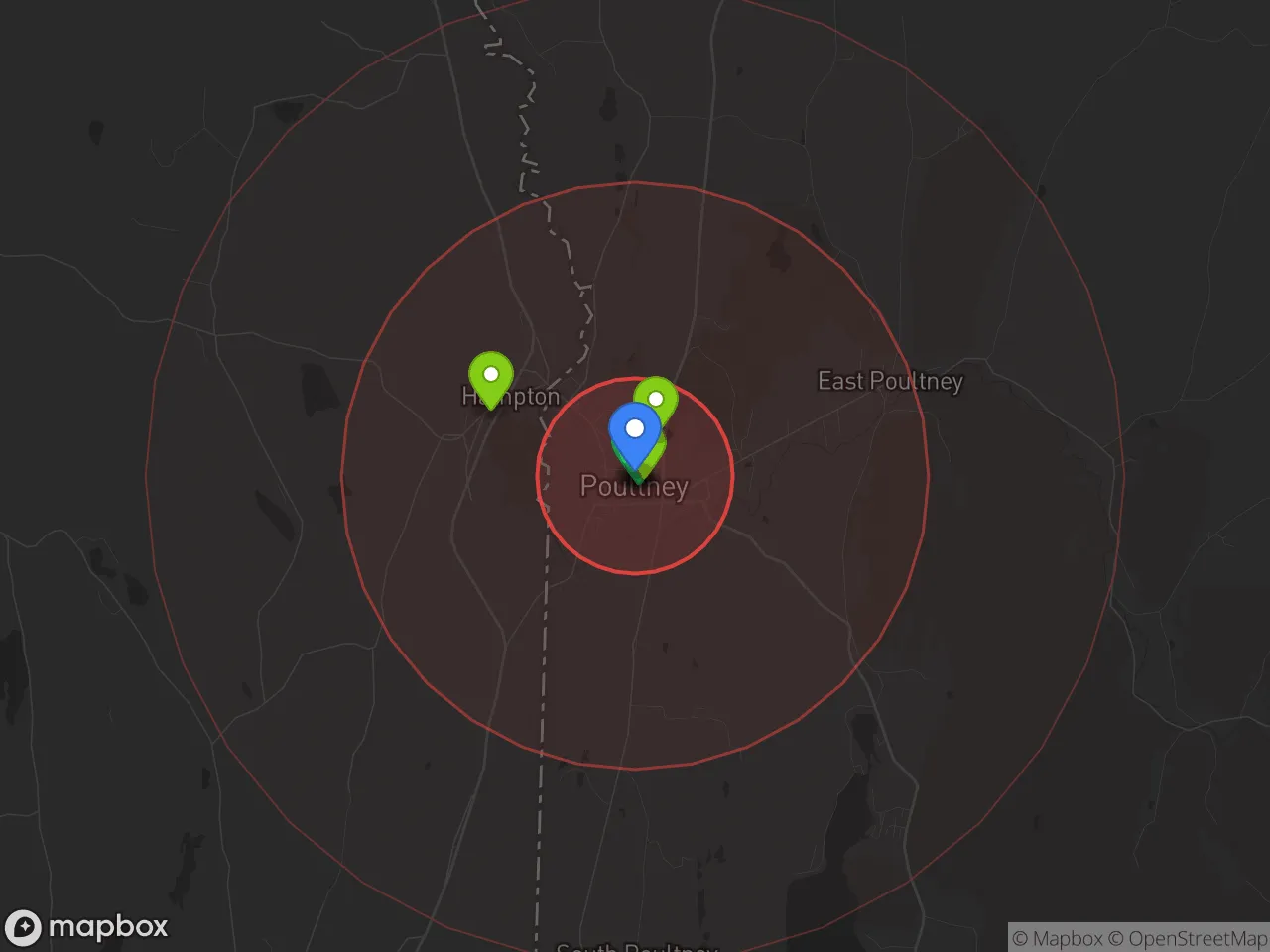
Hobbies
Explore the areaGroceries
2 within 10 miles
Gas
16 within 10 miles
Hospital
1 within 20 miles
Airport
PDX — Portland International Jetport
Post Office
USPS — Poultney, VT
Critical Amenities
Quality-of-Life Analysis
Poultney, Vermont, presents a notably affordable quality of life in a state often associated with high costs, with a cost of living index of 68—32% below the U.S. average. This small, rural community in Rutland County attracts a mix of Green Mountain College alumni, second-home buyers seeking lakefront property on Lake St. Catherine, and working-class families priced out of nearby ski towns like Killington or Manchester. The population of roughly 1,800 leans older and more transient than the state average, with a significant seasonal influx of summer residents and students during the academic year.
How housing costs and affordability compare to nearby Vermont towns
Poultney’s housing market is among the most accessible in southwestern Vermont. The median home value sits at $175,000, roughly half the Vermont state median of $350,000 and dramatically lower than the $600,000+ median in nearby Manchester. Median rent is $833, well below the state average of $1,200, making Poultney one of the few places in the region where a single-income household can afford a two-bedroom apartment without cost burden. The average commute of 23.4 minutes is shorter than the Vermont average of 26 minutes, with most residents driving to jobs in Rutland (20 minutes north), Fair Haven (10 minutes west), or across the border to Whitehall, New York (15 minutes). Property taxes in Poultney are moderate for Vermont—around $2,800 annually on a $175,000 home—though still higher than comparable towns in upstate New York. The trade-off is limited housing inventory; as of 2026, only about 15-20 homes are typically listed for sale at any given time, and rentals under $900 are often claimed within days.
What daily life is like for families and retirees in Poultney
Daily life in Poultney revolves around the village green, the Poultney River, and Lake St. Catherine. The town has a single K-8 school, Poultney Elementary and Middle School, with about 200 students and a 10:1 student-teacher ratio; high school students attend Fair Haven Union High School (15 minutes away) or the private Long Trail School in Dorset. Groceries are handled at the local Village Market, with larger shopping trips requiring a 20-minute drive to Rutland’s Walmart or Hannaford. Healthcare access is limited: the nearest hospital is Rutland Regional Medical Center (25 minutes), and the closest urgent care is in Fair Haven. Dining options are sparse—the Poultney Diner and the Lake St. Catherine Country Store are the mainstays—but the town hosts a weekly farmers market from June to October and a popular summer concert series on the green. Outdoor recreation is the primary draw: residents use the 12-mile Delaware and Hudson Rail Trail for biking and walking, fish for bass and perch on Lake St. Catherine, and hunt deer and turkey in the surrounding Green Mountain National Forest. Internet access is improving, with fiber-optic service from Consolidated Communications now available in the village center, though rural addresses still rely on DSL or satellite.
Poultney is best suited for retirees on fixed incomes, remote workers who value low housing costs over urban amenities, and families who prioritize outdoor recreation and small-school environments. The town’s low cost of living and quiet pace appeal strongly to those who want a second home on a lake or a starter home within commuting distance of Rutland. However, professionals seeking nightlife, diverse dining, or high-end healthcare will find Poultney too limited; nearby Rutland or Manchester offer more services but at significantly higher housing costs. For the right buyer—one who values affordability, lake access, and a tight-knit community—Poultney offers a quality of life that is increasingly rare in Vermont.

Crime in Poultney, VT
Generally safer than 71% of comparable U.S. locations.
Violent CrimeViolent Crime Analysis
Property CrimeProperty Crime Analysis
Crime Analysis
Poultney, Vermont, presents a mixed safety profile for prospective residents. The town’s violent crime rate of 213.8 incidents per 100,000 people is notably lower than the national average, but its property crime rate of 1,415.9 per 100,000 exceeds both the Vermont state average and the national median, indicating that theft and burglary are more pressing concerns than violent offenses. This data, drawn from the most recent FBI Uniform Crime Reporting statistics, provides a baseline for understanding daily risk in this small Rutland County community.
Crime in context
When compared to Vermont’s statewide violent crime rate of roughly 170 per 100,000, Poultney’s figure is about 25% higher, though still well below the U.S. average of approximately 380 per 100,000. The property crime rate, however, is a standout concern: it is nearly double Vermont’s statewide average of roughly 800 per 100,000 and significantly above the national average of about 1,950 per 100,000. This suggests that while residents are unlikely to face violent confrontations, they should take precautions against theft, vehicle break-ins, and vandalism. The town’s location near the New York border and its role as a small college community (home to Green Mountain College, now closed) may contribute to transient populations that affect property crime patterns.
What residents experience
Daily life in Poultney is generally quiet, with most crime concentrated around vacant properties and the former college campus. Residents report that petty theft from unlocked cars and outbuildings is the most common issue, particularly during summer months. The town’s police department, staffed by a small force, responds to calls promptly but has limited resources for proactive patrols. It is important to note that Vermont’s justice system, influenced by progressive policies and judicial philosophies that prioritize rehabilitation over incarceration, has been criticized for lenient sentencing. This approach, while well-intentioned, can result in repeat property offenders cycling through the system without meaningful consequences, directly impacting victims and public confidence. For example, a 2023 report from the Vermont Department of Corrections indicated that property crime recidivism rates in the state hover near 40%, a figure that frustrates local law enforcement and residents alike.
Neighborhood-level variation in Poultney is modest but worth noting. The downtown core, centered around Main Street and the historic square, sees slightly higher foot traffic and occasional disorderly conduct, while outlying residential areas and rural roads experience lower incident rates. The area around the former Green Mountain College campus has seen an uptick in reported thefts since the school’s closure in 2019, as vacant buildings attract trespassing and vandalism. Prospective residents should consider properties with good lighting, secure entry points, and proximity to neighbors who maintain regular watch. Overall, Poultney offers a low-violence environment where property crime is the primary safety consideration, shaped in part by broader state-level criminal justice policies that residents should weigh carefully.
* Values derived from national, state, county, city and local statistics and may differ in a specific area. Last updated: 2026-04-30T05:04:35.000Z
Narrative content on this page is AI-generated and may contain mistakes. Verify any details that matter before acting on them.
ReloMaps may earn a commission from affiliate links at no extra cost to you.

