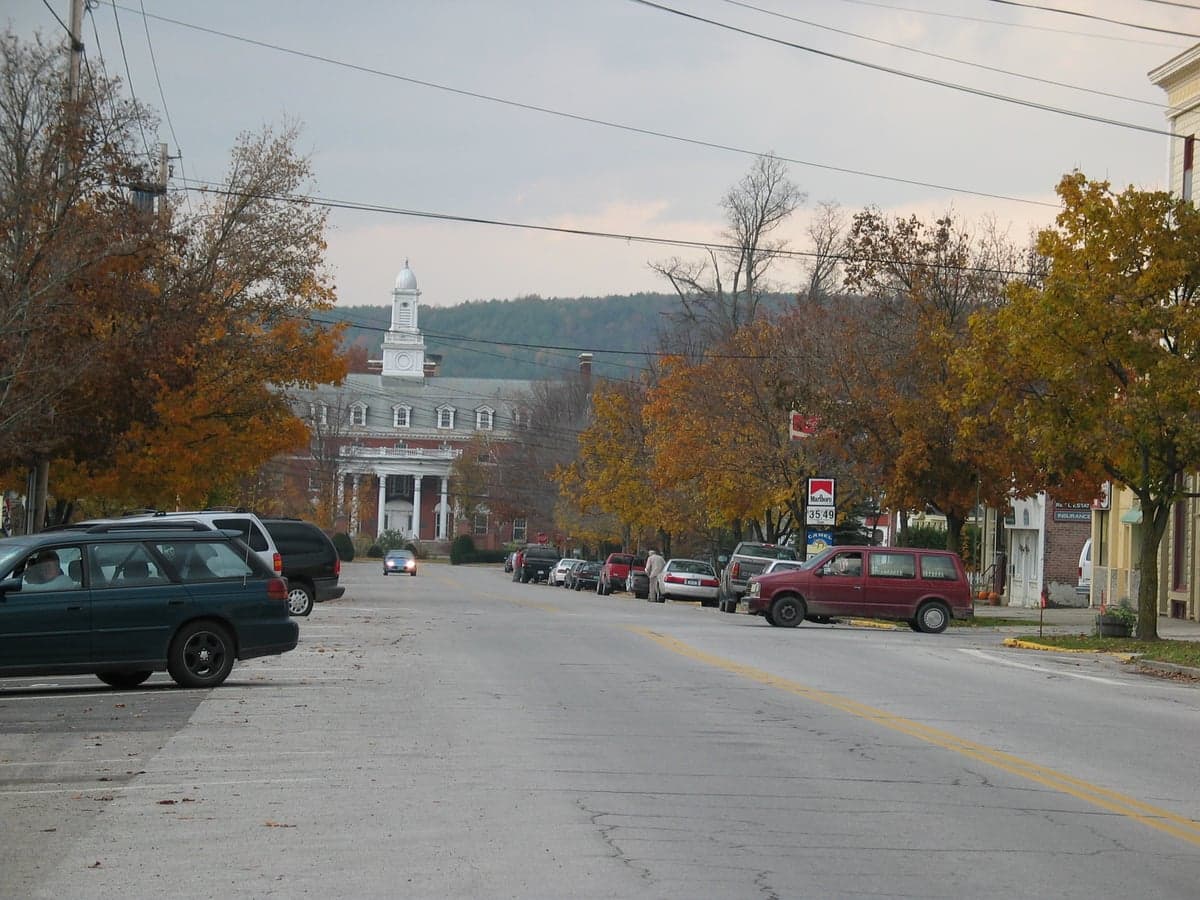
Photo: Wikipedia
Political ClimatePolitical Climate in Poultney, VT
District shown is the primary district for this city’s centroid. Cities may span multiple districts.
Inherited from parent state — no local data available.
Local Political AnalysisPolitical Analysis of Poultney, VT
Poultney, Vermont, leans heavily Democratic, with a Cook PVI of D+17, meaning it votes about 17 points more Democratic than the national average. That’s a pretty strong tilt, and it’s been trending that way for a while now. If you’re looking at the political climate here, you’re seeing a town that’s increasingly aligned with the progressive wing of the state party, which is saying something in a state that’s already one of the most liberal in the country. The shift hasn’t been overnight, but it’s been steady, and it’s worth paying attention to if you value personal freedoms and local control.
How it compares
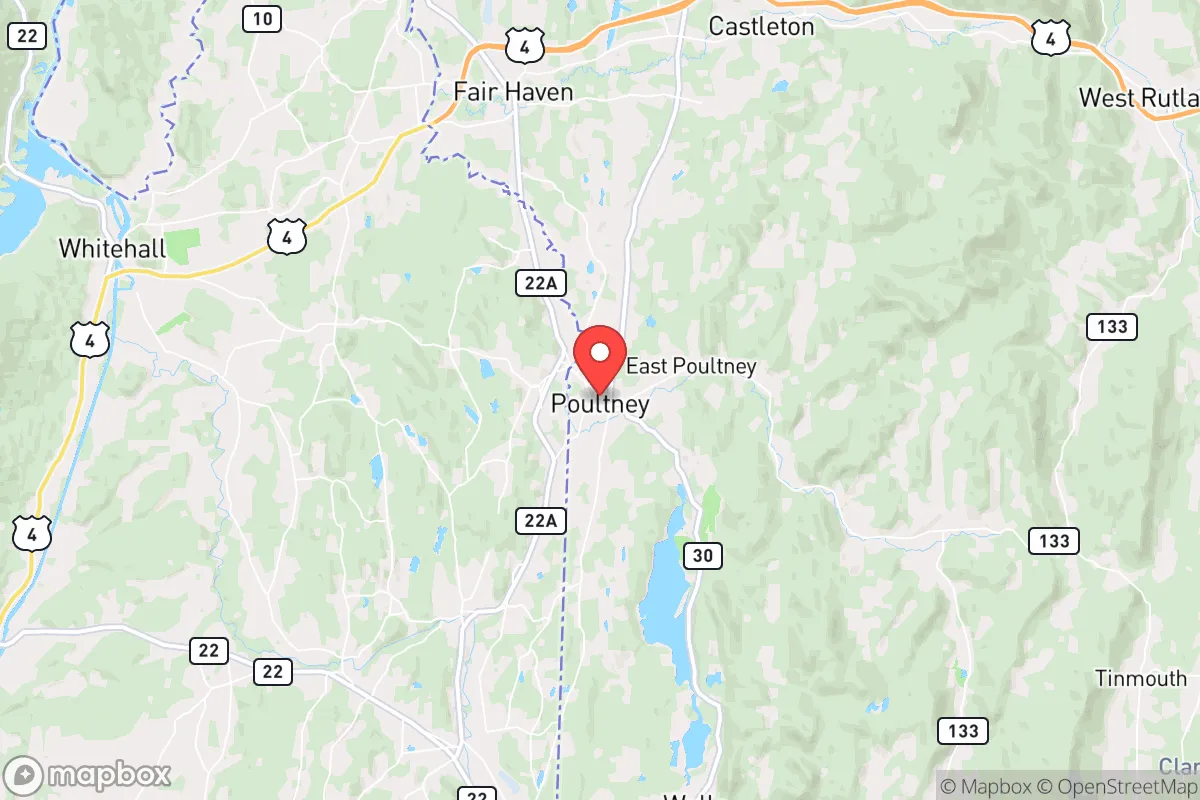
Poultney sits in Rutland County, which is a bit of a mixed bag politically. The county as a whole is more moderate than Poultney itself, with towns like Castleton and Fair Haven leaning more conservative, especially on fiscal issues and gun rights. Head south a few miles into Granville, New York, and you’ll find a more libertarian-leaning vibe, where folks are skeptical of government overreach from either party. But Poultney itself? It’s a different world. The presence of Green Mountain College (now closed, but its influence lingers) and a growing population of remote workers from out of state have pushed the local Overton window leftward. Compare that to Rutland City, about 20 minutes north, which is more purple—still Democratic, but with a stronger independent streak and a working-class base that’s wary of top-down mandates. Poultney’s political DNA is more aligned with Burlington than with its own county neighbors.
What this means for residents
For a long-time resident, the biggest concern is how this political tilt translates into real-life overreach. You’ve got town boards and school committees that are increasingly comfortable with progressive policies—think strict land-use regulations, vaccine mandates for municipal employees, and a general willingness to embrace state-level initiatives like Act 250 (Vermont’s development control law) and Act 76 (the paid family leave program). These aren’t just abstract ideas; they affect how you can use your property, run a small business, or even make medical decisions for your family. The local government here tends to be less responsive to dissenting voices, especially on issues like Second Amendment rights or school choice. If you’re someone who believes in limited government and personal responsibility, you might feel like your values are increasingly out of step with the town’s direction. The tax burden is also a factor—Vermont’s property taxes are among the highest in the nation, and Poultney’s progressive lean means there’s little appetite for cutting spending or pushing back on state mandates.
Culturally, Poultney has a small-town feel with a big-city political agenda. You’ll still find old-timers at the Poultney Diner talking about hunting and fishing, but the town’s official stance on issues like energy policy and environmental regulation is firmly green. The push for renewable energy mandates and electric vehicle infrastructure is strong, even if it means higher costs for residents. The local paper, the Rutland Herald, reflects the broader progressive consensus. If you’re considering a move here, just know that the political climate is not neutral—it’s actively moving in a direction that prioritizes collective goals over individual freedoms. That might work for some, but for those who value autonomy and a lighter touch from government, it’s a trend worth watching closely.

State Political ClimatePolitical Climate in Vermont
State Political AnalysisPolitical Environment in the State
Vermont has long been a deep blue state, but its political climate is far more complex than the national headlines suggest. The state has voted for the Democratic presidential candidate by massive margins since 1992, with Joe Biden winning by over 35 points in 2020. However, this progressive veneer masks a sharp urban-rural split, a growing libertarian streak, and a recent shift toward more moderate governance that has some conservatives cautiously optimistic. Over the past 10-20 years, the state has moved from a quirky, independent-minded New England republic to a place where progressive policies on taxes, education, and social issues have become the norm, but not without significant pushback from rural communities and a rising number of fiscal conservatives.
Urban vs. rural divide
The political map of Vermont is a tale of two distinct worlds. The urban core is dominated by the Burlington metro area, which includes Chittenden County and towns like Burlington, South Burlington, and Winooski. This region is the engine of the state’s progressive politics, consistently delivering 70-80% of its votes to Democrats. Burlington itself is a college town anchored by the University of Vermont, with a strong activist culture and a city council that has pushed for rent control, sanctuary city status, and defunding the police. In contrast, the rest of the state is a patchwork of small towns and rural counties that lean Republican or independent. Counties like Rutland, Orleans, and Essex have voted for Republican presidential candidates in recent cycles, with Donald Trump winning Essex County by 20 points in 2020. The town of St. Johnsbury in Caledonia County is a notable example of a rural hub where conservative values on gun rights, taxes, and local control still hold strong. Even within Chittenden County, there are pockets of resistance: Colchester and Milton have more moderate-to-conservative leanings, often voting for Republican state senators and local officials. This divide means that while the state legislature is firmly Democratic, many local governments and school boards remain battlegrounds.
Policy environment
Vermont’s policy environment is a mixed bag for conservatives. On the tax front, the state has one of the highest property tax burdens in the nation, driven largely by school funding formulas that have ballooned since Act 60 and Act 68 in the 1990s. Income taxes are also steep, with a top marginal rate of 8.75% on income over $213,000. The regulatory posture is heavy: Vermont has some of the strictest environmental regulations in the country, including a ban on fracking and aggressive renewable energy mandates that have driven up electricity costs. Education policy is a flashpoint, with the state’s Act 46 forcing school district consolidation, which many rural towns saw as a loss of local control. More recently, Act 76 (2023) created a universal child care system funded by a new payroll tax, which small business owners in places like Barre and Morrisville have criticized as a job killer. Healthcare is dominated by the Green Mountain Care system, a state-run Medicaid program that covers low-income residents, but private insurance costs remain high. Election laws are among the most accessible in the nation: Vermont has automatic voter registration, same-day registration, and universal mail-in ballots, which conservatives argue opens the door to fraud, though no major scandals have emerged. The state also has a strict gun control regime, including a 2018 law that raised the purchase age to 21, banned magazines over 10 rounds, and expanded background checks, which was a major blow to the state’s strong hunting and gun culture.
Trajectory & freedom
Over the past five years, Vermont has become less free in several key areas, particularly for conservatives. The 2018 gun control package (Act 94) was a watershed moment, passing despite massive protests from rural residents who saw it as an infringement on Second Amendment rights. In 2021, the state passed a law (Act 57) that eliminated the statute of limitations for child sexual abuse claims, which was popular but also opened the door to retroactive lawsuits against schools and churches. More concerning for personal liberty was the 2023 passage of Act 47, which codified abortion rights and removed parental notification requirements for minors seeking abortions, a move that angered pro-life and parental rights advocates. On the positive side, Vermont has resisted some federal overreach: it was one of the first states to legalize recreational marijuana (2018) without a heavy regulatory framework, and it has a strong tradition of town meeting democracy that gives local residents direct say in budgets and ordinances. However, the trend is clear: the state legislature has become more aggressive in expanding government control over healthcare, education, and personal choices. The 2024 push for a “right to repair” law for medical devices was a rare win for property rights, but it was overshadowed by a proposed wealth tax that failed only due to constitutional concerns.
Civil unrest & political movements
Vermont has seen its share of political activism, but it’s generally more subdued than in larger states. The most visible flashpoint in recent years was the 2020 Black Lives Matter protests in Burlington, which led to the removal of a statue of a Union general and calls to defund the police. The city council did cut the police budget by 10% in 2021, but the move was reversed after a spike in violent crime. On the right, the “Green Mountain Patriots” and other Second Amendment groups have held regular rallies at the Statehouse in Montpelier, particularly during the 2018 gun control debate, when thousands of gun owners descended on the capital. Immigration politics are relatively quiet, but Vermont is a sanctuary state, with Burlington and Montpelier having official “sanctuary city” policies that limit cooperation with ICE. This has caused tension in rural areas where residents feel the state is ignoring federal law. There has been no serious secession or nullification movement, though some libertarian-leaning towns have passed resolutions asserting local control over federal mandates. Election integrity controversies are minimal, as Vermont’s small population and tight-knit communities make large-scale fraud unlikely, but some conservatives remain skeptical of the universal mail-in system.
Projection
Looking ahead 5-10 years, Vermont is likely to become more progressive on social issues but may see a fiscal reckoning that could shift the political landscape. The state’s population is aging and shrinking, with young people leaving for lower-cost states like Texas and Florida. In-migration from out-of-state remote workers, many from blue states like New York and Massachusetts, is driving up home prices in places like Stowe and Woodstock, but these newcomers tend to be even more progressive than native Vermonters. This demographic shift will likely reinforce Democratic control of the legislature. However, the state’s fiscal situation is dire: pension liabilities are underfunded by billions, and the high tax burden is driving out businesses and middle-class families. A conservative backlash could emerge if property taxes continue to rise, as they did by 8% in 2024. The 2026 gubernatorial race will be a key test: if a moderate Republican like Phil Scott (who has been governor since 2017) retires, the state could swing further left. For now, expect more of the same: progressive social policies, high taxes, and a growing divide between the urban core and rural towns that feel left behind.
Bottom line for a new resident: If you’re a conservative moving to Vermont, you’ll find a state that respects your privacy and local autonomy in many ways, but you’ll also pay a heavy price in taxes and face a government that is increasingly hostile to gun rights, parental authority, and free market principles. The best bet is to settle in a rural county like Orleans or Essex, where you can find like-minded neighbors and lower property taxes, but be prepared to fight for your values at the local level. The state’s small size means your voice can still be heard, but the tide is against you in Montpelier.
* Values derived from national, state, county, city and local statistics and may differ in a specific area. Last updated: 2026-04-30T05:04:35.000Z
Narrative content on this page is AI-generated and may contain mistakes. Verify any details that matter before acting on them.
ReloMaps may earn a commission from affiliate links at no extra cost to you.

