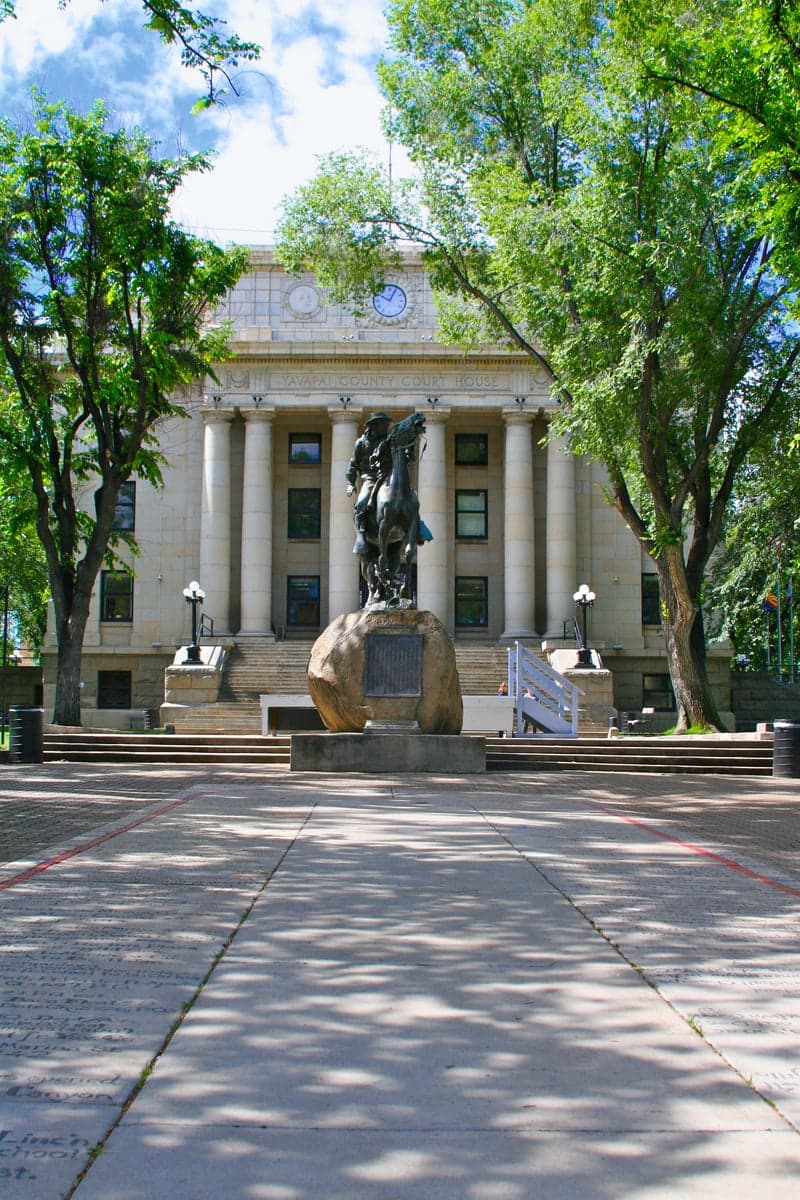
Photo: Wikipedia
Strategic Assessment of Prescott, AZ
Meaningful friction. Expect exposure to either population pressure, blast zones, or natural disaster risk. Consider buying a retreat property.
What does the Strategic Assessment tell us?
Our Strategic Assessment grades tactical survivability of an area. Major population centers, military targets, fallout zones, natural disasters, and border exposure all drive risk — lower exposure means a more defensible position in a crisis.
This is heavily inspired by Joel Skousen's Strategic Relocation book. Highly recommended you checkout the book ($)What does this tell us?
Our Strategic Assessment grades tactical survivability of an area. Major population centers, military targets, fallout zones, natural disasters, and border exposure all drive risk — lower exposure means a more defensible position in a crisis.
This is heavily inspired by Joel Skousen's Strategic Relocation book. Highly recommended you checkout the book ($)Strategic Pillars

Key Distances
Regional Safe Places
Below is our recommended "safe zones" in Arizona and the surrounding area based on our strategic heuristics. For most people, it's unrealistic to live in a “safe zone” full-time due to work, family or other personal reasons. They tend to be more rural. However, many of these areas are perfect for second homes and retreat properties that double as a vacation home or even a short-term rental.
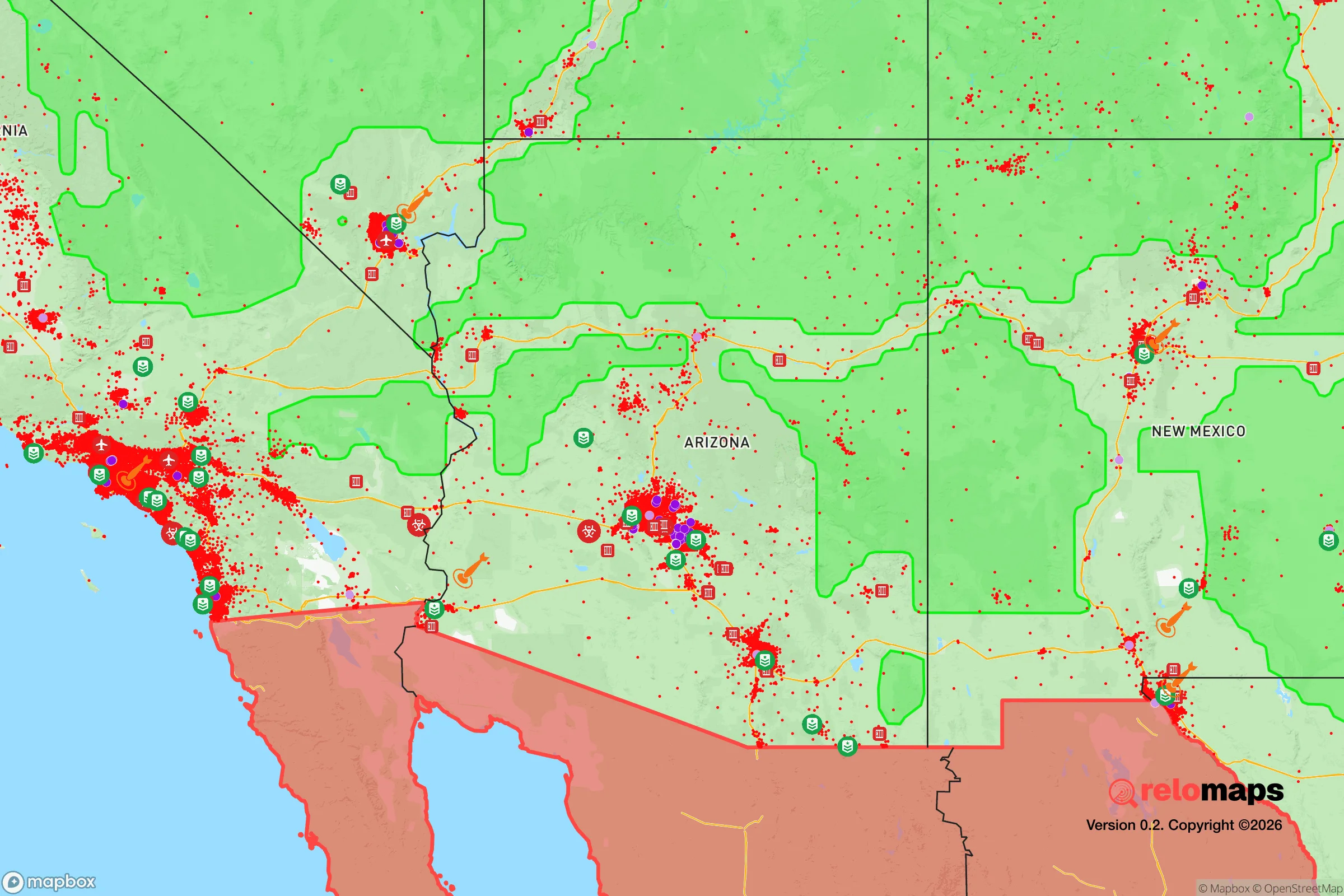
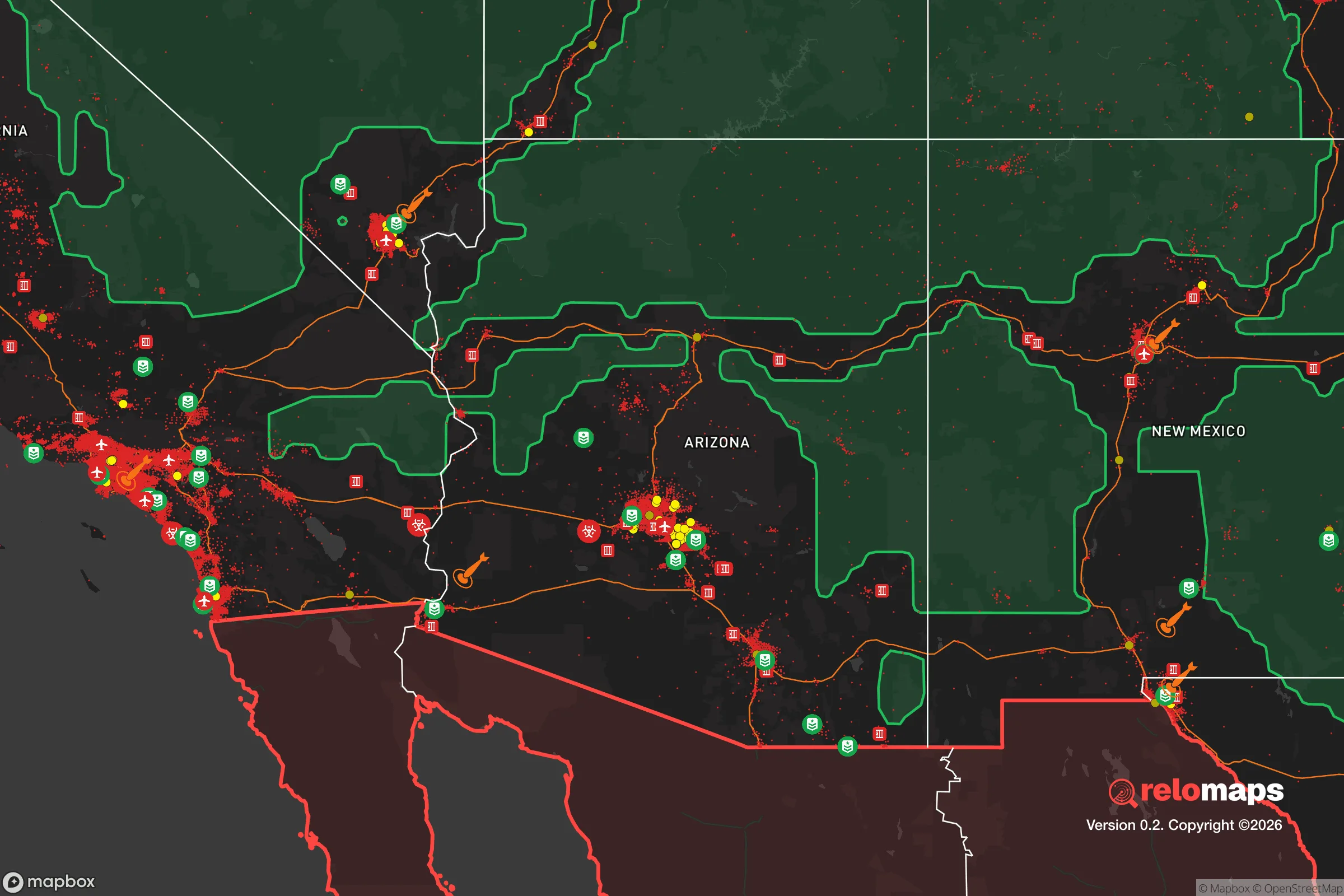


Important Note: For informational purposes only. This does not mean nothing bad ever happens in the green zones. Please use common sense. This is based on public data and modeled with AI. We tried to take a conservative approach but mistakes happen. We update this regularly as new information becomes available.
Solar Generator Recommendations
Backup power matters more here than in safer locations. We've picked three solar generators across budgets and capacity tiers — start with the budget unit if you only need a few essentials, or step up if you want to run a fridge and HVAC for days at a time.

Jackery Portable Power Station Explorer 300
Budget OptionPower on the Go: Weighing only 11 lbs, it's convenient to set up and store with book-sized foldable solar panels

BLUETTI Portable Power Station AC180
Designed for both indoor and outdoor scenarios, AC180 is highly capable as it has a robost capacity and continuous output power.

EF ECOFLOW DELTA Pro Ultra Power Station
Upgraded PickEcoFlow DELTA Pro Ultra is a whole-home energy system designed to grow with your family. Integrated with the Smart Home Panel 2, it scales to meet your evolving energy needs — keeping your home powered, intelligent, and secure through every stage of life.
We earn a commission, at no additional cost to you.
Strategic Assessment Analysis
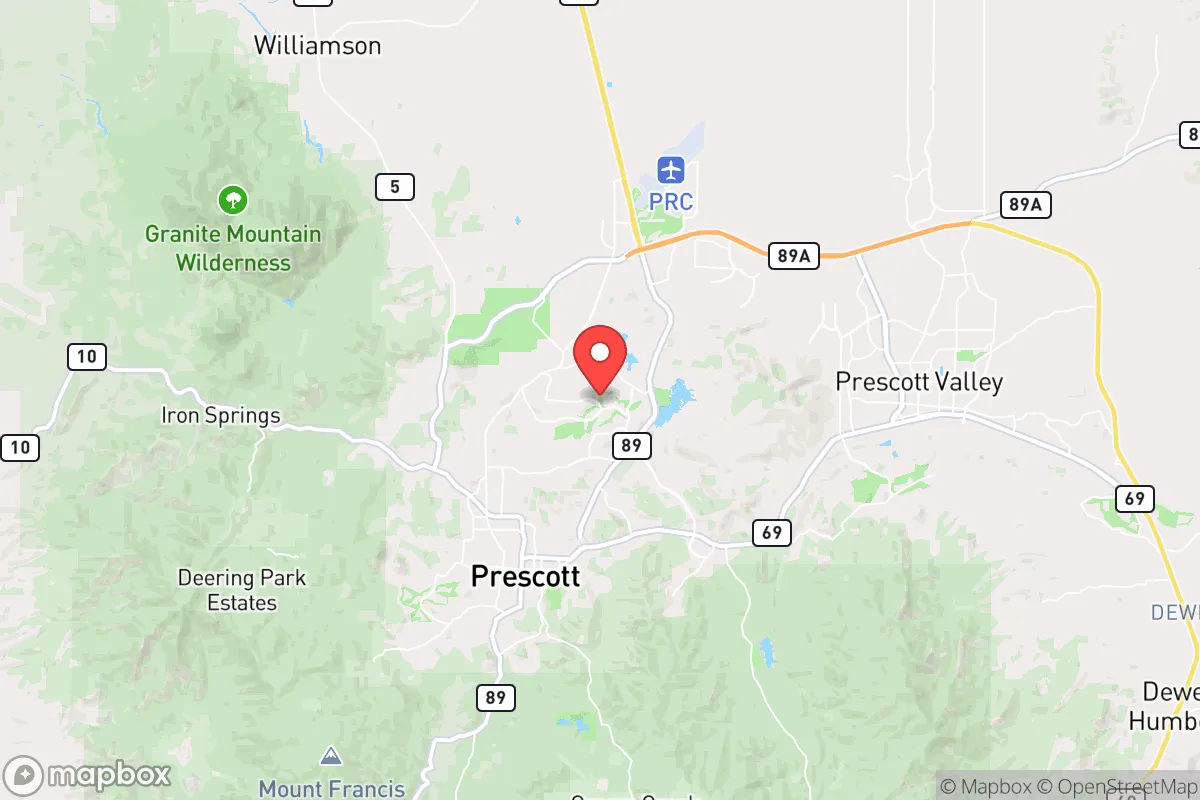
Prescott, Arizona, occupies a strategic niche that few relocation destinations can match: it sits at roughly 5,400 feet in the cool ponderosa pine belt of central Arizona, far enough from Phoenix (100 miles) and Las Vegas (160 miles) to avoid the immediate blast radius of a major urban event, yet close enough to access those cities’ supply chains and medical networks during normal times. The city’s location in Yavapai County, with a population of about 48,000 inside city limits and 240,000 in the county, offers a blend of small-town governance, a robust local economy, and natural barriers that make it a serious contender for anyone thinking long-term about resilience. For the conservative-leaning relocator who sees the national trajectory as unstable, Prescott provides a defensible, resource-rich base that doesn’t require living off-grid in a remote wilderness—it’s a functioning community with prepper-friendly fundamentals already baked in.
Geographic position and natural advantages for long-term security
Prescott’s geography is its first and strongest asset. The city is cradled by the Bradshaw Mountains to the south and the Sierra Prieta to the west, with the Prescott National Forest wrapping around three sides. This topography creates natural chokepoints on the major access routes—primarily State Route 69 from the south and US 89 from the north—which could be monitored or controlled if civil order degrades. The elevation means summer highs rarely break 90°F, and winter lows dip into the 20s, but snowpack is manageable (about 12 inches annually) and doesn’t isolate the city for more than a day or two. Water is the critical variable: Prescott draws from the Big Chino aquifer and the Verde River watershed, and while the region is in a long-term drought cycle, the city has secured water rights through 2035 and beyond via the Prescott Active Management Area. For a relocator, this means you’re not betting on a desert oasis that’s about to run dry—unlike Phoenix or Tucson, Prescott’s water situation is tight but not apocalyptic. The surrounding national forest also provides a buffer against suburban sprawl, meaning your retreat won’t be swallowed by strip malls in a decade.
Risks, exposures, and proximity to fallout-relevant landmarks
No location is a fortress, and Prescott has its share of vulnerabilities that a prepper must weigh. The most obvious is wildfire: the 2013 Yarnell Hill Fire killed 19 firefighters and destroyed 127 homes, and the 2021 Rafael Fire burned 78,000 acres in the region. Prescott sits in a high-risk fire zone, and a major blaze could cut off evacuation routes or degrade air quality for weeks. That said, the city has invested heavily in defensible space ordinances and a well-funded fire department, so the risk is manageable with proper property preparation—think metal roofs, cleared brush, and a go-bag. The bigger concern is proximity to Luke Air Force Base (about 90 miles south) and Davis-Monthan Air Force Base (200 miles southeast), both of which are potential targets in a major conflict. Prescott itself has no military installations, no nuclear plants, and no major industrial chemical sites, which is a significant plus. The nearest nuclear facility is the Palo Verde Generating Station near Phoenix—about 110 miles south—which is a pressurized water reactor with a strong safety record, but in a worst-case scenario, prevailing winds would carry fallout east or south, away from Prescott. For a relocator worried about mass casualty events tied to urban unrest, Prescott’s distance from Phoenix’s 5 million people is a buffer, but not a guarantee: civil disorder in Phoenix could spill up the I-17 corridor within hours, so having a secondary retreat further north (e.g., Chino Valley or Paulden) is a prudent hedge.
Practical resilience for a relocator: food, water, energy, and defensibility
When you break down the day-to-day logistics of surviving a prolonged disruption, Prescott holds up well. The local food system is anchored by the Prescott Farmers Market (year-round, with a strong network of growers in the Verde Valley and Chino Valley), and the city has multiple grocery stores—including a WinCo, Walmart, and Natural Grocers—that would be first to restock after a supply chain hiccup. For long-term food security, the surrounding area has decent agricultural potential: the Chino Valley and Dewey-Humboldt areas have working ranches and small farms, and the growing season (April to October) allows for home gardening of staples like beans, squash, and potatoes. Water storage is legal and common here; many homes already have rain catchment systems or wells, and the city’s municipal water is gravity-fed from tanks in the mountains, meaning it can operate without power for a limited time. Energy is a mixed bag: APS (Arizona Public Service) provides grid power, but outages from winter storms or summer monsoon winds happen a few times a year. Solar is a strong option—Prescott averages 280 sunny days annually—and the city’s building codes are solar-friendly, with net metering available. For defensibility, Prescott’s layout is a double-edged sword. The historic downtown is walkable and compact, but the suburban sprawl along the 69 corridor (toward Prescott Valley) creates long, exposed lines of communication. A relocator should prioritize property on the city’s north or west sides, where terrain is more rugged and access is limited to a few roads. The local gun culture is robust—Yavapai County has some of the highest per-capita firearm ownership in the state—and the sheriff’s office is known for a pro-Second Amendment stance, which matters if you’re thinking about community defense in a breakdown scenario.
The overall strategic picture for Prescott is that of a solid B+ location for the conservative prepper who wants civilization’s benefits without its collapse risks. It’s not a remote bunker—you’ll have neighbors, traffic on the 69, and the occasional tourist influx from Phoenix—but it offers a genuine community with a functioning local government, a diversified economy (mining, healthcare, education, and a growing remote-work sector), and natural barriers that slow down the chaos from the big cities. The tradeoffs are real: wildfire danger, a tight water budget, and the need to invest in property-level hardening. But for a single individual or a family looking to plant roots in a place that can weather a decade of instability, Prescott checks the critical boxes without requiring you to disappear into the wilderness. If the country holds together, you’re in a beautiful mountain town with good schools and a low crime rate. If it doesn’t, you’re in a defensible position with water, food access, and a community that won’t roll over. That’s about as good as it gets in the lower 48.

* Values derived from national, state, county, city and local statistics and may differ in a specific area. Last updated: 2026-05-01T07:46:15.000Z
Narrative content on this page is AI-generated and may contain mistakes. Verify any details that matter before acting on them.
ReloMaps may earn a commission from affiliate links at no extra cost to you.

