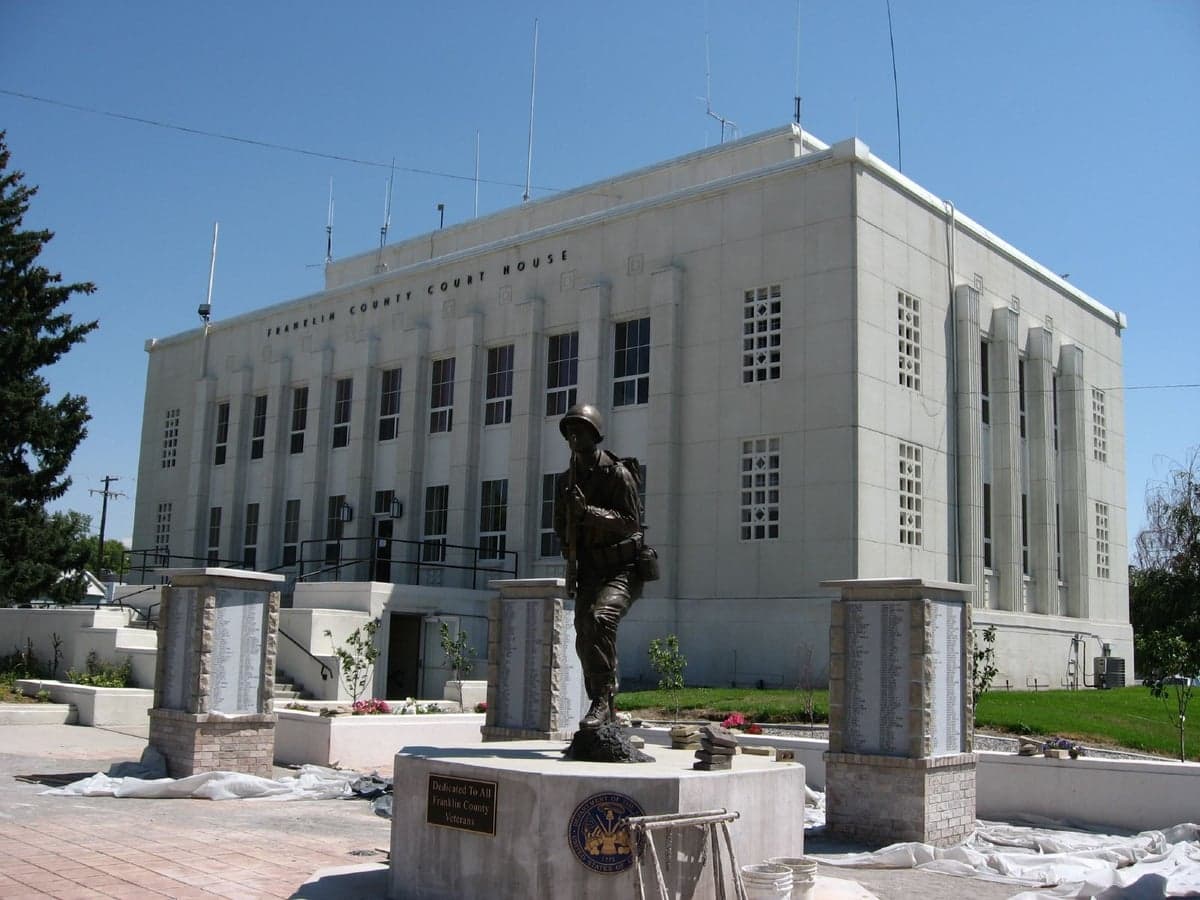
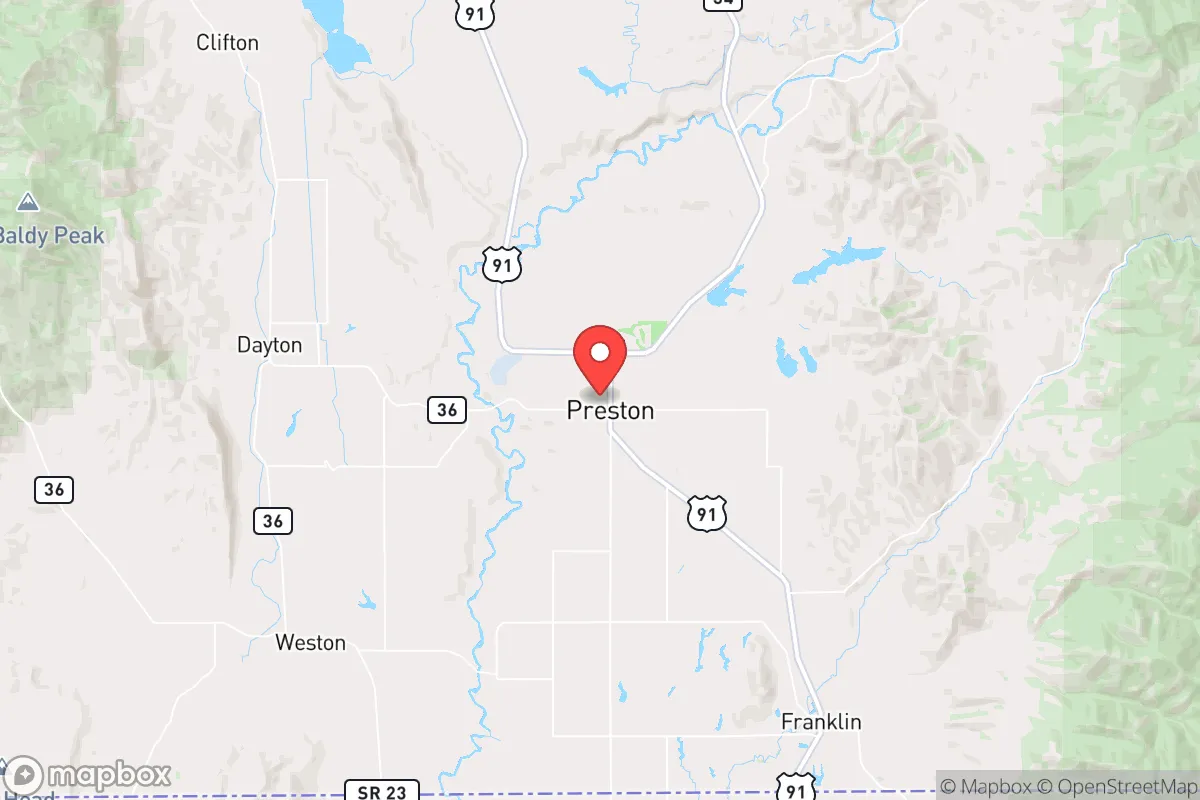
Photo: Wikipedia
Demographics of Preston, ID
Affluence Level in Preston, ID
A middle-class area roughly in line with national averages across income, home values, education, and employment.
People of Preston, ID
The people of Preston, Idaho, today form a remarkably homogeneous community of roughly 5,800 residents, characterized by a strong Latter-day Saint (Mormon) cultural identity, a rural agrarian work ethic, and one of the lowest foreign-born populations in the state at just 0.4%. With 89.3% of residents identifying as white alone and a Hispanic population of 5.9%, the city is overwhelmingly native-born and English-speaking, a demographic profile that has remained stable for decades. The college-educated share stands at 15.7%, well below national averages, reflecting a workforce oriented toward agriculture, manufacturing, and local services rather than professional or tech sectors. Preston’s identity is deeply tied to its pioneer heritage, its role as the setting for the film Napoleon Dynamite, and its annual "That Famous Preston Night Rodeo," all of which reinforce a tight-knit, family-centered social fabric.
How the city was settled and grew
Preston was founded in 1881 by Mormon settlers sent by The Church of Jesus Christ of Latter-day Saints to colonize the Cache Valley, a fertile agricultural basin straddling the Utah-Idaho border. The original settlers were predominantly of English, Scottish, and Scandinavian descent, drawn by church-directed land assignments and the promise of irrigated farming along the Bear River. The first wave built homes in what is now the Historic Downtown Preston district, centered around State Street and Oneida Street, where the original tithing office, mercantile stores, and meetinghouses still stand. A second wave of Mormon homesteaders arrived between 1890 and 1910, pushing settlement eastward into the Worm Creek area, named for the creek that runs through the eastern part of town. These families established dairy farms and sugar beet operations, and many of their descendants still occupy the same parcels today. The arrival of the Oregon Short Line Railroad in the 1880s spurred modest growth, but Preston remained a small agricultural service center through the mid-20th century, never experiencing the industrial booms that diversified other Western towns. The Glendale neighborhood, south of the city center, developed in the 1920s and 1930s as a working-class enclave for farm laborers and railroad workers, and it retains a higher concentration of older, single-family homes.
Modern era (post-1965)
After the 1965 Hart-Cellar Act, Preston saw virtually no immigration-driven demographic change. The foreign-born share has hovered near zero for decades, and the city’s racial composition has remained overwhelmingly white. The most significant post-1965 population shift was domestic: a slow but steady out-migration of young adults to larger cities like Logan, Utah (30 miles south) and Boise for college and employment, offset by a smaller in-migration of retirees and families seeking a low-cost, low-crime rural lifestyle. The Maple Grove subdivision, developed in the 1980s and 1990s on the city’s west side, absorbed most of the new arrivals—primarily white, LDS families moving from other parts of Cache Valley or returning after time away. The Riverdale area, along the Bear River on the city’s northern edge, saw scattered residential development in the 2000s, attracting a mix of local farm families and a few out-of-state retirees. The Hispanic population, while small at 5.9%, is the only non-white group with a measurable presence, concentrated in the South Preston agricultural zone, where seasonal farmworkers and a handful of permanent families live in mobile home parks and older rental properties. No East/Southeast Asian, Indian-subcontinent, or Black communities exist in any meaningful number; the data shows 0.0% for each of these groups.
The future
Preston’s population is projected to remain stable or grow very slowly, with no major economic drivers to attract significant in-migration. The city is not homogenizing further—it is already near the ceiling of demographic uniformity—but it is also not tribalizing into distinct enclaves, as the small Hispanic population is dispersed and largely assimilated into the broader LDS culture. The most likely demographic trend over the next 10–20 years is a gradual aging of the population, as younger adults continue to leave for urban job markets and retirees stay put. The foreign-born share will likely remain below 1%, as Preston lacks the industries—meatpacking, construction, hospitality—that draw immigrant labor to other parts of Idaho. The college-educated share may rise slightly if remote work allows a few professionals to relocate, but the city’s distance from a major airport and limited high-speed internet infrastructure will constrain that flow. For someone moving in now, Preston offers a stable, culturally cohesive, and safe environment, but one with very little ethnic or economic diversity and limited opportunity for those outside the dominant LDS social network.
Preston is becoming a quieter, older version of itself—a place where the population is more likely to shrink than diversify, and where the defining demographic story is not change but continuity. For a conservative-leaning individual or family seeking a low-crime, family-oriented community with strong religious institutions and a deep sense of place, Preston remains a reliable choice. However, those looking for racial or cultural diversity, a vibrant job market, or a growing population will need to look elsewhere in the Intermountain West.

* Values derived from national, state, county, city and local statistics and may differ in a specific area. Last updated: 2026-04-23T02:12:29.000Z
Narrative content on this page is AI-generated and may contain mistakes. Verify any details that matter before acting on them.
ReloMaps may earn a commission from affiliate links at no extra cost to you.

