Photo: Wikipedia
Political ClimatePolitical Climate in Preston, ID
District shown is the primary district for this city’s centroid. Cities may span multiple districts.
Local Political AnalysisPolitical Analysis of Preston, ID
Preston, Idaho, is about as solidly conservative as small-town America gets, and that’s been the case for as long as anyone around here can remember. The Cook PVI rating of R+13 tells the story, but the real picture is in the voting booths and the conversations at the local diner. This area leans hard Republican, and it’s not just a habit—it’s a deeply held conviction that local control and personal liberty matter more than whatever the latest trend out of Boise or Washington D.C. might be. You don’t see much of a shift toward progressive ideology here, and frankly, most folks are keeping a wary eye on any signs of that creeping in, because once government overreach starts, it’s hard to stop.
How it compares
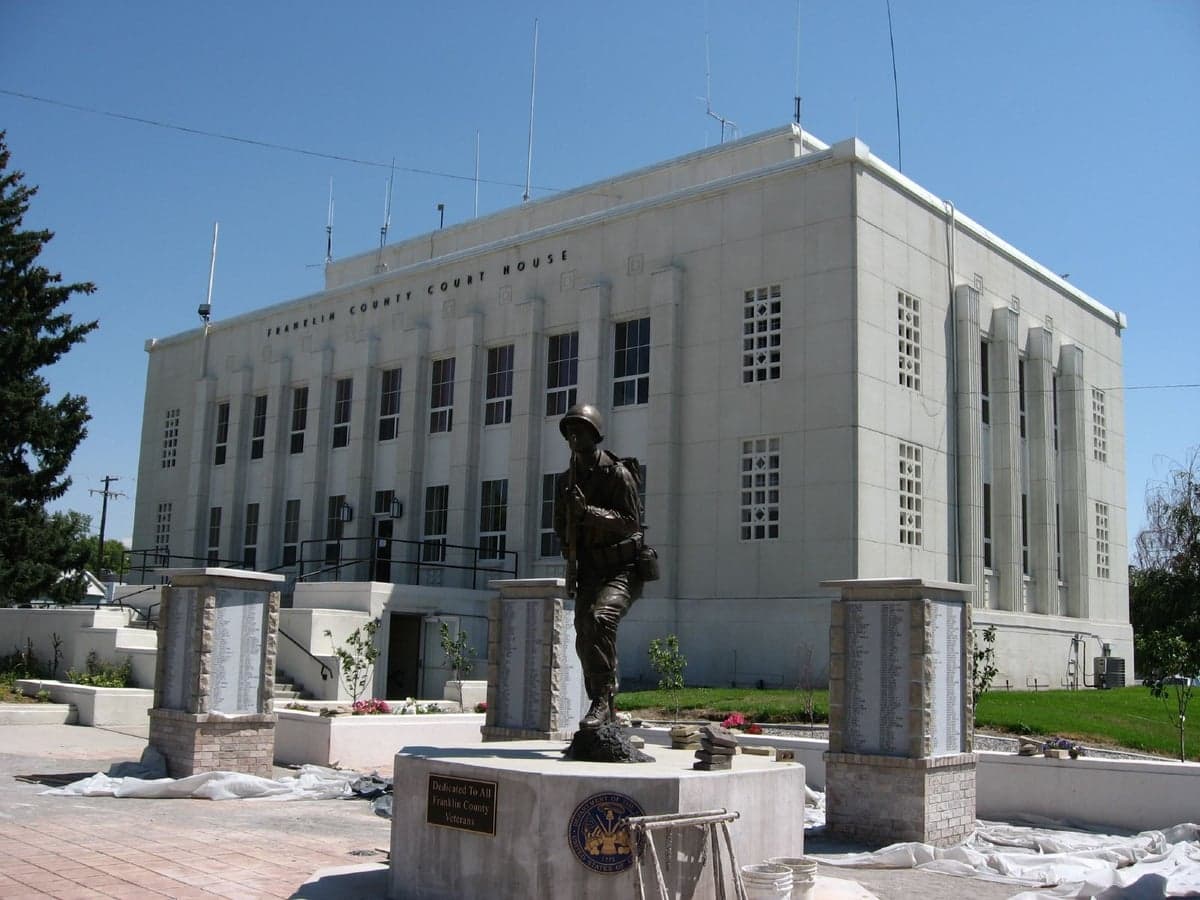
If you drive an hour north to Pocatello, you’ll find a more mixed political scene, with a noticeable progressive presence around Idaho State University. That’s a world away from Preston. Down here in Franklin County, the political climate is much more aligned with the rural, agricultural values that have defined this valley for generations. Even compared to nearby Logan, Utah—which is also conservative but has a more moderate, college-town vibe with Utah State University—Preston feels more grounded in traditional, no-nonsense conservatism. The contrast is sharpest when you look at the state’s northern panhandle, like Boise or Sandpoint, where you see more of that “live and let live” attitude that sometimes opens the door to policies that feel like an overreach. Here, the default is to trust the family, the church, and the local community before trusting the government.
What this means for residents
For someone living in Preston, the political climate translates into a pretty straightforward daily life. You’re not going to see a lot of new regulations on your property or your business that come from outside the county. The local government tends to be hands-off, which is exactly how most people want it. There’s a strong sense that your rights—to own a firearm, to speak your mind, to raise your kids without interference—are respected. That said, there’s a growing concern among long-time residents about the direction of the state as a whole. Some folks worry that as Idaho grows and attracts new people from places like California or Oregon, the political balance could shift. The fear is that those newcomers might bring the same big-government ideas they supposedly left behind, and that’s a red flag for anyone who values personal freedom over bureaucratic convenience.
One thing that stands out culturally is the strong influence of the Church of Jesus Christ of Latter-day Saints, which shapes a lot of the community’s values and political priorities. That means you see a real emphasis on family, self-reliance, and community service, but also a wariness of policies that seem to undermine those things. There’s a quiet but firm resistance to any kind of government overreach, whether it’s in education, land use, or public health mandates. The local school board, for instance, is very much in tune with parents’ concerns, and you won’t find a lot of support for curriculum that feels like it’s pushing a political agenda. Looking ahead, the biggest challenge will be keeping that sense of local control as the state grows. If you value a place where your voice actually matters and where the government stays out of your way, Preston is still that kind of town. But you’ve got to keep an eye on it, because nothing stays the same forever.

State Political ClimatePolitical Climate in Idaho
State Political AnalysisPolitical Environment in the State
Idaho has been a reliably Republican stronghold for decades, but the political climate has shifted dramatically in the last 10-20 years from a moderate, live-and-let-live conservatism to a more assertive, freedom-focused posture. The state’s dominant coalition is now a blend of traditional ranchers, evangelical Christians, and a wave of out-of-state transplants—many from California, Washington, and Oregon—who are fleeing progressive policies and seeking lower taxes, less regulation, and a culture that respects individual rights. This influx has accelerated Idaho’s rightward trajectory, with the GOP holding supermajorities in both legislative chambers and every statewide office, and Donald Trump carrying the state by over 30 points in 2020 and 2024.
Urban vs. rural divide
The political map of Idaho is starkly divided between its few urban centers and the vast rural expanse. The Treasure Valley, anchored by Boise, Meridian, and Nampa, is the state’s population hub and the only region with any real Democratic presence. Ada County (Boise) has trended purple in recent cycles—Biden won it in 2020 by a narrow margin—but the surrounding counties like Canyon (Nampa) and Gem remain deeply red. The liberal influence is concentrated in Boise’s core and the college town of Moscow (home to the University of Idaho), while Idaho Falls, Twin Falls, and Coeur d’Alene are solidly conservative. The rural counties—like Lemhi, Custer, and Clark—routinely vote 80-90% Republican. The real story is the suburban shift: places like Eagle and Star (outside Boise) have seen explosive growth from conservative transplants, reinforcing the GOP’s dominance even as Boise proper gets a little more progressive.
Policy environment
Idaho’s policy environment is among the most conservative in the nation, with a strong emphasis on limiting government overreach. The state has a flat income tax rate of 5.8% (down from 6.5% in 2023, with further cuts planned), no corporate income tax on pass-through entities, and a property tax system that caps annual increases. The regulatory posture is aggressively pro-business: there’s no state-level occupational licensing for dozens of trades, and the “Idaho First” initiative has blocked many federal overreach attempts. Education policy is a flashpoint: the state passed a school choice expansion in 2024 (HB 93) allowing education savings accounts for private and homeschool expenses, while also banning critical race theory and “divisive concepts” in public schools (HB 377). Healthcare is limited—Idaho has not expanded Medicaid under the traditional model (though a 2018 ballot initiative did expand it), and the legislature has repeatedly passed bills to restrict abortion, including a near-total ban (HB 242) triggered after Dobbs. Election laws are strict: voter ID is required, same-day registration is not allowed, and the state has banned ballot drop boxes and ranked-choice voting (SB 1074).
Trajectory & freedom
Idaho is clearly trending more free, especially in terms of personal liberty and resistance to federal overreach. The 2024 legislative session was a landmark: the “Second Amendment Preservation Act” (HB 124) prohibits state enforcement of any future federal gun bans or red-flag laws, and the “Parental Rights in Education” law (HB 261) requires schools to notify parents of any curriculum involving sexuality or gender identity. On medical autonomy, Idaho passed a law (SB 1028) allowing doctors to refuse to perform procedures that violate their conscience, and the “Medical Freedom Act” (HB 135) prohibits vaccine mandates by private employers and government entities. Property rights were strengthened with the “Private Property Protection Act” (HB 220), which limits eminent domain for economic development. The only concerning trend is the growth of government in Boise itself—the city has imposed rent control measures and a “livable wage” ordinance for city contractors, which feels like a creeping progressive influence that could spread if the urban core keeps growing.
Civil unrest & political movements
Idaho has a history of fringe movements, but the mainstream is now dominated by organized conservative activism. The “Idaho Freedom Foundation” and “Idaho Rising” are powerful grassroots groups that have successfully pushed for tax cuts, school choice, and anti-mandate legislation. On the left, the “Idaho Democratic Party” is weak, but activist groups like “Reclaim Idaho” (which pushed the Medicaid expansion ballot initiative) and “Idaho Women’s March” hold regular protests in Boise, especially around abortion rights. Immigration politics are tense: the state passed a law (HB 239) requiring local law enforcement to cooperate with ICE, and there’s a growing movement in rural counties to declare themselves “Second Amendment sanctuaries” or “constitutional counties.” The most visible flashpoint is the annual “Idaho Day” rally at the state capitol, where armed protesters have demonstrated against federal land management and COVID mandates. A new resident would notice the strong presence of “Don’t Tread on Me” flags and “Idaho is Full” bumper stickers, reflecting a cultural wariness of out-of-state influence.
Projection
Over the next 5-10 years, Idaho will likely become even more conservative, driven by the continued influx of right-leaning transplants from blue states. The Treasure Valley will keep growing, but the newcomers are largely fleeing progressive policies, not importing them—so expect the suburbs to stay red while Boise’s core may get a little more purple. The rural counties will remain deeply conservative, and the legislature will continue to push the envelope on school choice, gun rights, and federal nullification. The biggest risk is that the state’s rapid growth (Idaho was the fastest-growing state in the nation in 2023) could strain infrastructure and housing, potentially leading to more local government intervention in places like Boise and Coeur d’Alene. But the state’s political DNA is now so firmly libertarian-conservative that any move toward progressive policy will face fierce resistance. A new resident moving in now should expect to find a state that values individual freedom, low taxes, and limited government—and that is actively fighting to keep it that way.
For a conservative-leaning individual or parent considering relocation, Idaho offers a policy environment that aligns with traditional values and personal liberty. The schools are increasingly choice-friendly, the tax burden is low and falling, and the culture is one of self-reliance. The main trade-off is that the state’s rapid growth is changing the landscape—traffic in Boise is worse, housing is more expensive, and the political fights are getting sharper. But if you’re looking for a place where your rights are respected and the government stays out of your life, Idaho is one of the few states that is actually moving in that direction, not away from it.
* Values derived from national, state, county, city and local statistics and may differ in a specific area. Last updated: 2026-04-23T02:12:29.000Z
Narrative content on this page is AI-generated and may contain mistakes. Verify any details that matter before acting on them.
ReloMaps may earn a commission from affiliate links at no extra cost to you.

