 Popular
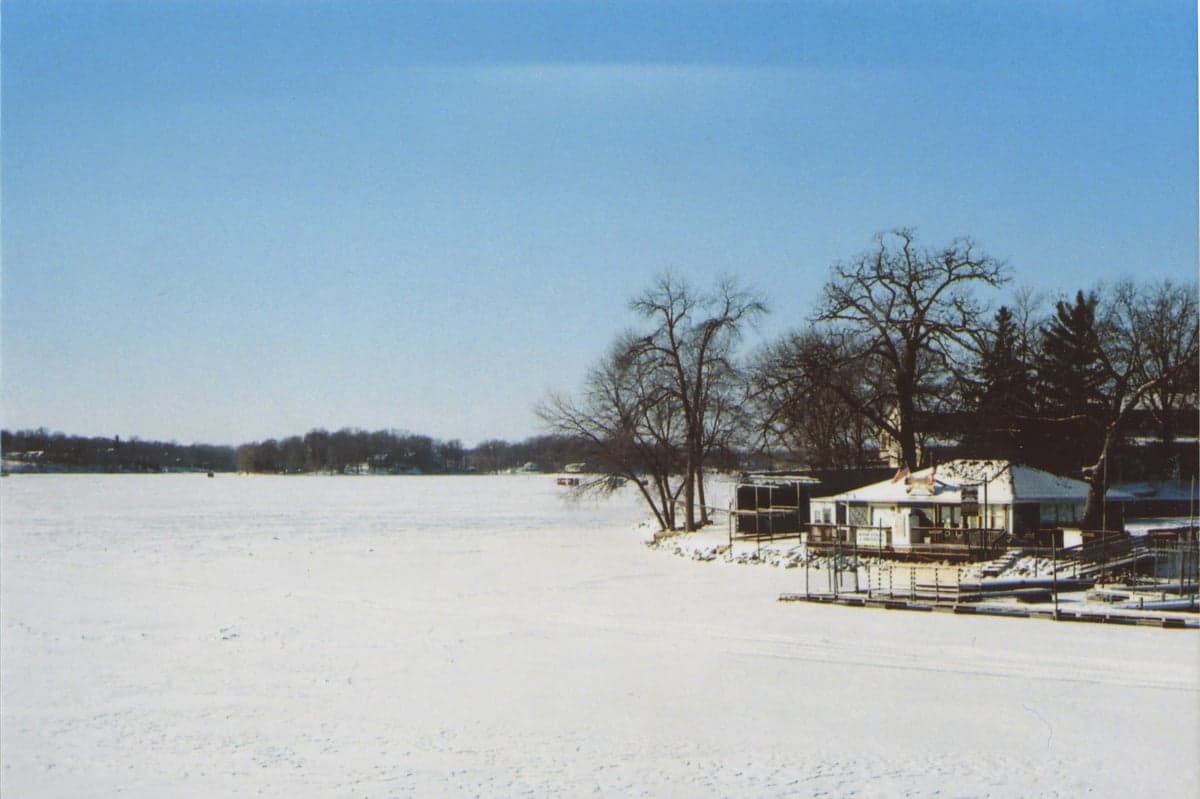
Photo: Wikipedia
Personal Sovereignty in Prior Lake, MN
Viable for self-reliance. Generally workable, though some barriers may limit total independence.
What does Personal Sovereignty tell us?
Personal Sovereignty measures your capacity for self-reliance and independence with minimal government friction. Higher scores mean fewer barriers between you and the way you want to live... but it assumes you have the space you need and good neighbors.
What does this tell us?
Personal Sovereignty measures your capacity for self-reliance and independence with minimal government friction. Higher scores mean fewer barriers between you and the way you want to live... but it assumes you have the space you need and good neighbors.
State Policy
Energy independence: Importer (20% of energy produced in-state)
Personal Liberty
Homesteading

Personal Liberty Analysis
Prior Lake, Minnesota, offers a mixed bag for those prioritizing personal sovereignty, with a local culture that leans toward self-reliance but operates under a state government that has increasingly asserted authority over individual choices. While the city itself maintains a relatively hands-off approach to daily life, residents must navigate a web of state-level regulations that can feel restrictive to those with a survivalist or prepper mindset. The key to thriving here lies in understanding where local autonomy ends and state control begins, particularly in areas like taxation, self-defense, and land use.
Tax burden and regulatory posture: How Minnesota’s fiscal policies affect your autonomy
Minnesota’s tax structure is a significant factor in any sovereignty calculation. The state imposes a progressive income tax with rates reaching 9.85% on high earners, and Scott County’s property taxes are above the national average, with effective rates around 1.1% of home value. For a family in Prior Lake, this means a substantial portion of income is redirected to state and local programs, reducing the capital available for personal preparedness projects like land acquisition, solar installation, or bulk supply storage. The regulatory environment is similarly dense: building codes are strict, and the Minnesota Department of Natural Resources (DNR) enforces rigorous environmental rules that can complicate anything from digging a well to clearing trees. While Prior Lake’s city council is generally business-friendly, the overarching state apparatus—with its extensive licensing requirements for trades and professions—can feel like a bureaucratic drag on self-sufficiency. For the strategic relocator, the tax burden here is moderate to high compared to states like South Dakota or Texas, but lower than in the metro core of Minneapolis.
Self-defense and gun law specifics: What you can and cannot do in Prior Lake
On self-defense, Minnesota is a "shall-issue" state for concealed carry permits, meaning Prior Lake residents can obtain a permit without demonstrating a specific need, provided they pass a background check and complete a training course. This is a solid foundation for personal security. However, the state does not have constitutional carry—you must have a permit to carry a firearm in public. Open carry is legal with a permit, but local ordinances in Prior Lake may restrict firearms in city parks or public buildings. More concerning for the prepper mindset is the state’s red flag law (Extreme Risk Protection Order), which allows law enforcement or family members to petition a court to temporarily seize firearms if someone is deemed a risk. This law, passed in 2023, gives the government a tool to disarm individuals without a criminal conviction, a clear erosion of due process. Additionally, magazine capacity is limited to 10 rounds for handguns and 15 for rifles, and background checks are required for all private firearm transfers. For those prioritizing self-defense sovereignty, these restrictions are a notable limitation compared to states like Arizona or Montana.
Self-reliance and homesteading viability: Lot sizes, zoning, and off-grid feasibility
Prior Lake’s suburban character limits traditional homesteading. Most residential lots are between 0.25 and 1 acre, with zoning that prohibits livestock like chickens or goats in standard subdivisions. The city’s code enforcement is active, and neighbors are likely to report unpermitted structures or visible stockpiles. Off-grid living is effectively illegal here: the city requires connection to municipal water and sewer, and building permits are mandatory for any structure over 120 square feet. Solar panels are allowed but must meet utility interconnection standards, and rainwater collection is restricted by state law to 2,500 gallons per property. For a serious prepper, this environment is constraining. However, the surrounding Scott County offers more flexibility—rural parcels with 5- to 40-acre lots are available within a 15-minute drive, where zoning allows for small-scale agriculture, private wells, and septic systems. The trade-off is that these areas still fall under state DNR regulations on wetland buffers and timber harvesting. The bottom line: Prior Lake proper is not a homesteading haven, but the broader region provides viable options for those willing to live outside city limits.
Personal liberties: Parental rights, medical autonomy, speech, and property
Minnesota’s stance on parental rights has shifted in recent years. The state mandates comprehensive sex education in public schools, and parents cannot opt their children out of specific lessons—only the entire curriculum. This is a direct challenge to parental authority over what children are taught. Medical autonomy is similarly constrained: the state has a vaccine mandate for school attendance (with limited exemptions), and during the COVID-19 pandemic, Minnesota imposed some of the longest-lasting mask and business restrictions in the Midwest. For those who value medical choice, this track record is a red flag. Free speech is protected under the First Amendment, but Prior Lake’s local ordinances on noise, signage, and public gatherings can be used to limit expressive activities. Property rights are relatively strong—eminent domain is rarely used for private development—but the state’s environmental regulations can restrict how you use your land, particularly near water bodies like Spring Lake or Prior Lake itself. Overall, personal liberties here are average for the Upper Midwest, but the trend is toward greater state control, especially in education and health decisions.
When stacked against other relocation options, Prior Lake offers a moderate level of personal sovereignty—better than the urban core of Minneapolis or St. Paul, but weaker than rural areas in the Dakotas or Wyoming. The city’s community is generally respectful of individual choices, and the local economy supports self-employment and small business. However, the state government’s appetite for regulation in areas like firearms, education, and land use means that a strategic resident must be proactive: know the laws, build relationships with neighbors, and consider purchasing property outside city limits for serious preparedness activities. For the single individual or family who values autonomy but needs proximity to a metro job market, Prior Lake is a compromise—not a fortress, but a defensible position if you’re willing to work within the system.

* Values derived from national, state, county, city and local statistics and may differ in a specific area. Last updated: 2026-04-24T10:09:40.000Z
Narrative content on this page is AI-generated and may contain mistakes. Verify any details that matter before acting on them.
ReloMaps may earn a commission from affiliate links at no extra cost to you.

