 Popular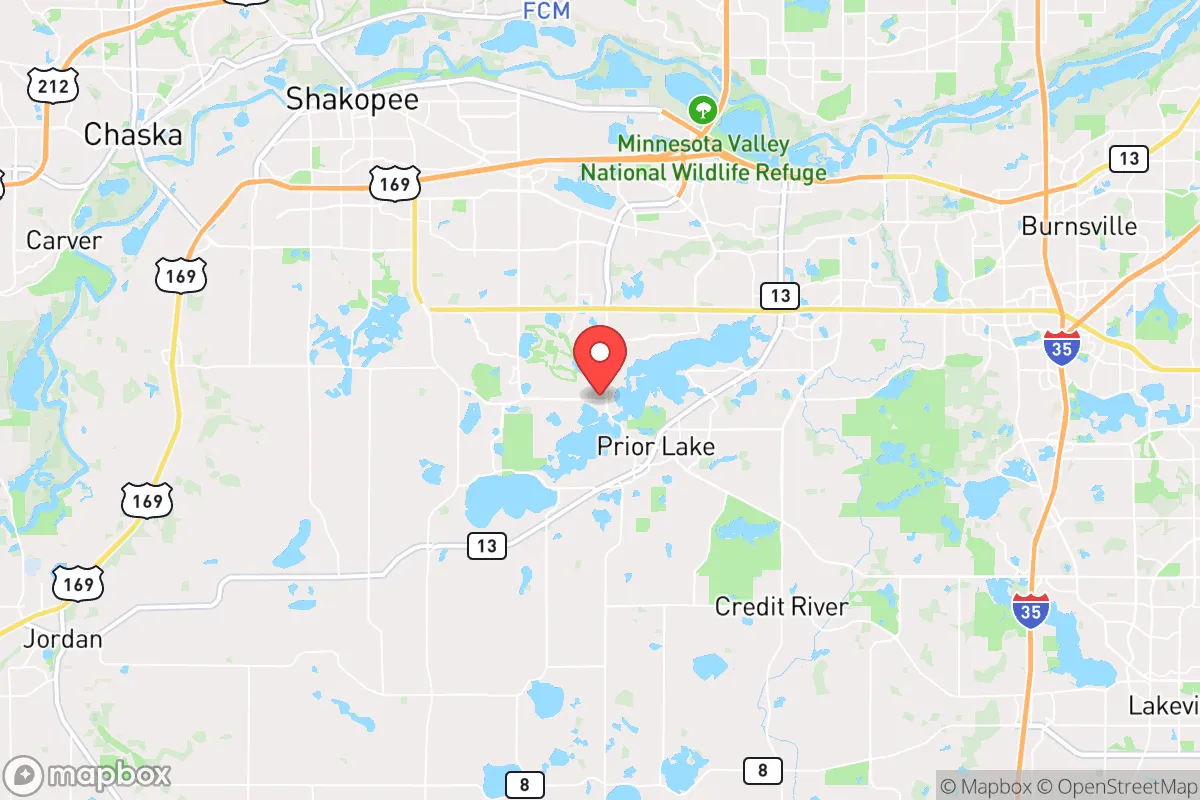
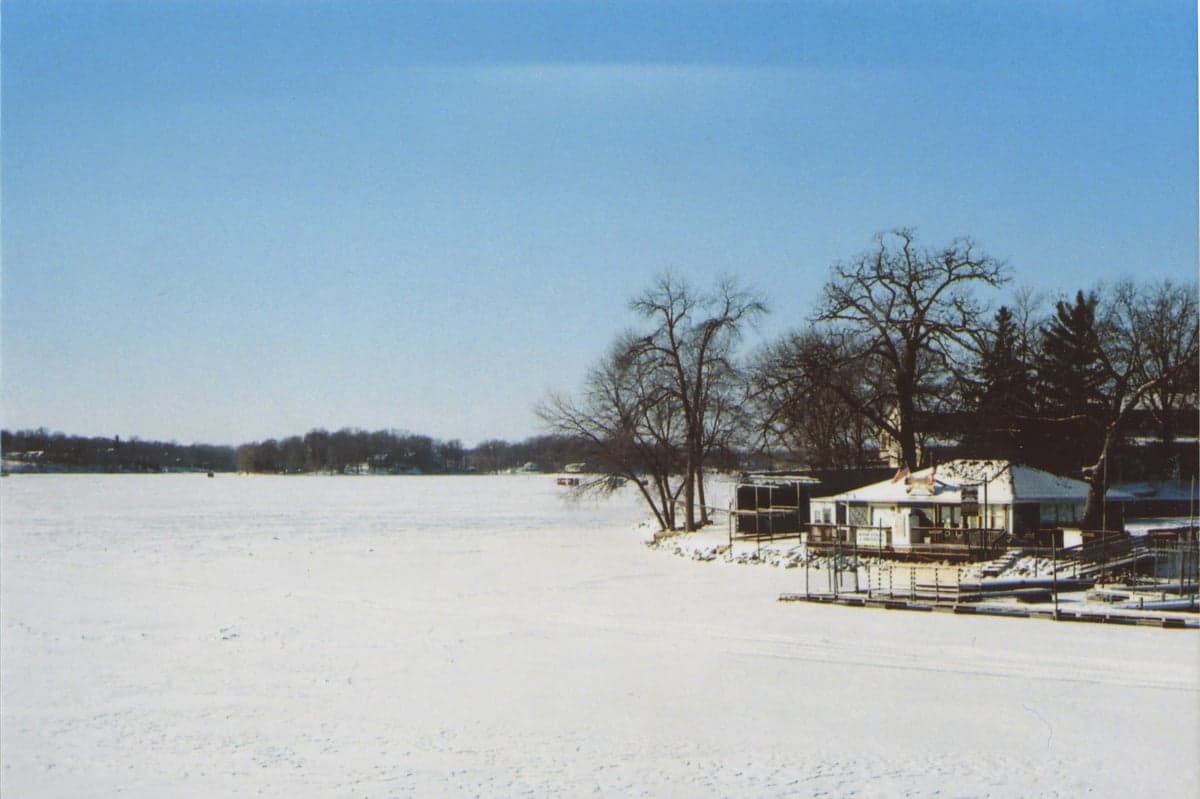
Photo: Wikipedia
Strategic Assessment of Prior Lake, MN
Meaningful friction. Expect exposure to either population pressure, blast zones, or natural disaster risk. Consider buying a retreat property.
What does the Strategic Assessment tell us?
Our Strategic Assessment grades tactical survivability of an area. Major population centers, military targets, fallout zones, natural disasters, and border exposure all drive risk — lower exposure means a more defensible position in a crisis.
This is heavily inspired by Joel Skousen's Strategic Relocation book. Highly recommended you checkout the book ($)What does this tell us?
Our Strategic Assessment grades tactical survivability of an area. Major population centers, military targets, fallout zones, natural disasters, and border exposure all drive risk — lower exposure means a more defensible position in a crisis.
This is heavily inspired by Joel Skousen's Strategic Relocation book. Highly recommended you checkout the book ($)Strategic Pillars

Key Distances
Regional Safe Places
Below is our recommended "safe zones" in Minnesota and the surrounding area based on our strategic heuristics. For most people, it's unrealistic to live in a “safe zone” full-time due to work, family or other personal reasons. They tend to be more rural. However, many of these areas are perfect for second homes and retreat properties that double as a vacation home or even a short-term rental.
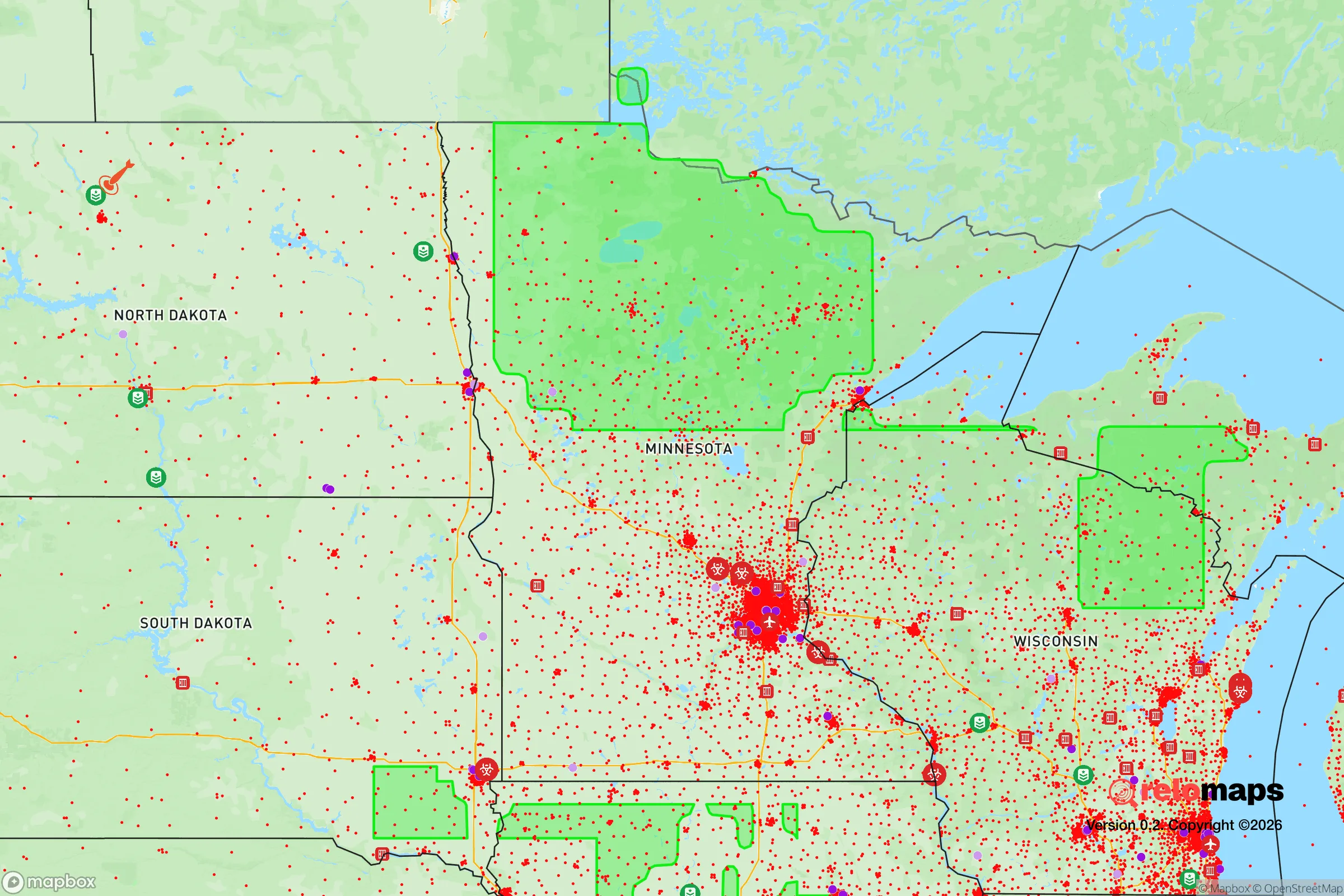
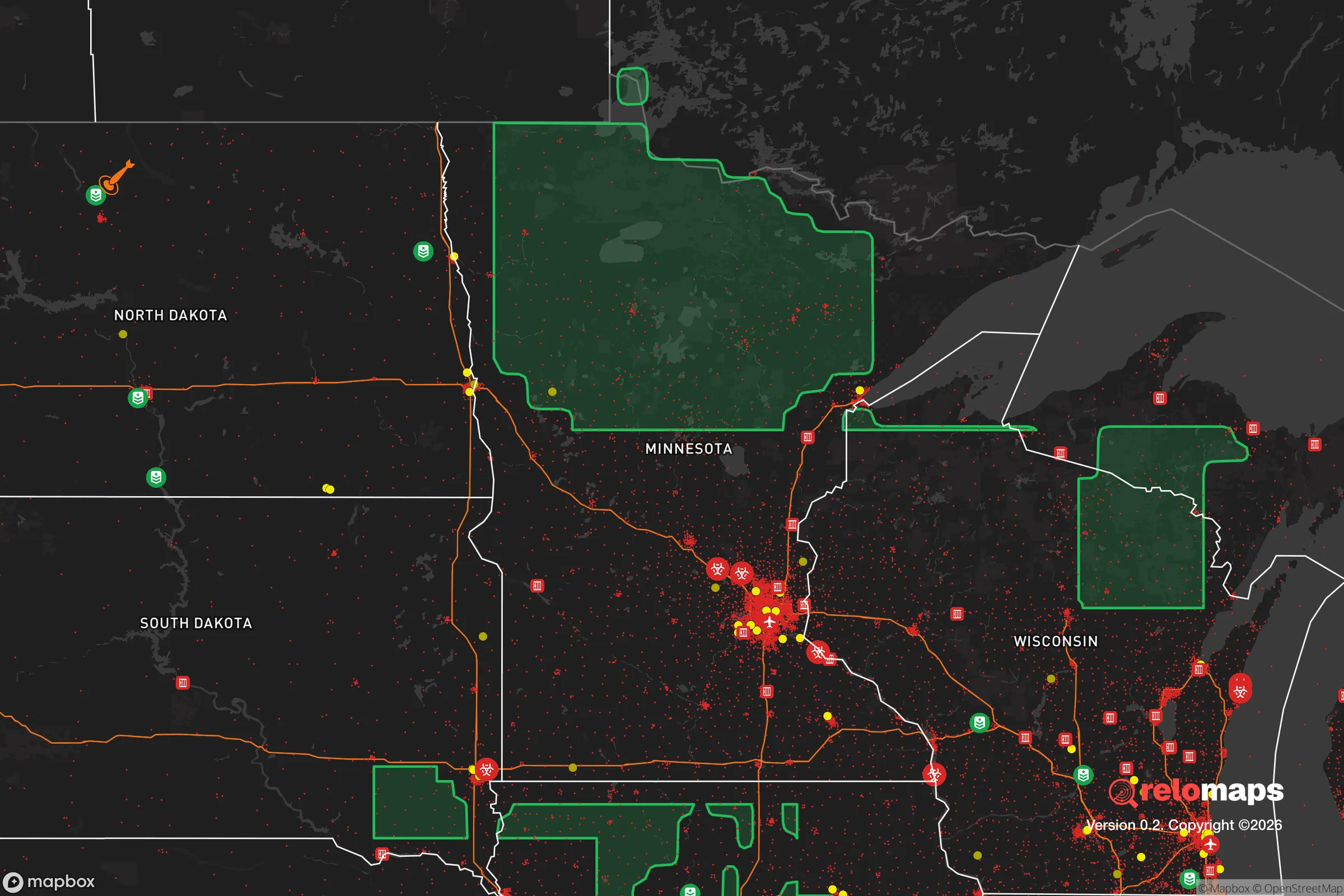


Important Note: For informational purposes only. This does not mean nothing bad ever happens in the green zones. Please use common sense. This is based on public data and modeled with AI. We tried to take a conservative approach but mistakes happen. We update this regularly as new information becomes available.
Solar Generator Recommendations
Backup power matters more here than in safer locations. We've picked three solar generators across budgets and capacity tiers — start with the budget unit if you only need a few essentials, or step up if you want to run a fridge and HVAC for days at a time.

Jackery Portable Power Station Explorer 300
Budget OptionPower on the Go: Weighing only 11 lbs, it's convenient to set up and store with book-sized foldable solar panels

BLUETTI Portable Power Station AC180
Designed for both indoor and outdoor scenarios, AC180 is highly capable as it has a robost capacity and continuous output power.

EF ECOFLOW DELTA Pro Ultra Power Station
Upgraded PickEcoFlow DELTA Pro Ultra is a whole-home energy system designed to grow with your family. Integrated with the Smart Home Panel 2, it scales to meet your evolving energy needs — keeping your home powered, intelligent, and secure through every stage of life.
We earn a commission, at no additional cost to you.
Strategic Assessment Analysis
Prior Lake, Minnesota, offers a strategic relocation option that balances proximity to the economic engine of the Twin Cities with a degree of geographic separation that can be leveraged for resilience. Located roughly 25 miles southwest of Minneapolis, the city sits within Scott County, an area that has experienced significant growth while retaining a semi-rural character in its outer reaches. For a relocator with a prepper mindset, the key advantage here is not isolation—it’s a calculated buffer: close enough to access urban resources and infrastructure, but far enough to avoid the immediate blast radius of a major metropolitan event. The area’s natural features, including the namesake Prior Lake and the nearby Minnesota River valley, provide both water resources and terrain that can be used for strategic positioning, though they also introduce specific vulnerabilities that must be weighed carefully.
Geographic position and natural advantages for long-term security
Prior Lake’s location on the southern edge of the Twin Cities metro area places it in a transitional zone between suburban development and agricultural countryside. The city itself sits on the shores of Upper and Lower Prior Lake, two large natural lakes that form part of the Minnesota River watershed. This water access is a genuine asset for a self-sufficient setup: surface water can be treated for drinking, and the lakes support fishing as a protein source. The surrounding Scott County landscape is relatively flat but punctuated by wooded bluffs along the Minnesota River, offering limited but usable defensible terrain. The area’s position south of the metro means it is not directly downwind of major industrial or nuclear targets in Minneapolis or St. Paul, which is a meaningful consideration for fallout scenarios. Prevailing winds in Minnesota run west to east, so a major event in the Twin Cities would likely push contamination eastward, sparing Prior Lake from the worst of a plume. Additionally, the city is adjacent to the Shakopee Mdewakanton Sioux Community’s reservation, which includes the Mystic Lake Casino—a large, well-fortified facility with its own security infrastructure. In a collapse scenario, this could be either a resource or a liability, depending on how tribal and local authorities coordinate. For a relocator, the takeaway is that Prior Lake offers a defensible perimeter with natural water sources, but it is not remote—you are still within a 30-minute drive of a metro area of 3 million people, which means you must plan for population displacement and resource competition.
Risks, exposures, and proximity to fallout-relevant landmarks
The most significant risk for Prior Lake is its proximity to the Twin Cities, which contains multiple high-value targets in a major conflict or terrorist scenario. Minneapolis-St. Paul International Airport (MSP) is roughly 20 miles northeast, and the metro area hosts major corporate headquarters (Target, Best Buy, 3M), the Federal Reserve Bank of Minneapolis, and the University of Minnesota’s research facilities. Any of these could be primary or secondary targets. A nuclear detonation at MSP would produce a fireball and blast wave that could cause structural damage in Prior Lake, depending on yield, but the greater concern is fallout. As noted, prevailing winds would likely carry contamination east, but a shift in wind direction or a ground burst could deposit radioactive particles over the area. The city is also within 10 miles of the Xcel Energy Black Dog Generating Plant in Burnsville, a natural gas facility that, while not nuclear, could be a target for sabotage or a cascading failure point. Flooding is a more immediate and probable risk: Prior Lake’s namesake lakes and the Minnesota River have a history of spring flooding, particularly in low-lying areas near the river. The 2019 floods in the region caused significant road closures and property damage. For a prepper, this means any retreat property should be sited on high ground, with multiple egress routes that avoid river crossings. The area’s population density—roughly 25,000 in the city and 150,000 in Scott County—means that in a crisis, you will not be alone. Roads like Highway 13 and County Road 42 can become choke points during an evacuation, and the nearby Interstate 35 corridor is a known bottleneck. The strategic risk here is not that Prior Lake is indefensible, but that it is not a bug-out location—it is a semi-urban staging area that requires active planning for movement and resupply.
Practical resilience for a relocator: food, water, energy, and defensibility
For a relocator focused on practical self-sufficiency, Prior Lake offers a mixed bag. Water is the strongest asset: the two large lakes provide a year-round surface water source, and the water table in Scott County is generally high, making well drilling feasible for those on acreage. However, the city’s municipal water supply comes from the Jordan Aquifer, which is deep and generally well-protected from surface contamination, but a prolonged power outage would disable electric pumps. A prepper should plan for manual or solar-powered pumping and have a means of filtration (e.g., Berkey or Sawyer systems) for lake water. Food production is viable but not ideal. The growing season in southern Minnesota runs roughly from May to September, with average frost dates limiting year-round gardening. Soil quality in the area is good—glacial till with loam—but suburban lot sizes (typically 0.25 to 1 acre) restrict large-scale agriculture. For serious food security, a relocator would need to purchase land in the unincorporated parts of Scott County or neighboring Le Sueur County, where 5- to 20-acre parcels are still available. Energy resilience is a weak point. The local grid is served by Xcel Energy, which has a mixed reliability record; winter storms in 2021 and 2022 caused multi-day outages in the region. Solar is viable—Minnesota gets about 4.5 peak sun hours per day in summer—but winter production drops sharply. A propane generator with a buried tank is a more reliable backup, but propane supply chains can be disrupted in a crisis. Defensibility is moderate. Prior Lake’s layout is typical of a modern suburb: cul-de-sacs, single-family homes, and a few commercial corridors. This creates natural chokepoints on the main roads, but also means that a determined group could move through neighborhoods easily. The best defensive setup would be a property on the lake’s western or southern shore, where access is limited to one or two roads and the lake provides a water barrier. The Shakopee tribal police and Scott County Sheriff’s Office are well-funded and professional, but in a widespread collapse, they would be overwhelmed. The overall resilience picture is that Prior Lake is a viable base for a relocator who is willing to invest in off-grid infrastructure and maintain a low profile, but it is not a standalone fortress.
The strategic picture for Prior Lake is one of calculated compromise. It offers genuine advantages—water access, proximity to metro resources, and a relatively stable local government—but it also carries the inherent risks of being within the orbit of a major urban center. For a conservative-leaning relocator who values community and infrastructure but wants to avoid the chaos of a city collapse, Prior Lake can work as a long-term staging area. The key is to treat it as a hub, not a final redoubt. Establish a primary residence here with redundant water and power, but also identify a secondary retreat further out—perhaps in the Driftless Area of southeastern Minnesota or western Wisconsin—for use if the metro corridor becomes untenable. In a world where the Twin Cities could become a target or a flashpoint, Prior Lake’s value is as a buffer zone: close enough to act, far enough to survive. Plan accordingly, and you can make this area work.

* Values derived from national, state, county, city and local statistics and may differ in a specific area. Last updated: 2026-04-24T10:09:40.000Z
Narrative content on this page is AI-generated and may contain mistakes. Verify any details that matter before acting on them.
ReloMaps may earn a commission from affiliate links at no extra cost to you.

