 Popular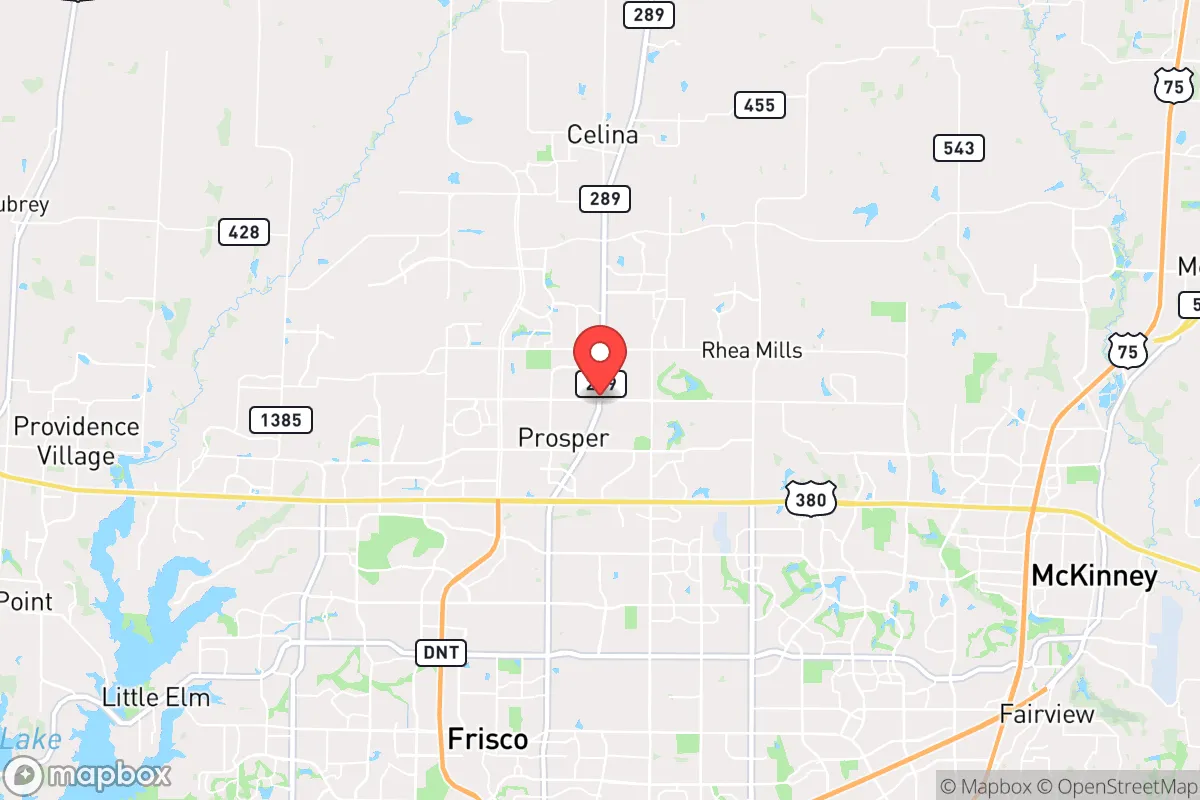
Strategic Assessment of Prosper, TX
Meaningful friction. Expect exposure to either population pressure, blast zones, or natural disaster risk. Consider buying a retreat property.
What does the Strategic Assessment tell us?
Our Strategic Assessment grades tactical survivability of an area. Major population centers, military targets, fallout zones, natural disasters, and border exposure all drive risk — lower exposure means a more defensible position in a crisis.
This is heavily inspired by Joel Skousen's Strategic Relocation book. Highly recommended you checkout the book ($)What does this tell us?
Our Strategic Assessment grades tactical survivability of an area. Major population centers, military targets, fallout zones, natural disasters, and border exposure all drive risk — lower exposure means a more defensible position in a crisis.
This is heavily inspired by Joel Skousen's Strategic Relocation book. Highly recommended you checkout the book ($)Strategic Pillars

Key Distances
Regional Safe Places
Below is our recommended "safe zones" in Texas and the surrounding area based on our strategic heuristics. For most people, it's unrealistic to live in a “safe zone” full-time due to work, family or other personal reasons. They tend to be more rural. However, many of these areas are perfect for second homes and retreat properties that double as a vacation home or even a short-term rental.

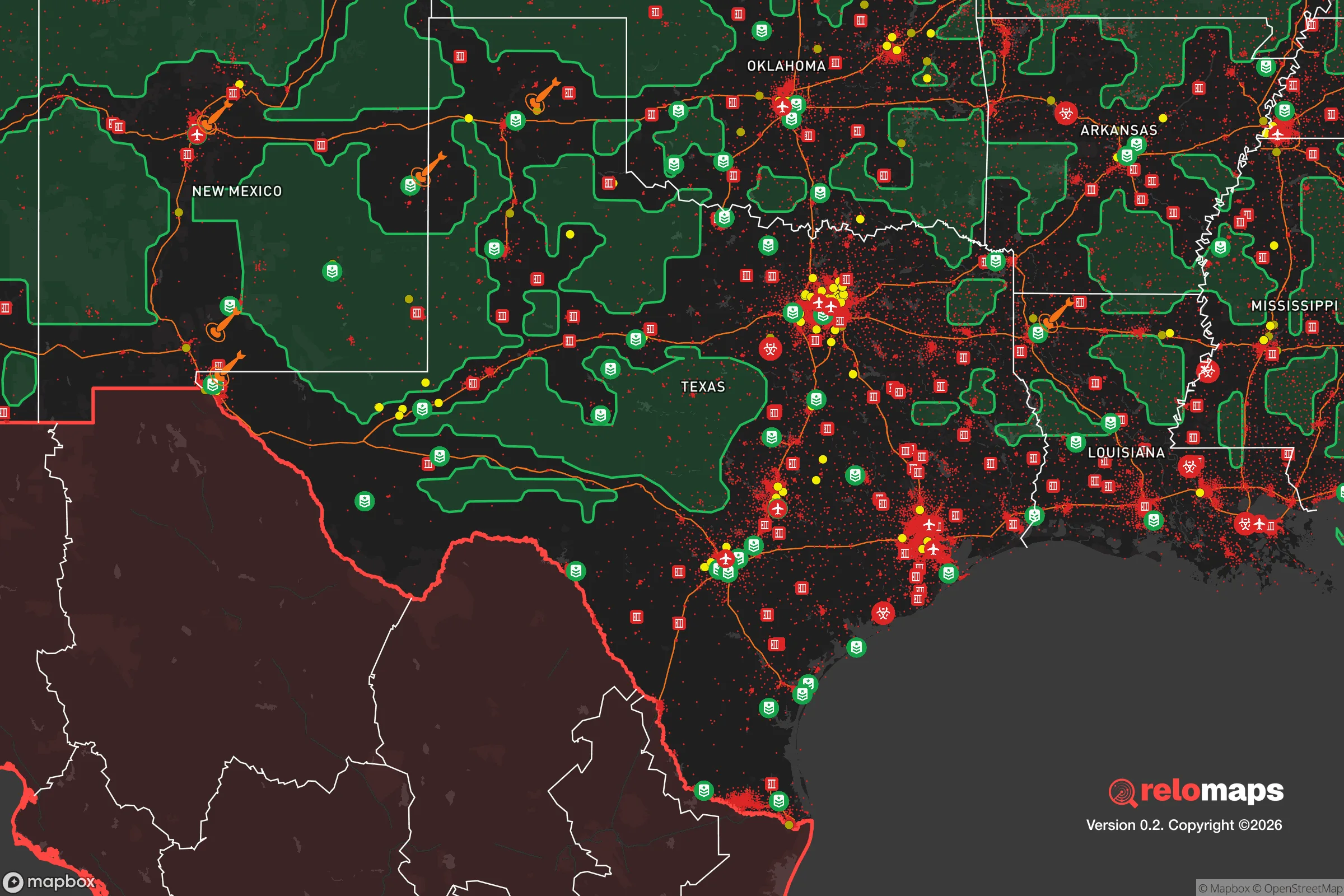


Important Note: For informational purposes only. This does not mean nothing bad ever happens in the green zones. Please use common sense. This is based on public data and modeled with AI. We tried to take a conservative approach but mistakes happen. We update this regularly as new information becomes available.
Solar Generator Recommendations
Backup power matters more here than in safer locations. We've picked three solar generators across budgets and capacity tiers — start with the budget unit if you only need a few essentials, or step up if you want to run a fridge and HVAC for days at a time.

Jackery Portable Power Station Explorer 300
Budget OptionPower on the Go: Weighing only 11 lbs, it's convenient to set up and store with book-sized foldable solar panels

BLUETTI Portable Power Station AC180
Designed for both indoor and outdoor scenarios, AC180 is highly capable as it has a robost capacity and continuous output power.

EF ECOFLOW DELTA Pro Ultra Power Station
Upgraded PickEcoFlow DELTA Pro Ultra is a whole-home energy system designed to grow with your family. Integrated with the Smart Home Panel 2, it scales to meet your evolving energy needs — keeping your home powered, intelligent, and secure through every stage of life.
We earn a commission, at no additional cost to you.
Strategic Assessment Analysis
Prosper, Texas, offers a strategic relocation option for those prioritizing disaster readiness and self-sufficiency, combining the logistical benefits of proximity to the Dallas-Fort Worth metroplex with the practical advantages of a low-density, inland location. Its position in Collin County places it within a region that has historically avoided the most severe natural disasters common to other parts of the country, such as hurricanes, earthquakes, and wildfires, while still providing access to major infrastructure and supply chains. For a relocator thinking seriously about resilience, Prosper represents a calculated trade-off: you gain geographic stability and community-scale preparedness, but you must account for the risks inherent in being within 40 miles of a major metropolitan area and its associated vulnerabilities.
Geographic position and natural advantages for long-term stability
Prosper sits on the Blackland Prairie, a region characterized by flat to gently rolling terrain, deep clay soils, and a climate that is generally stable compared to coastal or mountain zones. The area is over 300 miles from the Gulf of Mexico, which eliminates the direct threat of hurricane storm surge and significantly reduces the risk of catastrophic flooding from tropical systems. While flash flooding can occur during intense thunderstorms, the town's elevation (roughly 700 feet above sea level) and drainage patterns make it far less prone to the kind of inundation seen in Houston or along the Gulf Coast. The local geology also provides a natural buffer against seismic activity; North Texas experiences only minor, infrequent tremors, and the region is not situated near any active fault lines. For a self-sufficiency-minded resident, this means your property and infrastructure are unlikely to be destroyed by a single weather event or geological shift, allowing you to focus on long-term preparedness rather than constant emergency response. The climate supports a long growing season (roughly 230 frost-free days), which is a practical advantage for anyone serious about food production, though the hot, dry summers require careful water management.
Risk exposure and proximity to fallout-relevant landmarks
The primary strategic vulnerability for Prosper is its proximity to the Dallas-Fort Worth metroplex, a population center of over 7.5 million people that includes multiple potential targets for both natural and man-made disruptions. Prosper is roughly 35 miles north of downtown Dallas and about 40 miles from DFW International Airport, a major transportation hub that could be a focal point for supply chain interruptions, civil unrest, or, in a worst-case scenario, a direct attack. The town is also within 50 miles of several military installations, including Naval Air Station Joint Reserve Base Fort Worth and the Army's Red River Army Depot, which, while not likely primary targets, could experience secondary effects in a conflict scenario. For a relocator concerned about fallout—whether from a nuclear event, a chemical spill, or a biological incident—the prevailing wind patterns in North Texas generally blow from the south and southeast, meaning that airborne contaminants from the metroplex would most often be carried northward, directly over Prosper. This is a critical consideration: while the town's distance provides some buffer, it is not far enough to be considered safe from fallout drift. Additionally, the region's reliance on the ERCOT power grid, which has proven vulnerable to extreme weather events (notably the 2021 winter storm), means that a grid-down scenario could affect Prosper just as severely as the rest of Texas, though the town's newer infrastructure and lower population density may allow for faster recovery.
Practical resilience for a relocator: food, water, energy, and defensibility
For a relocator focused on day-to-day self-sufficiency, Prosper offers a mixed but workable environment. Water availability is the most significant constraint: the region relies on surface water from reservoirs like Lake Lavon and Lake Lewisville, both of which are subject to drought cycles and competing demand from the growing DFW population. A well is a viable option for those on larger lots, but the local groundwater (the Trinity Aquifer) is deep and can be expensive to tap, with yields varying significantly by location. Rainwater harvesting is legal and encouraged, but annual rainfall averages only about 36 inches, so storage capacity must be substantial to carry through dry periods. Food production is more feasible: the growing season is long, and the soil, while heavy clay, can be amended for vegetable gardens and small orchards. Local farmers' markets and a handful of small-scale producers exist, but Prosper is not yet a hub for local food networks—most groceries come via the standard supply chain from DFW. Energy resilience is improving: many newer homes are built with energy-efficient designs, and solar panel adoption is growing, though the local utility (CoServ, a cooperative) has net metering policies that make grid-tied solar economical. For off-grid capability, battery storage is recommended, as the grid remains the primary source. Defensibility is a nuanced factor: Prosper is a low-density suburban town with a strong sense of community and a responsive local police force, but it is not a gated or fortified enclave. The town's layout—with multiple entry points from major roads like US-380 and Preston Road—makes it difficult to secure in a crisis. However, the strong social fabric and active neighborhood watch programs provide a form of organic security that many rural areas lack. For a relocator, the best approach is to choose a home on a cul-de-sac or at the end of a dead-end road, with good visibility and a defensible perimeter, rather than relying on the town's overall layout for protection.
The overall strategic picture for Prosper is one of calculated stability with clear trade-offs. It offers a genuine advantage over coastal and seismically active regions, with a climate and geography that support long-term habitation and self-sufficiency. The town's new infrastructure, growing community, and access to DFW's resources make it a practical choice for someone who wants to be prepared without living in a remote bunker. However, the proximity to a major metropolitan area introduces risks—from grid vulnerability to fallout drift—that cannot be ignored. For the serious relocator, Prosper works best as a base of operations: a place to build a resilient home, establish local networks, and stockpile supplies, while maintaining a clear plan for evacuation or sheltering in place depending on the nature of the threat. It is not a survivalist's paradise, but it is a defensible, livable, and strategically sound location for those who value both preparedness and quality of life.

* Values derived from national, state, county, city and local statistics and may differ in a specific area. Last updated: 2026-10-10T16:28:45.000Z
Narrative content on this page is AI-generated and may contain mistakes. Verify any details that matter before acting on them.
ReloMaps may earn a commission from affiliate links at no extra cost to you.

