 Popular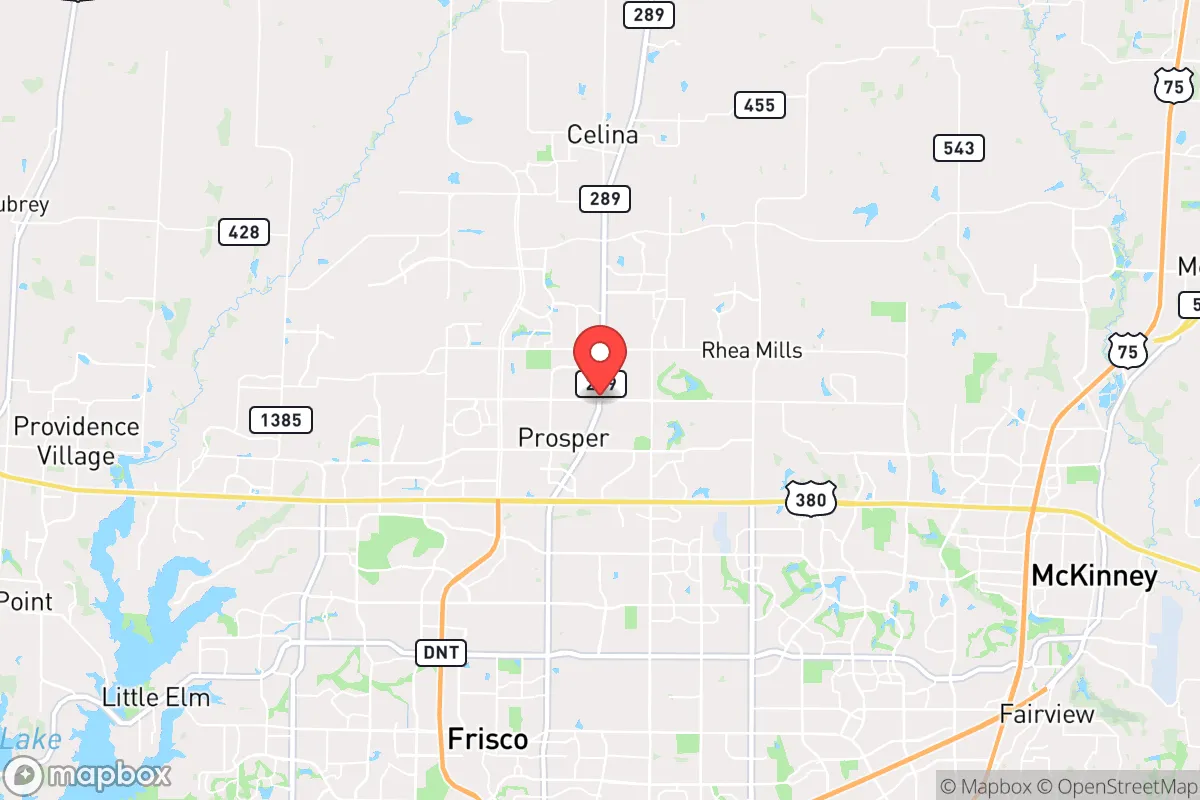
Political ClimatePolitical Climate in Prosper, TX
District shown is the primary district for this city’s centroid. Cities may span multiple districts.
Local Political AnalysisPolitical Analysis of Prosper, TX
Prosper, Texas, is about as reliably Republican as a town can get in North Texas, and it’s been trending that way for years. The Cook Partisan Voting Index (PVI) for the area sits at R+16, meaning the electorate here votes about 16 points more Republican than the national average. That’s a deep red number, and it’s not just a fluke of one election—it’s a consistent pattern. In 2024, Collin County, where most of Prosper sits, went for the Republican presidential candidate by a margin of roughly 58% to 40%, and local races rarely see a competitive Democrat. The trajectory is actually getting redder as the town explodes in population, drawing in families from other conservative suburbs and exurbs who are looking for more space and lower taxes.
How it compares
Compared to Texas as a whole, Prosper is noticeably more conservative. The state’s overall PVI is harder to pin down because Texas is a massive, diverse state—urban centers like Houston, Dallas, and Austin lean blue, while rural and suburban areas like Prosper are deep red. Texas as a whole voted for Donald Trump by about 5.5 points in 2024, so Prosper’s R+16 is roughly 10 points more Republican than the state average. That’s a big gap. If you drive 15 minutes south to Frisco, you’ll find a more mixed political landscape—Frisco has a growing number of moderate and liberal-leaning voters, especially in its newer developments and among younger professionals. Head 20 minutes west to Celina, and you’re in even redder territory, with a PVI closer to R+20. Prosper sits right in that conservative sweet spot: not as rural-hardline as Celina, but far more reliably Republican than Frisco or McKinney, which have seen some Democratic gains in recent cycles.
What this means for residents
For conservative residents, Prosper is a comfortable place to live. Local government, school board meetings, and city council elections are dominated by Republicans, so policies tend to align with low taxes, limited regulation, and a focus on public safety and infrastructure. The town’s rapid growth has been managed with a pro-development, business-friendly approach. For liberal residents, it’s a different story. You’ll likely be in the minority, and that can feel isolating at times—political conversations at the grocery store or PTA meetings will lean heavily conservative. But it’s not hostile. Most people are polite, and the town’s focus on family and community means you can find your niche if you’re willing to engage. There’s no real progressive political infrastructure here, so if you want to get involved in local activism, you’ll probably need to drive to Frisco or Plano for meetings and events. The practical reality is that local elections are effectively decided in the Republican primary, so if you’re a Democrat, your vote in the general election for local offices is largely symbolic.
One cultural distinction worth noting: Prosper is a relatively young town, with a median age around 35, and it’s heavily family-oriented. That means the political conversations here are often about schools, property taxes, and development—not the hot-button national issues you see on cable news. The local Republican club is active, but it’s more about zoning and bond elections than culture wars. There’s a strong sense of civic pride, and people tend to be pragmatic about growth. Looking ahead, I expect Prosper to stay solidly red for the foreseeable future. The new residents moving in are mostly coming from other conservative suburbs, not from blue cities, so the political balance isn’t shifting. If anything, the town’s rapid build-out of master-planned communities is reinforcing its conservative identity. For anyone moving here, the key takeaway is simple: if you’re conservative, you’ll feel right at home. If you’re liberal, you’ll need to be comfortable being the odd one out, but you won’t be treated poorly for it.

State Political ClimatePolitical Climate in Texas
State Political AnalysisPolitical Environment in the State
Texas has been a reliably Republican state for the past three decades, but the margin has been shrinking. In 2024, Donald Trump won the state by roughly 9 points, down from 11 points in 2020 and 16 points in 2012. The dominant coalition remains a mix of rural conservatives, suburban moderates, and evangelical voters, but explosive growth in the urban crescent—from Dallas-Fort Worth down through Austin to San Antonio and Houston—is steadily shifting the state’s political center of gravity. The long-term trajectory is toward a competitive two-party state, though the GOP still holds every statewide office and both legislative chambers.
Urban vs. rural divide
The political map of Texas is a study in stark contrasts. The big four metros—Houston, Dallas-Fort Worth, San Antonio, and Austin—are Democratic strongholds, with Harris County (Houston) and Dallas County flipping blue in the 2010s and staying there. Austin’s Travis County is the bluest in the state, routinely voting 70%+ Democratic. Meanwhile, the vast rural and exurban expanse—places like Lubbock, Amarillo, and the Rio Grande Valley—votes heavily Republican, though the Valley has shown signs of shifting rightward in 2020 and 2024. The suburbs are the real battleground: Collin County (north of Dallas) and Fort Bend County (southwest of Houston) were once GOP lockboxes but are now competitive, with Collin County voting for Trump by only 8 points in 2024 after a 20-point margin in 2016. The political future of Texas will be decided in these fast-growing suburban rings.
Policy environment
Texas operates under a low-tax, low-service model that appeals strongly to conservative relocators. There is no state income tax—funded instead by high property taxes (averaging 1.6% of home value) and a 6.25% state sales tax that local jurisdictions can push to 8.25%. The regulatory posture is business-friendly: no state-level minimum wage above the federal $7.25, no right-to-work law (though it’s effectively a right-to-work state), and a tort-reform system that caps non-economic damages in medical malpractice cases. Education policy is a flashpoint: the state funds public schools through a Robin Hood system that redistributes property tax revenue from wealthy districts to poor ones, and the 2023 school voucher bill (SB 1) failed in the House but remains a top priority for Governor Greg Abbott. Healthcare is a gap: Texas has the highest uninsured rate in the nation (16.6% in 2023) because it has not expanded Medicaid under the ACA. Election laws were tightened in 2021 with SB 1, which added ID requirements for mail-in ballots, limited drive-through and 24-hour voting, and gave poll watchers more access. For a relocator, the practical takeaway is lower taxes on income but higher costs on property and sales, and a system that prioritizes business flexibility over social safety nets.
Recent policy direction
The last five years have seen a sharp rightward shift on cultural and liberty issues. In 2021, Texas passed the Heartbeat Act (SB 8), banning abortion after six weeks and allowing private citizens to sue violators—effectively ending abortion access in the state. In 2023, the legislature passed a permitless carry law (HB 1927), allowing most adults to carry handguns without a license or training. On education, the 2023 Parental Bill of Rights (HB 900) restricted library content and required age-verification for online materials, while the 2022 Save Women’s Sports Act (HB 25) banned transgender athletes from school sports. Property rights were strengthened with the 2023 Texas Property Tax Relief Act, which cut school property tax rates by 10.7 cents per $100 valuation and raised the homestead exemption from $40,000 to $100,000. On voting, SB 1 (2021) remains the biggest change, but the 2023 session also passed a law requiring voter ID for all mail ballots. Privacy and surveillance are mixed: Texas has no comprehensive data privacy law, but it passed a 2023 law banning TikTok on government devices. For a relocator weighing liberties, the state offers strong gun rights, low taxes, and parental control in schools, but limited abortion access, no medical marijuana program (only low-THC cannabis for epilepsy), and a surveillance-friendly posture on law enforcement data collection.
Civil unrest & political movements
Texas has been a flashpoint for both left- and right-wing activism. The 2020 George Floyd protests in Austin and Houston were among the largest in the country, with Austin seeing over 100 consecutive nights of demonstrations and a subsequent police budget cut that was later restored. On the right, the 2021 Texas Secession Convention (a fringe event) and the Texas Nationalist Movement have kept secession rhetoric alive, though it has no mainstream political support. Immigration politics are a constant: Governor Abbott’s Operation Lone Star (2021-present) deployed state troopers and National Guard to the border, bused migrants to northern cities, and installed razor wire and buoys in the Rio Grande—leading to legal battles with the Biden administration. Sanctuary city policies are banned statewide (SB 4, 2017), but El Paso and Austin have resisted cooperation with federal immigration enforcement. Election integrity remains a live issue: the 2020 audit of four counties (including Harris and Dallas) found no widespread fraud but fueled ongoing distrust. A new resident would notice the border security billboards, the armed state troopers at rest stops near the border, and the occasional protest at the state capitol in Austin.
Projection
Over the next 5-10 years, Texas is likely to become a true swing state. Demographic trends are clear: the state’s population is growing by about 1,000 people per day, with most new arrivals moving to the blue-leaning suburbs of Houston, Dallas, and Austin. The Hispanic population, which has historically voted more Republican than national averages, is trending younger and more Democratic. The 2024 results showed the GOP’s margin in the suburbs shrinking by 2-3 points per cycle, and if that continues, Texas could be competitive for president by 2032. However, the state’s political geography favors the GOP: the rural vote is overrepresented in the state legislature due to gerrymandering, and the 2021 redistricting cycle locked in Republican majorities in the House and Senate. The policy direction will likely continue rightward on cultural issues (abortion, guns, education) but may moderate on taxes and spending as the state’s infrastructure strains under growth. A relocator moving in now should expect a decade of political tension—a state that is culturally conservative but demographically diversifying, with a GOP that will fight to hold power through legislative and legal means.
For a new resident, the bottom line is this: Texas offers a low-tax, business-friendly environment with strong gun rights and parental control in schools, but it also has high property taxes, limited healthcare access, and a political climate that is increasingly polarized. If you lean conservative, you’ll find a state government that aligns with your values on most issues. If you lean liberal, you’ll find vibrant blue cities and a growing political opposition, but you’ll also face state laws that restrict abortion, limit voting access, and prioritize border enforcement. The practical takeaway is to choose your location carefully—the political reality in Austin is very different from Lubbock, and the suburbs of Fort Worth are a world apart from El Paso. Know your county, and you’ll know your Texas.
* Values derived from national, state, county, city and local statistics and may differ in a specific area. Last updated: 2026-10-10T16:28:45.000Z
Narrative content on this page is AI-generated and may contain mistakes. Verify any details that matter before acting on them.
ReloMaps may earn a commission from affiliate links at no extra cost to you.

