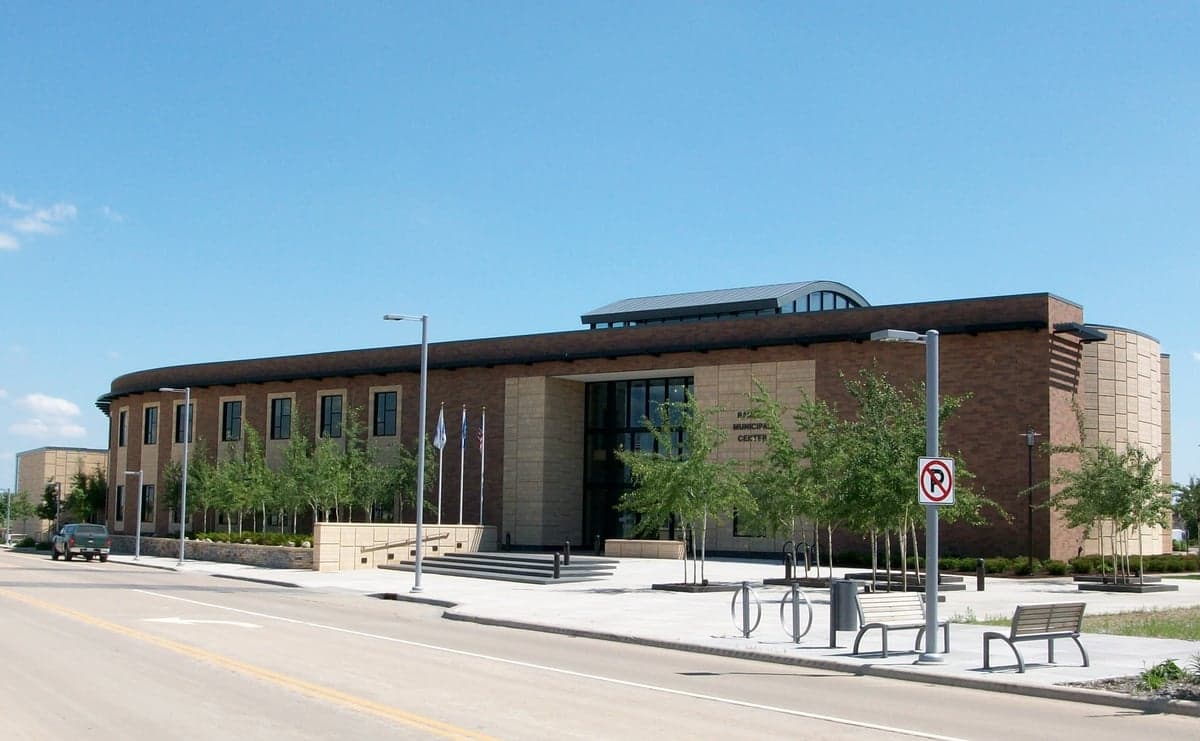
Photo: Wikipedia
Quality of Life in Ramsey, MN
Above-average quality of iife. The area offers a reasonable cost of living, decent mobility, and a mix of neighborhood amenities.
What does Quality of Life tell us?
Quality of Life blends cost of living, nearby amenities, socioeconomic signals, and neighborhood character. City-level scores represent the whole municipality; individual neighborhoods can differ.
What does this tell us?
Quality of Life blends cost of living, nearby amenities, socioeconomic signals, and neighborhood character. City-level scores represent the whole municipality; individual neighborhoods can differ.
Cost of Living
41% above national average
The Real Cost of Living in Ramsey, MN for 2026
| Tier | Individual | Family (4) |
|---|---|---|
| Survival | $28k | $53k |
| Comfortable | $67k | $99k |
| Luxury | $137k+ | $213k+ |
| Elite (Top 5%) | $162k+ | $250k+ |
114%
The Area Signal
A metric tracking the socioeconomic signals of the area.
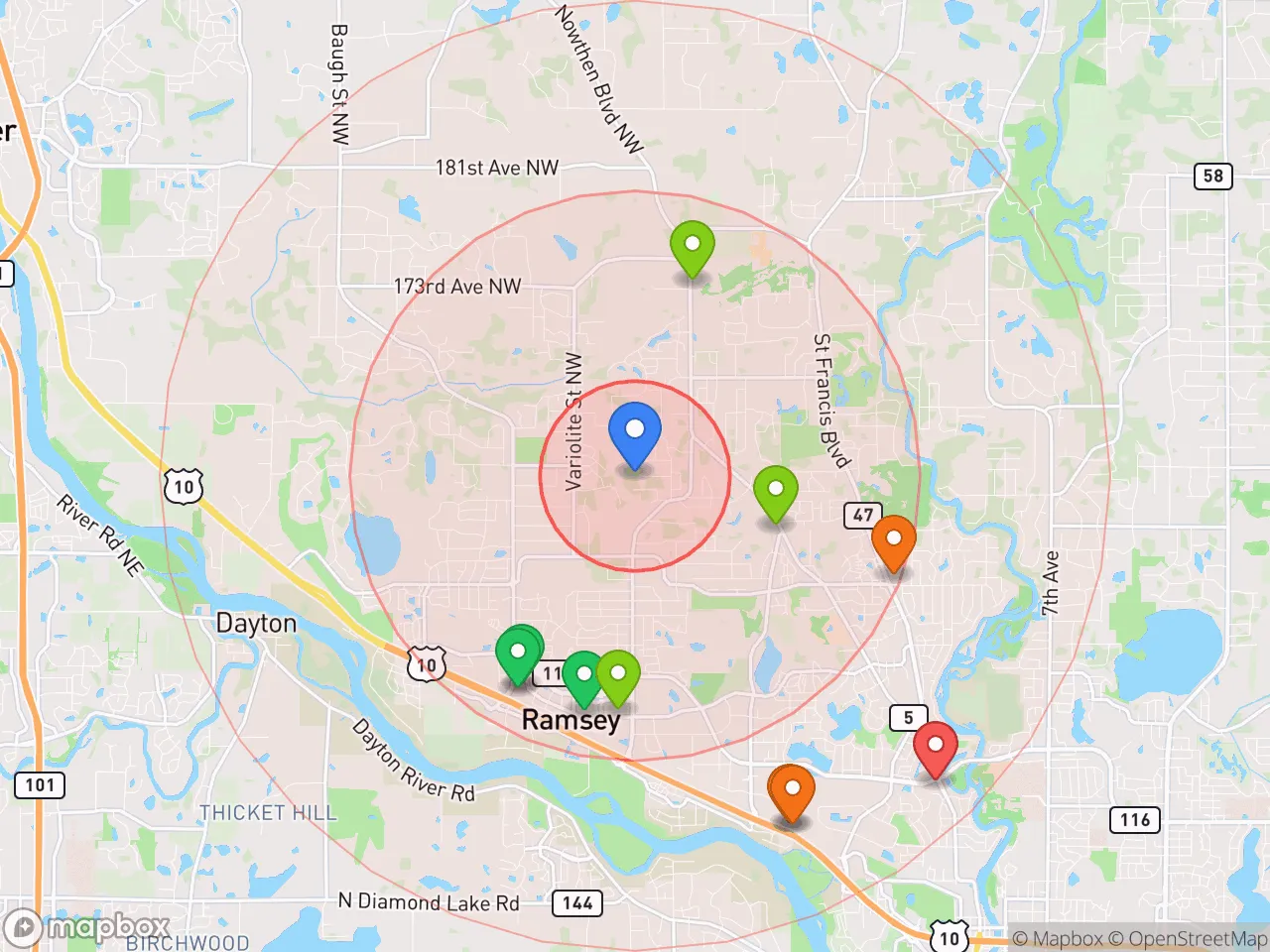
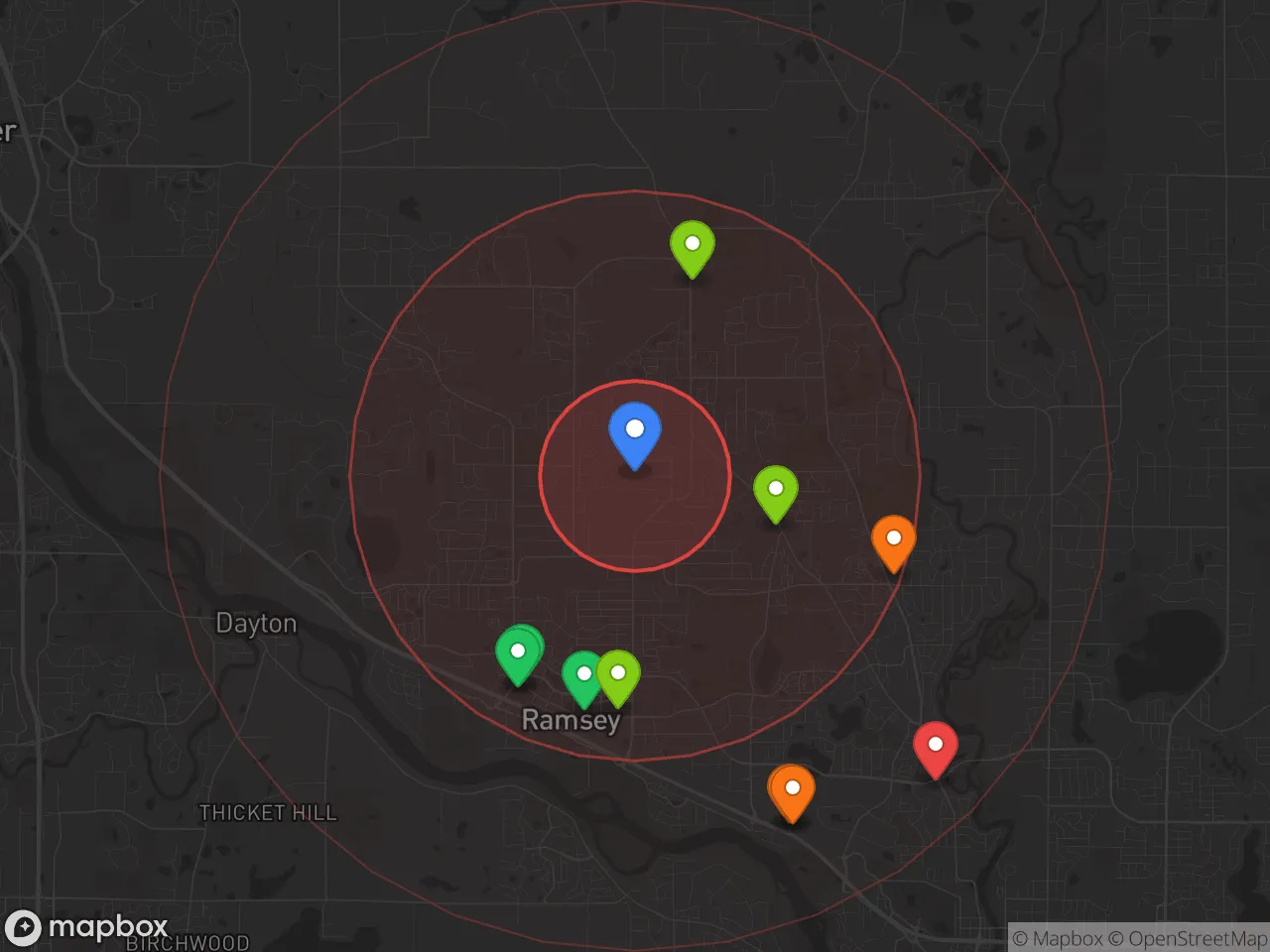
Hobbies
Explore the areaGroceries
4 within 10 miles
Gas
20 within 10 miles
Hospital
12 within 20 miles
Airport
JFK — John F. Kennedy Memorial
Post Office
USPS — Dayton, MN
Critical Amenities
Quality-of-Life Analysis
Ramsey, Minnesota, is an affluent northwestern suburb of the Twin Cities where the cost of living index sits at 141—41 percent above the national average—reflecting a community of established professionals, growing families, and long-term residents who prioritize space, safety, and access to nature over urban proximity. The city’s median home value of $345,000 and median rent of $1,780 place it squarely in the upper-middle tier of the metro area, attracting buyers who want newer construction and larger lots without the premium prices of closer-in suburbs like Maple Grove or Plymouth. With an average commute of roughly 28 minutes, Ramsey offers a deliberate trade-off: a quieter, more land-rich lifestyle in exchange for a longer drive to downtown Minneapolis or St. Paul.
Cost of living, housing affordability, and how Ramsey compares to nearby suburbs
Ramsey’s cost-of-living index of 141 is driven primarily by housing, though it remains notably more affordable than the western suburbs of Wayzata (index ~160) or Edina (~170). The median home value of $345,000 buys a single-family home on a half-acre or larger lot—a contrast to the denser, pricier inventory in Anoka or Coon Rapids to the south. Renters face a median of $1,780 per month, which is competitive for the northwest corridor but still about $200 above the Minneapolis metro average. Property taxes in Ramsey are moderate for the area, typically ranging from $3,500 to $4,500 annually on a median-priced home, and the city’s lack of a local sales tax (only the state’s 6.875% applies) helps offset some daily expenses. For buyers seeking new construction, developments like the Lakes at Cedar Lake and the Preserve at Deerwood offer homes in the $400,000–$550,000 range, while older stock from the 1990s and 2000s keeps entry points near $300,000.
What daily life is like for families: schools, parks, and local amenities
Daily life in Ramsey revolves around the Anoka-Hennepin School District, the largest in Minnesota, which serves the city through Ramsey Elementary, Northdale Middle School, and Anoka High School—all rated above average on state proficiency tests. The city’s 20+ parks, including the 160-acre Ramsey Nature Preserve and the sprawling Lake George Regional Park, provide year-round recreation: fishing, kayaking, and hiking in summer; cross-country skiing and snowshoeing in winter. Retail and dining are concentrated along Highway 10, with anchors like the Ramsey Town Center offering a Hy-Vee grocery, chain restaurants, and local shops, though residents often drive 10–15 minutes to the Riverdale Village complex in Coon Rapids for big-box stores and entertainment. The city’s low crime rate—violent crime is roughly 60% below the national average—and its strong sense of community events (the annual Ramsey Fest, farmers markets, and youth sports leagues) create a predictable, family-oriented rhythm that appeals to those who value routine over nightlife.
Ramsey is best suited for families and professionals who are willing to trade a longer commute for larger homes, lower crime, and abundant green space. Empty-nesters downsizing from rural properties also find the city’s maintenance-free townhome developments appealing, while remote workers benefit from the 28-minute average drive to Minneapolis when needed. Singles and young renters may find the social scene limited compared to Uptown or Northeast Minneapolis, but for anyone seeking a safe, spacious, and well-served suburb with strong schools and a clear sense of place, Ramsey delivers consistently high marks.

Crime in Ramsey, MN
Lower crime rates than 85% of comparable U.S. locations.
Violent CrimeViolent Crime Analysis
Property CrimeProperty Crime Analysis
Crime Analysis
Ramsey, Minnesota, is a notably safe community, with violent crime rates dramatically lower than both state and national averages. The city recorded a violent crime rate of just 17.1 incidents per 100,000 residents, a figure that is roughly 95% lower than the national average. Property crime, at 395.9 per 100,000, also sits well below the U.S. median, though it is slightly above the safest suburban benchmarks for the Twin Cities metro area.
Crime in context
Ramsey’s crime statistics place it among the safest municipalities in the northwest Twin Cities exurbs. For comparison, the national violent crime rate in 2023 was approximately 380 per 100,000, meaning Ramsey’s rate is a fraction of that figure. Property crime nationally hovers around 1,950 per 100,000, making Ramsey’s rate roughly 80% lower. However, as a small city adjacent to a large liberal metro area, residents should be aware that broader regional trends—including progressive prosecutorial policies in Hennepin and Anoka Counties—can influence crime patterns. While Ramsey itself maintains low crime, the surrounding metro area has seen increased property crime and car thefts linked to more lenient justice system approaches, which can spill over into suburban communities.
What residents experience
For most Ramsey residents, serious crime is a rare occurrence. The city’s low violent crime rate means incidents like homicide, robbery, and aggravated assault are statistically uncommon. Property crime, while higher than violent crime, is still manageable: the 395.9 per 100,000 rate translates to roughly 100-110 property crimes annually in a city of about 27,000 people. The most common issues are theft from vehicles and occasional burglaries, often concentrated near retail corridors like Highway 10. Residents typically report feeling safe walking their neighborhoods and leaving doors unlocked during the day, though standard precautions are advised, especially near the city’s borders with Anoka and Dayton.
Neighborhood-level variation
Crime in Ramsey is not evenly distributed. The newer, master-planned subdivisions in the western and northern parts of the city—such as those near the Mississippi River and the Rum River—consistently report the lowest crime rates. Older neighborhoods closer to the Highway 10 corridor and the city’s southern edge, near the Anoka border, see slightly higher property crime, particularly package thefts and vehicle break-ins. The city’s police department maintains a proactive community policing model, and neighborhood watch programs are active in several subdivisions. Overall, Ramsey’s crime profile is excellent by metro-area standards, but the influence of progressive criminal justice policies in the broader Twin Cities region remains a factor that prudent residents should monitor.
* Values derived from national, state, county, city and local statistics and may differ in a specific area. Last updated: 2026-04-24T15:27:40.000Z
Narrative content on this page is AI-generated and may contain mistakes. Verify any details that matter before acting on them.
ReloMaps may earn a commission from affiliate links at no extra cost to you.

