 Popular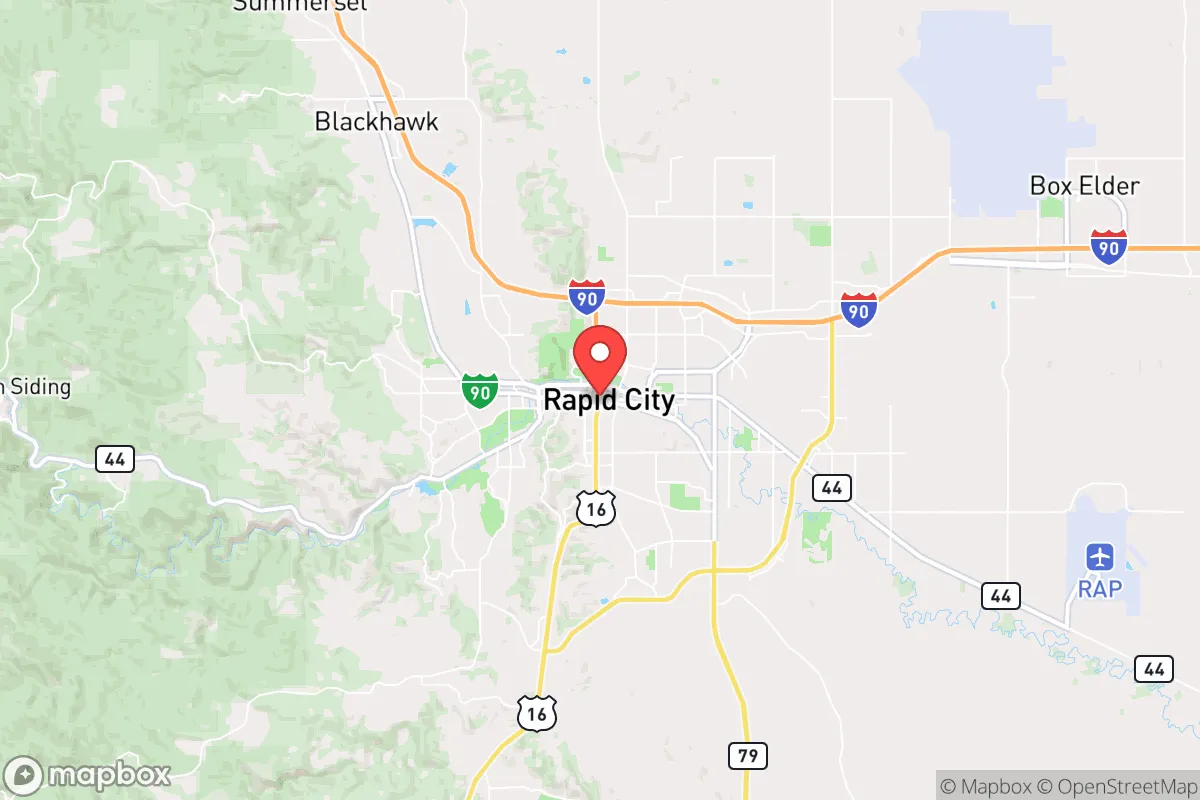
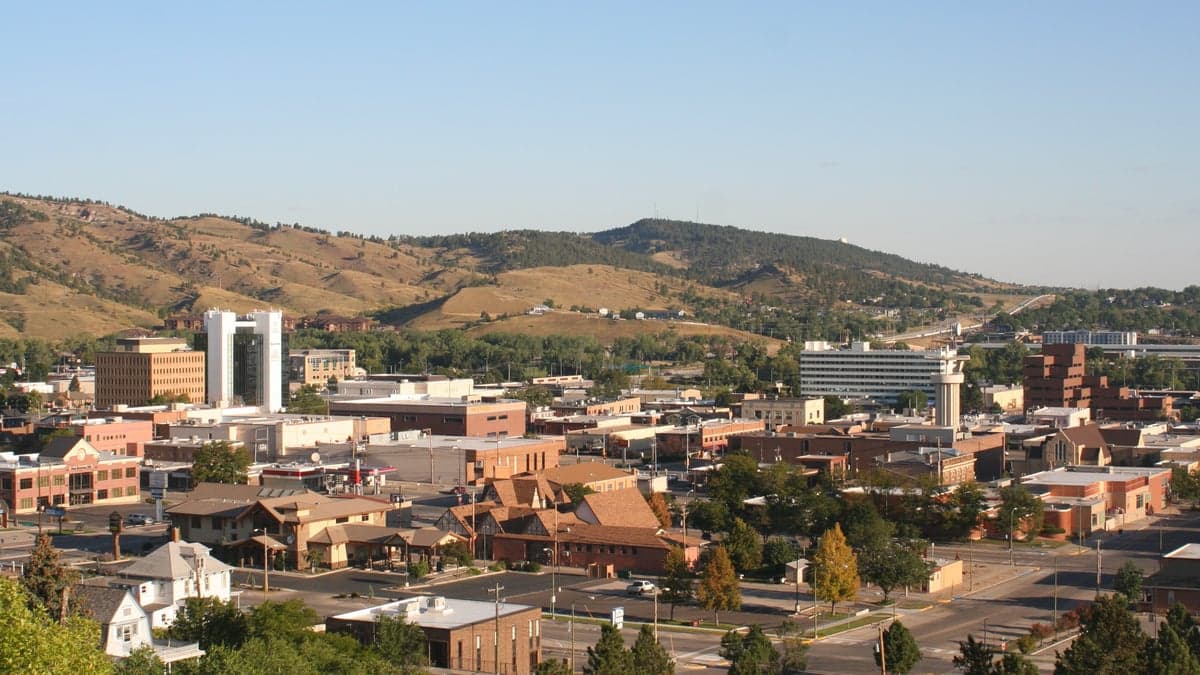
Photo: Wikipedia
Personal Sovereignty in Rapid City, SD
Viable for self-reliance. Generally workable, though some barriers may limit total independence.
What does Personal Sovereignty tell us?
Personal Sovereignty measures your capacity for self-reliance and independence with minimal government friction. Higher scores mean fewer barriers between you and the way you want to live... but it assumes you have the space you need and good neighbors.
What does this tell us?
Personal Sovereignty measures your capacity for self-reliance and independence with minimal government friction. Higher scores mean fewer barriers between you and the way you want to live... but it assumes you have the space you need and good neighbors.
State Policy
Energy independence: Importer (35% of energy produced in-state)
Personal Liberty
Homesteading

Personal Liberty Analysis
For the individualist, the prepper, or the parent seeking to insulate their family from federal overreach and cultural decay, Rapid City offers a rare synthesis of frontier autonomy and practical self-reliance. Nestled at the eastern edge of the Black Hills, this city of roughly 78,000 operates under South Dakota’s aggressively pro-liberty state framework—no income tax, weak zoning enforcement outside city limits, and a political culture that treats government as a necessary evil rather than a solution. While Rapid City itself leans moderately conservative, the surrounding Pennington County and the broader state provide a legal and regulatory buffer that allows a person to live largely unbothered, provided they are willing to accept cold winters and limited urban amenities. This is not a place for those seeking a managed existence; it is a place where personal sovereignty is the default, not the exception.
Tax burden and regulatory posture: how South Dakota protects your wallet and your choices
The single most powerful tool for personal sovereignty in Rapid City is the complete absence of a state income tax. South Dakota is one of only nine states with no individual income tax, and it also has no corporate income tax, no personal property tax on vehicles or boats, and no inheritance or estate tax. For a self-employed prepper, a remote worker, or a small business owner, this means every dollar earned stays in your pocket to be allocated toward land, supplies, or savings—not siphoned off by a state apparatus. Property taxes are moderate, averaging around 1.1% of assessed value in Pennington County, and the state’s sales tax is 4.5% (with local add-ons bringing it to roughly 6.5% in Rapid City). Regulatory burden is equally light: South Dakota has no state-level occupational licensing for many trades, no universal background checks for private firearm sales, and a state government that actively preempts local ordinances on everything from plastic bag bans to short-term rentals. The city of Rapid City does have a building code and zoning regulations, but they are applied with a light touch compared to coastal states. For the survivalist mindset, the key takeaway is that the state does not view you as a revenue stream—it views you as a citizen.
Self-defense and gun law specifics: constitutional carry and stand-your-ground in practice
Rapid City sits in a state that treats the Second Amendment as a non-negotiable right, not a privilege to be managed. South Dakota is a constitutional carry state—no permit is required to carry a concealed firearm for any law-abiding adult 18 or older. The state also has a robust stand-your-ground statute (SDCL 22-18-4), meaning there is no duty to retreat before using deadly force if you are lawfully present and reasonably believe it is necessary to prevent death or great bodily harm to yourself or another. This applies in your home, your vehicle, your business, or on public streets. There are no firearm registration requirements, no waiting periods, no magazine capacity restrictions, and no red flag laws. The state does have a permit-to-purchase system for handguns from dealers (a background check is required), but private sales between individuals require no paperwork. For the prepper, this means you can stockpile, carry, and train without bureaucratic interference. The local sheriff’s office in Pennington County is known for being pro-2A, and the Rapid City Police Department generally respects the legal framework. If your personal sovereignty hinges on the ability to defend yourself and your family without asking permission, this is as close to ideal as you will find in the continental United States.
Self-reliance and homesteading viability: lot sizes, zoning, and off-grid feasibility
For those looking to build a self-sufficient homestead, Rapid City’s surrounding area offers genuine opportunities, but with important caveats. Inside city limits, zoning is standard suburban—minimum lot sizes of 6,000 to 10,000 square feet in most residential zones, with restrictions on livestock, accessory structures, and water rights. The real potential lies in the unincorporated areas of Pennington County, where zoning is minimal and lot sizes can be as small as one acre (with a septic system) or as large as you can afford. Many parcels in the Black Hills foothills are available for under $10,000 per acre, and raw land with no utilities is common. Off-grid living is legal and practical: South Dakota has no state law requiring connection to the electrical grid, and rainwater collection is unrestricted. However, well drilling and septic system installation require permits and must meet state health standards, which is a reasonable cost of doing business. Solar panels, wind turbines, and composting toilets are all legal and common. The climate is the limiting factor—winter lows regularly hit -10°F, and the growing season is short (roughly 120 days). For the serious prepper, this means you need a well-insulated shelter, a reliable heat source (wood is abundant), and a greenhouse or cold-frame for extended growing. The regulatory environment will not stop you; the weather will test your resolve.
Personal liberties: parental rights, medical autonomy, speech, and property
South Dakota has become a national battleground for parental rights, and the state has consistently sided with parents over government. In 2023, the legislature passed the Parents’ Bill of Rights (SB 128), which affirms that parents have the fundamental right to direct the upbringing, education, and healthcare of their children. This includes the right to review all instructional materials, opt out of any curriculum, and be notified of any medical or mental health services provided to their child. Rapid City’s public school system, while not exceptional academically, operates under this framework, and the local school board has been responsive to conservative parents. Medical autonomy is similarly strong: South Dakota has no vaccine mandates for adults, no mask mandates, and no state-level public health emergency powers that can override individual consent (the legislature curtailed the governor’s emergency authority in 2021). The state also has a robust health freedom law (SDCL 36-4-26) that allows naturopaths and other alternative practitioners to operate without fear of prosecution. Free speech is protected by both the First Amendment and the state constitution, and Rapid City has no hate speech ordinances or social media censorship laws. Property rights are protected by a strong eminent domain statute that requires just compensation and a public purpose, and the state has no rent control or forced inclusionary zoning. For the individual who views government overreach as the primary threat to liberty, Rapid City offers a legal environment where you are presumed free unless proven otherwise.
In the broader landscape of American personal sovereignty, Rapid City ranks among the top tier for those who prioritize autonomy over convenience. The absence of income tax, the constitutional carry framework, the weak zoning outside city limits, and the robust parental and medical rights create a legal ecosystem that rewards self-reliance and punishes dependency. Compared to states like Oregon, Colorado, or New York—where regulatory creep, high taxes, and cultural hostility to firearms and traditional values are the norm—Rapid City feels like a different country. It is not a libertarian utopia; the winters are harsh, the economy is resource-dependent, and the city itself has pockets of crime and poverty. But for the strategic relocator who values the right to live, work, defend, and raise a family without asking permission, this is one of the few places in America where that vision is still the law of the land.

* Values derived from national, state, county, city and local statistics and may differ in a specific area. Last updated: 2026-04-19T04:24:41.000Z
Narrative content on this page is AI-generated and may contain mistakes. Verify any details that matter before acting on them.
ReloMaps may earn a commission from affiliate links at no extra cost to you.

