 Popular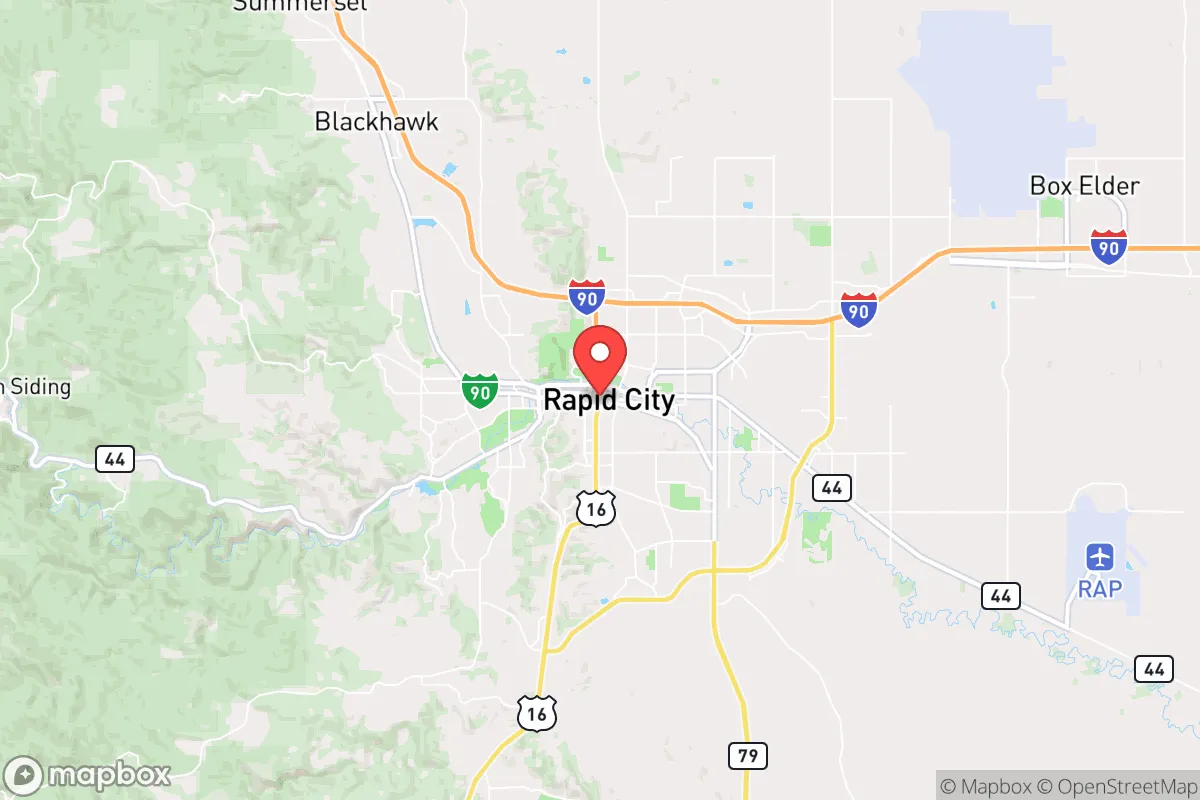
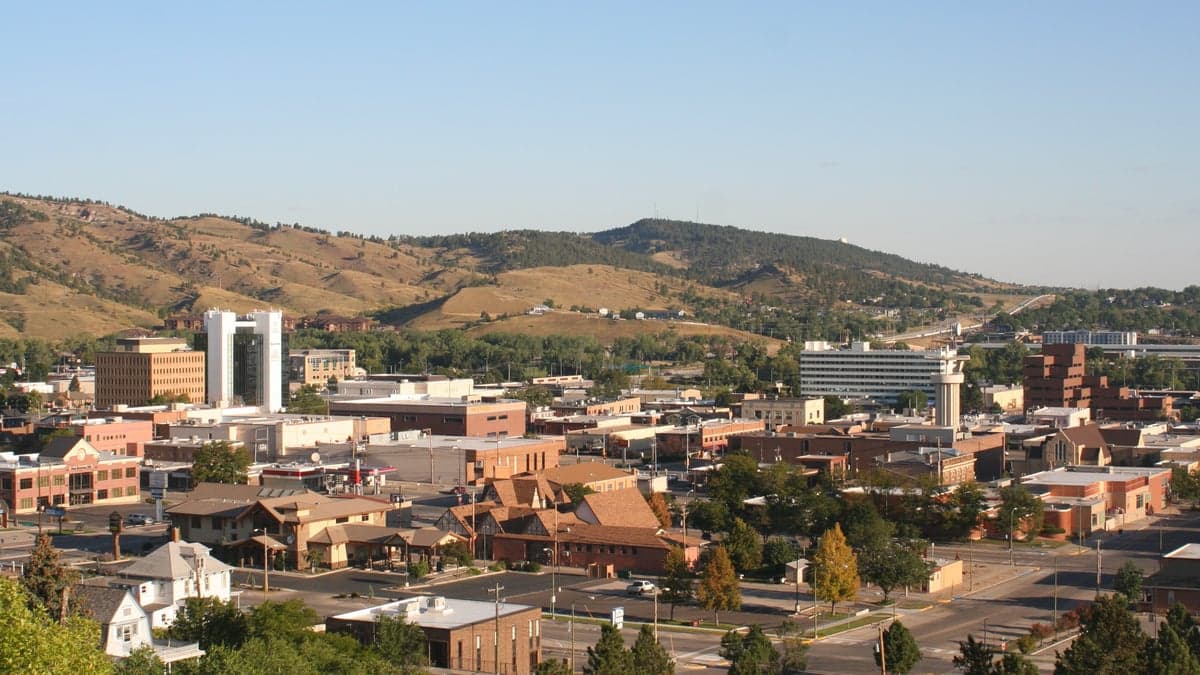
Photo: Wikipedia
Strategic Assessment of Rapid City, SD
Workable tactical position. Some exposure to population density or targets, but generally defensible in a crisis.
What does the Strategic Assessment tell us?
Our Strategic Assessment grades tactical survivability of an area. Major population centers, military targets, fallout zones, natural disasters, and border exposure all drive risk — lower exposure means a more defensible position in a crisis.
This is heavily inspired by Joel Skousen's Strategic Relocation book. Highly recommended you checkout the book ($)What does this tell us?
Our Strategic Assessment grades tactical survivability of an area. Major population centers, military targets, fallout zones, natural disasters, and border exposure all drive risk — lower exposure means a more defensible position in a crisis.
This is heavily inspired by Joel Skousen's Strategic Relocation book. Highly recommended you checkout the book ($)Strategic Pillars

Key Distances
Regional Safe Places
Below is our recommended "safe zones" in South Dakota and the surrounding area based on our strategic heuristics. For most people, it's unrealistic to live in a “safe zone” full-time due to work, family or other personal reasons. They tend to be more rural. However, many of these areas are perfect for second homes and retreat properties that double as a vacation home or even a short-term rental.
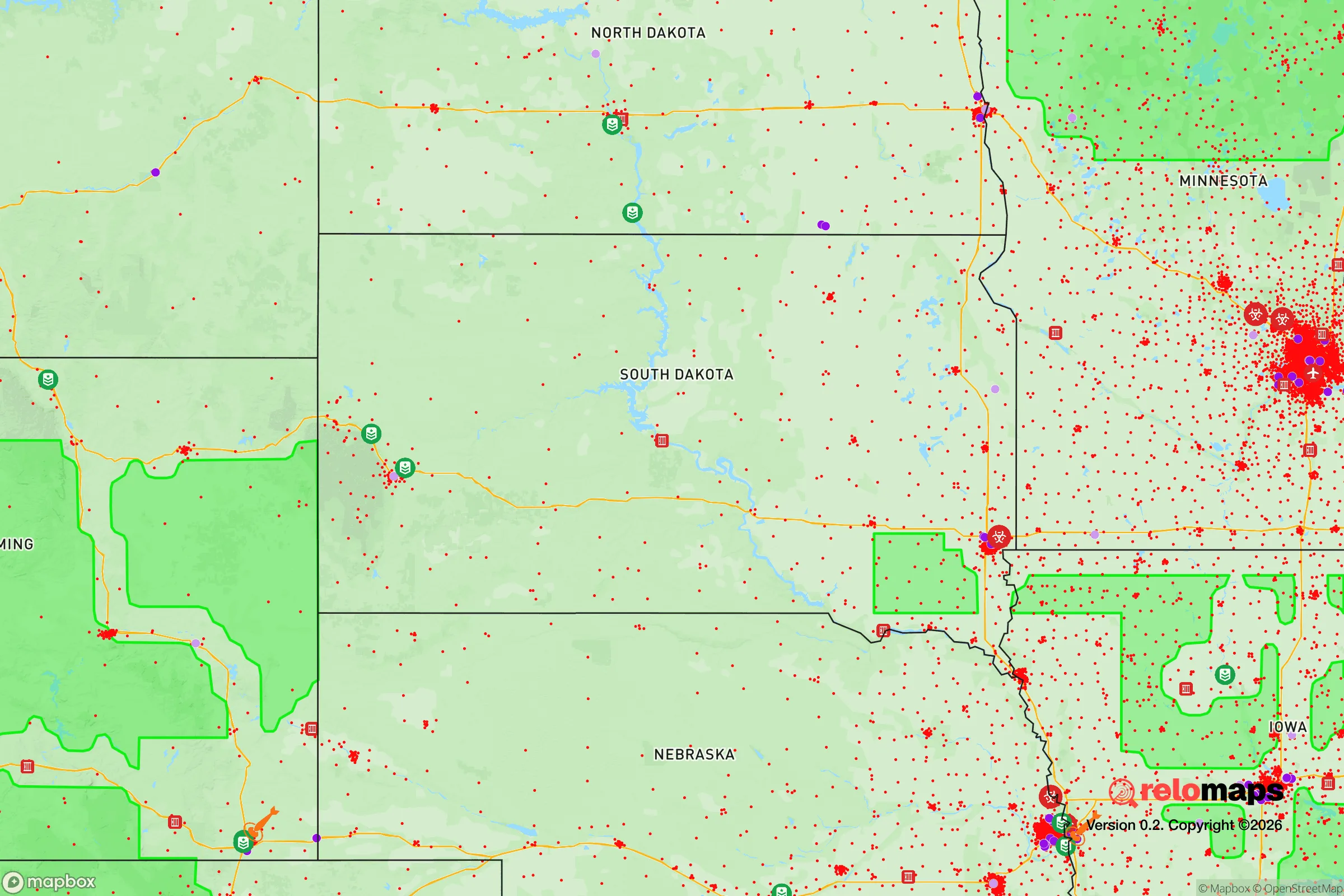


Important Note: For informational purposes only. This does not mean nothing bad ever happens in the green zones. Please use common sense. This is based on public data and modeled with AI. We tried to take a conservative approach but mistakes happen. We update this regularly as new information becomes available.
Solar Generator Recommendations
Backup power matters more here than in safer locations. We've picked three solar generators across budgets and capacity tiers — start with the budget unit if you only need a few essentials, or step up if you want to run a fridge and HVAC for days at a time.

Jackery Portable Power Station Explorer 300
Budget OptionPower on the Go: Weighing only 11 lbs, it's convenient to set up and store with book-sized foldable solar panels

BLUETTI Portable Power Station AC180
Designed for both indoor and outdoor scenarios, AC180 is highly capable as it has a robost capacity and continuous output power.

EF ECOFLOW DELTA Pro Ultra Power Station
Upgraded PickEcoFlow DELTA Pro Ultra is a whole-home energy system designed to grow with your family. Integrated with the Smart Home Panel 2, it scales to meet your evolving energy needs — keeping your home powered, intelligent, and secure through every stage of life.
We earn a commission, at no additional cost to you.
Strategic Assessment Analysis
Rapid City, South Dakota, offers a compelling strategic position for those prioritizing resilience and self-sufficiency in an increasingly uncertain national landscape. Its location at the eastern edge of the Black Hills, far from major coastal population centers and the dense urban corridors of the Midwest, provides a natural buffer against the cascading effects of civic unrest, supply chain disruptions, and mass casualty events that could cripple larger cities. The area’s low population density, robust local resource base, and distance from primary fallout targets make it a serious candidate for a relocation hub, though it is not without its own exposures and logistical challenges that require careful consideration.
Geographic position and natural advantages for long-term security
Rapid City sits in a unique geographic pocket that combines defensive depth with access to critical natural resources. The Black Hills themselves are a heavily forested, mountainous region that provides natural cover and defensible terrain, while the surrounding plains offer long sightlines and limited approach vectors for any potential threat. The area is over 300 miles from the nearest major metropolitan area (Denver) and more than 400 miles from Minneapolis, placing it well outside the immediate fallout zones of high-value targets like nuclear command centers, major military bases, or large-scale industrial infrastructure. The local water supply is robust, anchored by the Rapid Creek watershed and the massive Madison Aquifer, which underlies much of the region and provides a reliable, deep groundwater source that is less vulnerable to surface contamination than many other areas. The climate is semi-arid, with cold winters and hot summers, but the growing season is long enough for serious gardening and small-scale agriculture, especially in the protected valleys of the Hills. The region’s elevation (around 3,200 feet) also reduces the risk of airborne particulate fallout settling in the same way it would in lower, flatter terrain, a subtle but meaningful advantage for long-term habitation after a major event.
Risks, exposures, and proximity to fallout-relevant landmarks
No location is a fortress, and Rapid City has specific vulnerabilities that a strategic relocator must acknowledge. The most significant exposure is the presence of Ellsworth Air Force Base, located just 10 miles northeast of the city. Ellsworth is home to the 28th Bomb Wing, operating B-1B Lancer bombers and, increasingly, B-21 Raider stealth bombers. In a major conflict scenario, this base is a high-priority target for any adversary, and its proximity means that a nuclear strike or conventional attack on the base would likely devastate Rapid City itself. The prevailing winds blow from the northwest, which would carry fallout directly over the city and into the Black Hills. Additionally, the city sits near the Mount Rushmore National Memorial and the nearby Norbeck Wildlife Preserve, which are low-value targets but could become secondary objectives in a broader conflict. The area also has a history of severe weather, including blizzards, hailstorms, and the occasional tornado, though these are manageable with proper preparation. The real risk is the base: anyone relocating here must factor in that they are living next to a strategic military asset, and the fallout zone from a strike on Ellsworth would cover a wide area. For those willing to accept that risk, the trade-off is proximity to a major employer and a community that is heavily invested in national defense, which can be a stabilizing factor in peacetime.
Practical resilience for a relocator: food, water, energy, and defensibility
For the individual or family looking to build a self-sufficient life, Rapid City offers a mix of immediate advantages and long-term challenges. Water is the strongest asset: the Madison Aquifer is one of the largest and most reliable groundwater sources in the Great Plains, and many rural properties can access it via private wells. The Rapid Creek and the nearby Cheyenne River also provide surface water, though treatment would be necessary after a contamination event. Food production is viable but requires effort. The growing season averages 130-150 days, enough for cold-hardy crops like potatoes, carrots, kale, and beans, but not for corn or soybeans without irrigation. The Black Hills support wild game, including deer, elk, and turkey, and the surrounding grasslands are good for grazing livestock. Local food infrastructure is decent: there are several farmers' markets, a handful of local meat processors, and a strong hunting culture. Energy is a mixed picture. The region has excellent wind and solar potential, and many rural properties already use off-grid systems. However, the grid is not particularly robust, and winter storms can cause multi-day outages. A backup generator or solar-plus-battery system is a near-necessity for anyone serious about resilience. Defensibility is good but not perfect. The terrain around Rapid City is open enough to make approach detection easy, but the city itself is a valley, meaning that high ground around it offers observation points. Rural properties in the Hills can be very defensible, with limited access roads and dense tree cover. The local population is generally armed and self-reliant, with a strong gun culture and a low crime rate, which reduces the likelihood of civil unrest spilling over from elsewhere. The biggest practical weakness is supply chain dependence: the city relies on trucked-in goods for most of its non-local food, fuel, and medical supplies. A major disruption would hit hard within two to three weeks, so stockpiling is essential.
Overall, Rapid City presents a strong strategic option for those seeking a balance between isolation and access, natural resources and modern infrastructure. The presence of Ellsworth Air Force Base is the single greatest risk, and it cannot be ignored—anyone relocating here must accept that they are living next to a primary target. But for those who can manage that exposure, the area offers deep groundwater, defensible terrain, a supportive community culture, and a location that is far from the chaos of the coasts. It is not a bug-out location for a weekend; it is a place to build a life that is inherently more resilient than what most of the country offers. The key is to buy land outside the immediate blast radius of the base—ideally west or south of the city, in the Hills themselves—and to invest in water storage, food production, and off-grid energy from day one. If you do that, Rapid City can be a solid anchor in a world that is only going to get more unpredictable.

* Values derived from national, state, county, city and local statistics and may differ in a specific area. Last updated: 2026-04-19T04:24:41.000Z
Narrative content on this page is AI-generated and may contain mistakes. Verify any details that matter before acting on them.
ReloMaps may earn a commission from affiliate links at no extra cost to you.

