 Popular
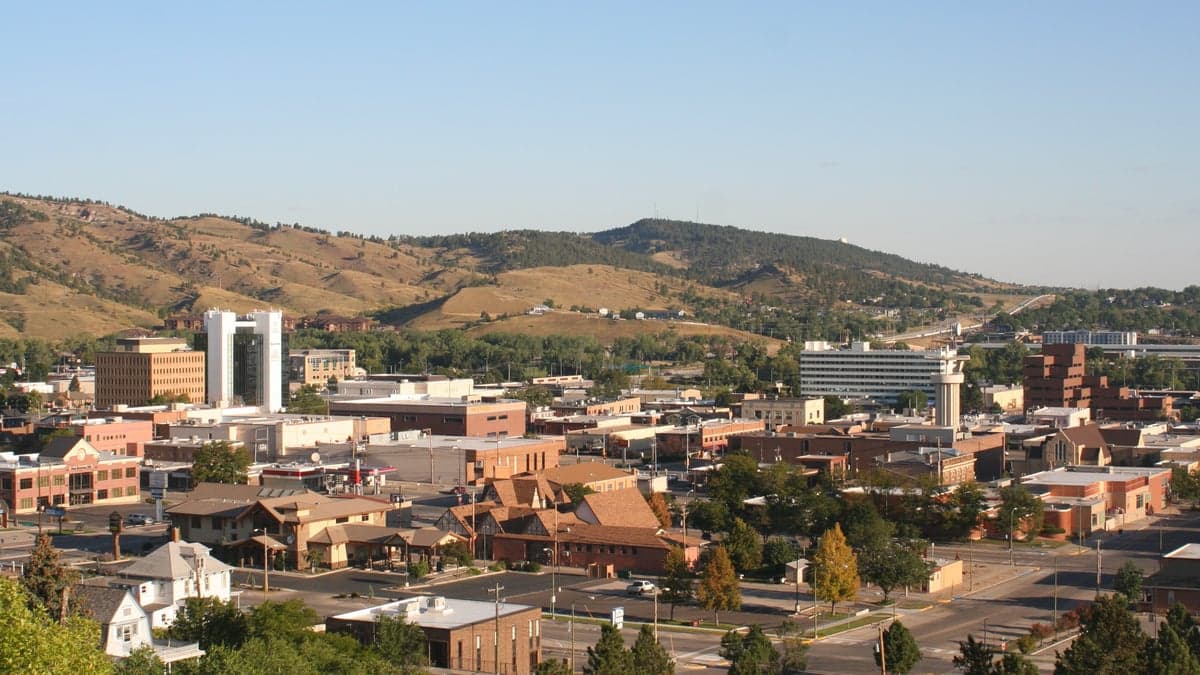
Photo: Wikipedia
Political ClimatePolitical Climate in Rapid City, SD
District shown is the primary district for this city’s centroid. Cities may span multiple districts.
Inherited from parent state — no local data available.
Local Political AnalysisPolitical Analysis of Rapid City, SD
Rapid City is about as solidly conservative as they come in South Dakota, with a Cook PVI of R+15 that tells you most of what you need to know about its political DNA. The city and surrounding Pennington County have voted Republican in every presidential election since at least 2000, and the 2024 results showed the county going +18 for the GOP ticket. But if you've lived here as long as I have, you've watched the political center of gravity shift in ways that are worth paying attention to — not in the voting booth, where things stay red, but in the cultural and policy battles that are quietly reshaping daily life.
How it compares
Drive an hour east to Pierre, the state capital, and you'll find a similar conservative vibe, though more government-worker-heavy and a little more establishment-Republican. Head south to Hot Springs or Custer, and those towns are even more reliably red — think R+20 or stronger, with fewer of the small progressive pockets you sometimes see in Rapid City's newer neighborhoods. The real contrast is with the Black Hills National Forest area and the tourist corridor around Keystone and Hill City, where the politics are still conservative but the economic reliance on federal lands and seasonal visitors creates a different set of priorities. Rapid City itself has seen a slow creep of progressive influence in local school board races and city council elections over the past five years, especially as younger families and remote workers move in from Colorado and California. That's the shift that worries me — not the voting totals, which stay red, but the quiet normalization of ideas that used to be fringe here, like diversity-equity programs in schools or zoning changes that favor dense development over property rights.
What this means for residents
For most folks, the day-to-day political reality in Rapid City is still one of low taxes, minimal regulation, and a general hands-off attitude from local government. The city's property tax levy is among the lowest in the state for a municipality its size, and there's no city income tax. But the warning signs are there if you're paying attention. The 2023 city council debate over a proposed "hate speech" ordinance — which ultimately failed — showed how quickly local politics can pivot toward government overreach when activists get organized. The school district's adoption of social-emotional learning curricula in 2022, without much public input, is another example of the kind of top-down policy that erodes parental rights. What keeps Rapid City from sliding further left is the active, organized conservative presence at the grassroots level — the county Republican party is one of the most active in the state, and groups like the Pennington County Taxpayers Association keep a close eye on every budget line item. But that vigilance is necessary precisely because the progressive drift is real, even if it's slow.
Culturally, Rapid City still feels like a Western town where people value their independence and don't appreciate being told what to do. The annual Sturgis Rally, just 25 miles north, is a symbol of that libertarian streak — a week where the whole region embraces the idea that adults can make their own choices. The biggest policy distinction between Rapid City and more progressive parts of the state is the city's consistent refusal to adopt any form of rent control or inclusionary zoning, despite pressure from housing advocates. That's a good sign for property rights, but the housing shortage is real, and if the city ever does cave on that front, it'll be a major shift in the local political culture. For now, the long-term outlook is cautiously optimistic: the conservative majority is still strong, but it's no longer automatic, and staying that way requires staying engaged.

State Political ClimatePolitical Climate in South Dakota
State Political AnalysisPolitical Environment in the State
South Dakota is one of the most reliably conservative states in the nation, with a Republican trifecta controlling the governorship and both legislative chambers for over a decade. The state has not voted for a Democratic presidential candidate since 1964, and in 2024, Donald Trump carried it by a margin of roughly 30 points. The dominant coalition is a mix of rural agricultural interests, small-business owners, and a growing number of out-of-state transplants seeking lower taxes and fewer restrictions. Over the past 20 years, the state has shifted further right, driven by an influx of remote workers and retirees from blue states, while the Democratic Party has collapsed outside of a few tribal areas and the city of Sioux Falls.
Urban vs. rural divide
The political map of South Dakota is starkly divided between a handful of small urban centers and vast rural expanses. Sioux Falls, the largest city, is the state's most competitive area—it leans Republican but has a noticeable Democratic presence, particularly in the core neighborhoods near downtown and the university district. Rapid City, the second-largest city, is more conservative than Sioux Falls, driven by a strong military and tourism economy tied to Ellsworth Air Force Base and Mount Rushmore. The rural counties west of the Missouri River—like Pennington and Lawrence counties—are deeply red, often voting 70-80% Republican. The eastern farm counties, such as Minnehaha and Lincoln, are also solidly conservative, though suburban growth around Sioux Falls has introduced a small but growing libertarian-leaning bloc that prioritizes low taxes and gun rights over social issues. The only reliably blue areas are the nine Native American reservations, including Pine Ridge and Rosebud, where Democrats often win by wide margins but have little influence on state policy due to low voter turnout and geographic isolation.
Policy environment
South Dakota's policy environment is among the most conservative in the country, with a strong emphasis on limited government. There is no state income tax, no corporate income tax, and no personal property tax on vehicles or business equipment—only a 4.5% state sales tax and local sales taxes that average around 2%. Property taxes are moderate, with a median effective rate of about 1.1%. The state has a right-to-work law, meaning no one can be forced to join a union as a condition of employment. Education policy is decentralized, with school choice limited to charter schools in Sioux Falls and Rapid City, but homeschooling is lightly regulated. Healthcare is largely private, with no state-run insurance exchange; Medicaid expansion was rejected until a 2022 ballot initiative forced it through, though implementation has been slow. Election laws are among the most secure in the nation: voter ID is required, same-day registration is not allowed, and absentee voting requires an excuse. The legislature has consistently passed laws to restrict abortion, with a near-total ban in effect since 2023, and has resisted any expansion of LGBTQ+ nondiscrimination protections.
Trajectory & freedom
Over the past five years, South Dakota has moved decisively toward greater personal freedom in several key areas, though some recent developments give pause. In 2021, Governor Kristi Noem signed a law banning mask mandates in schools and public buildings, and in 2023, the legislature passed a parental rights bill that requires schools to notify parents of any curriculum involving sexuality or gender identity. Gun rights are expansive: permitless carry has been legal since 2019, and there are no restrictions on magazine capacity or assault weapons. Property rights were strengthened in 2022 with a law limiting eminent domain for carbon pipeline projects, a direct response to the proposed Summit Carbon Solutions pipeline that sparked widespread opposition. However, there are concerns about government overreach in the form of a 2023 law that criminalizes certain forms of protest near critical infrastructure, which critics argue could chill free speech. Medical autonomy is strong—there are no vaccine mandates, and the state has resisted federal public health guidance on COVID-19. The trajectory is toward more freedom, but the pipeline protest law and a 2024 bill that expanded the governor's emergency powers are red flags for those wary of creeping executive authority.
Civil unrest & political movements
South Dakota has seen relatively little civil unrest compared to other states, but there have been notable flashpoints. The most visible was the 2021-2022 protests against the Summit Carbon Solutions pipeline, which drew hundreds of landowners and activists to the state capitol in Pierre, demanding stronger property rights protections. This movement was a rare cross-ideological coalition of conservative ranchers and environmentalists, and it succeeded in passing the 2022 eminent domain restrictions. On the left, the 2020 racial justice protests in Sioux Falls were small but drew attention to police reform, leading to a city-level ban on chokeholds. Immigration politics are muted—South Dakota has a very small foreign-born population (about 4%), and there is no sanctuary city movement. Election integrity controversies have been minimal, though the 2022 secretary of state race saw allegations of voter roll mismanagement. A new resident would notice that political activism is low-key and mostly focused on local issues like land use and school boards, rather than the high-intensity culture wars seen in larger states.
Projection
Over the next 5-10 years, South Dakota is likely to become even more conservative, driven by two demographic trends. First, the state is attracting a steady stream of migrants from California, Illinois, and New York—many of them remote workers and retirees who are fleeing high taxes and crime. These newcomers tend to be libertarian-leaning, supporting low taxes and gun rights but sometimes clashing with locals on land use and development. Second, the Native American population is growing but remains politically marginalized, with low voter turnout and limited representation in the legislature. The biggest wild card is the potential for a carbon pipeline network to be built, which could trigger a property rights backlash and reshape the political landscape. If the pipeline goes through, expect a populist revolt that could unseat incumbents. If it fails, the status quo will likely hold. The state's economy is diversifying beyond agriculture and tourism, with a growing tech sector in Sioux Falls and a data center boom in Rapid City, which could bring in more moderate voters. Overall, a person moving in now should expect a state that remains deeply conservative, with a strong emphasis on individual freedom, but with occasional battles over property rights and executive power.
For a new resident, the bottom line is this: South Dakota offers a high degree of personal freedom—no income tax, strong gun rights, and minimal government interference in daily life. The political climate is stable and predictable, with a conservative majority that has resisted progressive trends. However, you should be aware of the ongoing property rights fight over pipelines and the potential for future executive overreach. If you value low taxes, limited regulation, and a community that largely leaves you alone, South Dakota is a strong choice. Just keep an eye on Pierre—the capitol is where the real battles happen.
* Values derived from national, state, county, city and local statistics and may differ in a specific area. Last updated: 2026-04-19T04:24:41.000Z
Narrative content on this page is AI-generated and may contain mistakes. Verify any details that matter before acting on them.
ReloMaps may earn a commission from affiliate links at no extra cost to you.

