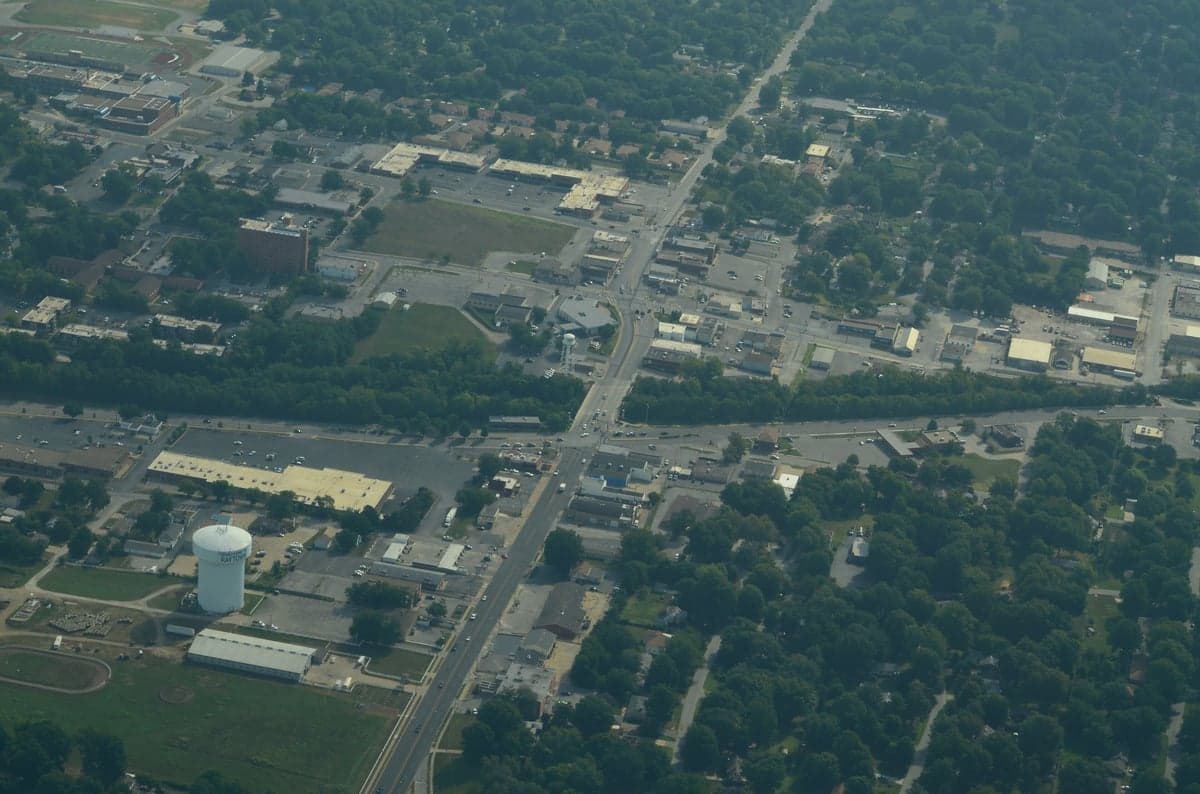
Photo: Wikipedia
Political ClimatePolitical Climate in Raytown, MO
District shown is the primary district for this city’s centroid. Cities may span multiple districts.
Local Political AnalysisPolitical Analysis of Raytown, MO
Raytown, Missouri, sits in a political bubble that’s been drifting further left for a while now, and if you’ve lived here as long as I have, you’ve felt the shift. The Cook PVI clocks it at D+12, which means it’s a solidly Democratic area, and that’s not just a number—it’s reflected in local elections, school board decisions, and the general vibe around town. Back in the ’90s, this was a reliably blue-collar, middle-class suburb where folks kept their politics to themselves and the government stayed out of your business. Today, you’re seeing more progressive energy, more talk of “equity” initiatives, and a creeping sense that personal freedoms—like how you run your small business or what you teach your kids—are being nudged aside for a one-size-fits-all agenda. The trajectory isn’t promising if you value limited government and local control; the pendulum has swung, and it’s not showing signs of swinging back anytime soon.
How it compares
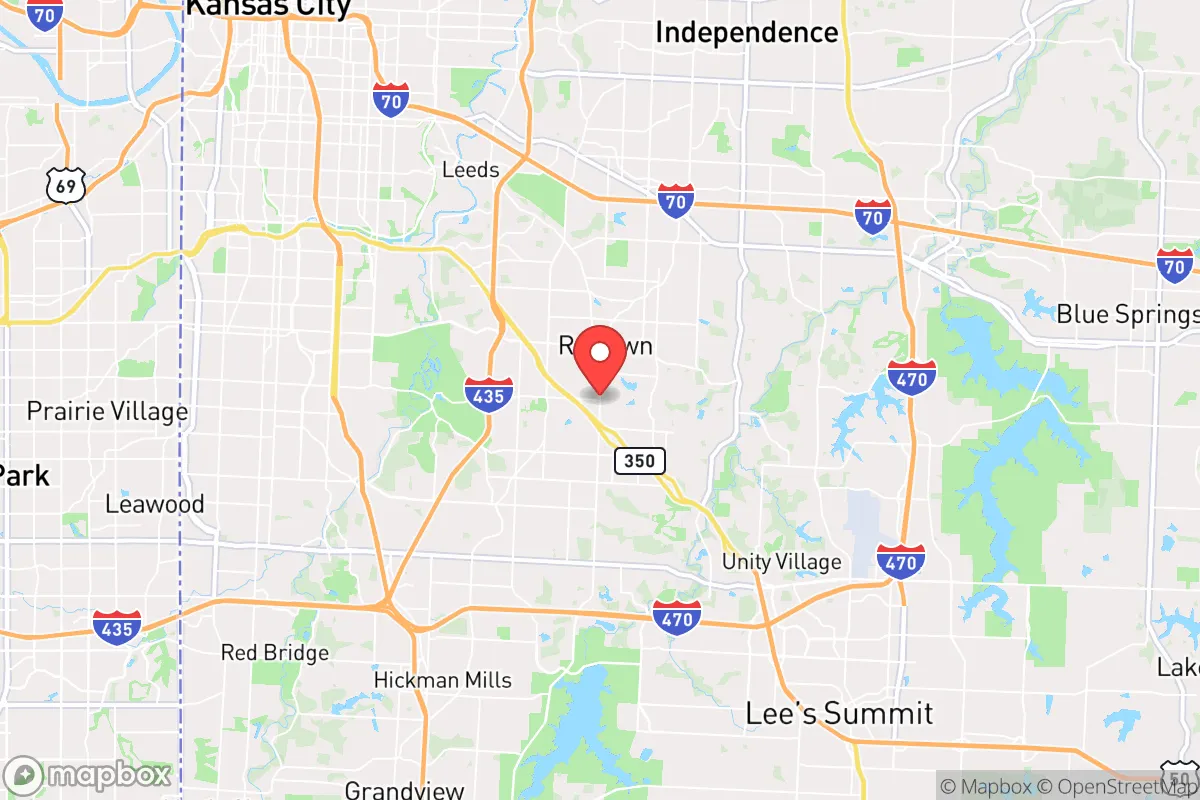
To understand Raytown, you’ve got to look at the map. Drive 10 minutes north to Independence, and you’ll find a more mixed political scene—still leans blue, but with a stronger conservative undercurrent, especially in the eastern parts. Head west into Kansas City proper, and you’re in deep-blue territory, where city council votes on things like rent control and police funding reforms that make you wonder who’s really in charge. But the real contrast is south and east: places like Lee’s Summit and Blue Springs are reliably red, with lower taxes, more school choice, and a general hands-off attitude from local government. Raytown, by comparison, feels like it’s trying to be a mini-Kansas City—more regulations, more zoning fights, and a school district that’s been wrestling with curriculum battles that would make a conservative’s head spin. If you’re looking for a place where your voice on property rights or Second Amendment issues actually carries weight, Raytown’s neighbors are a better bet.
What this means for residents
For the average Raytown resident, the political climate translates into real-life headaches. You’ll see it in property taxes that creep up faster than inflation, as the city funds programs you might not agree with—like diversity training for city employees or “affordable housing” mandates that squeeze small landlords. The school board has become a battleground, with progressive members pushing for critical race theory-adjacent materials and limiting parental input on what kids read. If you run a small business, expect more red tape: licensing fees, health inspection overhauls, and noise ordinances that seem designed to trip you up. The upside? If you’re politically active on the left, you’ll find plenty of allies. But for those of us who just want to be left alone, raise our families, and keep our money, it feels like the government is getting too cozy with your daily life. Long-term, if the trend holds, you might see more families voting with their feet—heading to Cass County or rural Johnson County where the tax burden is lighter and the schools are more traditional.
Culturally, Raytown still has some of that old-school Midwestern charm—neighborhood block parties, a decent little downtown, and folks who wave from their porches. But the policy distinctions are where the rubber meets the road. The city council has been flirting with “sanctuary city” resolutions, which raises eyebrows if you care about immigration enforcement. And there’s a growing push for ranked-choice voting and other electoral changes that could dilute your vote’s impact. It’s not a bad place to live—yet—but you’ve got to keep an eye on the ballot box. If you’re a conservative, you’re not going to change Raytown overnight, but you can still make your voice heard at the precinct level. Just know that the political winds are blowing in a direction that values collective goals over individual liberty, and that’s a tough fight to win in a D+12 district.

State Political ClimatePolitical Climate in Missouri
State Political AnalysisPolitical Environment in the State
Missouri has long been a reliably red state in presidential elections, voting for the Republican candidate by comfortable margins since 2000, but its political climate is far more nuanced than a simple partisan label suggests. The state is a classic battleground of urban versus rural values, with a deep-rooted conservative culture in the vast majority of its counties, but with two major metropolitan areas—St. Louis and Kansas City—that consistently pull the state leftward. Over the last two decades, the state has shifted from a competitive purple state to a solidly Republican one at the state level, driven by rural and exurban voters who feel increasingly alienated from national Democratic priorities.
Urban vs. rural divide
The political map of Missouri is a textbook example of the urban-rural split. The two major population centers—St. Louis City and County, and Kansas City (Jackson County)—are deep blue, reliably delivering 60-70% of their votes to Democrats. These areas are home to the state’s most progressive policies, including local sanctuary city ordinances and high property taxes. In contrast, the rest of the state is overwhelmingly red. The rural Ozarks, including counties like Christian, Greene, and Taney, are some of the most conservative in the nation, with Republican margins often exceeding 70%. The St. Louis suburbs, particularly St. Charles County, have become a key battleground; once a swing area, it has shifted hard right in recent cycles, now voting Republican by double digits. Similarly, the Kansas City exurbs like Clay and Platte counties are trending redder as families flee the city proper. The 2020 election saw St. Louis County flip back to Biden, but the rest of the state’s rural and suburban voters delivered a 15-point win for Trump. The divide is stark: drive 20 minutes outside either metro, and you’re in a world of low taxes, gun-friendly culture, and conservative social values.
Policy environment
Missouri’s state-level policy environment is a strong draw for conservatives. The state has a flat income tax rate of 5.3%, with a recent law (SB 3, 2022) that will phase it down to 4.5% by 2027 if revenue targets are met. Property taxes are among the lowest in the nation, averaging about 0.9% of home value. The state is a right-to-work state (though the law was repealed by referendum in 2018, the legislature has since passed a new version), and it has some of the most permissive gun laws in the country, including permitless carry (HB 146, 2016) and a “Stand Your Ground” law. On education, Missouri has a robust school choice program, including charter schools in Kansas City and St. Louis, and a growing voucher-like tax credit scholarship program (MOScholars). The state’s Department of Elementary and Secondary Education has been criticized by conservatives for pushing progressive curriculum standards, but local control remains strong in most districts. Healthcare policy is a mixed bag: Missouri expanded Medicaid in 2021 via a ballot initiative (Amendment 2), a move many conservatives opposed, but the state has not implemented a state-based insurance exchange and has resisted federal mandates. Election laws are moderately restrictive: voter ID is required, and the state has a 27-day early voting period (no-excuse absentee voting was expanded in 2020 but remains controversial). Overall, the policy environment is friendly to traditional values, low taxes, and limited government, though the Medicaid expansion remains a sore point for many.
Trajectory & freedom
Missouri has been on a clear trajectory toward greater personal freedom in the last decade, particularly on gun rights, parental rights, and tax policy. The 2016 permitless carry law (HB 146) was a landmark, removing the requirement for a license to carry a concealed firearm. In 2021, the state passed a Second Amendment Preservation Act (SAPA), which declares federal gun laws that infringe on the Second Amendment to be “null and void” in Missouri—a direct challenge to federal authority that has sparked legal battles. On parental rights, the state passed the “Parental Bill of Rights” (HB 1609, 2022), which gives parents the right to review curriculum and opt their children out of sex education. The state has also banned transgender athletes from competing in girls’ sports (SB 39, 2023) and restricted gender-affirming care for minors (SB 49, 2023). On the economic front, the income tax phase-down (SB 3) is a clear move toward lower taxation. However, there are concerning trends: the state’s attorney general has been aggressive in using consumer protection laws to go after businesses that “discriminate” against gun owners, but also has used the same laws to target political opponents. The COVID-19 era saw significant executive overreach from Governor Mike Parson, including a state of emergency that lasted over two years, though the legislature has since passed laws limiting future emergency powers (HB 1609). Overall, the trajectory is toward more freedom on cultural and economic issues, but with a growing tension between local control and state-level mandates.
Civil unrest & political movements
Missouri has been a flashpoint for civil unrest and political movements, particularly around race and policing. The 2014 Ferguson protests, sparked by the shooting of Michael Brown, were a national watershed moment, leading to the “Ferguson Effect” and a wave of police reform debates. The state has seen ongoing protests in St. Louis and Kansas City over police brutality, with the 2020 George Floyd protests leading to property damage and clashes with law enforcement. On the right, the “Second Amendment Sanctuary” movement has been strong, with over 100 counties passing resolutions opposing federal gun laws. The state has also seen a rise in “constitutional sheriff” movements, with some sheriffs refusing to enforce certain state laws. Immigration politics are less heated than in border states, but there have been controversies over sanctuary city policies in St. Louis and Kansas City, with the state legislature passing a law (HB 574, 2019) that allows the attorney general to sue local governments that adopt such policies. Election integrity has been a major issue since 2020, with the state conducting a controversial audit of the 2020 election in St. Louis County (which found no widespread fraud) and passing stricter voter ID laws. A new resident would notice the strong presence of conservative activism in rural areas, with frequent rallies and political events, while the cities remain more progressive and activist-driven. The divide is palpable, and political conversations can be heated, but most people keep to their own circles.
Projection
Over the next 5-10 years, Missouri is likely to become even more conservative at the state level, but with growing tension between the urban cores and the rest of the state. In-migration patterns show that people moving to Missouri are primarily coming from blue states like Illinois and California, and they tend to settle in the conservative exurbs and rural areas, further solidifying the Republican majority. The St. Louis and Kansas City metros will continue to be blue, but their influence will wane as the state legislature becomes more aggressive in preempting local ordinances (e.g., banning local minimum wage increases, restricting local gun control). The demographic trend is toward an older, whiter, and more conservative electorate, as younger, more diverse populations are concentrated in the cities. The biggest wild card is the ongoing legal battle over SAPA and the state’s challenge to federal gun laws—if the courts strike it down, it could spark a constitutional crisis and further radicalize the conservative base. The tax cuts will likely continue, making Missouri even more attractive to businesses and families from high-tax states. However, the state’s infrastructure and education funding may suffer as a result, leading to a two-tier system where wealthy suburbs have excellent schools and rural areas struggle. A new resident moving in now should expect a state that is firmly conservative, with low taxes and strong cultural freedoms, but with a persistent urban-rural divide that will only deepen.
For a conservative individual or family considering relocation, Missouri offers a compelling package: low taxes, strong gun rights, parental control in education, and a political culture that respects traditional values. The key trade-off is that you’ll need to choose your community carefully—the urban cores of St. Louis and Kansas City are progressive and have high crime rates, while the suburbs and rural areas are safe, family-friendly, and politically aligned with your values. The state is trending in the right direction on most freedom metrics, but you should be aware of the ongoing legal fights over federal versus state authority, particularly on guns. If you’re looking for a place where your vote counts, your rights are respected, and your family can thrive without government overreach, Missouri is a solid bet—just make sure you’re not moving into the city limits.
* Values derived from national, state, county, city and local statistics and may differ in a specific area. Last updated: 2026-04-24T13:18:21.000Z
Narrative content on this page is AI-generated and may contain mistakes. Verify any details that matter before acting on them.
ReloMaps may earn a commission from affiliate links at no extra cost to you.

