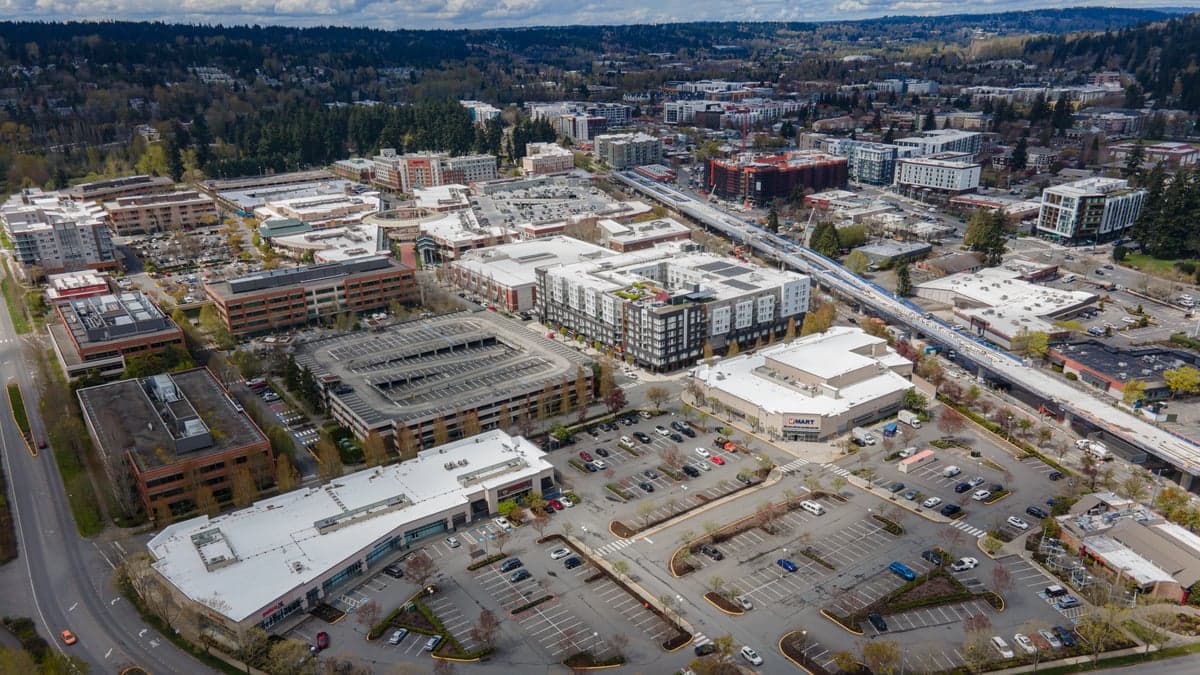
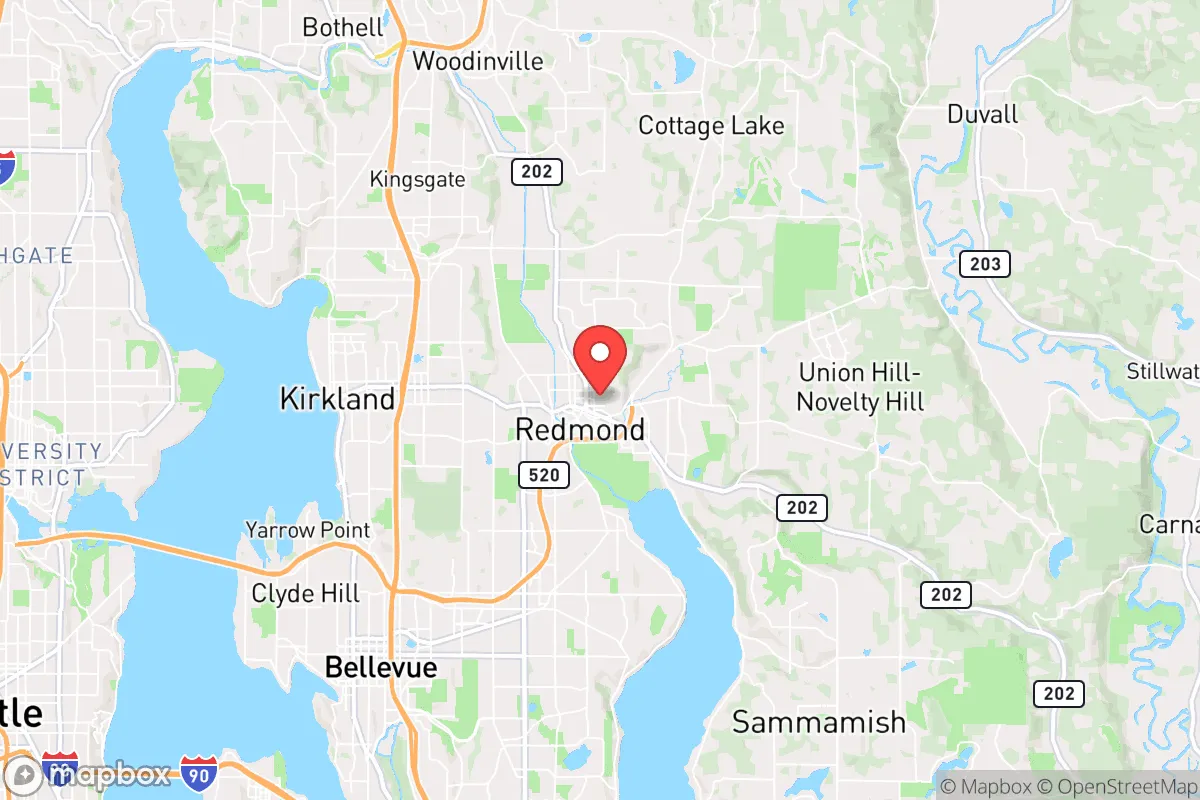
Photo: Wikipedia
Personal Sovereignty in Redmond, WA
Viable for self-reliance. Generally workable, though some barriers may limit total independence.
What does Personal Sovereignty tell us?
Personal Sovereignty measures your capacity for self-reliance and independence with minimal government friction. Higher scores mean fewer barriers between you and the way you want to live... but it assumes you have the space you need and good neighbors.
What does this tell us?
Personal Sovereignty measures your capacity for self-reliance and independence with minimal government friction. Higher scores mean fewer barriers between you and the way you want to live... but it assumes you have the space you need and good neighbors.
State Policy
Energy independence: Importer (55% of energy produced in-state)
Personal Liberty
Homesteading

Personal Liberty Analysis
Redmond, Washington, presents a challenging environment for personal sovereignty, where the state's expansive regulatory apparatus and progressive political culture significantly constrain individual autonomy. While the city itself offers high-end amenities and economic opportunity, the underlying legal and cultural framework prioritizes collective mandates over personal choice, making it a location that demands careful strategic consideration for those who value self-reliance and minimal government interference. For a survivalist or prepper mindset, the trade-offs here are stark: you gain access to immense wealth and infrastructure, but you operate within a system that is actively hostile to many core tenets of personal liberty.
Tax burden and regulatory posture in Washington state
Washington state's tax structure is a double-edged sword for personal sovereignty. The absence of a state income tax is a genuine advantage, allowing residents to keep more of their earnings and reducing the government's direct claim on your labor. However, this is offset by some of the highest sales taxes in the nation, with King County (where Redmond sits) adding a local rate that pushes the combined total to over 10%. This effectively functions as a regressive consumption tax that hits daily purchases hard. More critically, the regulatory posture is deeply interventionist. The state has a comprehensive capital gains tax on high-value asset sales, a long-term care payroll tax (the WA Cares Fund) that you cannot opt out of unless you purchase private insurance, and aggressive environmental regulations that drive up the cost of housing, energy, and transportation. The state's building codes are among the strictest in the country, and land-use regulations heavily restrict what you can do with your property. For someone seeking to minimize government entanglement, this regulatory density is a significant liability.
Self-defense rights and gun law specifics in Redmond
On the critical issue of self-defense, Washington state has moved decisively in a direction that will alarm anyone prioritizing personal security. In 2023, the state passed a ban on so-called "assault weapons" (a broad category covering many semi-automatic rifles, including the ubiquitous AR-15 platform), a ban on high-capacity magazines (over 10 rounds), and a requirement for a 10-day waiting period on all firearm purchases. Furthermore, the state now requires a background check and a safety training course to even apply for a permit to purchase a handgun. Redmond itself is a city with a strong police presence, but the legal framework makes it harder for law-abiding citizens to own the most effective tools for self-defense. Open carry is legal without a permit, but concealed carry requires a license, and the state's "good moral character" clause in the permitting process gives local authorities discretion. For a prepper, the inability to legally own standard-capacity magazines or commonly used defensive rifles is a major red flag, signaling a government that does not trust its citizens with the means to resist tyranny or defend their homes effectively.
Self-reliance and homesteading viability in Redmond
The feasibility of true self-reliance in Redmond is extremely limited. The city is a dense, suburban tech hub with very high land values. Typical residential lots in established neighborhoods range from 5,000 to 10,000 square feet, with newer developments often featuring even smaller parcels. Zoning is strictly residential, and most single-family lots are subject to homeowners' association (HOA) covenants that prohibit livestock, extensive gardening, or any structures that deviate from the suburban aesthetic. Raising chickens is often permitted with a permit, but larger animals like goats or pigs are generally not allowed within city limits. Off-grid living is effectively illegal; all residences must be connected to the municipal water and sewer systems, and the local power utility (Puget Sound Energy) is the only option for electricity. Rainwater collection is permitted but regulated, and solar panel installations require permits and must meet aesthetic standards. For anyone serious about homesteading, food production, or energy independence, Redmond is a non-starter. You would need to look to rural areas east of the Cascades or north of Snohomish County to find the acreage and permissive zoning required for a self-sufficient lifestyle.
Personal liberties: parental rights, medical autonomy, speech, and property
Personal liberties in Redmond are heavily circumscribed by state law and local culture. On parental rights, Washington state has some of the most progressive laws in the nation. The state mandates comprehensive sexual education in public schools, and it has laws that allow minors to consent to certain medical treatments (including reproductive health and mental health) without parental notification. School districts, including Lake Washington School District (which serves Redmond), have policies that can keep information about a child's gender identity or sexual orientation from parents if the child requests it. This is a direct erosion of parental authority. On medical autonomy, the state imposed one of the most aggressive COVID-19 vaccine mandates in the country, covering healthcare workers, state employees, and many private-sector workers, with no religious exemption recognized. This set a precedent for future public health emergencies. Free speech is protected by the First Amendment, but the state's strong anti-discrimination laws and hate crime statutes can create a chilling effect on certain political or religious expressions, particularly in a corporate-dominated culture like Redmond's. Property rights are weak; the state's Growth Management Act heavily restricts what you can build on your land, and the city's design review boards have significant say over the aesthetics of your home. The threat of eminent domain for public projects (like light rail expansion) is a real concern.
Overall, personal sovereignty in Redmond is low relative to other areas in the United States, particularly when compared to states in the Mountain West, the South, or even rural parts of the Midwest. The trade-off is access to a world-class economy and high-paying jobs, but the price is a significant surrender of personal autonomy in nearly every domain: your ability to defend yourself, to raise your children according to your values, to control your property, and to opt out of government programs. For a strategic relocation, Redmond is best viewed as a temporary economic base—a place to build capital and skills—rather than a long-term haven for a self-reliant, liberty-oriented lifestyle. The regulatory and cultural headwinds are simply too strong for anyone serious about personal sovereignty to consider this a permanent home.

* Values derived from national, state, county, city and local statistics and may differ in a specific area. Last updated: 2026-04-21T10:56:45.000Z
Narrative content on this page is AI-generated and may contain mistakes. Verify any details that matter before acting on them.
ReloMaps may earn a commission from affiliate links at no extra cost to you.

